Showing posts with label Roman Empire. Show all posts

Monday, December 31, 2012

[December 31] Commodus, emperor of Rome

Full Name: Marcus Aurelius Commodus Antoninus
Parents: Marcus Aurelius, emperor of Rome, and Faustina the Younger
Date of Birth: 31 August 161
House: Antonine
Spouse(s): Bruttia, daughter of Gaius Bruttius Praesens, consul of Rome
Predecessor: Marcus Aurelius
Reign: 180 – 192
Brief: Commodus was one of few heirs born to a reigning emperor before the era of Constantine in the 300s. His elder twin, Titus, died at the age of four and Commodus became sole heir. He was elected caesar with his younger brother in 166. In 175, Commodus joined the college of pontiffs and entered public life. Marcus Aurelius elevated his son to Augustus (co-emperor) in 177 and nominated him consul,  the youngest such Senator in history to the time. Marcus Aurelius died in 180 while fighting on the Danubian front, after which Commodus took control over the Roman Empire. Though often portrayed as a weak and selfish ruler, Commodus' reign is, in fact, poorly documented and it did not lead directly to the fall of Rome nearly two centuries later. His reign was externally peaceful, signing a treaty with the Danube tribes and relegating the government to loyal advisors. Throughout his reign, Commodus dealt with assassination attempts, attempted coups, and upstart usurpers, forcing him to become more directly involved in his government. Until 188, Commodus left the government under the management of a man named Cleander, whose mismanagement of affairs led to famine and his eventual beheading by Commodus. Commodus' megalomania peaked in 191 following a fire that destroyed much of the city of Rome. The emperor proclaimed a new Rome and himself, a new Romulus. He renamed the city, the months of the year, the legions, the fleet, the Senate, and even the people. On 31 December 192, after a failed poisoning, Commodus was strangled to death in his bath by a former wrestling partner. The city and everything was restored to Rome, though Commodus was later, under Septimus Severus, deified as per the standard procedures of the day. His death prompted the Year of the Five Emperors in 193.
Date of Death: 31 December 192
Successor: Pertinax

Other Monarchs Who Died Today:
  • St. Silvester I, pope of Rome (335)
  • Ottokar III, margrave of Styria (1164)
  • Leopold V, duke of Austria (1194)
  • Frederick III, duke of Lorraine (1302)
  • Shimazy Tadayoshi, daimyo in Japan (1568)
  • Dorgon, emperor of China (1650)
  • Charles III Philip, count palatine of the Rhine (1742)
  • Sabah III Al-Salim, emir of Kuwait (1977)

Wednesday, November 14, 2012

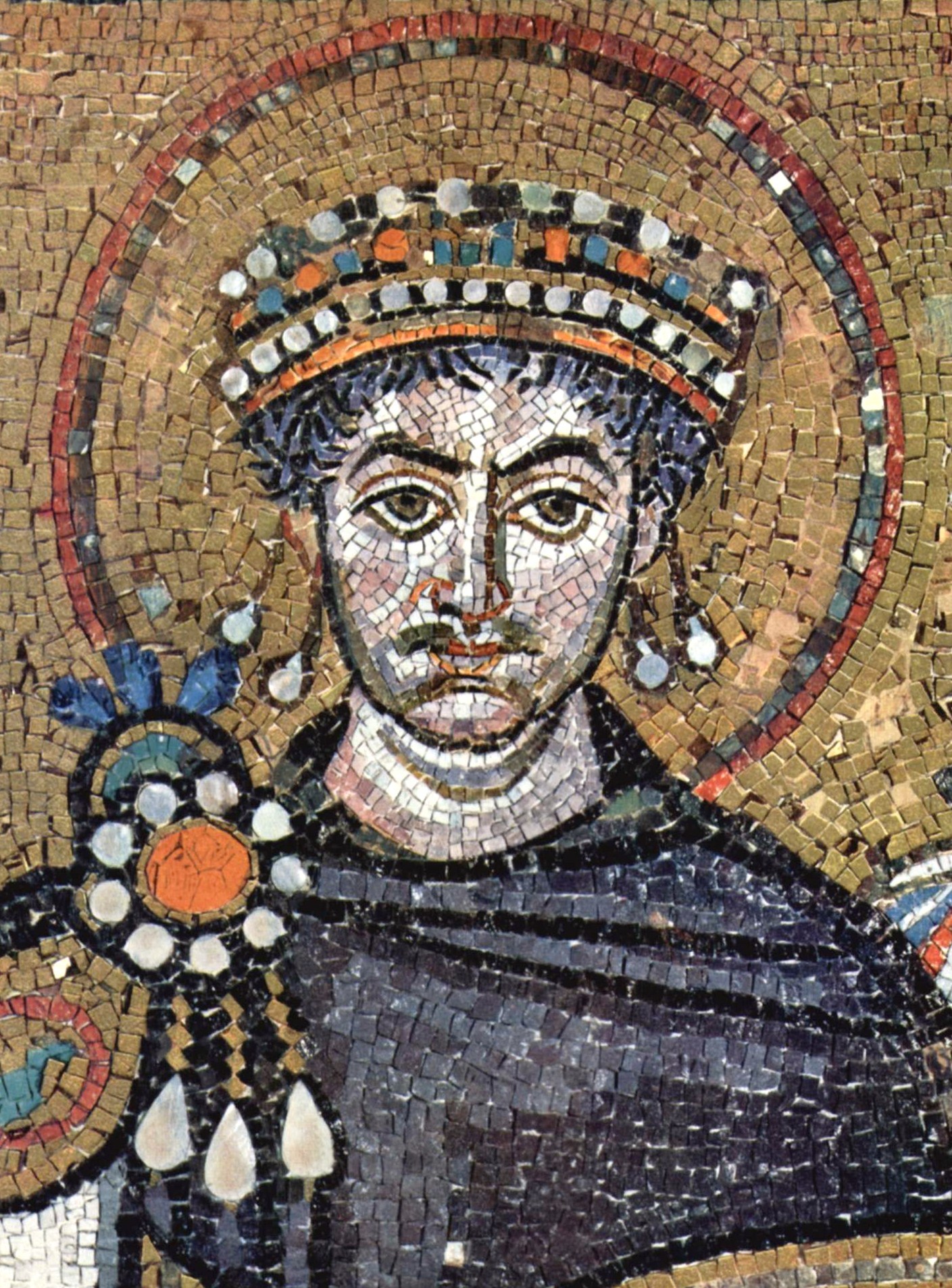
[November 14] St. Justinian I, emperor of Constantinople

Local Name: Petrus Sabbatius Justinianus
Surnamed: "The Great"
Parents: Sabbatius and Vigilantia, sister of Justin I, emperor of Constantinople
Born: circa 482
House: Justinian
Spouse(s): Theodora, daughter of Acacius and Theodora
Predecessor: Justin I
Reign: 527 – 565
Brief: Born into a Greek peasant family, Justinian rose to prominence when he was adopted as the heir of Emperor Justin, his uncle, in the 520s. As Justin's health declined, Justinian took control of the Roman government in Constantinople. He created a meritocracy rather than catering to family members, marrying his mistress, Theodora, in 525. Justinian reformed the judicial codes in the empire, forming the backbone of future judicial law across much of the east and, eventually, the west. During this time, the emperor set out on a campaign to rebuild the Roman Empire beginning in 530. He conquered North Africa from the Vandals, eliminating their entire empire; he intervened in Italy, deposing the Ostrogoths and reclaiming Rome itself for the Eastern Empire; and he waged constant warfare with the Sassanids of Persia in a bid to define borders between the two states. Regarding Christianity, Justinian directly oversaw the management of the Orthodox Church in Constantinople, while trying at the same time to work with the popes in Rome rather than against them. The emperor died in 565 leaving the empire to his nephew, Justin II. The Orthodox Church later canonized him, though this was not recognized in the west.
Date of Death: 14 November 565
Successor: Justin II

Other Monarchs Who Died Today:
  • Miguel, king of Portugal (1866)
  • Guangxu, emperor of China (1908)

Wednesday, October 31, 2012

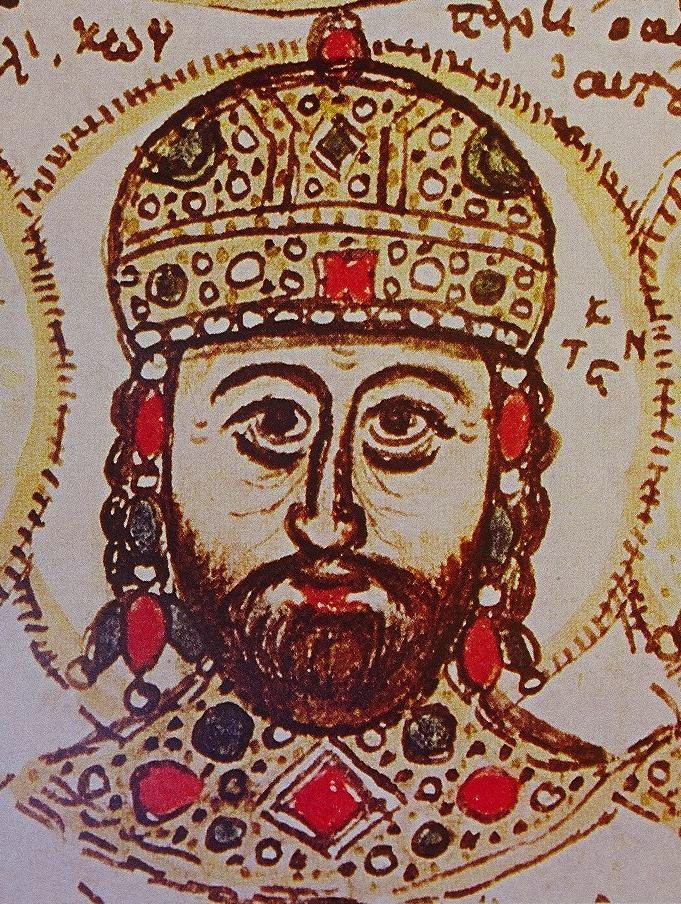
[October 31] John VIII, emperor of Constantinople

Local Name: Iōannēs (Ίωάννης Η' Παλαιολόγος)
Parents: Manuel II, emperor of Constantinople, and Helena of Serbia
Born: 18 December 1392
House: Palaeologos
Spouse(s): (1) Anna, daughter of Basil I, grand prince of Moscow, and Sophia of Lithuania, then (2) Sophia, daughter of Theodore II, marquess of Montferrat, and Joanna of Bar, then (3) Mara, daughter of Alexios IV, emperor of Trebizond, and Theodora Kantakouzene
Predecessor: Manuel II
Reign: 1425 – 1448
Brief: John became co-emperor with his father around the age of twenty-four. By the time he was thirty, he was in charge of the defenses of Constantinople as the city was besieged by Ottoman Sultan Murad II. In the hope that he could secure the protection of the city, he travelled to Italy and agreed to the union of the Orthodox and Catholic churches. While away, his father died and he became the sole ruler of Constantinople. John returned to Italy for the Council of Florence in 1439, but the proposed union of the churches failed due to opposition by the patriarchate of Constantinople. By good diplomacy with the Ottomans, John managed to save his city from complete conquest, but that would be achieved during the reign of his brother, Constantine XI, who had served as regent during John's travels and succeeded the emperor in 1448.
Date of Death: 31 October 1448
Successor: Constantine XI

Other Monarchs Who Died Today:
  • Cosimo III, grand duke of Tuscany (1723)
  • Victor Amadeus II, duke of Savoy (1732)
  • Eberhard IV Ludwig, duke of Württemberg (1733)

Thursday, September 6, 2012

[September 6] Eugenius, usurper of Rome

Full Name: Flavius Eugenius
Predecessor: Valentinian II
Reign: 393 – 394
Summary: Very little is known about Eugenius' past or upbringing. When he enters historical works, he is a teacher of grammar and rhetoric and a friend of the Frankish ruler Arbogast. When Emperor Valentinian II died, Arbogast chose Eugenius to be the next Western Roman Emperor, forcing the Roman Senate to support this election. Eugenius worked fast to replace appointments by Eastern Emperor Theodosius with those loyal to himself and Arbogast. Most were chosen from the senatorial class, endearing the Roman Senate to him as well. Unlike Theodosius, Eugenius also supported polytheism, though he himself was a Christian. This earned him the support of many of Rome's citizenry who still supported the old gods. Emperor Theodosius, who wished for an absolute Christianity within the empire, decided that he had had enough of this western pretender. While Arbogast was in the north unifying and pacifying Germanic tribes, Eugenius was in Milan attempting to receive recognition of his imperial titles. Theodosius denied him his titles and elevated his son, Honorius, to the rank of Western Emperor. He gathered an army to march on Milan. The rival armies met at the Battle of the Frigidus in September 394. The battle lasted for two days with Theodosius eventually winning the extremely bloody battle. Arbogast committed suicide after losing and Eugenius was executed for treason. His head was left on a spike outside the Roman camp. With Eugenius' death, the Roman Empire lost its last chance at preserving polytheism, with all future emperors supporting a solely Christian empire.
Date of Death: 6 September 394
Successor: Honorius

Other Monarchs Who Died Today:

  • Liudolf, duke of Swabia (957)
  • John XIII, pope of Rome (972)
  • Ashikaga Yoshizumi, shogun of Japan (1511)

Tuesday, August 28, 2012

[August 28] Magnus Maximus, emperor of Rome

Date of Birth: circa 335
Spouse(s): Elen, daughter of Octavius, king of the Britons
Predecessor: Gratian
Reign: 384 – 387
Summary: There are two stories of the life of Magnus Maximus, one of his exploits as a Roman, the other as his exploits as a Briton. In reality, nothing is known of the mane until 368 when he appeared in Britain as a junior officer in response to the Great Conspiracy. He soon moved to Africa where he served under Theodosius the Elder, father of Emperor Theodosius I, and then he went on to serve in the Danube campaign of 376. In 380, he was back in Britain defeating the Picts and Scots along Hadrian's Wall. Victories in Britain inspired his troops and in 383 he was proclaimed emperor by his army. He went to Gaul and began recruiting an army to secure his claim to the imperial throne. All of Britain was emptied out, with Magnus taking all the soldiers, armed recruits, governors, and youth from the colony. Near Paris, Magnus defeated Emperor Gratian and killed him near Lyon. He then marched on Rome where he stopped when the eastern emperor granted him the title of Augustus alongside Valentinian II, who ruled in Italy.

Magnus Maximus settled in Gaul and ruled Britain, Spain, and Northwest Africa as well. It is possible that Magnus was the person who started the office of Comes Britanniarum (Count of the Britons) which would one day factor into the Arthurian legend. As a Christian ruler, Magnus despised heretics and was the first recorded monarch to execute people for heresy. Magnus may have retained his position had he not become eager to depose Valentinian II, his co-ruler. He marched on Italy in 387 and Valentinian fled to Constantinople. The two emperors returned in summer 388 and defeated Magnus at the Battle of the Save. While he was gone, Franks had crossed the Rhine and invaded Gaul, surrounding Magnus with threats on all sides. Magnus finally surrendered to the two emperors and was summarily executed for his crimes. Most of his family was killed as well, though his mother and two daughters were spared. One of those daughters may have married Vortigern, the comes Britanniarum and possible king of the Britons. Welsh legend has much to say about Magnus Maximus, who may be the same person as Macsen Wledig, a legendary king of the Britons. Two prominent Welsh royal lines claim descent from Magnusa and Geoffrey of Monmouth wrote extensively about his reign where he ruled under the name Maximianus. 
Date of Death: 28 August 388
Successor: Theodosius I

Other Monarchs Who Died Today:
  • Leo V, king of Armenia (1341)
  • Afonso V, king of Portugal (1481)
  • Boris III, tsar of Bulgaria (1943)

Friday, August 24, 2012

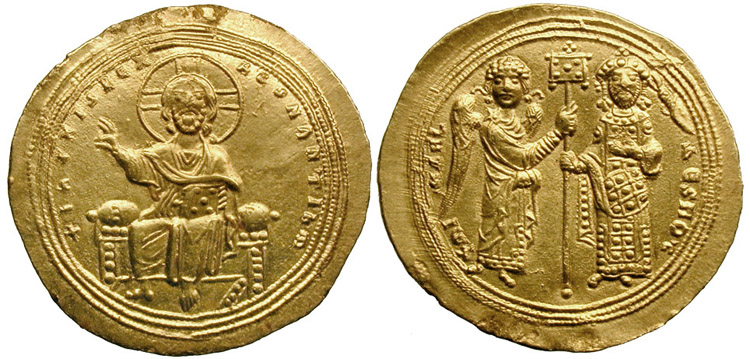
[August 24] Michael V, emperor of Constantinople

True Name: Μιχαήλ Ε΄ Καλαφάτης
Surnamed: "The Caulker"
Parents: Stephen, a caulker, and Maria, sister of Michael IV, emperor of Constantinople
Date of Birth: circa 1015
House: Macedonian
Predecessor: Michael IV
Reign: 1041 – 1042
Summary: The story of Michael V is as unlikely as many stories in Byzantine history. Born to a caulker and his wife, an aunt became the wife of Emperor Michael IV, throwing his entire family into the spotlight. His father, Stephen, became an admiral where he failed utterly on an expedition to Sicily. Emperor Michael did not even like his nephew, Michael, but the emperor decided to take his wife, Zoë's, advice and adopt the boy as his heir. An uncle, John the Eunuch, also supported the young man's promotion to heir. In the days leading up the Emperor Michael IV's death, he granted his adopted son the title Caesar. Michael succeeded to the throne on 10 December 1042 to begin one of the shortest reigns in Byzantine history.

The hope of Empress Zoë and John the Eunuch was that Michael V would be a malleable emperor that they could use to rule the country. But Michael sought to rule under his own power. Within days of his ascension, he nearly exiled John to a monastery for contempt. Michael hoped to make a good start and recalled hundreds of courtiers that had been exiled under Michael IV. One of those returning men was Michael Keroularios, the future patriarch of Constantinople, while another was General George Maniakes, who was sent to fight the Normans in Sicily. But Michael went to far on the night of April 18 when he banished his adopted mother Zoë from the imperial palace. When the plot was revealed the next morning, the public revolted against the emperor, demanding Zoë be restored. Zoë came back and brought her sister, Theodora, along with her, and then promptly deposed her adopted son. Michael V fled to a monastery with an uncle but could not hide from Zoë's inquisitors. They found him, arrested, blinded, and castrated the man who was once their emperor. Michael V died soon after.
Date of Death: 24 August 1042
Successor: Zoë

Other Monarchs Who Died Today:
  • Magnus III, king of Norway (1103)

Wednesday, August 15, 2012

[August 15] Flavius Honorius, emperor of Rome


Parents: Theodosius I, emperor of Rome, and Aelia Flaccilla
Date of Birth: 9 September 384

House: Theodosian
Spouse(s): (1) Maria, daughter of Stilicho and Serena, then (2) Thermantia, daughter of Stilicho and Serena
Predecessor: Theodosius I
Reign: 393 – 423
Summary: The Western Roman Empire was approaching collapse when Honorius entered the world. He was the second son of Theodosius I, the emperor in the east, and became a consul at the age of two. In 393, he was proclaimed co-emperor alongside his father when Valentinian II died and Eugenius, a usurper, was deposed. Little time was awarded for imperial training to Honorius and he became sole emperor in the west when his father died in 395. His elder brother, Arcadius, gained the eastern throne. Theodosius had appointed Stilicho, a half-Vandal Roman 
general, as regent for Honorius. Upon Theodosius' death, Stilicho married Honorius to his own daughter, Maria, to solidify the pact of regency between them. The reign of Honorius would be dominated by external forces controlling him, with Stilicho and the Roman papacy taking center stage. In 401, at the age of seventeen, Honorius oversaw the moving of the Roman court from Mediolanum to Ravenna to protect it from Visigothic incursions in the north of Italy. The location was well-protected but hard to base attacks out of. It remained the Roman capital in the west through Ostrogothic times. From the start of his reign while still a minor, the Western Empire was besieged by barbarian attacks. Immediately after suppressing a revolt in North Africa, Stilicho hurried to Italy to hold off a Visigoth invasion around 402. While Stilicho fought against incursions into Italy, barbarians invaded Gaul in the northwest.

Even as Honorius reached his maturity, his reign was threatened by usurpers. Britain, which was cut-off from Roman aide, especially was prone to imperial claimants, with Marcus, Gratian, and Constantine III all claiming imperial titles in quick succession. Constantine invaded Gaul in 407 soon after Gratian's death leaving his son, Constans, to rule in Britain. By 410, Britain was formally abandoned by Rome and told to look after itself, initiating its dark ages. Meanwhile, Hispania and Italy were both under constant bombardment by Alans, Suevi, Vandals, and Visigoths. Maria died in 407 and Honorius married her sister, Thermantia, the next year. Later that year, Arcadius, Honorius' brother, died in Constantinople. The Western emperor sought to go East to see the accession of his nephew, Theodosius II, but Stilicho insisted on going instead. While away, a court minister, Olympius, convinced Honorius that Stilicho was plotting with barbarians against Rome. When Stilicho returned, he was arrested and executed for treason. Hundreds of court officials and their families were executed for being loyal to Stilicho, and those that were not executed fled to the army of Alaric the Visigoth. Alaric returned in 409 and attempted to install Priscus Attalus on the throne, but soldiers sent from Constantinople blocked Alaric, but not before the Visigothic king sacked Rome. In Hispania, a new usurper, Maximus, invaded Gaul and Honorius found a new general, Constantius, who defeated first Maximus and then Constantine III in 411. But even as these revolts were suppressed, Jovinus revolted in northern Gaul and was not suppressed for two years. In 414, Honorius entered Rome in a triumphal ceremony, hauling the former pretender Priscus Attalus before him and the banishing him to the island of Lipara. Honorius then went about reorganizing Gaul, granting self-rule as quasi-independent states. This signaled the virtual loss of Gaul to the barbarians. In 421, Honorius recongized Constantius as co-emperor but was denied the title by Theodosius in the East and died the next year while planning an invasion of the East. Honorius died in 423 without any children. Joannes, a Roman nobleman, was installed as interim emperor until the return of Valentinian III, the nephew of Honorius, the next year.
Date of Death: 15 August 423
Successor: Valentinian III


Other Monarchs Who Died Today:
  • Libius Severus, emperor of Rome (465)
  • Stephen I, king of Hungary (1038)
  • Macbeth, king of Scots (1057)
  • Alexius I, emperor of Constantinople (1118)
  • Conrad II, duke of Swabia (1196)

Thursday, August 9, 2012

[August 9] Irene, empress of Constantinople

True Name: Ειρήνη Σαρανταπήχαινα
Date of Birth: c. 752
House: Sarantapechos
Spouse(s): Leo IV, emperor of Constantinople, son of Constantine V, emperor of Constantinople, and Tzitzak of Khazaria
Predecessor: Constantine VI
Reign: 797 – 802
Summary: Irene was born into an Athenian Greek family known as the Sarantapechos. She was orphaned while young and her uncle, Constantine, was a patrician. In 769, she was married to the Byzantine crown prince, Leo, after being brought to the court a few months earlier. No good reason has been fronted as to why she was chosen as empress, suggesting she may have been chosen from a list of mostly qualified contestants. Irene moved into the palace and in 771 gave birth to a son, Constantine. When her father-in-law died in 775, Leo became the new emperor at Constantinople and attempted to rule as a moderate in the ongoing iconoclasm debate. Beginning in 780, however, Leo IV became a harsh fighter against icons and when he discovered that Irene was harboring icons, he refused her the marriage bed. Leo died that same year, and Irene became regent for their nine-year old son Constantine VI. Almost immediately, Leo's half-brother, Nikephorus, attempted to take the throne. Irene counterattacked by ordaining him and his conspirators as priests, thereby disqualifying them from the throne. Irene also attempted to negotiate a closer relationship with Western Europe and the Franks by betrothing her son to Rotrude, a daughter of Charlemagne. She broke off the betrothal in 787, however, against her son's wishes. Throughout this all, Irene was working to secure her borders from Arab attacks, which were increasing annually. Still as regent, Irene summoned two church councils to resolve the iconoclasm debate. The second council, the so-called Seventh Ecumenical Council, in 787 reunited the Eastern and Catholic churches and revived the veneration of icons in Eastern Orthodoxy. Despite the resolution, the Franks attacked various Byzantine possessions in 788 while Irene's forces reconquered the Balkans.

Irene's ascent to the Byzantine throne began around 790 following an attempt revolt from her son, Emperor Constantine IV. At the age of 19, Constantine VI was proclaimed sole emperor by a large group of Byzantine soldiers. Irene began conspiring to keep the throne for herself. She set of cells of her conspirators throughout the Empire, leaving Constantine with nowhere to flee. He attempted to cross the Bosphorus in 797 but was captured and returned to the capital. There, his eyes were gouged out and he died from wounds several days later. Irene's ascent to the top was complete. She became the first female ruler of the Roman Empire since its creation in 27 BCE. Her rise to power brought unexpected opportunity to the west, where Pope Leo III, who was at risk of losing his papal seat, interpreted the ascension of a female in the east as a sign that the Roman Imperial throne was vacant. He crowned Charles the Great Roman Emperor in 800, a move that was viewed in the east as a direct attack on their authority and legacy. Irene, however, took advantage of the coronation of her rival to propose a marriage between the two, thereby binding East and West together in one Roman Empire. Her scheme was frustrated by a courtier, Aetios, and Irene's brief reign came to an inglorious end. She was deposed in 802 and replaced by Nikephorus, a Byzantine minister. Irene was exiled to the Greek isle of Lesbos where she died the following year. 
Date of Death: 9 August 803
Successor: Nikephoros I

Other Monarchs Who Died Today:
  • Trajan, emperor of Rome (117)
  • Valens, emperor of Rome (378)
  • Al-Ma'mun, caliph of Sunni Islam (833)
  • Damasus II, pope of Rome (1048)
  • Horikawa, emperor of Japan (1107)
  • Eric IV, king of Denmark (1250)
  • Metrophanese III, patriarch of Constantinople (1580)
  • Michael, voivode of Wallachia (1601)

Tuesday, June 26, 2012

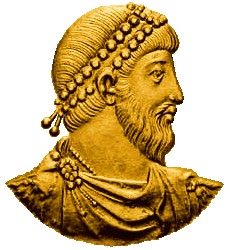
[June 26] Julian, emperor of Rome

Surnamed: "The Apostate"
Full Name: Flavius Claudius Julianus
Parents: Julius Constantius and Basilina
Date of Birth: circa 331
Royal House: Constantine
Spouse: Helena, daughter of Constantine I, emperor of Rome, and Fausta
Predecessor: Constantius II
Reign: 360 – 363
Summary: The son of a junior scion of the House of Constantine, both his parents converted to Christianity when Constantine proclaimed it as his favored religion. When Constantine died, Constantius II massacred many surviving members of the family, leaving only Julian and his half-brother, Gallus, alive from among their branch. During his youth, Julian was under constant guard and given a Christian education. He was largely raised by his maternal grandmother and educated by Eusebius, an Arian Christian bishop of Nicomedia. For the final years of his youth, he was educated by bBshop George of Csappodocia, who finally taught him the pre-Christian classics. When Julian became 18, he was allowed to live in Constantinople. From his education, he became a strong Christian leader and wrote strongly of the religion. For around five years, Julian toured around Greece learning the classics while lecturing on Christianity. In 351, Julian's brother, Gallus, became the caesar of the East. He was executed three years later after a short terrible reign. After his brother's death, Julian was imprisoned for a year under the fear that he was involved in his brother's intrigues. In 355, Julian was cleared of all charges and made caesar of the West to resolve problems in Gaul. During his stay there, Julian learned how to lead and run an army and led numerous campaigns against the Germans. After his campaigns, he began to rule Gaul directly, using his knowledge of Greek civil codes to run Germanic tribal cities. In the east, the Sassanid Empire has invaded Mesopotamia forcing Emperor Constantius II to demand troops be sent to the east. The troops in Gaul rebelled against their order and proclaimed Julian augustus, despite Julian's personal desire to remain a simple administrator. By November 360, Julian had accepted his bestowed title after numerous victories against the Franks. After a year campaign and the separate death of Consantius in 361, Julian was the uncontested Roman Emperor.


By the time Julian entered Constantinople, he had denied Christianity and become commonly known as "the Apostate," sticking to Greek pantheism. He still gave his cousin a Christian burial and placed him alongside Constantine the Great. Skipping his own dynasty's traditions, Julian harkened back to the era of Hadrian and Marcus Aurelius two hundred years prior, attempting to establish an older bureaucratic system that had been lost in the third century. He emptied the royal palaces and cleaned out the government. He removed and executed officials who had been too close to his immediate predecessors. Most importantly, Julian gave increased power to the cities to regulate their own local affairs, removing some of the responsibilities from the Senate. With the government in order, Julian travelled to Antioch to personally clean up the city that served as one of the most important trading centers in the world. To solidify his rule in the east, Julian set out on a campaign to invade Sassanid Persia. He marched his army all the way to Ctesiphon, the Sassanid capital along the Tigris River. The Roman army was quickly surrounded after first defeating the Persians at the Battle of Ctesiphon. Julian was forced to retreat and at the Battle of Samarra was wounded when Persian soldiers raided his camp. Three days later, Julian died from a major hemorrhage. A Roman commander, Jovian, was appointed the new emperor by the army.
Date of Death: 26 June  363
Successor: Jovian

Other Monarchs Who Died Today:

  • Albert I, prince of Monaco (1922)

Saturday, June 23, 2012

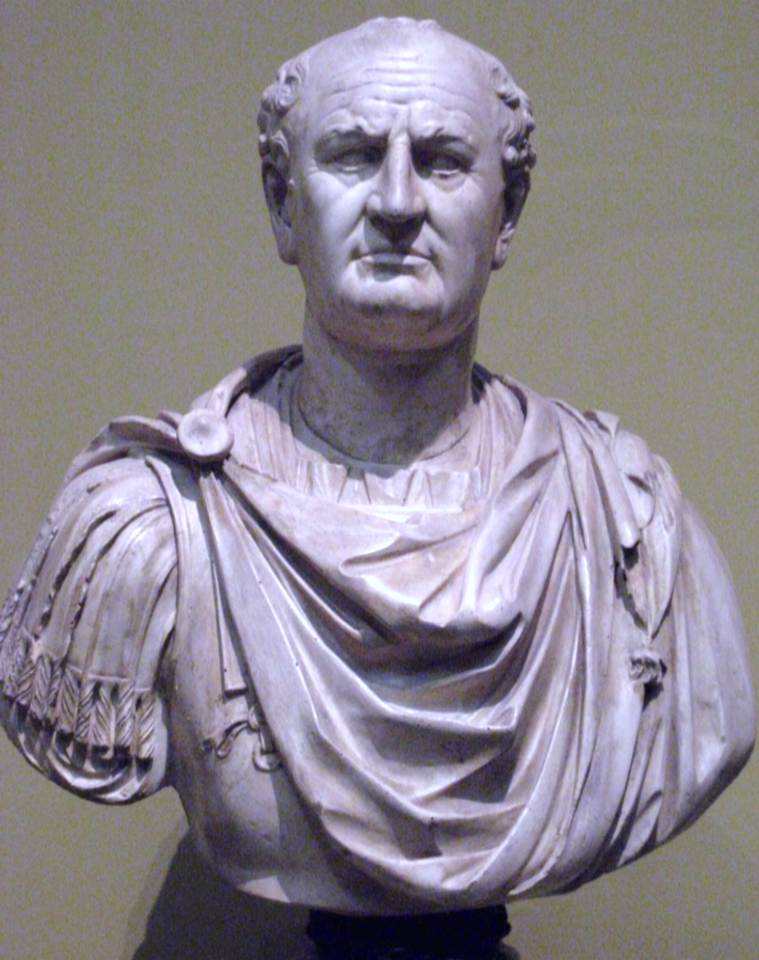
[June 23] Vespasian, emperor of Rome

True Name: Titus Flavius Caesar Vespasianus Augustus
Parents: Titus Flavius Sabinus I and Vespasia Polla
Date of Birth: 17 November 9 CE
Royal House: Flavian

Spouse: Domitilla the Elder, daughter of Flavius Liberalis
Predecessor: Vitellius
Reign: 69 – 79 CE
Summary: Vespasian not only was never meant to be an emperor of Rome, he didn't even respect politics when growing up. His elder brother, Titus Flavius Sabinus II, was the successful one, working closely with the Roman army and becoming personal friends with Emperor Caligula. His mother was his chief motivation, and it did little for him at first. He married young and had two sons, Titus Flavius Vespasianus and Titus Flavius Domitianus. A daughter predeceased him. Seeing few other options, Vespasian finally joined the military in order to raise in political rank. When he returned, he became the head of street-cleaning in Rome and tradition states that Caligula was so upset with his poor performance that he stuffed a handful of mud down Vespasian's toga. Soon after, he became a quaestor in Crete then an tribune in 38 CE. It is probably during this time that he met his long-term mistress, Antonia Caenis, who was a member of the imperial circle and a possible inroad for Vespasian's future successes. By 41 CE, his prospects were looking up. He as a legate in the Legio II Augusta stationed in Germania and he participated in the Roman invasion of Britain in 43. He was vital to the success of the invasion in the southwest, subduing Hampshire, Dorset, Somerset, Devon, Cornwall, and Wiltshire. Upon his return to Rome, he earned himself a triumphal regalia in the parade. In 51 CE, he became a consul and then he retired from public live. In 63, he returned to become governor of Africa and became a close associate with many of the provincial leaders, ingratiating himself rather than earning their enmity. In 66, he was sent to suppress the growing Jewish Revolt in Palestine. During his campaign, he befriended Flavius Josephus who eventually wrote a great tome concerning the Jew's history in Palestine. Josephus praised Vespasian, even once claiming he was the messiah, and lauded his efforts to protect the non-revolting Jews while being kind to those captured in rebellion. Soon after the Jewish campaign was ended, Emperor Nero died and Rome fell into civil war. Three emperors—Galba, Otho, and Vitellius—were all killed in short order and Vespasian felt it his duty to claim the imperial regalia. Troops in Egypt were the first to proclaim him emperor, followed by his own army in Caesarea. Vitellius still had a significant army in Rome but one-by-one the armies outside of Rome and the west declared for Vespasian. While Vespasian secured the grain supply in Egypt, his army invaded Rome and burned much of the city. Vitellius was defeated and killed and the Senate declared Vespasian emperor of Rome.


Domitian, Vespasian's son, was placed in charge of the government while Vespasian returned him. Tax collection became important to refinance the government. Titus continued to quell the Jewish Revolt which had resurged when Vespasian departed for Egypt. He finally ended it by sacking the Jewish Temple and leveling it. Titus then pursued all surviving descendants of David to maintain the myth that Vespasian was the messiah. In Gaul and Germania, a new uprising began led by Julius Sabinus, a claimed descendant of Julius Caesar. Vespasian was a selfish emperor who wished for the focus to remain on him, editing critical histories to emphasize his greatness, and building triumphal architecture to increase his fame. The odd thing is that little is known of his actual reign in Rome. He built many buildings including a colossus of Apollo and he began the Flavian Amphitheater known as the Colosseum. But it is likely that he was under constant threat of assassination and attack, and that he remained in seclusion most of the time. In 78, Vespasian sent Agricola to Britain to consolidate Roman rule in the north. By the middle of 79, Vespasian had grown very sick with a stomach illness and he died at a country estate proclaiming as his last words: "Oh! I think I'm becoming a god!" His eldest son, who is known by the regnal name Titus, succeeded him.
Date of Death: 23 June 79 CE
Successor: Titus

Other Monarchs Who Died Today:

  • Henry I, margrave of Austria (1018)
  • Mashita Nagamori, daimyo in Japan (1615)
  • Wilhelm Ludwig, Duke of Württemberg (1677)

Tuesday, May 29, 2012

[May 29] Constantine XI, emperor of Constantinople


True Name: Kōnstantinos XI Dragasēs Palaiologo (Κωνσταντῖνος ΙΑ' Δραγάσης Παλαιολόγος)
Parents: Manuel II, emperor of Constantinople, and Helena Dragas
Date of Birth: 8 February 1404
House: Palaiologos
Spouse: (1) Theodora, daughter of Leonard II, lord of Zante, then (2) Caterina, daughter of Dorino, lord of Lesbos, and Orietta Doria
Predecessor: John VIII
Reign: 1448 – 1453
Summary: Despite being born as the second son of the large family of Manuel II, Constantine was truly set to rule an empire. Most of his childhood was spent playing in the palaces of Constantinople and during his older brother, John VIII's, campaigns in Italy, Constantine ruled as his regent in the Imperial capital. In 1443, Constantine became the despot of Morea, a state created in the aftermath of the Latin conquest of Constantinople two centuries earlier. Mistra, its capital, was a center of arts and culture that rivaled Constantinople. With the threat of the Ottoman Empire ever present, Constantine built up the city walls and conquered the surrounding Duchy of Athens that had been tributary to the Ottomans previously. In 1446, Sultan Murad II invaded Morea, destroyed the wall, and sacked the city. Constantine fled back home and stopped any future plans of expanding Morea at the Ottoman's expense. John VIII died childless in 1448 and Constantine was next in line, but his younger brother, Demetrios, sought the throne as well. The two rival claimants sought the advice of Murad II, who favored Constantine.


Constantine was crowned in Mistra rather than Constantinople and never had a chance to be formally crowned by the patriarch in Constantinople. In 1451, Murad II died and his son, Mehmed II, took over and immediately began plans to invade Constantinople and the surviving territory of the Byzantine Empire. Constantine tried his utmost to rebuild his defenses but the economy was against him and the clergy was indifferent. A few troops from the West came in to help, but in 1452, Mehmed blockaded the city, thereby stopping future reinforcements. The army of the enemy was many times larger than Constantinople's and better equipped. Mehmed offered Constantine Morea in exchange for surrendering the Empire, but the emperor would not admit defeat. Constantine XI died the day the city fell and tradition states that he fell while leading a last charge against the Ottoman army. His body was never found and it is likely he was buried in a mass grave with his soldiers. Constantine was the last emperor of Constantinople in a line that stretched almost unbroken to Augustus, emperor of Rome. The Ottoman Empire renamed the city Istanbul soon after its conquest and relocated their capital to the city. Mehmed took the title "sultan of Rûm" as one of his subsidiary titles.
Date of Death: 29 May 1459
Successor: Mehmed II

Other Monarch Deaths:
Christopher I, king of Denmark (1259)
Henry II, king of Castile (1379)
Hongxi, emperor of China (1425)
Anaukpetlun, king of Burma (1628)
Michael III, prince of Serbia (1868)

Thursday, April 12, 2012

[April 12] Gordian I, emperor of Rome

True Name: Marcus Antonius Gordianus Sempronianus Romanus Africanus
Parents: Maecius Marullus (probably) and Ulpia Gordiana (probably)

Date of Birth: circa 159
House: Gordiani
Spouse: Fabia Orestilla (probably)
Predecessor: Maximinus Thrax
Reign: 22 March to 12 April 238
Date of Death: 12 April 238
Successor: Pubienus, Balbinus, and Gordian III

Other Monarchs Who Died Today:
Gordian II, emperor of Rome (238)
Julius I, pope of Rome (352)
Maximianus, archbishop of Constantinople (434)
Vladislaus I, duke of Bohemia (1125)

Sunday, April 8, 2012

[April 8] John II, emperor of Constantinople

True Name: Iōannēs II Komnēnos (Ίωάννης Β΄ Κομνηνός)
Surname: "The Beautiful" (Kaloïōannēs)
Parents: Alexios I, emperor of Constantinople, and Irene Doukaina
Date of Birth: 13 September 1087
House: Komnenos
Spouse: Irene, daughter of Ladislaus I, king of Hungary, and Adelaide of Swabia
Predecessor: Alexios I
Reign: 1118 – 1143
Date of Death: 8 April 1143
Successor: Manuel I

Other Monarchs Who Died Today:
Caracalla, emperor of Rome (217)
Gilbert, duke of Burgundy (956)
Jean II, king of France (1364)

Friday, March 16, 2012

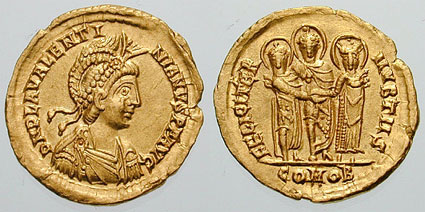
[March 16] Valentinian III, emperor of Rome

True Name: Flavius Placidius Valentinianus
Parents: Constantius III, emperor of Rome, and Galla Placidia
Date of Birth: 2 July 419
House: Theodosian
Spouse: Licinia Eudoxia
Reign: 425 – 455
Predecessor: Honorius
Summary: Born in Ravenna, the capital of the Western Roman Empire, Valentinian was the only son of his parents. He was born into the royal family, his mother being the half-sister of Emperor Honorius. Valentinian was also related to the Eastern Roman Emperor through his mother. His prominence rose in 421 when his father was nominated co-emperor with Honorius, a title he would hold until his death seven months later. With his father's death, Valentinian, his mother, and his sister all moved to Constantinople to live at the court of Theodosius II. Honorius died two years later but the Western throne was then usurped by Joannes.  In 424, Theodosius nominated his cousin, Valentinian, to act as caesar in the West and the emperor betrothed the boy to his daughter, Licinia Eudoxia. Following Joannes' defeat in 425, Valentinian was installed as the formal Western Roman Emperor.

Valentinian was only six at the time of his coronation. His mother ruled in his stead until 433 and then Flavius Aëtius, the military leader, ruled as regent. The decentralized leadership of a child emperor did little to help the already ailing Western Empire. Africa was conquered by the Vandals by 439, Spain and Gaul fell to the Visigoths and Franks, and Sicily was constantly under threat from Africa. When Valentinian finally came of age in 437, he married his betrothed and set out to rule his shrinking empire. Aëtius remained his general and was principle in the defeat of Attila the Hun in 451. Aëtius also campaigned in Gaul and Germany. Valentinian became unpopular due to his harsh taxation policies, which were required to retain the empire but put an undue burden on those provinces still loyal to Rome. Threats to the empire finally forced the royal family to flee Ravenna and resettle in Rome, which was safer. Aëtius became a threat to the throne in 454 and Valentinian eventually had to kill the general. But this move backfired the next year when two loyalists to the general assassinated the emperor. The plot may have been inspired by Petronius Maximus, a senator whose wife was raped by the emperor. The day after the assassination, Petronius was made emperor and paid the Roman army a large sum. But he was unable to control Rome. Eleven weeks later, he was stoned to death. The Vandals arrived in the aftermath, sacking the city for two weeks before order could be restored. Valentinian was the last dynastic ruler of the Western Roman Empire, and his poor management of the realm led to its eventual demise two decades later.
Date of Death: 16 March 455
Successor: Petronius Maximus

Other Monarchs Who Died Today:
  • Tiberius, emperor of Rome (37)
  • Heribert, archbishop of Cologne (1021)

Friday, February 17, 2012

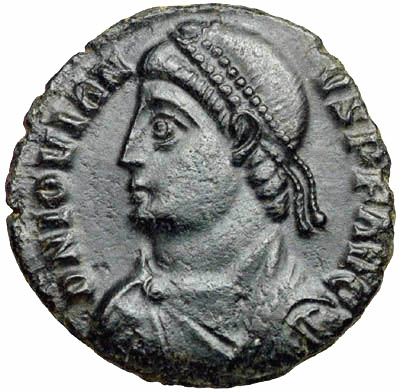
[February 17] Jovian, emperor of Rome

True Name: Flavius Jovianus
Parents: Flavius Varronianus
Date of Birth: 331
Spouse: Charito, daughter of Lucillianus
Reign: 363  – 364
Predecessor: Julian
Summary: Flavius Jovianus was the last of the breed of Constantine, though he was not a member of the family. He was born near modern-day Belgrade, Serbia, the son of a commander in Constantius II's bodyguard. He himself joined the guards and had risen to the same rank by the time of his elevation to emperor. He accompanied Emperor Julian on his campaigns against Emperor Shapur II of Persia but the army was forced to retreat and Julian was mortally wounded. Saturninius Secundas Salutius, a praetorian prefect of Asia, was nominated to replace the emperor, but he declined. Jovian was the next logical choice. There is a high likelihood that Jovian was never meant to be emperor. When his name was put forward, it is highly possible that the army misheard the name and either thought that a different Jovian was being referred to or that Julian had recovered. In any case, Jovian became emperor by popular acclamation on 27 June 363.

Julian was often known as "the Apostate" because he had turned away from the Christian faith. Jovian returned Rome to Christianity. He revoked edicts condemning Christians and restored the Chi-Rho Labarum of Constantine I. Yet Jovian went further. He ordered the pagan Library of Antioch to be burned to the ground and made the worshipping of ancestral gods a capital crime. By the end of the year, even participating in a pagan ceremony could earn the death penalty. His intolerance of non-Christians became standard from his reign all the way to the nineteenth century. Julian was the last non-Christian emperor of Rome and Jovian established what became the standard Christian realm that all other kingdoms were held up to. And while not all of Europe was Christianized by 364, other non-Christian religions were in decline. Meanwhile, Jovian had to make a hasty retreat from Sassanid Persia, ceding five large provinces to Persia as well as the protection of the Kingdom of Armenia. Such a retreat lost Jovian all of his popularity. He rushed to Constantinople from Antioch to consolidate his power, but it was too late already. Luckily for Jovian, he died probably by accident during his flight. He was found dead, only eight months into his reign, due to bad mushrooms or CO2 poisoning from a charcoal fire.
Date of Death: 17 February 364
Successor: Valentinian I

Other Monarchs Who Died Today:
  • Otto, duke of Austria (1339)
  • Ivan Alexander, tsar of Bulgaria (1371)
  • Ferdinando I, grand duke of Tuscany (1609)
  • Albert I, king of Belgium (1934)

Labels

[brief] (102) female monarch (31) Capet (26) [abbreviated] (19) Roman Empire (17) Great monarchs (16) Japan (15) Papacy (15) England (13) saints (13) France (11) Portugal (11) [Missing Deaths] (11) Habsburg (10) Sweden (10) Byzantine Empire (9) Carolingian (9) China (9) Hohenzollern (9) Oldenburg (9) Holy Roman Empire (8) Japan (dynasty) (8) Aragón (7) Austria (7) Denmark (7) Electorate (7) Ethiopia (7) Hungary (7) Navarre (7) Norway (7) Romanov (7) Russia (7) Saxony (7) Scotland (7) Wettin (7) Wittelsbach (7) Bavaria (6) Burgundy (6) Egypt (6) Italy (6) Lorraine (6) Luxembourg (6) Persia (6) Poland (6) Sicily (6) Spain (6) Valois (6) Capet-Burgundy (5) Franks (5) Germany (5) Plantagenet (5) Prussia (5) Quraish (5) Solomon (Ethiopia) (5) Tuscany (5) Anjou (4) Aquitaine (4) Barcelona (dynasty) (4) Bohemia (4) Brittany (4) Burgundy-Aviz (4) Burma (4) Capet-Valois (4) Castile (4) Constantinople (Patriarchate) (4) Habsburg-Lorraine (4) Holstein-Gottorp-Romanov (4) India (4) Ireland (4) Jerusalem (4) Jiménez (4) Kiev (4) Mongolia (4) Naples (4) Netherlands (4) Normandy (4) Osman (4) Ottoman (4) Palaeologos (4) Savoy (4) Savoy (dynasty) (4) Trastámara (4) Wales (4) Afghanistan (3) Albania (3) Bagrationi (3) Banu Hashim (3) Blois (3) Borjigin (3) Bourbon (3) Brabant-Hesse (3) Brandenburg (3) Capet-Bourbon (3) Cologne (3) Croatia (3) Cyprus (3) Disney (3) Fairhair (3) Georgia (3) Gwynedd (3) Hainaut (3) Hesse (3) Hohenstaufen (3) Holland (3) Holstein-Gottorp (3) Inca (3) Islam (3) León (3) Limburg (3) Lithuania (3) Livonia (3) Lothier (3) Macedonia (dynasty) (3) Mainz (3) Mann (3) Medici (3) Morocco (3) México (3) Nassau (3) Nguyễn (3) Serbia (3) Stuart (Stewart) (3) Toungoo (3) Tudor (3) Turkey (3) Vaudemont (3) Vietnam (3) Welf (3) Wessex (3) published articles (3) Abberfraw (2) Aberffraw (2) Alexandria (patriarchate) (2) Angevins (2) Anglo-Saxon (2) Ardennes-Metz (2) Auvergne (2) Ayyubid (2) Basarab (2) Bernadotte (2) Billung (2) Boulogne (2) Brabant (2) Bruce (2) Burgundy-Bragança (2) Caliphate (2) Cilicia (2) Constantine (2) Crovan (2) Denmark (Dynasty) (2) Draculesti (2) Dreux (2) Dunkeld (2) Dutch Republic (2) Estridsen (2) Flanders (2) Florence (2) Further Austria (2) Greece (2) Habsburg-Spain (2) Hanover (2) Hardrada (2) Hauteville (2) Hawai'i (2) Ivrea (2) Joseon (2) Karadordevic (2) Konbaung (2) Korea (2) Maya (2) Merovingian (2) Milan (2) Ming (2) Monaco (2) Nassau-Orange (2) Nassau-Weilburg (2) Norman (2) Novgorod (2) Orange (2) Ottonian (2) Piast (2) Piedmont-Savoy (2) Poitiers (dynasty) (2) Robertian (2) Romania (2) Rurik (2) Sardinia (2) Saxe-Coburg-Gotha (2) Seljuk (2) Siam (2) Syria (2) Teutonic Knights (2) Thailand (2) Theodosian (2) Thuringia (2) Timurid (2) Tokugawa (2) United Kingdom (2) Valois-Burgundy (2) Vandal (2) Venice (2) Visconti (2) Vladimir (2) Wallachia (2) Württemberg (2) York (2) Yugoslavia (2) Zeeland (2) the Britons (2) 18th Dynasty (Egypt) (1) Abbasid (1) Adal (1) Agiad (1) Akinyele (1) Al Khalifa (1) Al-Said (1) Alawiyya (Egyptian) (1) Albret (1) Algeria (1) Algonquian (1) Amber (1) Angola (1) Anjou (dynasty) (1) Anjou-Hungary (1) Ansbach (1) Antonia (1) Antonine (1) Apulia (1) Arabia (1) Armenia (1) Arpad (1) Arsacid (1) Asen (1) Ashikaga (1) Athens (1) Avesnes (1) Avignon Papacy (1) Aviz-Beja (1) Aztec Empire (1) Baden (1) Bahrain (1) Balti (1) Barakzai (1) Barazkai (1) Barcelona (1) Battenberg (1) Belgium (1) Bengal (1) Berg (1) Berg (dynasty) (1) Bernicia (1) Bharatpur (1) Bhutan (1) Bjelbo (1) Bonaparte (1) Bonde (1) Bonngau (dynasty) (1) Borghese (1) Borja (1) Bosnia (1) Bourbon-Two Sicilies (1) Brandenburg-Ansbach (1) Brienne (1) Brutus (1) Bukhara (1) Bulgaria (1) Canossa (1) Capet-Dreux (1) Carthage (1) Celje (1) Celje (dynasty) (1) Chakri (1) Champagne (1) Champagne (dynasty) (1) Chartres (1) Cometopuli (1) Contantine (1) Cordoba (1) Craiovesti (1) Crusader States (1) Dalmatia (1) Damascus (1) Danesti (1) Debeubarth (1) Deira (1) Deira (dynasty) (1) Denmar (1) Dulo (1) Díaz (1) Early Han (1) East Anglia (1) East Francia (1) Eastern Han (1) Eastern Jin (1) Egmont (1) Estonia (1) Farnese (1) Fatimid (1) Fatimid Caliphate (1) Flanders (dynasty) (1) Flavian (1) Friuli (1) Gausi (1) Geneva (1) Geneva (dynasty) (1) Gordiani (1) Grimaldi (1) Guelders (1) Guideschi (1) Gwent (1) Gwynedd (dynasty) (1) Gyatso (1) Haag (1) Hainaut (dynasty) (1) Hanan Cuzco (1) Hashim (1) Hashimite (1) Hebrides (The Isles) (1) Hellenes (1) Herat (1) Hohenzollern-Ansbach (1) Hohenzollern-Sigmaringen (1) Holland (dynasty) (1) Hunfriding (1) Ibadan (1) Iran (1) Iturbide (1) Jaipur (1) Jin (1) Jordan (1) Julio-Claudian (1) Jungingen (1) Justinian (dynasty) (1) Kachwaha (1) Kalakaua (1) Kamehameha (1) Karrani (1) Kent (1) Kent (house) (1) Kestutis (1) Khurasan (1) Knights Templar (1) Komnenos (1) Kotromanić (1) Lakota Sioux (1) Lancaster (1) Latin Empire (1) Lebanon (1) Leuchtenberg (1) Lombards (1) Ludowinger (1) Lusignan (1) Luxembourg (dynasty) (1) Luxembourg-Limburg (1) Maan (1) Macedon (1) Magdeburg (1) Maine (1) Majorca (1) Malaysia (1) Manghit (1) Maratha Empire (1) Marinid (1) Matsunaga (1) Maurya (1) Mecklenburg (1) Mecklenburg-Strelitz (1) Meissen (1) Mercia (1) Mercia (dynasty) (1) Miniconjou (1) Moldavia (1) Montenegro (1) Montferrat (1) Morgannwg (1) Mortain (1) Mountbatten (1) Mughal (1) Muhammad Ali (1) Munster (1) Musat (1) Myanmar (1) Nakagawa (1) Ndongo and Matana (1) Nemanjic (1) Nepal (1) Nervo-Trajan (1) Neuchâtel (1) Nigeria (1) Nominoë (1) Northumbria (1) O'Brien (1) Obrenović (1) Odowa (1) Olgovich (1) Olympus (1) Orléans-Longueville (1) Ostrogoths (1) Ottawa (1) Pahlavi (1) Palatinate of the Rhine (1) Parma (1) Penthièvre (1) Petrović-Njegoš (1) Poděbrady (1) Pointiers (Ramnulfids) (1) Poitiers (1) Poitiers-Lusignan (1) Polignac (1) Powys (1) Prasat Thong (1) Premyslid (1) Provence (1) Přemyslid (1) Q'umarkaj (1) Qin (1) Qing (Manchu) (1) Reginar (1) Reginarid (1) Rethel (1) Rethel-Boulogne (1) Ribagorza (1) Rouergue (1) Roupenians (1) Sa Malietoa (1) Safavid (1) Salian (1) Salzburg (1) Samoa (1) Sarantapechos (1) Saud (1) Saudi Arabia (1) Second Triumvirate of Rome (1) Selangor (1) Selangor (dynasty) (1) Sforza (1) Shah (Nepal) (1) Shi'a Imamate (1) Shishman (1) Shivaji (1) Silesia (1) Simmern (1) Sinsinwar Jat (1) Skowronski (1) Slovenia (1) Sobieski (1) South Africa (1) South America (1) Sparta (1) Spoleto (1) Sture (1) Sudan (1) Sussex (1) Sverre (1) Swabia (1) Swasi (dynasty) (1) Swaziland (1) Swiss Confederation (1) Tang (1) Tenochtitlan (1) Teotihuacán (1) Terter (1) Tibet (1) Tikal (1) Tolkien (1) Toulouse (1) Tours (dynasty) (1) Transylvania (1) Tunisia (1) Umayyad (1) Unruoching (1) Valencia (1) Valois-Angoulême (1) Valois-Anjou (1) Valois-Orléans (1) Vasa (1) Vermandois (1) Visigoths (1) Vokil (1) Wangchuck (1) Wied-Neuwied (1) Windsor-Mountbatten (1) Württemberg (dynasty) (1) Yamato (1) Ying (Qin) (1) Yuan (1) Zanzibar (1) Zhao (Song) (1) Zhou (1) Zhu (1) Zogu (1) Zulu Nation (1) Zápolya (1) Zähringen (1) bretwalda (1) cardinal (1) fantasy (1) fiction (1) shogunate (1) terms (1) Árpád (1) Öuchi (1)