Showing posts with label Habsburg. Show all posts

Sunday, December 30, 2012

[December 30] Ferdinand Charles, archduke of Further Austria

Parents: Leopold V, archduke of Further Austria, and Claudia de' Medici
Date of Birth: 17 May 1628
House: Habsburg
Spouse(s): Anna de' Medici, daughter of Cosimo II, grand duke of Tuscany, and Maria Magdalena of Austria
Predecessor: Leopold V
Reign: 1630 – 1662
Brief: During the 16th and 17th centuries, the archduchy of Austria was divided up among rival cadet branches of the family. Ferdinand Charles was delegated ruler of Further Austria based out of Tyrol near the Italian border. For the first sixteen years of his rule, he was a minor and his mother, Claudia de' Medici, ruled in his name until 1646. Once he became archduke, Ferdinand Charles ruled with an iron fist. He dissolved the Tyrolian Diet in 1648 and executed his chancellor in 1651, ruling alone afterwards. He enjoyed a luxurious lifestyle and paid for it by selling titles of nobility and family heirlooms under his care. He was paid a portion of gold from France for lands ceded to France in a previous war—he wasted all of this on luxuries. For all his greed, Ferdinand Charles was a lover of Italian opera and had an opera house at his court for performances. When he died in 1662, few mourned his passing and his brother, Sigismund Francis, bishop of Augsburg, Gurk, and Trent, inherited Further Austria.
Date of Death: 30 December 1662
Successor: Sigismund Francis

Other Monarchs Who Died Today:
  • Felix I, pope of Rome (274)
  • Richard II, pretender to England (1460)
  • Innocent IV, pope of Rome (1591)

Thursday, November 29, 2012

[November 29] Maria Theresa, queen of Bohemia

Full Name: Maria Theresa Walburga Amalia Christina
Parents: Charles VI, Holy Roman Emperor, and Elisabeth Christina of Burnswick-Wolfenbüttel
Date of Birth: 13 May 1717
House: Habsburg
Spouse(s): François, duke of Lorraine, son of Leopold, duke of Lorraine, and Élisabeth Charlotte d'Orléans
Predecessor: Charles VI
Reign: 1740 – 1780
Brief: The resultant final heir of the House of Habsburg, Maria Theresa was destined to be queen of Bohemia and archduchess of Austria from at least 1713, when her father passed his Pragmatic Sanction. Most of the rest of his reign was spent securing the law that would allow his daughter to succeed to the throne, but it was all for nothing. This was partially because Emperor Charles VI had already signed a Mutual Pact of Succession with his elder brother that ensured that the daughters of Emperor Joseph I would supersede any daughters of Charles. But by the time Charles died, little mattered to the land-hungry magnates of Europe who only wished to dissect Austria for themselves. Raised by Jesuits and kept under harsh security, Maria Theresa was not a great student and her father did not teach her how to rule his empire. At the age of nineteen, Maria Theresa married the duke of Lorraine, who lost Lorraine the next year but gained the Grand Duchy of Tuscany as compensation. When Charles finally died in 1740 of mushroom poisoning, he left Austria in financial bankruptcy and a small unprepared army. Maria Theresa did not have a clue how to run her new government.

Taking her father's advice, Maria Theresa campaigned to have her husband elected Holy Roman Emperor, since she could not gain the title herself. To give him a free vote from Bohemia, the queen made him joint-ruler of Austria and Bohemia, though Hungary waited a year before approving the joint leadership. Despite his joint role, Maria Theresa did not trust her husband and did not allow him to make decisions within her empire. Outside of Austria, the queen's neighbors began banging swords in a move that would prompt the War of the Austrian Succession. Charles Albert, duke of Bavaria, was married to the senior Habsburg heiress and wanted a piece of Austria. Frederick II, king of Prussia, wanted Silesia and took it from her through force after negotiations failed. The Bavarian duke invaded Bohemia in 1741 while Maria Theresa was pregnant with her second child. She threw everything into the war effort to keep Charles Albert from succeeding, but the Bavarian duke was nominated Holy Roman Emperor in early 1742. On the same day, Austrian troops occupied his Bavarian capital of Munich, sullying the coronation. In 1745, Charles Albert died, ending the Bavarian fight. François was elected Holy Roman Emperor Franz I later that year and the war ended in 1748 with the cession of Parma to Spain. For ten years, Maria Theresa had peace until Prussia invaded Saxony in 1756 sparking the Seven Years' War. Luckily, the war ended with little changed for Austria, though the queen desperately wanted Silesia back from Prussia. Domestically, Maria Theresa modernized much of the Austrian military, creating a standing army and unifying Bohemia and Austria more closely. She ended capital punishment and outlawed witch burning and torture. When Franz I died in 1765, Maria Theresa removed herself from government, leaving the management to her eldest son, Joseph II. She died in 1780, probably after a prolonged smallpox attack that left her sick with pneumonia. She was the last direct Habsburg descendant on record, her cousin having predecesed her, and her successors would be known as the House of Habsburg-Lorraine.
Date of Death: 29 November 1780
Successor: Joseph II

Other Monarchs Who Died Today:
  • Chlothar I, king of the Franks (561)
  • Gregory III, pope of Rome (741)
  • Otto II, duke of Bavaria (1253)
  • Clement IV, pope of Rome (1268)
  • Philippe IV, king of France (1314)
  • Charles IV, Holy Roman Emperor (1378)
  • Nanda, king of Burma (1600)
  • Frederick V, count palatine of the Rhine (1632)

Thursday, November 1, 2012

[November 1] Charles II, king of Spain

Surnamed: "The Hexed" (El Hechizado)
Parents: Philip IV, king of Spain, and Mariana of Austria
Born: 6 November 1661
House: Habsburg-Spain
Spouse(s): (1) Marie Louise, daughter of Philippe I, duke of Orléans, and Henrietta of England, then (2) Maria Anna, daughter of Philip William, elector of the Palatinate, and Elisabeth Amalie of Hesse-Darmstadt
Predecessor: Philip IV
Reign: 1665 – 1700
Brief: Although he ruled a vast empire spanning all of Spain, the Low Countries, southern Italy, and much of the New World, the infamy of Charles II was his medical condition. Born with mandibular prognathism (the Habsburg Jaw) and unable to chew, Charles also suffered from an enlarged tongue and other ailments resulting from many generations of inbreeding. His mother, Mariana, ruled during much of his reign, from his minority through many period of poor health. The Spanish court vacillated between French and Austrian influences with Charles generally being ignored. By the end of his life, Charles lived in seclusion, becoming hypersensitive and easily angered. He resolved the succession of Spain on a French grand-nephew, Duke Philip of Anjou, before disappearing entirely from the public. When he died in 1700, the coroner was baffled at how he had lived for so long, finding little of substance left within the dead king's body. Charles II's death prompted the War of the Spanish Succession in 1701 which would last fourteen years as countries fought over the unmanageably large Spanish Empire.
Date of Death: 1 November 1700
Successor: Philip V

Other Monarchs Who Died Today:
  • Richard, duke of Burgundy (921)
  • Henry I, duke of Bavaria (955)
  • Amadeus VII, duke of Savoy (1391)
  • John V, duke of Brittany (1399)
  • Alexander III, tsar of Russia (1894)

Thursday, September 13, 2012

[September 13] Felipe II, king of Spain

Parents: Charles V, Holy Roman Emperor, and Isabella of Portugal
House: Habsburg-Spain
Born: 21 May 1527
Spouse(s): (1) Maria Manuela, daughter of João III, king of Portugal, and Catherine of Habsburg, then (2) Mary I, queen of England, daughter of Henry VIII, king of England, and Catherine of Aragón, then (3) Elisabeth, daughter of Henri II, king of France, and Catherine de Medici, then (4) Anna, daughter of  Maximilian II, Holy Roman Emperor, and Maria of Spain
Predecessor: Carlos I
Reign: 1556 – 1598
Brief: The king-consort of Queen Mary I of England for four years, Felipe II inherited half the Habsburg Empire in 1556. He further expanded his domains in 1580 by successfully claiming the Portuguese crown after the death of King Henrique. His despotic tendencies and neglect of the Low Countries led to the revolt and creation of the Dutch Republic the next year. In 1588, he unsuccessfully tried to invade England but was stopped when his Spanish Armada was destroyed by the forces of Queen Elizabeth I. His death was especially long and painful as he suffered from gout, fever, and dropsy for fifty-two days before dying at his palace near Madrid in 1598.
Date of Death: 13 September 1598
Successor: Felipe III & II

Other Monarchs Who Died Today:

  • Titus, emperor of Rome (81)
  • Leopold V, archduke of Austria (1632)
  • Hezqeyas, emperor of Ethiopia (1813)

Sunday, June 3, 2012

[June 3] Leopold IV, duke of Further Austria


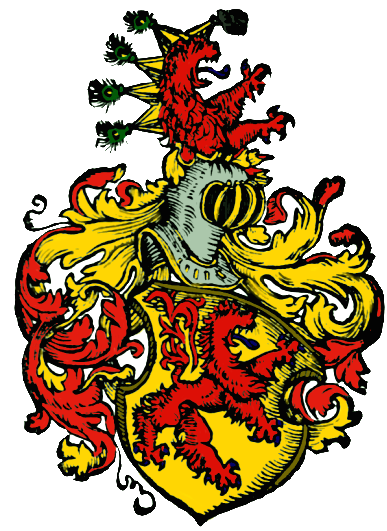
Habsburg family coat of arms
Parents: Leopold III, duke of Austria, and Viridis Visconti
Date of Birth: 1371
House: Habsburg
Spouse: Catherine, daughter of Philip II, duke of Burgundy, and Margaret III, countess of Flanders
Predecessor: Leopold III
Reign: 1386 – 1411
Summary: At only the age of fifteen, Leopold's brother, Duke William of Inner Austria, enlisted him to rule Further Austria. The region of Further Austria included the Habsburg hereditary lands in Swiss Aargau as well as various lands in the west of Austria. Throughout his reign, Leopold would face opposition from the Swiss over which he ruled. In 1391, he was granted sole administration over Further Austria, and in 1396 he added the management of Tyrol in northern Italy to his dossier. By 1393, he was involved in a dynastic marriage that could have had far-reaching consequences if it had produced any heirs. His new wife, Catherine, was a member of the Burgundian royal family and her mother, Margaret, was the countess of Flanders in her own right. Although no heirs were produced, this marriage was an interesting foreshadowing of an actual dynastic alliance that would form about eighty years later.

Ernest and Frederick, two younger brothers of Leopold's, were left in Austria where they earned their own titles as Austrian dukes in 1402. When William, the eldest, died in 1406, Leopold IV became the effective ruler of all the Austrian lands and the head of the family. With no children, Ernest and Frederick began partitioning up Austria for when they succeeded to the throne. Leopold allowed them their game and remained the ruler of Further Austria, granting administration of the eastern lands to his power-hungry younger brothers. Leopold also began to mentor Albert V, the senior member of the junior cadet line of the Habsburgs and the future king of Hungary and Germany. The younger brothers fought Leopold over this move to consolidate Habsburg control, but both brothers in turn later acted as guardians for Albert as well. Leopold died in 1411 and was succeeded by Frederick in Further Austria, with Ernest already ruling Inner Austria.
Date of Death: 3 June 1411
Successor: Frederick IV

Other Monarch Deaths:
Ivan, tsar of Bulgaria (1395)
John XXIII, pope of Rome (1963)

Thursday, January 12, 2012

[January 12] Maximilian I, Holy Roman Emperor

Parents: Frederick III, Holy Roman Emperor, and Eleanor of Portugal
Date of Birth: 22 March 1459
Royal House: Habsburg
Spouse: Mary, Duchess of Burgundy, then Anne of Brittany, then Bianca Maria Sforza
Predecessor: Frederick III as Holy Roman Emperor, Sigismund as Archduke of Austria
Reign: 1486 – 1519 (Co-emperor until 1493)
Summary: Maximilian was a lucky man. He was born to the politically powerful Habsburg family and he married into the incredibly wealthy House of Valois-Burgundy. Indeed, his only misfortune in youth was the loss of the Habsburg's ancestral lands to the Swiss Confederacy. In 1477, his wife's father, Charles the Bold, died leaving the entire Burgundian inheritance to her. This land included all of the Low Countries (Belgium, Netherlands, and Luxembourg) as well as vast territories in France and modern-day Germany, as well as a few scraps in Italy and Switzerland. As husband, Maximilian took on the job of administering the land in the name of his wife. Mary died in 1482 and their son, Philip, became the official duke but was far too young to rule. After negotiations with France, Burgundy became a crown possession of the Habsburg monarchy and by far the wealthiest component.

As Emperor, Maximilian had a more shaky reign. War between Austrian counties caused the Holy Roman Empire to recognize the secession of the Swiss Confederation from the Empire in 1499. War in Italy forced the HRE and France to bump heads again. And worst of all, the other German magnates felt that the Habsburgs were using too many Imperial resources to fight what they viewed as dynastic warfare. To fund all his enterprises, Maximilian went into deep debt, an amount that would not be paid off for nearly 100 years. Maximilian died in 1519, his son Philip predeceasing him by some 13 years. He was, therefore, succeeded by his grandson, Charles, who became Charles V, Holy Roman Emperor, upon the latter's death. Perhaps Maximilian's greatest legacy to history was the marriage of his son, Philip, to the heiress of Castile and Aragon, thereby giving the Habsburg dynasty the largest—at least on paper—empire that ever spanned the world: the Spanish Empire.
Date of Death: 12 January 1519
Successor: Charles V

Friday, January 6, 2012

[January 6] Alessandro, duke of Florence

Surname: "The Moor"
Parents: Probably Giulio de' Medici (later Pope Clement VII) and a mulatto servant woman, Simonetta da Collevechio
Date of birth: 22 July 1510
Royal House: Medici
Spouse: Margaret, illegitimate daughter of Charles V, Holy Roman Emperor, and Johanna Maria van der Gheynst
Predecessor: None; founded monarchy
Reign: 1530 – 1537
Summary: Alessandro was the only recognized son of the Florentine patriarch Lorenzo II de' Medici. Though probably the actual son of Lorenzo's clerical brother, Giulio, he was accepted as Lorenzo's son for political reasons. The family fled Florence in 1527 ahead of an Imperial army led by Holy Roman Emperor Charles V. In their departure, the Florentines re-established the Florentine Republic, a political entity that had existed intermittently for centuries. Giulio, now Pope Clement VII, made peace with Charles and installed his illegitimate son, Alessandro, as the first sovereign duke of Florence. Charles V approved the appointment and made it hereditary in 1531. 

Alessandro was not known to be a good ruler and was especially harsh to his opponents. He may have even been responsible for the death of his cousin, Ippolito, who died while en route to Charles V to appeal actions of the duke. Alessandro's largest statement of power was the Fortezza da Basso, the tallest tower in Florence at the time. The young duke was eventually assassinated by his own cousin, Lorenzino, who was in turn forced to flee and was killed a decade later in Venice.
Date of Death: 6 January 1537
Successor: Cosimo I, duke of Florence

Other Monarchs Who Died Today:
  • Christopher, king of Denmark, Norway and Sweden (1448)
  • Akhmat Khan, khan of the Golden Horde (1481)
  • Johann Casimir, elector of the Palatinate of the Rhine (1592)
  • Mehmed IV, sultan of the Ottoman Empire (1693)

Thursday, September 1, 2011

To Have a Son (Henry VIII and the Tudors)

Today we discuss one of history's most tragic dynasties: the Tudors. Dying off after only three generations and barely a century of rule, indeed, hardly constitutes a dynasty at all. Had not Mary and Elizabeth ruled, I'd go so far to say that the Tudors were simply a ruling house—an interregnum between the successful Plantagenets and the somewhat successful Stuarts. In any case, no 118 period in English history was more turbulent than the Tudors, though the War of the Roses preceded it and the English Civil War came soon after.

The dynasty began with hope and ended with a long defeat. But the major error the the dynasty was the failure to arrange successful marriages. From Henry VIII's failed six marriages to Edward VI's and Elizabeth I's lack of marriages, the Tudors failed in the marriage game miserably. Their only success was in the marriages of those who never themselves became rulers. The failure of the Tudors to establish successful marriages doomed the dynasty within the first generation. Thus, despite Henry VII's triumphant victory over Richard III at Bosworth Field, which heralded the end of England's medieval experience, England did not enter the new area with a secure dynasty.

The Lancastrian Inheritance
Henry Tudor, 2nd earl of Richmond (later King Henry VII) was the son of Edmund Tudor and Margaret Beaufort. Neither of these people had a claim to the English throne. The Tudors were an upstart Welsh family that only achieved fame through the affair and marriage of Owen Tudor to Catherine of Valois, the French widow of King Henry V. This placed their son, Edmund, in the curious position of having no claim to the English throne but being the legitimate half-brother of King Henry VI. His Lancastrian loyalty when the War of the Roses broke out was through this.
Henry VII Tudor, king of England
Meanwhile, the Beaufort family was equally from a strange background. The House of Lancaster descended from John of Gaunt, duke of Lancaster, the fourth son of King Edward III. His son, Henry IV, deposed King Richard II and claimed the throne for himself despite others having a stronger claim. The Beauforts were half-siblings of Henry IV through John of Gaunt's affair with Catherine Swynford, a Flemish Lady. Although the entire family was later declared legitimate, they were barred from inheriting the English throne due to their ancestry. Margaret Beaufort, the mother of Henry VII, was the daughter of John Beaufort, duke of Somerset, the son of John Beaufort, the earl of Somerset. She was the only child of the eldest line of the Beauforts and, therefore, the most senior member of the House of Lancaster, although that claim was through an illegitimate line of descent.

Thus Henry VII officially had no claim to the throne against Richard III, who he deposed, especially considering that Richard III descended from the senior-most line of Edward III. Sure there were people with a better claim than Richard (Edward, earl of Warwick, was his nephew through an elder brother. Edward had a sister, Margaret, as well.), but Richard was the eldest among them if nothing else.
Elizabeth of York, queen consort of England
The Reign of Henry VII
Henry VII negotiated his succession by marrying the Yorkist heiress Elizabeth, the eldest daughter of King Edward IV. Officially, this was his only legitimate claim to the throne, but he downplayed her status throughout his reign. The marriage was loveless at best. It was arranged between Henry, Margaret, and Elizabeth Woodville, the girl's mother. It was fruitful, though. Henry and Elizabeth produced four surviving children, two sons and two daughters. His eldest, Arthur, died at the age of fifteen only six months after marrying Catherine of Aragon, the daughter of Ferdinand and Isabella of Spain. After Arthur died, Catherine insisted that the marriage was never consummated, a statement that justified her marriage to Henry, Arthur's brother, eight years later.
Catherine of Aragon, queen consort of England and Ireland
The marriage of Arthur to Catherine was part of a strategy to ally with Spain against French aggression. Meanwhile, Henry VII attempted to pacify the Scottish by marrying his eldest daughter to King James IV in 1503. James was killed in battle ten years later, leaving Margaret in charge of the young James V. Margaret abandoned her position as regent when she married Archibald Douglas, earl of Angus, the next year. With Archibald, Margaret produced a daughter, Margaret Douglas, who will enter into this story later.

Henry VII attempted to marry his younger daughter, Mary, off to many different individuals but died before she was even betrothed. In 1514, the fifth year of Henry VIII's reign, Mary was wedded to Louis XII of France as part of a peace settlement. He was thirty years her senior and died three months after the wedding. Mary returned to England and resumed her courtship by Charles Brandon, duke of Suffolk. They married in secret in March 1515 and publicly, after paying a hefty fine, in May. Their marriage was more fruitful. The couple had two surviving daughters, Frances and Eleanor. Frances was married to Henry Grey, later duke of Suffolk. This family, too, will reenter the story later.

Henry VIII and his Many Wives
In England, Henry VII passed leaving the throne to Henry VIII. The new Henry was young and rash. He married his brother's widow reluctantly and was haunted by fears that Catherine of Aragon had consummated her marriage to Arthur. Still, the couple produced one daughter, Mary, in 1516. Meanwhile, Henry began a long life of adultery and intrigue. Mary became little more than a political tool throughout his life, much to her and Catherine's dismay.
Henry VIII, king of England and Ireland
His first public affair was with Elizabeth Blount, the daughter of a knight. This affair proved fruitful in proving that Henry was, in fact, capable of producing a son. His illegitimate son, named Henry FitzRoy, was publicly recognized and created duke of Richmond and Somerset. He lived to the age of seventeen before dying of an unknown sickness.

Henry's affair with Mary Boleyn soon after received much more attention. Mary, too, was the daughter of a knight, though a more prestigious one. Henry and Mary's affair lasted for nearly a decade and may have produced up to two children, Catherine and Henry Carey, though both were never acknowledge and both accepted as children by William Carey, Mary's husband at the time. In any case, the most important aspect of Henry and Mary's affair was his introduction to Anne, Mary's sister, which singlehandedly destroyed the Tudor dynasty.
Anne Boleyn, queen consort of England and Ireland
Although a devout Catholic, Henry strongly sought an annulment from his wife, Catherine of Aragon, since she had failed to provide him with sons and he had ceased being attracted to her. The pope at the time, Clement VII, refused his requests leaving Henry with few options. Henry, therefore, broke ties with the Catholic Church, was excommunicated by the pope, divorced Catherine of Aragon, and married his long-time love interest. The couple married in January 1533 before receiving formal clearance of divorce from the new head of the Church of England, Thomas Cranmer. Anne was pregnant within days and when the baby was born in September of that year, it was a girl. For another two years the couple attempted to produce a son, but Henry had grown tired of Anne and her tricks and began an affair with another young courtier, Jane Seymour. Meanwhile, Catherine of Aragon died, leaving all taint of illegality behind him. Another stillbirth by Anne finalized Henry's plans to annul the marriage. He accused Anne of adultery and incest (with her brother) and treason. These charges required the death penalty. Anne was beheaded on 19 May 1536, leaving a daughter, Elizabeth.
Jane Seymour, queen consort of England and Ireland
Henry moved fast to marry Jane Seymour. Within months of their marriage, Jane conceived and nine months later a son was born and Jane was dead by childbed. The son, Edward, remained a sickly child his whole life and, although he outlived his father, he never got a chance to truly rule England.
Anne of Cleves, queen consort of England and Ireland
Henry was out another wife. He decided to arrange a marriage rather than pursue another courtier. He found himself attracted to a portrait of Anne of Cleves, a German princess, during his research. He had her sent to England and, when they met, he found her less-than-appealing. They were forced to wed but apparently Anne also lacked skills in the bedchamber as they never consummated their marriage. The marriage was annulled six months later with Anne being awarded a generous settlement.
Catherine Howard, queen consort of England and Ireland
Again he sought and found a wife in the beautiful Catherine Howard, an English noblewoman. Catherine came from a Catholic family and it is possible that her family manipulated her into catching the eye of Henry in order to restore a Catholic status to England. In any case, it failed. Catherine was pregnant by the time Henry's marriage to Anne was annulled. They were married within a week afterwards. Henry was no longer attractive, however, and the young Catherine became repulsed. She began an affair with another courtier. Through a two-year intrigue, it became known to Henry and he promptly brought charges of adultery and treason against his wife. He annulled his marriage with Catherine Howard in November 1541 and she was executed for a law passed ex post facto in February of the next year.
Catherine Parr, queen consort of England and Ireland
Henry waited a whole year before finding his final wife, Catherine Parr. Yet another noblewoman, he finally found someone with the ability to outlive him. Catherine never produced a child by the king but stayed with Henry to the end of his days and then silently passed into history, the last of Henry VIII's six wives.
Edward VI, king of England and Ireland

The Failure of the Tudor Dynasty
The last four monarchs of the Tudor dynasty all failed in their bid to continue the dynasty. Three were the surviving children of Henry VIII while the fourth was one of Henry VII's great-granddaughters. England fell to the regency of Edward VI which was headed first by his uncle, Edward Seymour, duke of Somerset, but later by John Dudley, duke of Northumberland. During this time, the descendants of Mary Tudor, Henry VIII's younger sister, sought a dynastic union.  Mary's daughter, Frances, was too old to rule and already married, but her youngest daughter, Jane Grey, was just slightly older than Edward VI. The plan fell apart, however, when Edward Seymour was removed from the council and replaced with John Dudley. To make things worse, Edward VI was dying. John, seeing an opportunity, married his son, Guildford Dudley, to Jane, thereby placing his own son as, if nothing else, the head of a future English dynasty. Edward approved a writ disinheriting his sisters from the throne and soon after died in 1553. The stage was set for one of the shortest-lived royal coups in history.
Jane, queen of England and Ireland
Jane was proclaimed queen of England by the regency council but many quickly turned to Mary I, the eldest surviving daughter of Henry VIII. By the thirteenth day, Jane was arrested by Mary and placed in the Tower of London. She remained there for a year until her father with others staged the Wyatt Rebellion targeting Jane as their preferred royal candidate. With little other choice, Mary had her cousin beheaded, thereby stabilizing the English throne under her rule. The Suffolk claim to the English throne continued through first Jane's youngest sister and then through the line of her aunt, but never came to fruition. Fate had other plans for the English succession.
Mary I, queen of England and Ireland
Mary I ruled England for five years from 1553 until 1558. In that time Catholicism was resorted and Protestantism pushed out of the limelight. She was unwed and nearly 40-years-old at the time of her succession. She found a husband in her first cousin-once removed Prince Philip of Spain (king from 1556 to 1598). Philip, who was eleven years her junior, proved to be unloving, distant, and uninterested in his new wife. Philip, nonetheless, was crowned king of England & Ireland, the only king consort in the history of England. Even still, Philip returned to the continent and visited rarely. Her inability to conceive a child forced her to accept the inevitable and acknowledge Elizabeth as her heir. Mary died, Protestantism returned, and Philip found a "reasonable regret" that his wife had died.
Elizabeth I, queen of England and Ireland
Indeed, Philip actually saw opportunity. The younger and more attractive Elizabeth was approached soon after her coronation by a delegation from Spain seeking her hand for King Philip II. Elizabeth I rejected this request multiple times over the next few years and the relationship between England and Spain soured. Elizabeth eventually ceased seriously considering suitors entirely, leaving the entire Tudor succession in doubt.

The Solution
Legally, the line of Suffolk had the best claim to the throne after Elizabeth, but Elizabeth refused to validate that claim and even imprisoned the heiress when she wed another claimant from a parallel line without permission. The Catholic world supported Mary I, queen of Scots, the only child of James V, the son of Margaret Tudor. Mary solidified her claim by marrying Henry Stewart, the son of Margaret, the daughter of Margaret Tudor through her second marriage to Archibald Douglas. Thus Mary and Henry shared the first and second senior-most claim to the English throne. Scottish politics proved to be Mary's undoing when a Protestant consortium forced her to abdicate after she arranged the death of Henry Stewart. Her infant son, James VI, became king. Mary continued to pursue her claim to the English throne through intrigue while imprisoned in England. This frustrated Elizabeth I to the point that she had Mary executed. James VI, thereby, became the prime heir, a Protestant with a senior and double claim, and no ghosts in his past. Though the law of Henry VIII's denied his elder sister's line from inheriting the English throne, politics at the time of Elizabeth I's death in 1603 said otherwise. James's succession would bring about a new era in English politics, uniting England once and for all with its northern rival Scotland.
James VI & I, king of Scotland, England and Ireland
Conclusion
A long but interesting story of intrigue and plotting by the best known, but least dynastically important, English royal family. The Tudors act as a bridge between a two-hundred year span of dynasties that failed to leave a strong dynastic impact on English history. The Tudors passed their claims through an eldest daughter of the first monarch of the dynasty just as the Stuarts passed the claim through a younger daughter of the first monarch of the dynasty. It was not until the House of Hanover that things became straightforward again in English dynastic politics.

Friday, April 1, 2011

One Emperor to Rule them All! (The Holy Roman Empire)

 
Banner of the Holy Roman Empire

Of all the great and powerfully misunderstood political entities in history, few are as confusing as the political monstrosity now known as the Holy Roman Empire. Indeed, many who know little about European History have heard of this strange empire, sometimes wondering when and where it was, why it was Holy and Roman, and if it was even an empire. Well it has been long in coming but let us explore what was, for a while, one of the most powerful empires in the western world.

The Frankish Empire
Let us begin with the FIRST Holy Roman Empire, or at least the original empire that would become, through twists and turns, that empire. The original empire was much larger, actually, than the one that reached its height around the year 1600 in the modern state of Germany. Historians now call the earlier empire the Frankish Empire, or the Carolingian Empire. Neither are really correct, though, since it was not always ruled by Franks nor by Carolingians. Nonetheless, the coronation on December 25th, 800 as Roman Emperor of Charles the Great, Roman Emperor Charles I, Charlemagne, heralded a new age for Europe. Starting from this date, the Holy Roman Empire claimed a 1006 year heritage from its founding in 800 until its demise in 1806 under the overwhelming occupation of Napoleon I Bonaparte of France. It established the precedent of the Germanic emperors being "Roman Emperors" for, indeed, the Carolingian emperors from whence the empire claims its foundation was built upon control over Rome and the defeat of the Lombards by Charlemagne in 774. Thus the Holy Roman Empire was indeed based upon a true empire that included Rome.

The Frankish Empire showing its maximum extent and its 843 divisions

In addition, Pope Leo III who crowned Charlemagne Roman Emperor did not feel that he was stealing the title. Rather, he felt he had a legitimate right to place such a title upon Charles' head. First and foremost, he did not recognize the legitimate Roman Emperor in Constantinople. Constantine VI, the legitimate emperor, had been overthrown in 797 by his mother, Irene, who claimed the title Roman Empress, the first female to ever hold the imperial throne. Since there was no precedent for such a title, Leo III felt the throne had become vacant and, as the senior patriarch of the Christian church, took the initiative and crowned his savior, Charles, as an anti-emperor to Irene. Despite Irene's death in 802, Byzantium's replacements proved unworthy and the papacy continued to support its own line of Roman Emperors. Secondly, the Lombards who had controlled Rome were defeated and their Iron Crown captured by Charles. Charles was already, then, King of the Lombards and thereby King of Rome, and so he was the only logical candidate for the imperial title.

What happened next is why the Holy Roman Empire is considered separate from the Frankish Empire of Charlemagne. Charles' grandsons divided up the empire with the eldest son taking the title of Roman Emperor. But, in exchange, the eldest son was also placed in the worse condition, being ruler of a narrow strip of lands stretching from the Netherlands south through Burgundy to Tuscany and Italy. His younger brothers controlled the more centralized lands of Francia and the more warmongering lands of Germania. Quickly, the imperial title was abandoned and minor rulers in Italy fought for it. Berengar I was the last such emperor and died in 824. The Frankish Empire was dead.

The Early Roman Empire of the Germans
The Holy Roman Empire formed out of the ruins of the Germanic Eastern Empire of the Franks. The Carolingian line had died and Germany had pieced itself apart into small duchies. Bavaria and Saxony became the biggest rivals. Henry of Saxony was elected the first king of Germany in 919. He was a warrior who defeated the Magyars (Hungarians) to the east. His son, Otto, continued that war and achieved fame and renown. In 951, Otto campaigned in Italy where he aided then married the widowed queen of Italy and, as a reward, was crowned Emperor of Rome by the pope in 962. Thus Otto became the first Roman Emperor of Germany. Otto's son, Otto II, elevated his title to match that of his eastern counterpart, angering the Byzantine Empire even more. But to counter his presumption, he wed a Byzantine princess. The early Holy Roman Emperors were constantly split between loyalty to Italy, whence their titles come, and loyalty to Germany, where their hereditary lands and people resided. Thus while it can certainly be said that Holy Roman Emperors were Roman, it perhaps would have been better if they had also been German. In these early days, the empire was still hereditary in the line of Henry. That would all change when Henry II died.

The First Election and the "Holy" Empire
In 1024, Henry II of the Ottonian dynasty died leaving no heirs. The dukes and high nobles of the land, therefore, chose his successor: Conrad II of the Salian dynasty. While the line remained in the Salian dynasty for quite some time, a precedent had been unknowingly set. The fate of the empire had passed from hereditary right, as had been with the Carolingian emperors, to election by peers. And though the pope had the power to crown the emperor, the peers had the power to select the king of Germany who would be eligible for the imperial crown. Thus, a change in tides was coming though it was still long off.

The Holy Roman Empire, c. 1000

Meanwhile, Pope Gregory VII was establishing a different kind of precedent. For many centuries, the Roman Emperors had been in charge of appointing their own bishops and choosing which clergy would assist them in their day-to-day tasks. In 1075, Gregory and Henry IV excommunicated eachother, leading to a bitter struggle to determine the place of the church in government. For Henry it was a disaster. He walked to Canossa in 1077 and prostrated himself before the pope. In Germany, he had lost such face that some dukes elected a new king, Rudolf of Swabia. Henry's son, Henry V, finally resolved the conflict through the Concordat of Worms in 1122. It held the empire in check and removed the pope from it.

Following the earlier tradition, a new dynasty arose through election, the Hohenstaufens, and they used their political power to increase the "Romanness" of Italy and Germany. At every turn, they tried to fight against papal power but ultimately failed in their attempt. The pope kept the rulers in constant check by including blackmail in their elevations to emperor. Only if a king were "holy" would the pope crown them emperor over his domain. Thus the "Holy Roman" aspect of the empire became a dependent clause — if the empire wanted to be Roman, it had to be holy since the pope controlled Rome. And if it wanted to be holy, it had to be Roman since the pope lived in Rome. Thus the Holy Roman Empire, during its pre-Habsburg years, was constantly Holy and Roman, even though it was often only reluctantly both.

This problem reached its apex during the reign of Frederick II. Already many Crusades had gone out, generally with the enthusiastic support of the Holy Roman Emperors. These campaigns in the Middle East helped strengthen the claim that the empire was "Holy". But in Italy, Frederick and the papacy fought constantly. Frederick supported multiple anti-popes while Pope Innocent III long supported rival kings to Frederick II. Frederick's reign also saw the end of centralized rule in Germany. Whereas before Germany was a rather centralized Empire, it became after Frederick a decentralized empire. Frederick spent most of his efforts in Italy, specifically Sicily, giving wide-reaching freedoms to his dukes in Germany. Thus when Frederick died in 1250, the German empire literally crumbled into the confusions of history.

The Holy Roman Empire, c. 1300

The "Holy" "Roman" "Empire"
Where most of the confusion comes concerning the terminology of the HRE derives from the period from 1250 through 1806. During this time, Germany lost its control over Rome, lost its direct election by the pope, and lost the centralization required to truly be called an empire. Thus, while the HRE was at one point all three of those things, by the time history books catch up to it in 1806, it was none of those things.

An Early Image of the College of Electors

The empire dissolved after 1250. A 23-year interregnum ended with the election of Rudolf I of Habsburg as the new king and emperor-elect. The College of Electors was firmly in place by this time, having been created out of the power vacuum of the past two decades. The college became the elective body that chose the next German king. It met to discuss imperial law and was comprised of the chief dukes and archbishops of the state. In state affairs, the archbishops of Mainz, Trier, and Cologne met with the margrave of Brandenburg, count palatine of the Rhine, and the duke of Saxony. In imperial elections, the King of Bohemia, a seventh party, presided and acted as the swing-vote. In 1621, the duke of Bavaria became the eighth electorate, though it would later inherit the Palatinate. In 1692, a ninth elector was chosen—the duke of Brunswick-Lüneburg (Hanover). These people were deemed overlords of the empire under the ruling emperor, but each region was autonomous in all things save inter-territorial disputes.

The Decline of the German Empire
The decline of the empire happened gradually and over much time. Most of the post-1250 emperors were not crowned by the pope in Rome, but rather held the title "emperor-elect", which sometimes had the blessing of the pope. The emperors ruled their own lands and presided over the imperial courts. The majority of imperial funds came from their own lands except for a small tax imposed on all the other lords, which often went unpaid. Yet even as the empire dissolved into hundreds of petty states separated by rival dynasties and cadet branches, the government began to bureaucratize. Institutions sprang up, especially throughout the Renaissance after the Black Death. In 1512, the empire received its first legal name: The Holy Roman Empire of the German Nation. The concept of a centralized German state had reappeared, but centralization was but a pipe dream. The Habsburgs became the founders of a nearly-unbroken line in 1452. Charles V would be their banner-boy but he could not hold his massive empire that spanned from the New World, Spain, and Italy together. Religious strife appeared with the teachings of Martin Luther in the heart of Germany, and with it came the many wars of religion that would prove the death of a central German state until 1871.

The Holy Roman Empire, c. 1648, after the Peace of Westphalia

One-by-one, the Holy Roman Empire fell to pieces. The Peace of Westphalia which ended the Thirty Years' War in 1648 granted near-complete sovereignty to hundreds of the German states. The Dutch Netherlands rebelled from the empire while Switzerland achieved independence in 1499. Control of the empire shifted from a united entity to rival major states vying for control of the petty states. Of these, Brandenburg-Prussia, Austria-Hungary-Bohemia, Bavaria-Palatinate and Saxony became the biggest competitors. The balance of power, however, rested solely in Austria and Prussia, the two largest states in Germany.

The Holy Roman Empire, c. 1789, on the eve of the French Revolution

Only outside chaos could have ended the stalemate of the Holy Roman Empire. The French Revolution turned Prussia against many of its neighbors while Austria retreated to its heartland. In addition, the majority of the smaller states were forcibly annexed by their neighbors via French mediation. Ultimately, Holy Roman Emperor Francis II voluntarily dissolved the empire on August 6th, 1806. Napoleon took the remaining imperial lands and created the Confederacy of the Rhine, while the Austrian Habsburgs declared themselves Emperors of Austria and survived for another 112 years until their ultimate defeat in World War I. Germany reorganized into the German Confederation after Napoleon was defeated in 1815, and became the North German Confederation in 1866 when Prussia took control of Germany. The Hohenzollern king of Prussia, in 1871, declared himself King of Germany and dissolved the confederation after that, and the German Empire lasted for another 47 years before it, too, was ended in World War I.

So ends the tragic tale of the rise and fall of the First Reich of the German Empire. It rose in splendor and glory, passed through times of trial and success, and fell to lows unforeseen and unrepairable. Thus the Holy Roman Empire became, through feats of piety and subservience, Holy, through feats of strength, Roman, and through expansion and allegiance, an Empire, only to lose all three through greed and disorganization. The Holy Roman Empire's last remnant in Europe lies in Luxembourg and Liechtenstein, two petty states of the great empire that somehow survived through it all.

Saturday, October 9, 2010

When Dynasties Grow on Trees (Dynastic Trees)

I have been working on a project off and on for quite a while now regarding Dynastology. Since I don't have my usual amount of time today to talk about a specific dynasty anyway, it seems appropriate to discuss my new concept. It's called a Dynastic Tree. In many ways, it is the same as a family tree, except that it charts all the branches of a family (the entire family) rather than specific people. Last week in my final Oldenburg post, I showed my first such tree. It was a rather poor example, though, because the Oldenburg family was a quite expansive (wide) family, with many branches over its generations. I guess it was actually a fairly good example, but it didn't really fit on the page. A little later, I will provide a link to view the larger tree.

Now, the purpose of a Dynastic Tree is to document the development, expanse, and Salic inheritance of a specific dynasty. It could easily be adapted to other systems as well, but my examples thus far have been focused on Germanic Salic Law (male-line) dynasties. The most important function of the chart, and the easiest visual aspect of it, is to determine seniority between family branches. The senior line is always to the extreme left, while lines of decreasing importance are to the right.

Enough conceptual talking, let's look at a tree:
The House of Habsburg Family Tree

Above we see the Illustrious House of Habsburg. Now, the House of Habsburg is an extinct house, and I will explain shortly how that is noted on this tree. Extant houses appear differently and that will be explained later. On this tree, it begins with an upward arrow indicating that the family's origins go back into the distant past. All Dynastic Trees begin this way since no family is spontaneous but has some distant origin. The lines then proceed downward at measured rates equal to the individual generations in the family. In other words, even though no people appear on the chart, the lines still represent generations. When a branch forms (usually going right), that represents a single generation with the two lines descending from brothers. Minor cadet branches, such as those that die out after only two generations, are not shown on Dynastic Trees unless the line was especially important historically or dynastically.

Where possible, all lines are named. Sometimes lines retain the name of their predecessor branch, at which point it may not be written again upon the chart. For the Habsburgs, the senior line has always been the Austrian line. It is the heart of the dynasty. However, as the senior Austrian line descends, various other branches break off—the Swabian and Styrian branches. Styria, at this time, was an independent duchy attached to Austria, while Swabia was a separate entity entirely.

Now note the fates of these three branches:
  • The Austrian branch ends with an inverted "F". The means that the line continued but only through females (Salic Law bars them from inheritance).
  • The Swabian lines end with a definitive "L", which implies that the line is extinct (no male or female branches).
  • The first Styrian line ends with a downward half arrow. That means that the line continued, but was illegitimate and never legitimized (a legitimized line would have an arrow but continue past it).
  • The second Styrian line continues as a separate branch that passes the end of the senior branch, implying that it became the new senior line.
The lower section of the chart shows the dynasty from 1500 until the 1770s. As the chart shows, the family split into two large sections, overemphasized by the moving of the senior branch back to the far left. The Spanish line didn't have any branches and ends with only female descendants. Meanwhile, the Austrian line, broken into three branches—Tyrol, Sytrian & Imperial—continues for a few generations past the Spanish, implying that it became senior eventually. The Tyrol line ended with an illegitimate branch and so the titles passed immediately to a branch of the Styrian line, which was now named the Tyrol line. The Imperial line was short and, historically, a rather odd occurrence with the titles returning to the Austrian senior line when it died out. That ends the House of Habsburg dynastic tree. It is a fairly straight-forward tree with few problems. Since no male lines survived, it can be inferred from the tree that one of the female lines probably inherited the titles.

Now let's look briefly at the tree from last week. A larger version of it can be found here:
The House of Oldenburg Dynasty Tree
Now the Oldenburg tree, despite its massive width, goes back about as far as the Habsburg's. It just had many more branches and inheritances over the generations. To consolidate width, short-lived branches are placed above other branches, since they never were in serious competition for seniority. Many of the branch names are made-up, based on locations ruled rather than actual names the family would have given their branch (they all would have just named themselves Oldenburg, or the name of the larger branch).

This tree follows the same rough general rules of the Habsburg tree but does have an extra notation. The inverted "P" shown on the Glücksburg, Danish, Norwegian, Hellene, Mountbatten, Romanov, and (Grand Ducal) Oldenburg lines implies that the families are still extant (here in the "P"resent). Unlike in the Habsburg chart, there are numerous small branches in this tree that don't have names beside them. The Romanov and (Grand Ducal) Oldenburg lines especially demonstrate this. The names are missing because the families have no other designating factors separating them from their parent branches. The Romanovs all call themselves Romanovs, despite the fact that there are rival lines. The (Grand Ducal) Oldenburgs all just consider themselves princes of the ducal house. In some cases, the omission was done because it just made sense, such as the slight stair-step for the Beck branch, which almost immediately succeeded its predecessor.

Regardless, the same rules apply. If a female line continues a dynasty (such as Habsburg-Lorraine), it can be included on the tree by continuing the line past the inverted "F". Likewise, legitimized lines can continue past the half arrow. Extant ("P") lines always go to the youngest member of the generation, not necessarily the ruling person, to show the full extent of the dynasty. Thus, even though the Glücksburg branch is the most senior Oldenburg branch extant, the Norwegian and Hellene branches are the youngest generations of the family.

Also interesting to note, as families decrease in seniority, it takes fewer generations to reach the present. Thus, the (Grand Ducal) Oldenburg branch is many generations older than the Norwegian branch, despite the fact that they both survive today. This is partially because younger children reproduce after older children (because younger children get married later in life), and also because minor lines of families aren't prone to as much inbreeding (which stifles reproduction) and intrigue (which often kills off monarchs prematurely).

So here I have my proposal for Dynastic Trees. They take quite a while to make but look fairly nice when done. I hope someday soon to make a book and website about dynasties using this system, but I need to find a quicker way to make the trees—Photoshop takes too long!

Labels

[brief] (102) female monarch (31) Capet (26) [abbreviated] (19) Roman Empire (17) Great monarchs (16) Japan (15) Papacy (15) England (13) saints (13) France (11) Portugal (11) [Missing Deaths] (11) Habsburg (10) Sweden (10) Byzantine Empire (9) Carolingian (9) China (9) Hohenzollern (9) Oldenburg (9) Holy Roman Empire (8) Japan (dynasty) (8) Aragón (7) Austria (7) Denmark (7) Electorate (7) Ethiopia (7) Hungary (7) Navarre (7) Norway (7) Romanov (7) Russia (7) Saxony (7) Scotland (7) Wettin (7) Wittelsbach (7) Bavaria (6) Burgundy (6) Egypt (6) Italy (6) Lorraine (6) Luxembourg (6) Persia (6) Poland (6) Sicily (6) Spain (6) Valois (6) Capet-Burgundy (5) Franks (5) Germany (5) Plantagenet (5) Prussia (5) Quraish (5) Solomon (Ethiopia) (5) Tuscany (5) Anjou (4) Aquitaine (4) Barcelona (dynasty) (4) Bohemia (4) Brittany (4) Burgundy-Aviz (4) Burma (4) Capet-Valois (4) Castile (4) Constantinople (Patriarchate) (4) Habsburg-Lorraine (4) Holstein-Gottorp-Romanov (4) India (4) Ireland (4) Jerusalem (4) Jiménez (4) Kiev (4) Mongolia (4) Naples (4) Netherlands (4) Normandy (4) Osman (4) Ottoman (4) Palaeologos (4) Savoy (4) Savoy (dynasty) (4) Trastámara (4) Wales (4) Afghanistan (3) Albania (3) Bagrationi (3) Banu Hashim (3) Blois (3) Borjigin (3) Bourbon (3) Brabant-Hesse (3) Brandenburg (3) Capet-Bourbon (3) Cologne (3) Croatia (3) Cyprus (3) Disney (3) Fairhair (3) Georgia (3) Gwynedd (3) Hainaut (3) Hesse (3) Hohenstaufen (3) Holland (3) Holstein-Gottorp (3) Inca (3) Islam (3) León (3) Limburg (3) Lithuania (3) Livonia (3) Lothier (3) Macedonia (dynasty) (3) Mainz (3) Mann (3) Medici (3) Morocco (3) México (3) Nassau (3) Nguyễn (3) Serbia (3) Stuart (Stewart) (3) Toungoo (3) Tudor (3) Turkey (3) Vaudemont (3) Vietnam (3) Welf (3) Wessex (3) published articles (3) Abberfraw (2) Aberffraw (2) Alexandria (patriarchate) (2) Angevins (2) Anglo-Saxon (2) Ardennes-Metz (2) Auvergne (2) Ayyubid (2) Basarab (2) Bernadotte (2) Billung (2) Boulogne (2) Brabant (2) Bruce (2) Burgundy-Bragança (2) Caliphate (2) Cilicia (2) Constantine (2) Crovan (2) Denmark (Dynasty) (2) Draculesti (2) Dreux (2) Dunkeld (2) Dutch Republic (2) Estridsen (2) Flanders (2) Florence (2) Further Austria (2) Greece (2) Habsburg-Spain (2) Hanover (2) Hardrada (2) Hauteville (2) Hawai'i (2) Ivrea (2) Joseon (2) Karadordevic (2) Konbaung (2) Korea (2) Maya (2) Merovingian (2) Milan (2) Ming (2) Monaco (2) Nassau-Orange (2) Nassau-Weilburg (2) Norman (2) Novgorod (2) Orange (2) Ottonian (2) Piast (2) Piedmont-Savoy (2) Poitiers (dynasty) (2) Robertian (2) Romania (2) Rurik (2) Sardinia (2) Saxe-Coburg-Gotha (2) Seljuk (2) Siam (2) Syria (2) Teutonic Knights (2) Thailand (2) Theodosian (2) Thuringia (2) Timurid (2) Tokugawa (2) United Kingdom (2) Valois-Burgundy (2) Vandal (2) Venice (2) Visconti (2) Vladimir (2) Wallachia (2) Württemberg (2) York (2) Yugoslavia (2) Zeeland (2) the Britons (2) 18th Dynasty (Egypt) (1) Abbasid (1) Adal (1) Agiad (1) Akinyele (1) Al Khalifa (1) Al-Said (1) Alawiyya (Egyptian) (1) Albret (1) Algeria (1) Algonquian (1) Amber (1) Angola (1) Anjou (dynasty) (1) Anjou-Hungary (1) Ansbach (1) Antonia (1) Antonine (1) Apulia (1) Arabia (1) Armenia (1) Arpad (1) Arsacid (1) Asen (1) Ashikaga (1) Athens (1) Avesnes (1) Avignon Papacy (1) Aviz-Beja (1) Aztec Empire (1) Baden (1) Bahrain (1) Balti (1) Barakzai (1) Barazkai (1) Barcelona (1) Battenberg (1) Belgium (1) Bengal (1) Berg (1) Berg (dynasty) (1) Bernicia (1) Bharatpur (1) Bhutan (1) Bjelbo (1) Bonaparte (1) Bonde (1) Bonngau (dynasty) (1) Borghese (1) Borja (1) Bosnia (1) Bourbon-Two Sicilies (1) Brandenburg-Ansbach (1) Brienne (1) Brutus (1) Bukhara (1) Bulgaria (1) Canossa (1) Capet-Dreux (1) Carthage (1) Celje (1) Celje (dynasty) (1) Chakri (1) Champagne (1) Champagne (dynasty) (1) Chartres (1) Cometopuli (1) Contantine (1) Cordoba (1) Craiovesti (1) Crusader States (1) Dalmatia (1) Damascus (1) Danesti (1) Debeubarth (1) Deira (1) Deira (dynasty) (1) Denmar (1) Dulo (1) Díaz (1) Early Han (1) East Anglia (1) East Francia (1) Eastern Han (1) Eastern Jin (1) Egmont (1) Estonia (1) Farnese (1) Fatimid (1) Fatimid Caliphate (1) Flanders (dynasty) (1) Flavian (1) Friuli (1) Gausi (1) Geneva (1) Geneva (dynasty) (1) Gordiani (1) Grimaldi (1) Guelders (1) Guideschi (1) Gwent (1) Gwynedd (dynasty) (1) Gyatso (1) Haag (1) Hainaut (dynasty) (1) Hanan Cuzco (1) Hashim (1) Hashimite (1) Hebrides (The Isles) (1) Hellenes (1) Herat (1) Hohenzollern-Ansbach (1) Hohenzollern-Sigmaringen (1) Holland (dynasty) (1) Hunfriding (1) Ibadan (1) Iran (1) Iturbide (1) Jaipur (1) Jin (1) Jordan (1) Julio-Claudian (1) Jungingen (1) Justinian (dynasty) (1) Kachwaha (1) Kalakaua (1) Kamehameha (1) Karrani (1) Kent (1) Kent (house) (1) Kestutis (1) Khurasan (1) Knights Templar (1) Komnenos (1) Kotromanić (1) Lakota Sioux (1) Lancaster (1) Latin Empire (1) Lebanon (1) Leuchtenberg (1) Lombards (1) Ludowinger (1) Lusignan (1) Luxembourg (dynasty) (1) Luxembourg-Limburg (1) Maan (1) Macedon (1) Magdeburg (1) Maine (1) Majorca (1) Malaysia (1) Manghit (1) Maratha Empire (1) Marinid (1) Matsunaga (1) Maurya (1) Mecklenburg (1) Mecklenburg-Strelitz (1) Meissen (1) Mercia (1) Mercia (dynasty) (1) Miniconjou (1) Moldavia (1) Montenegro (1) Montferrat (1) Morgannwg (1) Mortain (1) Mountbatten (1) Mughal (1) Muhammad Ali (1) Munster (1) Musat (1) Myanmar (1) Nakagawa (1) Ndongo and Matana (1) Nemanjic (1) Nepal (1) Nervo-Trajan (1) Neuchâtel (1) Nigeria (1) Nominoë (1) Northumbria (1) O'Brien (1) Obrenović (1) Odowa (1) Olgovich (1) Olympus (1) Orléans-Longueville (1) Ostrogoths (1) Ottawa (1) Pahlavi (1) Palatinate of the Rhine (1) Parma (1) Penthièvre (1) Petrović-Njegoš (1) Poděbrady (1) Pointiers (Ramnulfids) (1) Poitiers (1) Poitiers-Lusignan (1) Polignac (1) Powys (1) Prasat Thong (1) Premyslid (1) Provence (1) Přemyslid (1) Q'umarkaj (1) Qin (1) Qing (Manchu) (1) Reginar (1) Reginarid (1) Rethel (1) Rethel-Boulogne (1) Ribagorza (1) Rouergue (1) Roupenians (1) Sa Malietoa (1) Safavid (1) Salian (1) Salzburg (1) Samoa (1) Sarantapechos (1) Saud (1) Saudi Arabia (1) Second Triumvirate of Rome (1) Selangor (1) Selangor (dynasty) (1) Sforza (1) Shah (Nepal) (1) Shi'a Imamate (1) Shishman (1) Shivaji (1) Silesia (1) Simmern (1) Sinsinwar Jat (1) Skowronski (1) Slovenia (1) Sobieski (1) South Africa (1) South America (1) Sparta (1) Spoleto (1) Sture (1) Sudan (1) Sussex (1) Sverre (1) Swabia (1) Swasi (dynasty) (1) Swaziland (1) Swiss Confederation (1) Tang (1) Tenochtitlan (1) Teotihuacán (1) Terter (1) Tibet (1) Tikal (1) Tolkien (1) Toulouse (1) Tours (dynasty) (1) Transylvania (1) Tunisia (1) Umayyad (1) Unruoching (1) Valencia (1) Valois-Angoulême (1) Valois-Anjou (1) Valois-Orléans (1) Vasa (1) Vermandois (1) Visigoths (1) Vokil (1) Wangchuck (1) Wied-Neuwied (1) Windsor-Mountbatten (1) Württemberg (dynasty) (1) Yamato (1) Ying (Qin) (1) Yuan (1) Zanzibar (1) Zhao (Song) (1) Zhou (1) Zhu (1) Zogu (1) Zulu Nation (1) Zápolya (1) Zähringen (1) bretwalda (1) cardinal (1) fantasy (1) fiction (1) shogunate (1) terms (1) Árpád (1) Öuchi (1)