Showing posts with label India. Show all posts

Tuesday, December 25, 2012

[December 25] Suraq Mal, maharaja of Bharatpur

Local Name: महाराजा सूरज मल
Parents: Badan Singh, maharaja of Bharatpur, and Rani Devki of Jat
Date of Birth: February 1707
House: Sinsinwar Jat
Spouse(s): (1) Kishori, daughter of Chowdhary Kashi Ram Jat of Hodal, (2) Hansia, daughter of Chowdhary Rati Ram Jat of Salempur, (3) Ganga, (4) Kalyani, (5) Gauri, (6) Khattu, and others
Predecessor: Badan Singh
Reign: 1756 – 1763
Brief: The kingdom of Bharatpur was a recent creation of the Mughal Empire when Suraq Mal succeeded his father, who had served as the first raja. Suraq Mal entered history in 1730 building fortresses to protect the cities of Deeg and Kumher. He would continue these projects far into his reign. By 1746, Suraq Mal was the real power behind the throne and the leader of the Bharatpur army. He expanded outward from their small base, conquering and annexing large swaths of land in northwest India. By 1754, he had sacked Delhi but declined usurping the Moghul throne since he shared enemies with the Moghul emperor. He continued his fight against his neighbors for his entire life, eventually dying in an ambush. As maharaja, he brought wealth and prestige to the state and built many fortresses that still exist today. He never wavered in his resolve and some modern writers have called him "the Plato of the Jat people" and the "Jat Odysseus" because of his vast campaigns. Today, the Jat people can claim at least a part of their higher status in Indian society to the successes of Suraq Mal.
Date of Death: 25 December 1763
Successor: Jawahar Singh

Other Monarchs Who Died Today:
  • Adrian I, pope of Rome (795)
  • Leo V, emperor of Constantinople (820)
  • Taisho, emperor of Japan (1926)

Thursday, September 20, 2012

[September 21] Jai Singh II, king of Juiper

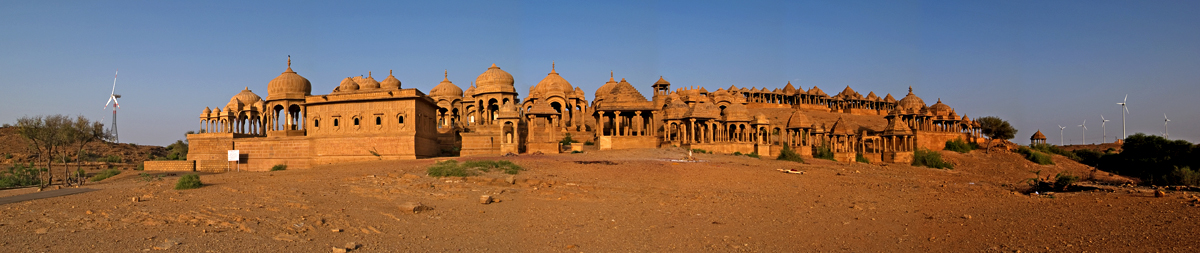
Bada Bagh, the memorial burial site of Jai Singh II near Jaisalmer, India
Parents: Bishan Singh, king of Amber
Date of Birth: 3 November 1688
House: Kachwaha
Spouse(s): Bikaner, Sheopur, and Udaipur
Predecessor: Bishan Singh
Reign: 1723 – 1743
Brief: An Indian warrior client king of the Mughal Emperor, Jai Singh II achieved his fame while serving in the Deccan Wars as the king of Amber. He raised the siege of Khelna and was appointed governor of Malwa in 1704. Following the war, Jai Singh served in numerous campaigns conquering forts of the Jat Confederacy. His kingdom was enlarged and became Juiper in 1723. In his new position, he continued to serve as the Malwa governor, conquering enemies for the Mughals and centralizing the Deccan Plateau. When the Mughals were attacked by Nadir Shah, Jai Singh began defending his own lands. He built up Jaipur city which became the capital of the Indian state of Rajasthan. 
Date of Death: 21 September 1743
Successor: Isrisingh

Other Monarchs Who Died Today:

  • Conon, pope of Rome (687)
  • Edward II, king of England (1327)
  • Charles V, Holy Roman Emperor (1558)
  • Håkon VII, king of Norway (1957)

Tuesday, April 3, 2012

[April 3] Shivaji, chhatrapati of the Maratha Empire

Surname: Shivaji Bhosle (ʃiʋaˑɟiˑ bʱoˑs(ə)leˑ)
Parents: Shahaji and Jibabai
Date of Birth: 19 February 1630
House: Shivaji
Spouse: Sai bai, Soyarabai, Putalabai, Sakavaarbai, and others
Reign: 1674 – 1680
Summary: Shivaji was born into a mercenary band that worked for the Deccan Sultanates, a confederation of sultanates ruling central India during the early Moghul period. Shivaji was named after a local deity and was religious throughout his life thanks to the upbringing from his mother. He was a devout Hindu who respected the tenets of Sufi Islam. Shivaji began claiming power in India at the age of 16 when he convinced a regional commander to hand over possession of a local fortress to him. He petitioned the Moghul Emperor to recognize him as an ally and together they worked to release Shivaji's father from captivity. He had been captured two years prior due to the tenacity of his son. From that point onward, Shivaji began to accumulate a well-organized army. He taught his army to respect women captured in war, to maintain religious monuments even when of a different religion, to avoid enslaving captured prisoners, and to cease with forced religious conversations. Through many years, he became one of the most skilled military tacticians in the world, developing the Shiva sutra, which was a form of guerrilla warfare. He amassed an army 100,000 strong and began conquering the Deccan Plateau in Central India, though with many setbacks along the way. During the early years of his insurrection, Shivaji maintained peaceful relations with the Mughals, but in 1657, small guerrilla strikes made by both sides finally ended the peace. Warfare continued between the two Indian powers until 1666 when Shivaji was captured by the Moghul Emperor Aurangzeb. He was placed under house arrested but managed to escape through deception. He and his son made it back to the Deccan dressed as holy men, while convincing Aurangzeb that he was dead. For four years peace was maintained, but Shivaji struck back against the Moghuls in 1670, recovering much of the territory he had lost before 1666. Shivaji then began repairing Fort Raigad as the location of his new capital.


On 6 June 1674, Shivaji was crowned the chhatrapati (emperor) of the Maratha Empire.  50,000 people gathered for his coronation ceremony. When his mother died two weeks later, he had a second coronation performed for good luck. Shivaji then began conquering southern India. His army of 50,000 strong headed south, though it never made it to the bottom tip of India. Six years later, Shivaji died. The emperor was succeeded by his son Raja Ram but Raja was within days deposed and replaced with Sambhaji, the true heir of Shivaji. Shivaji was an emperor like none other who balanced internal and external affairs and organized a truly modern form of a cabinet to lead different areas of public life. He maintained a standing army built on respect while also building a large navy to secure the borders from both Indian and European rivals. He even abolished the feudal system in his lands over a century before the same was done in some European countries. Many of his fortresses survive today as ruins across the Deccan countryside. In India today, he is recognized as a national hero in the early Indian independence movement.
Date of Death: 3 April 1680
Successor: Sambhaji

Other Monarchs Who Died Today:
  • William III, duke of Aquitaine (963)
  • Honorius IV, pope of Rome (1287)
  • Eudes IV, duke of Burgundy (1350)

Friday, December 17, 2010

Unification Through Conquest: How Empires Became Nation States (Consolidation)

The world as we see it today is made up of many states that were once parts of large empires. Some, such as Canada and Australia, were conquered slowly by the suppression of native peoples. Others, though, were formed through conquest and consolidation of smaller, or sometimes larger, political entities that fought hard to create their own state only to be conquered by another. Today, we get to discuss a few of these once-large empires that formed the basis of modern states through their subsequent conquest and rearrangement. This should be fun...

Mughal Empire of India
Babur, First Mughal EmperorFew empires went through such a large empire-building stage only to decline just as quickly. The Mughal Empire, ruled by descendants of Genghis Khan Tamerlane, has perhaps one of the most tragic tales to tell. The empire actually failed twice, once immediately after its start, and a second time many years later. It was founded by a regional warlord of the Tamerlane line called Babur, who ruled Afghanistan for a short time before being pushed out and forced into Pakistan. Of course in those days, Pakistan was just a part of the Indian subcontinent, and there had not been an empire that ruled all of India since around the time of Jesus. But the year was 1526 when Babur stormed into old Delhi and conquered the capital from the old sultans. Babur quickly took over the surrounding regions and, by the time of his death, he controlled much of northern India and all of Pakistan. His son, Humayun, was an utter failure. He tried to expand but was forced out of not just his new conquests, but out of India entirely. From 1540, the Mughal Empire ceased to exist and Humayun was living in Persia.

So began the second Mughal Empire. With the death of his conqueror around 1555, Humayun and a large army of Persian mercenaries stormed back into India, retook most of his father's empire, and started the empire anew. He died just before things were set in stone. Enter Akbar the Great, the son of Humayun who turned the fledgling upstart empire into an Indian powerhouse that soon would rule most of Hindustan. He decided that non-Muslims were okay and that won him a lot of support. With the enemies of Humayun defeated, Akbar led campaigns south and east to take over the unconquered regions of India. His greatness was followed by that of his son, Jahangir, and his grandson, Jahan. The three of them turned the small Mughal Empire into a regional power that challenged China, the Ottomans, and Persia. Under the reign of Aurangzeb, most of modern-day India, Pakistan, Bangladesh and Afghanistan were under the control of the Mughals. This was 1700. Britain, Portugal, and France already had small settlements around the empire, but the Mughals were not ready for colonialism to take full effect.
The Mughal Empire, c. 1700
Internal problems, of course, proved to be the empire's undoing. Persia and Afghanistan invaded India multiple times and both sacked Delhi. Britain became a powerhouse in this time, taking the internal problems and using them to expand their own physical presence and political influence. The empire itself began to fall apart when kingdoms formed and splintered off, even though most recognized the titular leadership of the Mughals. By 1804, the Mughal emperor was blind and requested the protection of the British. The British began to refer to the emperor as the "King of Delhi" rather than the "Mughal Emperor" and the army of the Mughals was disbanded by the British in 1805. For all intent and purposes, the Mughal Empire had died in all but name by this time. For fifty years, the emperors ruled little more than their palace in Delhi, with the British ruling most of the country.

Bahadur Zafar, Last Mughal EmperorThen, the Sepoy Rebellion erupted. The Indians, searching hard for a person to lead them to independence from the British, proclaimed Emperor Bahadur Shah II as the Emperor of India! The British would have none of it. Within two years, the British had stopped the rebellion and deposed Bahadur II. The Mughal Empire was finished, and Britain had just conquered it. The best part for them was that they realized the Indian people would support an "Emperor of India" as a binding force among them. Thus, twenty years later, the British Parliament declared Queen Victoria Empress of India, and so the title was restored within the British royal family until India declared its full independence in 1948. Britain used the prestige of the title that the Mughal Emperors had spent the better part of 300 years to make to take over an empire in both an official and regnal capacity. Poor India, your unity betrayed you in the end.

The Rise and Fall of the Inca Empire
The Inca Empire was a relatively new empire in the Andes when Francisco Pizarro conquered them in 1533. It began as a small regional kingdom in the mid-12th century centered around Cuzco. In the mid-1400s, it began to expand outward, conquering most of the neighboring states until the Inca Empire was quite large. Inca Roca founded the Second Inca Dynasty and it was his dynasty that led the expansionist effort. The fourth emperor in his line, Pachacuti, was the first great conqueror, and during his reign, he took over most of modern-day Peru and Ecuador. He centralized the Inca government into four provinces led by strong regional leaders loyal to the Inca Emperor. Machu Picchu is traditionally thought to have been built during his reign as a summer retreat, although it is possible it was a simple agricultural station. Pachacuti sent out spies to all the surrounding regions, infiltrating local governments and returning to the emperor with information that could be useful in their conquest.
The Inca Empire with expansions
During the reign of Pachacuti's son, Túpac, the empire stretched toward the Isthmus of Panama and into the wilds of Bolivia. His son, Huayna Cápac, took the empire to its greatest extent by the late 1400s, conquering much of northern Chile. The deserts of Argentina provided a logical southern border of the empire, while thick jungles surrounded the east and north. The Inca Empire was a multicultural, multilingual behemoth, united under the emperor at Cuzco. Then the Spanish came.

Pizarro had scouted the region out in 1526 and, when he returned to Spain, he received permission to subdue the Inca Empire. When he returned in 1532, Huayna Cápac's two sons were in the midst of a civil war for the throne and smallpox ravaged the land. With fewer than 200 men, 27 horses, and a single cannon, Pizarro conquered the Inca Empire. Okay, that's not entirely true. Pizarro had enlisted the help of thousands of local natives who no longer wanted to be ruled by the Inca. Pizarro won his first battle in July 1532 and established the first Spanish city in what would become New Castile. Meanwhile, Atahualpa had won his civil war with his brother and claimed the throne, with an army of 80,000 troops resting near the capital.

Oddly, a Franciscan friar kidnapped the emperor while trying to convert him, and the emperor paid a huge ransom of gold and silver to be let free. Pizarro, though, did not free him. Atahualpa's brother was placed on the throne but the emperor had him assassinated while in prison. Pizarro, angry at the emperor, had him killed in August 1533. Another brother, Manco, was then installed by Pizarro, escaped, reconquered Cuzco, and then fled into the jungle. He and his successors fought against the Spanish for another 36 years, but to no avail. The Spanish used the Inca Empire as their base of operations in western South America for centuries. Although no modern state resembles the Empire of the Inca, the Spanish wasted no time using the conquests of another people to build their own empire.

The Unification of Burma
The country known today as either Burma or Myanmar was unified in the 16th century. The small kingdom of Taungoo led by King Tabinshwehti made a push for power around 1540 and conquered the region of Lower Burma from the previous Mon kingdom. His successor, Bayinnaung, conquered the neighboring Shah States for Burma, enlarging the empire to a size that matched the Bagan Empire of three centuries prior. Burma became a major force in Indochina during this time. Bayinnaung went on to conquer Siam (Thailand), Manipur and Lan Xang (Cambodia), creating the largest empire to ever rule in Southeast Asia. But the empire fell apart quickly around 1599. A few decades later, the empire reemerged at a slightly smaller level under the rule of Nyaungyan and Anaukpetlun. This state resembled much of modern-day Myanmar. But even that empire fell apart. The problem of "palace rulers", rulers who did little but dwell in their harems, destroyed the dynasty, and it became the object of invasion from neighbors and vassal states. The capital city of Ava was finally conquered by an upstart vassal in 1752 and the Taungoo Dynasty was ended not 300 years after its inception.
The Toungoo Empire, c. 1752
Out of the ashes, though, a new dynasty emerged in the very year that the Taungoo were overthrown. The Konbaung Dynasty was founded by a regional chieftan, Alaungpaya, who thought it fun to challenge the Hanthawaddy king who had just destroyed the Taungoo Empire. By 1759, Alaungpaya had defeated the Hanthawaddy king and pushed out all Europeans. The next year, Alaungpaya began a war with Siam that would last for a century. By 1770, Siam and Laos were subdued and the Konbaung dynasty had reunited most of the Burmese Empire of the late Taungoo dynasty. But war with China made it difficult to hold on to recent conquests. Siam and Laos were released from vassalage and China finally left Burma alone. Conquests in the northwest brought Burma into conflict with Bengal, which was controlled by the British. In 1824, Britain declared war on Burma and took a large chunk of northern Burma from them. In 1852, Britain conquered Lower Burma. Then, in 1885, Britain conquered the remaining part of Burma in fear that France might do it first.
The Konbaung Empire, c. 1824
Through barely more than 100 years of rule, the Konbaung dynasty had united Burma only to make it easier for Britain to break off chunks at their beck and call. Despite years of war and empire building, they were no match for the British machine which had already conquered all of India. Burma became a part of India for a short time before becoming its own entity again, ruled by the British Crown. The later state that formed was just as much a result of British state-building as the Burmese independence movement, but both were the direct result of the consolidation and wars fought by the Taungoo and Konbaung dynasties.

Conclusion
So there we have it: three upstart empires that formed out of nothing into regional powers only to be conquered by Europeans. The lesson: creating an empire can be all fun and good, but make sure to teach your kids about moderation and statecraft. Also, make sure you've set up a good system of succession that leaves no question as to who the heir is. The Mughal and Inca empires fell partly because of succession crises, and the Mughal and Burmese empires fell partly because of "palace rulers" who had no interest in statecraft. If you look at other former kingdoms across the world, those two reasons are often behind the fall of a dynasty or monarchy.

Labels

[brief] (102) female monarch (31) Capet (26) [abbreviated] (19) Roman Empire (17) Great monarchs (16) Japan (15) Papacy (15) England (13) saints (13) France (11) Portugal (11) [Missing Deaths] (11) Habsburg (10) Sweden (10) Byzantine Empire (9) Carolingian (9) China (9) Hohenzollern (9) Oldenburg (9) Holy Roman Empire (8) Japan (dynasty) (8) Aragón (7) Austria (7) Denmark (7) Electorate (7) Ethiopia (7) Hungary (7) Navarre (7) Norway (7) Romanov (7) Russia (7) Saxony (7) Scotland (7) Wettin (7) Wittelsbach (7) Bavaria (6) Burgundy (6) Egypt (6) Italy (6) Lorraine (6) Luxembourg (6) Persia (6) Poland (6) Sicily (6) Spain (6) Valois (6) Capet-Burgundy (5) Franks (5) Germany (5) Plantagenet (5) Prussia (5) Quraish (5) Solomon (Ethiopia) (5) Tuscany (5) Anjou (4) Aquitaine (4) Barcelona (dynasty) (4) Bohemia (4) Brittany (4) Burgundy-Aviz (4) Burma (4) Capet-Valois (4) Castile (4) Constantinople (Patriarchate) (4) Habsburg-Lorraine (4) Holstein-Gottorp-Romanov (4) India (4) Ireland (4) Jerusalem (4) Jiménez (4) Kiev (4) Mongolia (4) Naples (4) Netherlands (4) Normandy (4) Osman (4) Ottoman (4) Palaeologos (4) Savoy (4) Savoy (dynasty) (4) Trastámara (4) Wales (4) Afghanistan (3) Albania (3) Bagrationi (3) Banu Hashim (3) Blois (3) Borjigin (3) Bourbon (3) Brabant-Hesse (3) Brandenburg (3) Capet-Bourbon (3) Cologne (3) Croatia (3) Cyprus (3) Disney (3) Fairhair (3) Georgia (3) Gwynedd (3) Hainaut (3) Hesse (3) Hohenstaufen (3) Holland (3) Holstein-Gottorp (3) Inca (3) Islam (3) León (3) Limburg (3) Lithuania (3) Livonia (3) Lothier (3) Macedonia (dynasty) (3) Mainz (3) Mann (3) Medici (3) Morocco (3) México (3) Nassau (3) Nguyễn (3) Serbia (3) Stuart (Stewart) (3) Toungoo (3) Tudor (3) Turkey (3) Vaudemont (3) Vietnam (3) Welf (3) Wessex (3) published articles (3) Abberfraw (2) Aberffraw (2) Alexandria (patriarchate) (2) Angevins (2) Anglo-Saxon (2) Ardennes-Metz (2) Auvergne (2) Ayyubid (2) Basarab (2) Bernadotte (2) Billung (2) Boulogne (2) Brabant (2) Bruce (2) Burgundy-Bragança (2) Caliphate (2) Cilicia (2) Constantine (2) Crovan (2) Denmark (Dynasty) (2) Draculesti (2) Dreux (2) Dunkeld (2) Dutch Republic (2) Estridsen (2) Flanders (2) Florence (2) Further Austria (2) Greece (2) Habsburg-Spain (2) Hanover (2) Hardrada (2) Hauteville (2) Hawai'i (2) Ivrea (2) Joseon (2) Karadordevic (2) Konbaung (2) Korea (2) Maya (2) Merovingian (2) Milan (2) Ming (2) Monaco (2) Nassau-Orange (2) Nassau-Weilburg (2) Norman (2) Novgorod (2) Orange (2) Ottonian (2) Piast (2) Piedmont-Savoy (2) Poitiers (dynasty) (2) Robertian (2) Romania (2) Rurik (2) Sardinia (2) Saxe-Coburg-Gotha (2) Seljuk (2) Siam (2) Syria (2) Teutonic Knights (2) Thailand (2) Theodosian (2) Thuringia (2) Timurid (2) Tokugawa (2) United Kingdom (2) Valois-Burgundy (2) Vandal (2) Venice (2) Visconti (2) Vladimir (2) Wallachia (2) Württemberg (2) York (2) Yugoslavia (2) Zeeland (2) the Britons (2) 18th Dynasty (Egypt) (1) Abbasid (1) Adal (1) Agiad (1) Akinyele (1) Al Khalifa (1) Al-Said (1) Alawiyya (Egyptian) (1) Albret (1) Algeria (1) Algonquian (1) Amber (1) Angola (1) Anjou (dynasty) (1) Anjou-Hungary (1) Ansbach (1) Antonia (1) Antonine (1) Apulia (1) Arabia (1) Armenia (1) Arpad (1) Arsacid (1) Asen (1) Ashikaga (1) Athens (1) Avesnes (1) Avignon Papacy (1) Aviz-Beja (1) Aztec Empire (1) Baden (1) Bahrain (1) Balti (1) Barakzai (1) Barazkai (1) Barcelona (1) Battenberg (1) Belgium (1) Bengal (1) Berg (1) Berg (dynasty) (1) Bernicia (1) Bharatpur (1) Bhutan (1) Bjelbo (1) Bonaparte (1) Bonde (1) Bonngau (dynasty) (1) Borghese (1) Borja (1) Bosnia (1) Bourbon-Two Sicilies (1) Brandenburg-Ansbach (1) Brienne (1) Brutus (1) Bukhara (1) Bulgaria (1) Canossa (1) Capet-Dreux (1) Carthage (1) Celje (1) Celje (dynasty) (1) Chakri (1) Champagne (1) Champagne (dynasty) (1) Chartres (1) Cometopuli (1) Contantine (1) Cordoba (1) Craiovesti (1) Crusader States (1) Dalmatia (1) Damascus (1) Danesti (1) Debeubarth (1) Deira (1) Deira (dynasty) (1) Denmar (1) Dulo (1) Díaz (1) Early Han (1) East Anglia (1) East Francia (1) Eastern Han (1) Eastern Jin (1) Egmont (1) Estonia (1) Farnese (1) Fatimid (1) Fatimid Caliphate (1) Flanders (dynasty) (1) Flavian (1) Friuli (1) Gausi (1) Geneva (1) Geneva (dynasty) (1) Gordiani (1) Grimaldi (1) Guelders (1) Guideschi (1) Gwent (1) Gwynedd (dynasty) (1) Gyatso (1) Haag (1) Hainaut (dynasty) (1) Hanan Cuzco (1) Hashim (1) Hashimite (1) Hebrides (The Isles) (1) Hellenes (1) Herat (1) Hohenzollern-Ansbach (1) Hohenzollern-Sigmaringen (1) Holland (dynasty) (1) Hunfriding (1) Ibadan (1) Iran (1) Iturbide (1) Jaipur (1) Jin (1) Jordan (1) Julio-Claudian (1) Jungingen (1) Justinian (dynasty) (1) Kachwaha (1) Kalakaua (1) Kamehameha (1) Karrani (1) Kent (1) Kent (house) (1) Kestutis (1) Khurasan (1) Knights Templar (1) Komnenos (1) Kotromanić (1) Lakota Sioux (1) Lancaster (1) Latin Empire (1) Lebanon (1) Leuchtenberg (1) Lombards (1) Ludowinger (1) Lusignan (1) Luxembourg (dynasty) (1) Luxembourg-Limburg (1) Maan (1) Macedon (1) Magdeburg (1) Maine (1) Majorca (1) Malaysia (1) Manghit (1) Maratha Empire (1) Marinid (1) Matsunaga (1) Maurya (1) Mecklenburg (1) Mecklenburg-Strelitz (1) Meissen (1) Mercia (1) Mercia (dynasty) (1) Miniconjou (1) Moldavia (1) Montenegro (1) Montferrat (1) Morgannwg (1) Mortain (1) Mountbatten (1) Mughal (1) Muhammad Ali (1) Munster (1) Musat (1) Myanmar (1) Nakagawa (1) Ndongo and Matana (1) Nemanjic (1) Nepal (1) Nervo-Trajan (1) Neuchâtel (1) Nigeria (1) Nominoë (1) Northumbria (1) O'Brien (1) Obrenović (1) Odowa (1) Olgovich (1) Olympus (1) Orléans-Longueville (1) Ostrogoths (1) Ottawa (1) Pahlavi (1) Palatinate of the Rhine (1) Parma (1) Penthièvre (1) Petrović-Njegoš (1) Poděbrady (1) Pointiers (Ramnulfids) (1) Poitiers (1) Poitiers-Lusignan (1) Polignac (1) Powys (1) Prasat Thong (1) Premyslid (1) Provence (1) Přemyslid (1) Q'umarkaj (1) Qin (1) Qing (Manchu) (1) Reginar (1) Reginarid (1) Rethel (1) Rethel-Boulogne (1) Ribagorza (1) Rouergue (1) Roupenians (1) Sa Malietoa (1) Safavid (1) Salian (1) Salzburg (1) Samoa (1) Sarantapechos (1) Saud (1) Saudi Arabia (1) Second Triumvirate of Rome (1) Selangor (1) Selangor (dynasty) (1) Sforza (1) Shah (Nepal) (1) Shi'a Imamate (1) Shishman (1) Shivaji (1) Silesia (1) Simmern (1) Sinsinwar Jat (1) Skowronski (1) Slovenia (1) Sobieski (1) South Africa (1) South America (1) Sparta (1) Spoleto (1) Sture (1) Sudan (1) Sussex (1) Sverre (1) Swabia (1) Swasi (dynasty) (1) Swaziland (1) Swiss Confederation (1) Tang (1) Tenochtitlan (1) Teotihuacán (1) Terter (1) Tibet (1) Tikal (1) Tolkien (1) Toulouse (1) Tours (dynasty) (1) Transylvania (1) Tunisia (1) Umayyad (1) Unruoching (1) Valencia (1) Valois-Angoulême (1) Valois-Anjou (1) Valois-Orléans (1) Vasa (1) Vermandois (1) Visigoths (1) Vokil (1) Wangchuck (1) Wied-Neuwied (1) Windsor-Mountbatten (1) Württemberg (dynasty) (1) Yamato (1) Ying (Qin) (1) Yuan (1) Zanzibar (1) Zhao (Song) (1) Zhou (1) Zhu (1) Zogu (1) Zulu Nation (1) Zápolya (1) Zähringen (1) bretwalda (1) cardinal (1) fantasy (1) fiction (1) shogunate (1) terms (1) Árpád (1) Öuchi (1)