Showing posts with label Portugal. Show all posts

Thursday, December 6, 2012

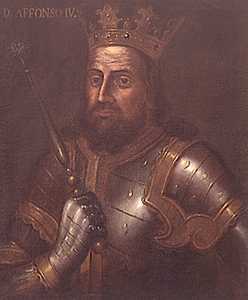
[December 6] Afonso I, king of Portugal

Sobriquet: "The Conqueror" (O Conquistador)
Parents: Henrique, count of Portugal, and Theresa, countess of Portugal
Date of Birth: 25 June 1109
House: Capet-Burgundy
Spouse(s): Maud, daughter of Amadeo III, count of Savoy, and Mahaut of Albon
Predecessor: Henrique (as count)
Reign: 1139 – 1185
Brief: The first monarch of an independent, post-Carolingian Portugal, Afonso I began his tenure as a count and vassal of the kingdom of Léon. His father had been created count when he married King Alfonso VI of León's illegitimate daughter, Theresa, a woman who later ruled after her husband died alongside Afonso. After being forced out of the government in 1120, Afonso sought out on his own and became a knight, fighting his mother's troops at the Battle of São Mamede in 1128 at the age of nineteen. He proclaimed himself sovereign duke of Portugal after his victory, and he sent his mother into a monastery for the rest of her life. In 1129, after defeating King Alfonso VII of León, he promoted himself to prince, but was still a decade away from his true goal. That came after ten years of continuous fighting against the Moors of southern Spain and the successful Battle of Ourique, whereafter he proclaimed himself the King of the Portuguese. He transferred his allegiance to the Papacy in Rome, which was confirmed in 1179, and León was forced to accept the loss of its southern province. For most of the rest of his reign, Afonso sought to enrich the monasteries of Portugal in order to win over the pope. Despite years of civil war with León and fighting against the Moors, Afonso continued to engage in combat until 1184. He died the following year leaving his now-secure kingdom to his son, Sancho I.
Date of Death: 6 December 1185
Successor: Sancho I

Other Monarchs Who Died Today:
  • Clement VI, pope of Rome (1352)
  • John II Casimir, king of Poland (1672)
  • Charles Michael, titular grand duke of Mecklenburg-Strelitz (1934)

Thursday, November 15, 2012

[November 15] Maria II, queen of Portugal

Surnamed: "The Educator" (A Educadora) and "The Good Mother" (A Boa Mãe)
Parents: Pedro IV, king of Portugal, and Maria Leopoldina of Austria
Born: 4 April 1819
House: Capet-Burgundy-Aviz-Bragança
Spouse(s): (1) Auguste, 2nd duke of Leuchtenberg, son of Eugène de Beauharnais and Augusta of Bavaria, then (2) Fernando II, son of Ferdinand of Saxe-Coburg & Gotha and Maria Antonia Koháry de Csábrág
Predecessor: Pedro IV
Reign: 1826 – 1828, 1834 – 1853
Brief: Maria II has the unique distinction of being the only European monarch in modern history to be born outside of Europe, being born in Brasil in 1819. Her father, Pedro, was the eldest son of King João VI and was Emperor of Brasil since 1822. A younger son, Miguel, had been exiled after prompting revolutions against his father during the Napoleonic Wars. Maria, his eldest granddaughter, was nominated as his heir until "the legitimate heir" returned to Portugal. Unfortunately, João did not note which son was his legitimate heir. Pedro sought a compromise: marry his daughter to his brother. This would solve any succession crisis. Miguel agreed, but when he finally arrived in Portugal, he proclaimed himself king and deposed his niece. Pedro replied violently in 1831, abdicating the Brasilian throne to his son, Pedro II, and invading Portugal with forces loyal to Maria. Miguel was finally forced to abdicate in 1834, leading a long life of exile abroad. Maria II was now in firm control over Brasil. After a short marriage to a grandson of Empress Josephine (Napoleon's wife), Maria married a prince of Saxe-Coburg & Gotha, who received the title "king consort" a year later. She successfully suppressed an insurrection in 1846, and completely avoided the crises of 1848. She focused on expanding education and public health in Portugal. Maria II died in 1853 due to complications from childbirth, leaving the country to her teenaged son, Pedro V.
Date of Death: 15 November 1853
Successor: Pedro V

Other Monarchs Who Died Today:
  • Penda, king of Mercia (655)
  • Constantine VIII, emperor of Constantinople (1028)
  • Leopold III, margrave of Austria (1136)
  • Jungjong, king of Korea (1544)
  • Tsangyang Gyatso, dalai lama of Tibet (1706)

Thursday, September 13, 2012

[September 13] Felipe II, king of Spain

Parents: Charles V, Holy Roman Emperor, and Isabella of Portugal
House: Habsburg-Spain
Born: 21 May 1527
Spouse(s): (1) Maria Manuela, daughter of João III, king of Portugal, and Catherine of Habsburg, then (2) Mary I, queen of England, daughter of Henry VIII, king of England, and Catherine of Aragón, then (3) Elisabeth, daughter of Henri II, king of France, and Catherine de Medici, then (4) Anna, daughter of  Maximilian II, Holy Roman Emperor, and Maria of Spain
Predecessor: Carlos I
Reign: 1556 – 1598
Brief: The king-consort of Queen Mary I of England for four years, Felipe II inherited half the Habsburg Empire in 1556. He further expanded his domains in 1580 by successfully claiming the Portuguese crown after the death of King Henrique. His despotic tendencies and neglect of the Low Countries led to the revolt and creation of the Dutch Republic the next year. In 1588, he unsuccessfully tried to invade England but was stopped when his Spanish Armada was destroyed by the forces of Queen Elizabeth I. His death was especially long and painful as he suffered from gout, fever, and dropsy for fifty-two days before dying at his palace near Madrid in 1598.
Date of Death: 13 September 1598
Successor: Felipe III & II

Other Monarchs Who Died Today:

  • Titus, emperor of Rome (81)
  • Leopold V, archduke of Austria (1632)
  • Hezqeyas, emperor of Ethiopia (1813)

Thursday, August 30, 2012

[August 30] Emmanuel Philibert, duke of Savoy

Surnamed: "Ironhead" (Testa di ferro)
Date of Birth: 8 July 1528
Parents: Charles III, duke of Savoy, and Beatrice of Portugal
House: Savoy
Spouse(s): Margaret, daughter of François I, king of France, and Claude, duchess of Brittany
Predecessor: Charles III
Reign: 1553 – 1580
Summary: The fate of the Savoy dynasty often fell into the hands of only childs. Such was the case of Emmanuel Philibert, the only child of Charles III to reach adulthood. Because of his family ties with the House of Habsburg through his mother, Emmanuel joined the army of Holy Roman Emperor Charles V when still young against the armies of François I of France. At the age of 25, he captured the city of Hesdin for the emperor. His father died a month later and Emmanuel Philibert rose to the dukedom. Unfortunately, Savoy had few hereditary lands remaining as France had been occupying Piedmont since 1536. Emmanuel remained in imperial service in the hope that the emperor would help him regain his captured lands.

From 1555 to 1559, Emmanuel Philibert lived in the Netherlands, serving as regent for King Philip II following Charles V's death. He marched on France ahead of an army of Spanish soldiers in 1557 and won a victory at Saint-Quentin. During this time, he attempted to marry Elizabeth Tudor, the future queen, but was rebuffed since he possessed little land and money. When peace finally occurred between France and Spain in 1559 at Caateau Cambrésis, Emmanuel Philibert regained his lost lands and married a daughter of the king of France, Margaret. Upon the death of King Henrique I in Portugal in 1580, Emmanuel Philibert returned to the spotlight, this time as a royal claimant to the Portuguese throne. However, the claim of Philip II of Spain was stronger and the military forces he was able to muster made Emmanuel's attempt feeble at best. Over the last twenty years of his reign, Emmanuel worked to regain and reassert his authority in his lost lands, eventually taking Turin back as his capital. He died in 1580 and was buried in the Chapel of the Holy Shroud within Turin Cathedral. His only child, Charles Emmanuel, succeeded him.
Date of Death: 30 August 1580
Successor: Charles Emmanuel I

Other Monarchs Who Died Today:
  • Theodoric I, king of the Ostrogoths (526)
  • Sancho III, king of Castile (1158)
  • Khutughtu Khan, emperor of China (1329)
  • Shoko, emperor of Japan (1428)
  • Louis XI, king of France (1483)
  • Shimazu Yoshihiro, daimyo in Japan (1619)

Saturday, August 4, 2012

[August 4] Sebastião, king of Portugal

Parents: João Manuel, crown prince of Portugal, and Joanna of Austria
Date of Birth: 20 January 1554
House: Capet-Burgundy-Aviz-Beja
Predecessor: João III
Reign: 1557 – 1578

Summary: Born into the golden age of Portuguese exploration, it is no wonder that Sebastião had his sights on more things than his progeny. He was born in 1554 and given the highly-unusual name of Sebastião due to being born on the feast day of Saint Sebastian. He was born posthumously to his father, who had been the crown prince. It was not unexpected, then, when three years later, Sebastião became the king of Portugal. His mother left soon after he became king to rule as regent of Castile for her father, Emperor Charles V of Spain. She continued in that role for her brother, Philip II of Spain, when he was away on other business. Joanna never saw her son, Sebastião, again. His regency was handled by his grandmother, Catherine of Austria, and a great-uncle, Cardinal Henrique of Évora. During his minority, Portugal continued to conquer new lands in Angola, Mozambique, Malacca, and in Macau. Catherine was directly in charge of her grandson and raised him as best she could, but he grew up to be impulsive and rebellious. His upbringing was heavily influenced by the Jesuits. His tutor and teachers were all Jesuit priests, and Sebastião became a devout Catholic. He was constantly followed by two members of the Theatine Order whose job was to ensure the chastity of the king. Throughout his teen years, Sebastião almost married the daughter of King Henri II of France, Margaret of Valois, but his indecisiveness lost him the day and the girl married Henry of Navarre instead. Other marriage proposals were all rebuffed and Sebastião never ended up marrying, an event that precipitated the succession crisis of 1580 two years after his death.

Sebastião slowly took direct control over his government beginning in 1568 when he began a scholarship program for impoverished noble children hoping to study medicine at the University of Coimbra. In 1569, he also ordered that all official laws and legal documents in the kingdom be combined and centralized in a collection known as the Leis Extravagantes. When an outbreak of plague occurred that same year, Sebastião requested doctors be sent from Saville and he created two hospitals to treat those afflicted. Sebastião was intensely interested in the well-being of his native allies in Brazil and India, and in 1570 ordered that all natives be released as slaves and treated as normal people. Sebastião was a standardizer, and in 1573 established a system of measurement for solid and liquid goods. This standardization helped in distributing goods to the poor and valuing items for sale. His final legal act was establishing court laws to regulate the time lapse between accusation and trial, and the roles lawyers play in the process. In 1576, the deposed Moroccan sultan, Abu Abdallah Mohammed II Saadi, fled to Portugal and requested help in reclaiming the throne from his uncle, who was backed by the Ottoman Empire. Sebastião attempted to rally support with his cousin in Spain but was declined. Regardless, he ventured to Morocco in front of an army of 17,000 troops including most of Portugal's nobility. At the Battle of Alcácer Quibir, the joint Portuguese-Moroccan army was obliterated by the army of ABu Abdallah's uncle, Abd Al-Malik, who commanded 50,000 men. The Portuguese king was last seen riding into the enemy lines. His body was never found, though Philip II of Spain later received remains that were supposedly Sebastião's. His uncle, Cardinal Henrique, succeeded him to the Portuguese throne. A hope—or rather myth—that Sebastião survived persisted into the 1610s, with four people claiming to be the deceased king. A movement, known as Sebastianism, persisted even longer and is but one apocalyptic tradition of a king that will return at the End of Days.
Date of Death: 4 August 1578
Successor: Henrique


Other Monarchs Who Died Today:
  • Henri I, king of France (1060)
  • Wenceslaus III, king of Bohemia (1306) 

Tuesday, July 31, 2012

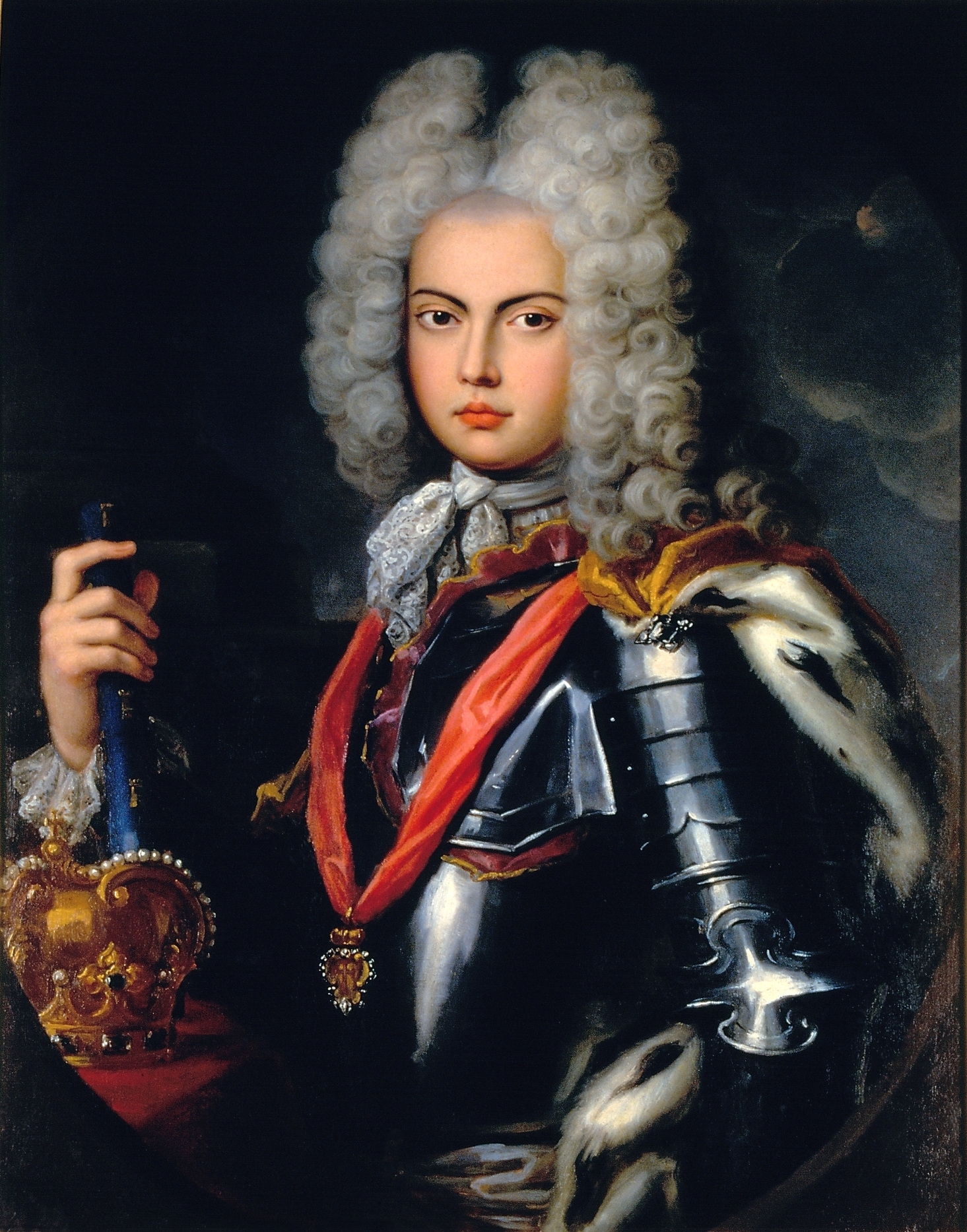
[July 31] João V, king of Portugal

Surnamed: "The Magnanimous"
Full Name: João Francisco António José Bento Bernardo
Parents: Pedro II, king of Portugal, and Maria Sofia of the Palatine-Neuburg
Date of Birth: 22 October 1689
Royal House: Capet-Burgundy-Avis-Bragança
Spouse: Maria Anna, daughter of Leopold I, Holy Roman Emperor, and Eleonore Magdalena of the Palatine-Neuburg
Predecessor: Pedro II
Reign: 1706 – 1750
Summary: A son of the relatively new ruling dynasty in Portugal, João was destined to succeed his father from birth, being the first male born to his father and the long-awaited heir. His father was already elderly when he was born but surprisingly lived another seventeen years, finally dying in 1706. João succeeded his father at that time.


João became involved in politics immediately, sending his general, the Marquês das Minas, into Castile and capturing Madrid briefly for the Grand Alliance. He married a first cousin in 1708 and strengthened his alliance with the Habsburgs who were still slightly miffed about Portugal declaring independence from Spain seventy years earlier. João continued his war with Spain and France for the War of the Spanish Succession until 1713 and 1715 respectively. Gold and diamonds found in Brasil strengthened the Portuguese economy and made João one of the wealthiest monarchs in Europe. The increased funds allowed the king to rule without parliamentary oversight and João never called the Cortes once during his forty-four year reign, ruling as an absolute monarch. Mimicking the court of Louis XVI in France, João centralized his government at the Royal Palace of Mafra and summoned all his high lords to live there, taming the upper nobility. João purchased great works of art from throughout Europe with his vast treasure troves. He expanded the royal library and added original musical manuscripts. Virtually all of these treasures were destroyed by an earthquake and ensuing tsunami and fire in 1755. It was a loss that the art world never truly recovered from. After the Spanish war, João kept Portugal out of European conflicts during his reign, preferring instead to expand the local economy, patronize the arts, and ensure Portugal's continued independence. He spent a large portion of his wealth on ensuring that the church support his family's position. It was only in 1748, though, that Pope Benedict XIV finally recognized the Bragança dynasty as the legitimate rulers of Portugal, bestowing upon them the title "Most Faithful King." But by that time, João had already removed himself from politics, having suffered a minor stroke in 1742 which left him partially paralyzed. The government and centralization began to fall apart in his last years as they were directly dependent on a strong absolute monarch, which João was failing to be. The aging king died in 1750 and his son, José, succeeded him to the throne.
Date of Death: 31 July 1750
Successor: José

Other Monarchs Who Died Today:
  • Na'od, emperor of Ethiopia (1508)
  • Kien Phuc, emperor of Vietnam (1884)
  • Baudouin I, king of Belgium (1993)
  • Friedrich Franz, pretender to Mecklenburg-Schwerin (2001)

Monday, May 28, 2012

[May 28] Afonso IV, king of Portugal

Surnamed: "The Brave"
Parents: Denis, king of Portugal, and Elizabeth of Aragon
Date of Birth: 8 February 1291
House: Capet-Burgundy
Spouse: Beatrice, daughter of Sancho IV, king of Castile, and Maria de Molina
Predecessor: Denis
Reign: 1325 - 1357
Summary: Born in Lisbon, he was the eldest but less favored son of King Denis of Portugal. An illegitimate son of the king curried more favor and it took all of Afonso's power to secure the throne for himself. Civil wars between Afonso and his brother were commonplace before his coronation. When Afonso became king, he sentenced his brother to exile in Castile, stripping him of all lands and titles. For many years, his brother continued to incite rebellions in Portugal until the two finally signed a peace treaty.

During Afonso's lifetime, new alliances were formed with Castile. Afonso himself married a Castilian princess in 1309, and he married his daughter, Maria, to a Castilian king in 1328. His son, Pedro, was betrothed to a Castilian princess as well. Portugal then went to war with Castile because the king, Alfonso XI, was abusing Afonso's daughter, Maria. The two Iberian powers finally came to terms in 1339 and the next year, they led a joint invasion of Moorish Iberia (Southern Spain). During the later years of his reign, Castilian exiles flooded into Portugal fleeing from the civil war between Pedro the Cruel of Castile and his half-brother Henry of Trastamara. When Afonso's son, Pedro, openly acknowledged a Castilian heiress as his mistress, the political intrigue in Portugal reached its height. Aging, Afonso was unable to stop his son from making a mockery of his court. Pedro's illegitimate children with Ines de Castro grew in power and authority within Portugal while Pedro's legitimate son, Fernando, remained sickly.  In 1355, Afonso had enough. He had Ines executed. Pedro responded by  taking control of the military and devastating Portugal. The two only reconciled in 1357, and Afonso died only days later. Afonso's only real contribution to the future of Portugal was the enlargement and state financing of the Portuguese navy, which in the next century would reach India under Vasco da Gama. The Age of Exploration began during his reign, though discoveries only came years later.
Date of Death: 28 May 1357
Successor: Pedro I

Other Monarch Deaths:
Caterina, countess of Forli (1509)
Saito Dosan, daimyo of Japan (1556)
Sakuramachi, emperor of Japan (1750)
Edward VIII, king of the United Kingdom (1972)

Monday, March 5, 2012

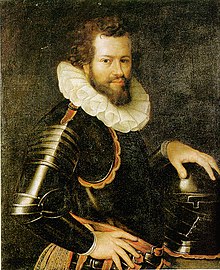
[March 5] Ranuccio I, duke of Parma

Parents: Alessandro, duke of Parma, and Maria of Guimarães
Date of Birth: 28 March 1569
House: Farnese
Spouse: Margherita, daughter of Gianfranceso Aldobrandini and Olimpia
Reign: 1592 – 1622
Predecessor: Alessandro
Summary: Ranuccio, despite being a Parmese prince, was senior heir to Cardinal Henry I, king of Portugal, when he died in 1580. Ranuccio was only eleven at the time but his mother, Maria, was the eldest daughter of Edward, duke of Guimarães, the sixth legitimate son of Manuel I of Portugal. The problem at the time was that no female line had ever inherited the Portuguese throne, and thus Ranuccio's role as heir general was in question. To make matters worse, Ranuccio's father, Alessandro, was a subject and ally of the Spanish king who claimed Portugal for himself. Thus Ranuccio quietly renounced his right to the throne and his mother's sister, Catherine, attempted to claim the throne instead. In any case, Spain won out in the end, with Catherine's line only inheriting sixty years later. The Parma of Ranuccio's youth was rich in the arts and architecture. He became duke in 1592 upon the death of his father.

As duke, Ranuccio I centralized the Parma government, removing the nobles' right to counter the duke's decisions. He began expanding Parma outward, enlarging and revitalizing the university and expanding the city's walls. He also began creating a new royal palace called the Palazzo della Pilotta, which was completed near the end of his reign in 1620. Ranuccio was not above intrigue, and was responsible for the deaths of numerous nobles in 1612 who he feared were plotting against him. This ostracized him from the other important Italian families because some of them were named as conspirators. The duke died in 1622 leaving the duchy to his young son Odoardo, under the regency of his brother, also named Odoardo.
Date of Death: 5 March 1622
Successor: Odoardo

Other Monarchs Who Died Today:
  • Yeongjo, king of Korea (1776)

Tuesday, January 31, 2012

[January 31] Henrique, king of Portugal

Surname: The Chaste (o Casto)
Parents: Manuel I, king of Portugal, and Maria of Aragón
Date of Birth: 31 January 1512
Royal House: Burgundy-Aviz
Reign: 1578 – 1580
Predecessor: Sebastião
Summary: As with many younger sons of royalty, Henrique was raised in the Catholic Church. He took orders at a young age to promote Portuguese influence with the church. Over a short period of time, he was elevated to first Archbishop of Braga, then of Évora where he also held the position of Grand Inquisitor. In 1545 he was elevated to the rank of Cardinal. With his new powers and influence, he brought Jesuits to Portugal and, more importantly, to the rest of the Portuguese Empire in East Asia and Brasil. He retained his religious post for the majority of his life, though he served as regent for his grand-nephew Sebastian until 1572. In 1578, Sebastian was killed at the Battle of Alcazarquivir against Morocco and Henrique became the king, the last legitimate male descendant of João I of Aviz.

Henrique had no choice but to renounce his cleric rights and take on the role of Portuguese monarch. He was 66 years old at the time of his ascension, and a life in the clergy meant that he had not married in his younger years. Henrique sought a renunciation of his vows with the pope in order to find a bride and desperately hope for a child. But the pope, Gregory VIII, was an ally of the Habsburgs who were the next legitimate claimants to the throne, refused the request and Henrique was bound to a heirless throne. He refused to appoint an heir or regency council, and died only two years later, leaving his country in peril. In November of 1580, King Philip II of Spain invaded Portugal and claimed the crown under the condition that the overseas territories of the two states would not be combined. Another claimant, the illegitimate prior of Crato, António, fought an unsuccessful war to win the throne but ended up ruling only the Azores for a few months until Philip forced him into exile. He never reclaimed the throne and sold Portugal's crown jewels to pay for his exile for the next fifteen years.
Date of Death: 31 January 1580
Successor: Anthony or Philip I

Other Monarchs Who Died Today:
  • Suko, pretender to Japan (1398)
  • Xuande, emperor of China (1435)
  • Henry, king of Portugal (1580)
  • Charles III, pretender to England and Scotland (1788)
  • Khedrup Gyatso, Dalai Lama (1856)

Monday, January 23, 2012

[January 23] Ya'qub al-Mansur, emir of Morocco

True Name: Abū Yūsuf Ya‘qūb al-Manṣūr (بو يوسف يعقوب المنصو)
Parents: Abu Ya'qub Yusuf, emir of Morocco
Date of Birth: c. 1160
Royal House: Almohad
Reign: 1184 – 1199
Predecessor: Abu Ya'qub Yusuf
Summary: Al-Manṣūr led a short life of continuous warfare. From the time that he ascended the throne in 1184, he vowed vengeance against the Christian crusaders who killed his father. But he first had to deal with the recently-ousted rival dynasty, the Almoravids. He finally defeated them and invaded the Iberian Peninsula. He had a great military conquest but returned home with many slaves. A full Christian uprising happened in his wake. Al-Manṣūr returned and defeated the Christians again, taking many more slaves than the first time and selling them to sub-Saharan traders. 

Morocco and the Almohad territories thrived during al-Manṣūr's reign. Architecture, science, and philosophy reached new heights in continental Europe, but it was to be short-lived. In July 1195, al-Manṣūr defeated the Castilian king Alfonso VIII at the Battle of Alarcos and sent the Castilians into a hard retreat to Toledo. Al-Manṣūr took up residence in Seville and continued to raid southern Iberia for the next four years. He took the title "al-Manṣūr Billah" which means "Made victorious by God". In 1198, al-Manṣūr finally lost interest in Iberia since he had reconquered most of the original Umayyad lands of four hundred years previous. He returned to Morocco and died a few months later. His empire crumbled under the reign of his son in 1212 at the Battle of Las Nevas de Tolosa, and the Muslim presence in Iberia began a permanent decline.
Date of Death: 23 January 1199
Successor: Muhammad an-Nasir, amir of Morocco

Other Monarchs Who Died Today:
  • Otto III, Holy Roman Emperor (1002)
  • Jiajing, emperor of China (1567)

Thursday, December 1, 2011

Two States, One King (Divided Rule)

Two years ago last December, I completed my master's dissertation on the topic of dynastic unions. Specifically, I focused on the dynastic union of England and the United Provinces of the Netherlands under King William III and the union of Great Britain (later the United Kingdom) and the Electorate of Brunswick-Lüneburg (later Kingdom of Hanover) under Kings George I-IV and William IV. It was a daunting task with a strong emphasis on ruling two states at the same time. Yet these individuals were only the last British monarchs in a long series of rulers to preside over multiple states simultaneously. Indeed, for a while it was vogue for monarchs to try and collect states, as it were, in order to expand their empire. Some they would fold into their own "mother" state while others would remain under outside control.


England's Bouts of Duality
Let's start this little survey with a look at what Britain has controlled off-and-on throughout its existence. I've already mentioned two so let's chalk them up:
William III, King of England
& Stadtholder of the Netherlands
  • The Kingdoms of England, Scotland & Ireland, et al. with The United Provinces of the Netherlands (1689 – 1702)
    • Ruler: King William III who was also Stadtholder of the Holland, Zeeland, Utrecht, Guelders & Overijssel (most of the Netherlands)
    • The Dutch Estates General ruled the Netherlands in his stead
    • The English Privy Council ruled Britain in his stead
    • How'd it start: William III conquered England (sort of) and deposed his father-in-law, thereby taking the crown. He was already stadtholder at the time.
    • Fate: Died leaving England in the hands of his sister-in-law Anne and Netherlands in the hands of nobody in particular
  • The Kingdom of Great Britain & Ireland, et al. with The Duchy of Brunswick-Lüneburg and Electorate of Brunswick (1714 – 1803, 1813 – 1832)
    • Rulers: Kings George I, George II, George III, George IV, and William IV who were also hereditary rulers of the region immediately around Hanover in Germany
    • The English Privy Council, the Queen, and/or the Prince of Wales ruled Britain in their stead
    • The Hanoverian Regency and/or the Prince of Wales ruled Hanover in their stead
    • Communication was via a special agency unaffiliated with the British government
    • How'd it start: To avoid another Catholic monarch, the British monarchy went to their 52nd choice in the line of succession: an elderly granddaughter of James I. She died and her German son inherited Britain.
    • The Kingdom of Great Britain & Ireland became the United Kingdom in 1801
    • The Duchy of Brunswick-Lüneburg became the Kingdom of Hanover in 1814
    • Fate: Separate succession laws left Britain in the hands of Queen Victoria and Hanover in the hands of King Ernest Augustus
    • Duchy of Brunswick-Lüneburg. Note: Bremen, Verden, Osnabrück, and
      Lauenburg were also all dynastic unions. Brunswick -Wolfenbüttel was
      a separate possession of a younger branch of the House of Este-Welf.
These are rather late additions, so let's step back into time and see what other dynastic unions existed. Two have already been implied though not mentioned:
  • The Kingdom of England with The Kingdom of Ireland (1542 – 1651, 1659 – 1801)
    • Rulers: All English monarchs from Henry VIII onwards until 1801
    • The Lord Lieutenant of Ireland ruled in their stead
    • How'd it start: The Kingdom of Ireland replaced the semi-sovereign and often autonomous Lordship of Ireland which was also presided over by the Lord Lieutenant. Ireland had been partially conquered by Normans in the 12th century and Henry VIII finished the job...mostly.
    • Fate: Ireland had little independence in the union and Great Britain and Ireland finally formed a constitutional union in 1801
The Royal Standard of the United Kingdom
(Note: First and Fourth quarters represent England, the
second represents Scotland, and the third Ireland.)
  • The Kingdoms of England & Ireland with The Kingdom of Scotland (1603 – 1651, 1660 – 1707)
    • Rulers: All English monarchs from James I onwards until 1707
    • The Scottish Parliament and Privy Council ruled in their stead
    • How'd it start: Elizabeth I died leaving three possible heirs: the most senior—the Scottish king—or one of two squabbling heiresses who broke the queen's rules. She went with the Scotsman.
    • Fate: Scotland attempted to end the union but failed and were forced to enter into a constitutional union in 1707
There are dozens of other unions England had with other states throughout its medieval history. Most of these territories were in France. While England very briefly claimed true control over the French throne in the 15th century, I will gloss over that to focus on two other historically more important territories that England once controlled:
Map of France in 1154. Normandy is the pink bit in
the north. Aquitaine is the large peach part in the
middle and south. Note: Brittany (orange on left)
and Anjou (center red) were also dynastic unions.
  • The Kingdom of England with The Duchy of Normandy (1066 – 1087, 1106 – 1144, 1150 – 1204 [– Present])
    • Rulers: William I, Henry I, Stephen, Henry II, Richard I and John
    • A regent and/or Lord Lieutenant ruled Normandy in their stead
    • How'd it start: William I of Normandy invaded England and killed his predecessor, Harold II, and deposed the upstart, Edgar II.
    • Fate: Conflict with France over sovereignty in Normandy resulted in the French confiscation of Normandy in 1204.
    • Today: The Channel Islands, primarily Guernsey and Jersey, remain Crown Dependencies under the name "Duchy of Normandy" and are the last remnant of the once-great duchy. These islands are not a part of the United Kingdom though are administered by it. The Lieutenant Governor of each set of islands rules in the monarch's stead.
  • The Kingdom of England with The Duchy of Aquitaine ([1152] 1204 – 1362)
    • Rulers: Technically, Eleanor of Aquitaine ruled until 1204, but her husband, Henry II, and sons, Richard I and John, both ruled in her stead many times. Henry III, Edward I, Edward II, and Edward III also ruled.
    • A Regent ruled in their stead.
    • How'd it start: Henry II married the Aquaitaine duchess, Eleanor, and took her lands for his own.
    • Fate: The French got fed up with England not respecting them, so reclaimed their fief. England countered by claiming the French crown. So began the Hundred Years' War. Neither side really could claim the title after that.
Finally, just as a fun aside, the British monarch is still technically in one last dynastic union (not counting the Commonwealth countries) with a tiny little island sitting in the Irish Sea:
The Kingdom of Mann was
once much larger and included
the Western Isles of Scotland
  • The Kingdom of England with The Lordship of Mann (1765 – Present)
    • Rulers: Every British monarch since George III
    • A Lieutenant Governor rules in their stead
    • How'd it start: In 1399, Henry IV conquered the Kingdom of Mann from its hereditary ruler. It had previously alternated between Norwegian, Scottish, and English control for centuries. It fell into the Stanley family and, in 1504, they renounced the title "King" in favor of "Lord". In 1765, the Baroness Strange sold the title back to the English crown.
    • Fate: Today, the monarch of the United Kingdom is also, separately, the Lord of Mann. It is administered separately as with the Channel Islands (see Duchy of Normandy).

More Problems than an Oversized Chin
The Habsburgs of Austria had their own divided monarchy that, at times, remained divided for long periods of time, but every once in a while, they would recombined to become truly behemoth political entities that would span the breath of Europe. Three long-term unions and one amazingly brief union created a Habsburg empire that still boggles modern minds.
  • The Archduchy of Austria with The Kingdoms of Bohemia & Hungary (1438 – 1918)
    • Rulers: Various Habsburg monarchs until 1918
    • The Habsburg monarchs ruled Bohemia through various means, but rarely directly
    • How'd it start: Albert married the daughter of the previous king of both Bohemia and Hungary. He was crowned king of Hungary in 1438 and Bohemia six months later, but never ruled in the latter. The Habsburgs did not firmly establish themselves in either until 1526.
    • Fate: Hungary remained a part of Austria-Hungary until 1918 and the monarchy was officially ended on 1921. Bohemia was incorporated into the Austrian Empire in 1806 and became crown land in 1867. It later became half of Czechoslovakia after World War I.
Map of the Ethnic Composition of Austria-Hungary in 1910. Note: Only Austria, Hungary and Bohemia were legal
dynastic unions. Bosnia, Croatia, Dalmatia, Transylvania, Galicia, and Moravia were all artificial monarchies.
Map of the Iberian Peninsula, 1570. Note: Galicia (top left),
Aragon (top right), and Cordoba (bottom center) were all
in dynastic unions with Castile (Spain) during this period.
  • The Kingdom of Spain with The Kingdom of Portugal (1560 – 1640)
    • Rulers: Philip II of Spain, Philip III and Philip IV
    • A Viceroy of Portugal ruled in their stead
    • How'd it start: The last obvious heir to the Portuguese throne died leaving it vacant with the Spanish monarch, Philip II, in a prime dynastic, political, and military position to claim it.
    • Fate: Fed up with Spanish domination of politics and an obvious loss of their overseas empire, Portuguese revolutionaries deposed Philip IV and installed a native king.
A Map of the Burgundian Inheritance. The lands
dynastically unified to Spain in the Low Countries
were vast and spanned seven modern countries.
  • The Kingdom of Spain with The Duchy of Burgundy (1516 – 1555)
    • Ruler: Charles I of Spain, also known as Holy Roman Emperor Charles V
    • Many different methods were used to rule his empire
    • How'd it start: First off, this dynastic union appears very mediocre for all the hype, so let's explain. The Kingdom of Spain at this time did not just include what we think of today as Spain. It also included all of Italy south of Rome and Sicily. He inherited all of this from his mom, though technically she was still alive until 1555. Next, Burgundy refers to a large area that today includes Belgium, Netherlands, Luxembourg and parts of Germany and France. It was on par in side to Portugal but with much more valuable land. He inherited this lot from his dad, Philip the Handsome, in 1506. In addition, Charles was also an Archduke of Austria, was elected Holy Roman Emperor (which technically means he was King of Italy and Germany), and he also ruled over all the new Spanish possessions overseas. So in literal size, his empire was quite large for a European monarch.
    • Fate: Inevitably, he tired of ruling such a large empire. He actually abdicated two years before his death. Spain, Italy, and Burgundy he left to his son, Philip II. The Holy Roman Empire he left to his brother, Ferdinand I.

Danes Among Us
Denmark has led a long history of dual monarchy. Stationed on the small peninsula that divides the North Sea from the Baltic Sea, it is in prime position to claim both the fjords of Norway and Sweden and the flats of Germany. And claim them it did, though not without significant resistance. Two long dynastic unions proved that a small country could still play it large.
  • The Kingdom of Denmark with The Kingdoms of Sweden & Norway (1397 – 1523)
    • Rulers: Margaret, Erik, Christopher III, Christian I, John and Christian II
    • Sweden and Norway maintained regencies in their stead (and sometimes against them)
    • How'd it start: Queen Margaret I of Denmark married King Haakon VI of Norway and their son, Olaf III, became king of both in 1380. In 1389, Margaret united Sweden to Denmark and in 1396, Erik of Pomerania was elected the first king of all three realms. The union was formalized the next year via the Treaty of Kalmar.
    • Fate: Almost immediately, the Swedes came into conflict with the Danes over Danish wars in northern Germany. Sweden elected an anti-king, Charles VIII, who was deposed and restored numerous times. Eventually Sweden would elect Gustav Vasa as king and secede from the union permanently, only to become involved in their own German wars.
The Kalmar Union. Note: Lower Finland was a dependency of Sweden while
Greenland, Iceland, the Faroe Islands, the Shetland Islands, and the Orkneys
were dependencies of Norway. Schleswig-Holstein in Germany was in a
dynastic union with Denmark throughout this time.
  • The Kingdom of Denmark with The Kingdom of Norway (1536 – 1816)
    • Rulers: All kings of Denmark until 1816
    • Norway maintained a regency in their stead
    • How'd it start: With the fall of the Kalmar Union (see above), Denmark retained Norway, though not without a fight. Denmark's dynastic claim over Norway was stronger, and Norway was unable to resist Danish domination to the same degree as Sweden.
    • Fate: Norway was traded to Sweden following the Napoleonic Wars and, after a brief war between Norway and Sweden, the two countries entered into their own dynastic union that lasted until 1905, when Norway finally became an sovereign kingdom once more.

Poling your Weight Around
Poland, too, was the senior partner in a long dynastic union. While Poland jumped in and out of other unions throughout its history, it's union with one partner withstood the test of time.
The Polish-Lithuanian Commonwealth, 1618. The sheer size of this dynastic
union is unbelievable. Livonia (gray), Courland (greenish), and Prussia (peach)
were vassal states of Poland-Lithuania but not in dynastic union with it.
  • The Kingdom of Poland with The Grand Duchy of Lithuania (1382 – 1795)
    • Rulers: All kings of Poland until the dissolution of the monarchy in 1795
    • It is unknown how these monarchs ruled both realms
    • How'd it start: Grand Duke Ladislas II of Lithuania married "King" Hedwig of Poland. When she died, Ladislas became ruler of both. 
    • Fate: Sigismund II constitutionally unified the two lands in 1572, though both retained autonomy. The monarchy became elective after that date, though it stayed in the Vasa family of Sweden for many generations. The entire monarchy fell apart in the French Revolutionary Wars and its fractions were given to Russia, Prussia and Austria.

Conclusion
Almost every monarchic state in Europe at one time or another controlled another state. France was often the largest player, but its attachments were almost always geographically close to France and also geographically smaller. Spain ruled vast lands around the Mediterranean for many years, including much of southern Italy. Sweden and Denmark both had their hands on significant lands in Northern Germany for awhile. In the end, most dynastic unions have to come to an end. The junior partner either joins the senior partner in a constitutional union or the two separate permanently. Today, quasi-states such as Mann and the Channel Islands are exceptions rather than the rule.

Attempts to force dynastic unions, such as that of the Austrian Netherlands (Belgium) and United Provinces (Netherlands) after the Napoleonic Wars, generally fail. The Prussian and Sardinian technique of blatant conquest and monarchic overthrow, such as in the unifications of Germany and Italy, seem to work better. The other technique, largely used by France and Spain, of slowly marrying into title-holding families and inheriting the titles also works better.

Nonetheless, throughout history most monarchies have experienced periods of dynastic union and it is an interesting, albeit often overlooked, aspect of nation-building that I find absolutely riveting.

Labels

[brief] (102) female monarch (31) Capet (26) [abbreviated] (19) Roman Empire (17) Great monarchs (16) Japan (15) Papacy (15) England (13) saints (13) France (11) Portugal (11) [Missing Deaths] (11) Habsburg (10) Sweden (10) Byzantine Empire (9) Carolingian (9) China (9) Hohenzollern (9) Oldenburg (9) Holy Roman Empire (8) Japan (dynasty) (8) Aragón (7) Austria (7) Denmark (7) Electorate (7) Ethiopia (7) Hungary (7) Navarre (7) Norway (7) Romanov (7) Russia (7) Saxony (7) Scotland (7) Wettin (7) Wittelsbach (7) Bavaria (6) Burgundy (6) Egypt (6) Italy (6) Lorraine (6) Luxembourg (6) Persia (6) Poland (6) Sicily (6) Spain (6) Valois (6) Capet-Burgundy (5) Franks (5) Germany (5) Plantagenet (5) Prussia (5) Quraish (5) Solomon (Ethiopia) (5) Tuscany (5) Anjou (4) Aquitaine (4) Barcelona (dynasty) (4) Bohemia (4) Brittany (4) Burgundy-Aviz (4) Burma (4) Capet-Valois (4) Castile (4) Constantinople (Patriarchate) (4) Habsburg-Lorraine (4) Holstein-Gottorp-Romanov (4) India (4) Ireland (4) Jerusalem (4) Jiménez (4) Kiev (4) Mongolia (4) Naples (4) Netherlands (4) Normandy (4) Osman (4) Ottoman (4) Palaeologos (4) Savoy (4) Savoy (dynasty) (4) Trastámara (4) Wales (4) Afghanistan (3) Albania (3) Bagrationi (3) Banu Hashim (3) Blois (3) Borjigin (3) Bourbon (3) Brabant-Hesse (3) Brandenburg (3) Capet-Bourbon (3) Cologne (3) Croatia (3) Cyprus (3) Disney (3) Fairhair (3) Georgia (3) Gwynedd (3) Hainaut (3) Hesse (3) Hohenstaufen (3) Holland (3) Holstein-Gottorp (3) Inca (3) Islam (3) León (3) Limburg (3) Lithuania (3) Livonia (3) Lothier (3) Macedonia (dynasty) (3) Mainz (3) Mann (3) Medici (3) Morocco (3) México (3) Nassau (3) Nguyễn (3) Serbia (3) Stuart (Stewart) (3) Toungoo (3) Tudor (3) Turkey (3) Vaudemont (3) Vietnam (3) Welf (3) Wessex (3) published articles (3) Abberfraw (2) Aberffraw (2) Alexandria (patriarchate) (2) Angevins (2) Anglo-Saxon (2) Ardennes-Metz (2) Auvergne (2) Ayyubid (2) Basarab (2) Bernadotte (2) Billung (2) Boulogne (2) Brabant (2) Bruce (2) Burgundy-Bragança (2) Caliphate (2) Cilicia (2) Constantine (2) Crovan (2) Denmark (Dynasty) (2) Draculesti (2) Dreux (2) Dunkeld (2) Dutch Republic (2) Estridsen (2) Flanders (2) Florence (2) Further Austria (2) Greece (2) Habsburg-Spain (2) Hanover (2) Hardrada (2) Hauteville (2) Hawai'i (2) Ivrea (2) Joseon (2) Karadordevic (2) Konbaung (2) Korea (2) Maya (2) Merovingian (2) Milan (2) Ming (2) Monaco (2) Nassau-Orange (2) Nassau-Weilburg (2) Norman (2) Novgorod (2) Orange (2) Ottonian (2) Piast (2) Piedmont-Savoy (2) Poitiers (dynasty) (2) Robertian (2) Romania (2) Rurik (2) Sardinia (2) Saxe-Coburg-Gotha (2) Seljuk (2) Siam (2) Syria (2) Teutonic Knights (2) Thailand (2) Theodosian (2) Thuringia (2) Timurid (2) Tokugawa (2) United Kingdom (2) Valois-Burgundy (2) Vandal (2) Venice (2) Visconti (2) Vladimir (2) Wallachia (2) Württemberg (2) York (2) Yugoslavia (2) Zeeland (2) the Britons (2) 18th Dynasty (Egypt) (1) Abbasid (1) Adal (1) Agiad (1) Akinyele (1) Al Khalifa (1) Al-Said (1) Alawiyya (Egyptian) (1) Albret (1) Algeria (1) Algonquian (1) Amber (1) Angola (1) Anjou (dynasty) (1) Anjou-Hungary (1) Ansbach (1) Antonia (1) Antonine (1) Apulia (1) Arabia (1) Armenia (1) Arpad (1) Arsacid (1) Asen (1) Ashikaga (1) Athens (1) Avesnes (1) Avignon Papacy (1) Aviz-Beja (1) Aztec Empire (1) Baden (1) Bahrain (1) Balti (1) Barakzai (1) Barazkai (1) Barcelona (1) Battenberg (1) Belgium (1) Bengal (1) Berg (1) Berg (dynasty) (1) Bernicia (1) Bharatpur (1) Bhutan (1) Bjelbo (1) Bonaparte (1) Bonde (1) Bonngau (dynasty) (1) Borghese (1) Borja (1) Bosnia (1) Bourbon-Two Sicilies (1) Brandenburg-Ansbach (1) Brienne (1) Brutus (1) Bukhara (1) Bulgaria (1) Canossa (1) Capet-Dreux (1) Carthage (1) Celje (1) Celje (dynasty) (1) Chakri (1) Champagne (1) Champagne (dynasty) (1) Chartres (1) Cometopuli (1) Contantine (1) Cordoba (1) Craiovesti (1) Crusader States (1) Dalmatia (1) Damascus (1) Danesti (1) Debeubarth (1) Deira (1) Deira (dynasty) (1) Denmar (1) Dulo (1) Díaz (1) Early Han (1) East Anglia (1) East Francia (1) Eastern Han (1) Eastern Jin (1) Egmont (1) Estonia (1) Farnese (1) Fatimid (1) Fatimid Caliphate (1) Flanders (dynasty) (1) Flavian (1) Friuli (1) Gausi (1) Geneva (1) Geneva (dynasty) (1) Gordiani (1) Grimaldi (1) Guelders (1) Guideschi (1) Gwent (1) Gwynedd (dynasty) (1) Gyatso (1) Haag (1) Hainaut (dynasty) (1) Hanan Cuzco (1) Hashim (1) Hashimite (1) Hebrides (The Isles) (1) Hellenes (1) Herat (1) Hohenzollern-Ansbach (1) Hohenzollern-Sigmaringen (1) Holland (dynasty) (1) Hunfriding (1) Ibadan (1) Iran (1) Iturbide (1) Jaipur (1) Jin (1) Jordan (1) Julio-Claudian (1) Jungingen (1) Justinian (dynasty) (1) Kachwaha (1) Kalakaua (1) Kamehameha (1) Karrani (1) Kent (1) Kent (house) (1) Kestutis (1) Khurasan (1) Knights Templar (1) Komnenos (1) Kotromanić (1) Lakota Sioux (1) Lancaster (1) Latin Empire (1) Lebanon (1) Leuchtenberg (1) Lombards (1) Ludowinger (1) Lusignan (1) Luxembourg (dynasty) (1) Luxembourg-Limburg (1) Maan (1) Macedon (1) Magdeburg (1) Maine (1) Majorca (1) Malaysia (1) Manghit (1) Maratha Empire (1) Marinid (1) Matsunaga (1) Maurya (1) Mecklenburg (1) Mecklenburg-Strelitz (1) Meissen (1) Mercia (1) Mercia (dynasty) (1) Miniconjou (1) Moldavia (1) Montenegro (1) Montferrat (1) Morgannwg (1) Mortain (1) Mountbatten (1) Mughal (1) Muhammad Ali (1) Munster (1) Musat (1) Myanmar (1) Nakagawa (1) Ndongo and Matana (1) Nemanjic (1) Nepal (1) Nervo-Trajan (1) Neuchâtel (1) Nigeria (1) Nominoë (1) Northumbria (1) O'Brien (1) Obrenović (1) Odowa (1) Olgovich (1) Olympus (1) Orléans-Longueville (1) Ostrogoths (1) Ottawa (1) Pahlavi (1) Palatinate of the Rhine (1) Parma (1) Penthièvre (1) Petrović-Njegoš (1) Poděbrady (1) Pointiers (Ramnulfids) (1) Poitiers (1) Poitiers-Lusignan (1) Polignac (1) Powys (1) Prasat Thong (1) Premyslid (1) Provence (1) Přemyslid (1) Q'umarkaj (1) Qin (1) Qing (Manchu) (1) Reginar (1) Reginarid (1) Rethel (1) Rethel-Boulogne (1) Ribagorza (1) Rouergue (1) Roupenians (1) Sa Malietoa (1) Safavid (1) Salian (1) Salzburg (1) Samoa (1) Sarantapechos (1) Saud (1) Saudi Arabia (1) Second Triumvirate of Rome (1) Selangor (1) Selangor (dynasty) (1) Sforza (1) Shah (Nepal) (1) Shi'a Imamate (1) Shishman (1) Shivaji (1) Silesia (1) Simmern (1) Sinsinwar Jat (1) Skowronski (1) Slovenia (1) Sobieski (1) South Africa (1) South America (1) Sparta (1) Spoleto (1) Sture (1) Sudan (1) Sussex (1) Sverre (1) Swabia (1) Swasi (dynasty) (1) Swaziland (1) Swiss Confederation (1) Tang (1) Tenochtitlan (1) Teotihuacán (1) Terter (1) Tibet (1) Tikal (1) Tolkien (1) Toulouse (1) Tours (dynasty) (1) Transylvania (1) Tunisia (1) Umayyad (1) Unruoching (1) Valencia (1) Valois-Angoulême (1) Valois-Anjou (1) Valois-Orléans (1) Vasa (1) Vermandois (1) Visigoths (1) Vokil (1) Wangchuck (1) Wied-Neuwied (1) Windsor-Mountbatten (1) Württemberg (dynasty) (1) Yamato (1) Ying (Qin) (1) Yuan (1) Zanzibar (1) Zhao (Song) (1) Zhou (1) Zhu (1) Zogu (1) Zulu Nation (1) Zápolya (1) Zähringen (1) bretwalda (1) cardinal (1) fantasy (1) fiction (1) shogunate (1) terms (1) Árpád (1) Öuchi (1)