Showing posts with label Holy Roman Empire. Show all posts

Friday, December 7, 2012

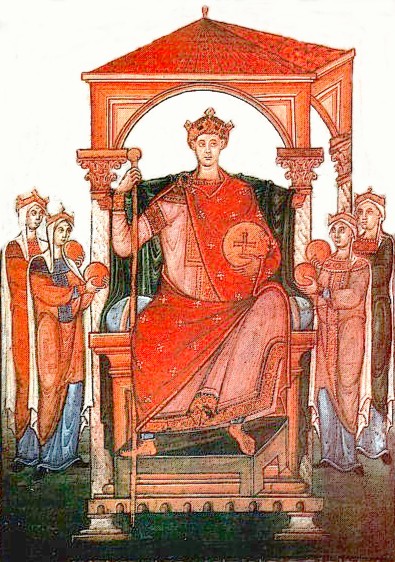
[December 7] Otto II, Holy Roman Emperor

Sobriquet: "The Red" (Rufus)
Parents: Otto I, Holy Roman Emperor, and Adelaide of Italy
Date of Birth: 955
House: Ottonian
Spouse(s): Theophanu, daughter of Constantine Skeleros and Sophia Phokaina
Predecessor: Otto I
Reign: 973 – 983
Brief: Otto was not the oldest son of his father but he was the only legitimate one left alive by 957. He was raised by his illegitimate brother, William, archbishop of Mainz, and the margrave of Saxony, Odo.  He was elected co-king of Germany in 961 at the age of six alongside his father and in 967 was crowned co-emperor. Unfortunately, he languished for many years without any authority or proper training, only succeeding to power when his father died of a fever in 973. In 976, a civil war broke out between Otto and his cousin Henry II, duke of Bavaria, over the titles to Swabia. Otto won the battle and, as punishment, reduced the size of Bavaria and Swabia. A second rebellion the next year ended with Henry II arrested and his son sent to a monastery. Otto II spent much of the rest of his reign conquering southern Italy for the Holy Roman Empire. This brought him into conflict with the Byzantine Empire and the Fatimid Caliphate who both claimed Sicily and parts of Naples. His lieutenant in the south, Pandulf, duke of Spoleto, Salerno, and Benevento, died in 981 leaving his three sons each with a duchy, which weakened Otto's power in Italy. Otto lost at the Battle of Stilo in 982 and many of his officers were killed, leaving southern Italy open to further Moorish and Byzantine aggression. Otto called together the German nobles in northern Italy to elect his son as his successor and then took his army to the Slavic lands to suppress a great rebellion against Christianity there. While fighting, the pope died and Otto was forced back to Italy to select a new candidate. Unfortunately, while there, Otto died of a malaria outbreak, his toddler son succeeding him to the throne under a regency government led by the escaped pretender Henry II. 
Date of Death: 7 December 983
Successor: Otto III

Other Monarchs Who Died Today:
  • Eutychian, pope of Rome (283)
  • Innocent IV, pope of Rome (1254)
  • Boleslaus V, king of Poland (1279)
Thursday, November 8, 2012

[November 8] Louis IV, king of East Francia

Surnamed: "The Child"
Parents: Arnulf, king of East Francia, and Ota of Hesse
Born: September 893
House: Carolingian
Predecessor: Arnulf
Reign: 899 – 911
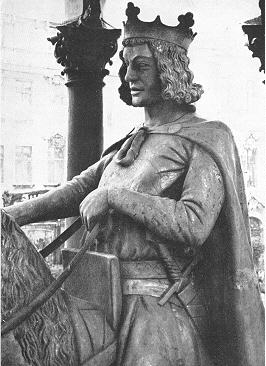
Brief: Born the only legitimate son of Roman Emperor and king of East Francia Arnulf of Carinthia, Louis the Child ascended the throne of the East Franks at the age of six. His coronation in 900 was the earliest recorded at the time, but the child king was powerless as his German empire fell around him. From the beginning, East Francia was ravaged by the Magyars. The boy was sickly and his government was controlled by a few nobles and bishops. When his half-broter Zwrntibold died in 900, The remnants of Lotharingia (Lorraine) were added to East Francia, expanding the state into a nascent Holy Roman Empire. In 903, under the leadership of his regents, Louis promulgated the first customs tax in Germany. Louis' army was constantly on the defensive against the Magyars despite a few victories. The army was almost complete destroyed in 910, soon after Louis took direct command of his army. Louis died distraught at the age of eighteen. His death brought a power vacuum to East Francia until Henry the Fowler helped fill it. Conrad of Franconia was elected as his successor, fighting the urge to elect the Carolingian king of West Francia and reunite the old empire once more. The nobles in Lorraine chose Charles the Simple, however, and the Holy Roman Empire would remain divided for another thousand years.
Date of Death: 8 November 911
Successor: Conrad I

Other Monarchs Who Died Today:
  • Agapetus II, pope of Rome (955)
  • Baldwin IV, count of Hainaut (1171)
  • Conrad, count palatine of the Rhine (1195)
  • Louis VIII, king of France (1226)
  • Natsuka Masaie, daimyo in Japan (1600)
  • Jahangir, emperor of India (1627)
  • Francisco I, king of the Two Sicilies (1830)

Monday, October 15, 2012

[October 15] Lambert, Holy Roman Emperor

Parents: Guy III, duke of Spoleto, and Ageltrude
Born: 880
House: Guideschi
Spouse(s): (1) Isabel, daughter of John, earl of Atholl, and Marjory of Mar, then (2) Isabella, daughter of Uilleam II, earl of Ross, and Euphemia
Predecessor: Guy
Reign: 892 – 898
Brief: The earliest records of Lambert begin with his coronation alongside his father in 891 at the age of roughly eleven. Pope Formosus, however, found the Guideschi emperor and his son intolerable and requested Arnulf of Carinthia, another man of Carolingian descent, to come and liberate Rome. A civil war in Italy broke out between the Guideschi's and Arnulf, with Guy dying in late 892. In 894, Arnulf returned with another army but decided against conquering all of Italy and deposing Lambert. For a third time in 895, Arnulf invaded but Lambert would not meet him in battle, which lost him considerable support among the nobility but saved his life. Arnulf conquered Rome in 896, freeing the pope and earning the crown. Lambert was formally deposed but Arnulf suffered a stroke and the pope died soon after, thus Lambert reasserted his claim. The new pope and his successor confirmed Lambert as emperor, but Lambert was assassinated in 898 while hunting after capturing Adalbert of Tuscany, one of his many rivals for the Italian throne. The Imperial throne was contested between multiple claimants while Spoleto fell to his brother, Guy IV.
Date of Death: 15 October 898
Successor: Arnulf (as Holy Roman Emperor), Guy IV (in Spoleto)

Other Monarchs Who Died Today:
  • Theophilus, pope of Alexandria (412)
  • Otto-Henry, duke of Burgundy (1002)
  • Urban VI, pope of Rome (1389)

Saturday, October 6, 2012

[October 6] Charles II, emperor of Rome

Surnamed: "The Bald"
Parents: Louis I, emperor of Rome, and Judith
Date of Birth: 13 June 823
House: Carolingian
Spouse(s): (1) Ermentrude, daughter of Odo I, count of Orléans, and Engeltrude, then (2) Richilde, daughter of Bivin, count of Ardennes
Predecessor: Louis II
Reign: 875 – 877
Brief: The youngest son of Emperor Louis the Pious, Charles was a somewhat unexpected heir who was given West Francia following the Treaty of Verdun n 843. In the fighting prior to the treaty, Charles allied with his brother, Louis, against Emperor Lothair I, defeating him in 841. As king in what would one day be France, Charles ruled a relatively peaceful land except for the southern regions where constant warfare with the Moors occasionally drew his interest. After some infighting throughout the 860s, Charles and Louis divided the lands of Lothair II according to the Treaty of Mersen. Viking attacks from the north and rebellions in Brittany dominated the remaining years of his administration in West Francia. In a surprise move, the king was crowned Emperor Charles II in 875 following the death of his nephew. This sparked a new round of civil war between the rival branches of the Carolingians. To make matters worse, increased attacks by the Moors in Italy forced Charles to send an army to help the pope, though few of his nobles would back the expedition. Emperor Charles died while returning from the short campaign in southern Italy and was buried in Burgundy.
Date of Death: 6 October 877
Successor: Charles III (as Emperor), Louis II (in West Francia)

Other Monarchs Who Died Today:

  • Samuil, tsar of Bulgaria (1014)
  • Dawit I, emperor of Ethiopia (1413)
  • Charles Emmanuel IV, king of Sardinia (1819)
  • Duc Duc, emperor of Vietnam (1883)

Monday, May 7, 2012

[May 7] Otto I, Holy Roman Emperor

Surame: "The Great"
Parents: Henry I, king of Germany, and Matilda of Ringelheim
Date of Birth: 23 November 912
House: Ottonian
Spouse: Eadgyth, daughter of Edward I, king of Wessex, and Æfflæd, then Adelaide, daughter of Rudolf II, king of Burgundy, and Bertha of Swabia
Predecessor: Henry I
Reign: 936 – 973
Summary: Otto was born to Henry the Fowler's second wife in 912. Little of his youth is known but he first was active in the military during his father's campaigns against the Slavs. Otto's first illegitimate son, William, was born in 929 during these campaigns and that son would later become the Archbishop of Mainz. When Conrad I, king of Germany, died in 918, Otto's father was elected the new king. Henry was the first Saxon, rather than Frank, to rule over East Francia. Henry was given the right of sole succession in Germany making Otto the heir apparent. His two brothers were promised lands and titles instead. Henry then made an alliance with the king of Wessex in England and married Otto to one of the king's daughters. When Henry died in 936, Otto became the duke of Saxony and king of Germany, both hereditary titles. Unlike his father, Otto attempted in all his manners to appear the successor of Charlemagne. While he aspired to France, he accepted rulership of Germany and Lotharingia (Lorraine) first. Four other German rulers submitted formally to his authority. Otto began his reign with a unified kingdom not seen for many years.

Troubles started for Otto almost immediately. In 937, Bavaria rose up in rebellion and Otto was forced to depose the duke and install a loyal duke instead. The original duke was eventually restored but rose up again a year later and was much more successful this time around. The Bavarian duke recruited leaders from all around Germany in his second uprising and joined with France as well since King Louis IV wished to retake Lorraine. Otto finally reconciled with the disaffected parties and forced them to show public penance on Christmas of 941. The half-decade of rebellions was over. For the next ten years, Otto consolidated his power in Germany, arranging royal marriages and arranging a merit-based system of promotion. Germany became a true international state during this time and Otto centralized authority under himself directly, at the expense of the other German dukes and his two brothers. Internationally, Otto was continuously butting heads with France throughout his reign because, while Otto claimed succession from Charlemagne, in France Charlemagne's descendants, the Carolingians, still ruled. Burgundy and Bohemia, two independent, realms, both entered into long-term associations with Germany and could, by this time, be considered quasi-vassal states of the latter. In the east, Otto fought a long and continuous war against the Slavs. The Slavs in the north joined forces with the Danish king and caused a constant nuisance there. Political infighting in Italy gave Otto the chance to unify most of Charlemagne's empire once and for all. Otto sent his son, Luidolf, sough in 951 to overthrow the current Roman Imperial claimant, Berengar II. Luidolf arrived, however, unopposed. Otto quickly came in on October 10, 951, he was crowned king of Italy as soon as he arrived. Liudolf soon after went into open civil war against his father and he singlehandedly led the rest of Germany in rebellion. When Magyars from Hungary invaded Germany in 954, Otto blamed his son and the rebels. Sentiment quickly returned to Otto and he reasserted himself in Germany. Within two years, most of the leaders of the rebellion, including his own son, were dead. Meanwhile, Otto was able to centralize his authority even further with through the fear of invasion from the Magyars. It took another year, but Otto was finally able to defeat them as well. In 957, Otto led a second campaign into Italy and this time demanded that the pope crown him Roman Emperor. With his coronation, the titles "king of Germany" and "king of Italy" were linked in dynastic union under the all-encompassing title "Holy Roman Emperor." A few years later, Otto called a synod to discuss the relationship between the Papacy and the Empire. They agreed that the pope would remain spiritual leader while the emperor would rule as secular leader. Problems regarding this agreement arose again many years later in the Investiture Controversy. Almost as soon as Otto left, Italy rose up in rebellion. Otto arranged for his illegitimate son to act as regent for his legitimate surviving son, Otto (II). Otto then marched to Italy and captured all the rebel leaders. The emperor then sought further assurances by marrying his son to a Byzantine princess, thereby legitimizing his own title of Roman Emperor in the eyes of the eastern empire. Otto fell ill with fever in 973 and died at the age of 60. His son succeeded without opposition.
Date of Death: 7 May 973
Successor: Otto II

Other Monarch Deaths:
Feodor III, tsar of Russia (1682)

Monday, April 16, 2012

[April 16] Berengar, Holy Roman Emperor

Parents: Eberhard, duke of Friuli, and Gisela of the Franks
Date of Birth: circa 845
House: Unruoching
Spouse: Bertilla, then Anna, daughter of Leo VI, emperor of Constantinople
Predecessor: Louis III
Reign: 915 – 924
Date of Death: 16 April 924
Successor: Otto I

Other Monarchs Who Died Today:
Marcus Salvius Otho, emperor of Rome (69)
al-Walid, Caliph of Sunni Islam (744)
Sviatopolk II, grand prince of Kiev (1113)
Frederick I, duke of Austria (1198)

Friday, March 2, 2012

[March 2] Francis II, Holy Roman Emperor

Parents: Leopold II, Holy Roman Emperor, and Maria Luisa of Spain
Date of Birth: 12 February 1768
House: Habsburg-Lorraine
Spouse: Elisabeth of Württemberg, then Maria Theresa of Naples, then Maria Ludovika of Austria-Este, then Caroline Augusta of Bavaria
Reign: 1792 – 1806
Predecessor: Leopold II
Summary: Few monarchs in history can say that they were the last ruler of an empire, yet Francis II was precisely that man. Ruling the Holy Roman Empire during the time of the Napoleonic Wars, he saw the 1,000-year empire finally come to an end. The emperor was born in Tuscany, the son of the grand duke but was raised in Vienna with his uncle in preparation for his eventually succession to the imperial throne. The boy was isolated from most people during his childhood to better enable him to lead without advisors. To give him martial experience, he joined the Hungarian regiment of the army and became a soldier. Emperor Joseph II died in 1790 and Francis's father, Leopold, became the new emperor. Francis served as deputy governor of Austria while his father tried to rally support for the Empire. But after only two years in office, Leopold died, leaving Austria and the Empire to the young Francis. 


Francis became emperor during the years of the French Revolutionary Wars. His aunt, Marie Antoinette, was executed in 1792 and Austria maintained strained relations with France from that point forward. During the war, he constantly switched sides and profited greatly from it. Austria annexed Venice and Dalmatia, even while losing lands west of the Rhine. After the defeat at Austerlitz, Francis agreed to the Treaty of Pressurg that basically ended the Holy Roman Empire as Napoleon took over governance of Germany. With no further purpose for the title, Francis abdicated the Holy Roman Imperial throne and declared himself to be Francis I, emperor of Austria. Little else changed, though. He attacked France in 1809 but was forced to ally with France the next year, wedding his daughter Marie-Louise to him. Austria had become a vassal state of France. In 1813, Austria switched sides again and led the Allies toward France's defeat. Francis was nominated president of the Congress of Vienna and he also became leader f the German Confederation, a successor state to Napoleon's Confederation of the Rhine. Following the war, Francis downsized the Austrian army and made his government more transparent and accessible to the people. The emperor died in 1835, one of the best remembered of the Holy Roman Empire's many monarchs.
Date of Death: 2 March 1835
Successor: Ferdinand I

Other Monarchs Who Died Today:
  • Lothair I, emperor of Rome (855)
  • Nicholas I, emperor of Russia (1855)

Thursday, January 12, 2012

[January 12] Maximilian I, Holy Roman Emperor

Parents: Frederick III, Holy Roman Emperor, and Eleanor of Portugal
Date of Birth: 22 March 1459
Royal House: Habsburg
Spouse: Mary, Duchess of Burgundy, then Anne of Brittany, then Bianca Maria Sforza
Predecessor: Frederick III as Holy Roman Emperor, Sigismund as Archduke of Austria
Reign: 1486 – 1519 (Co-emperor until 1493)
Summary: Maximilian was a lucky man. He was born to the politically powerful Habsburg family and he married into the incredibly wealthy House of Valois-Burgundy. Indeed, his only misfortune in youth was the loss of the Habsburg's ancestral lands to the Swiss Confederacy. In 1477, his wife's father, Charles the Bold, died leaving the entire Burgundian inheritance to her. This land included all of the Low Countries (Belgium, Netherlands, and Luxembourg) as well as vast territories in France and modern-day Germany, as well as a few scraps in Italy and Switzerland. As husband, Maximilian took on the job of administering the land in the name of his wife. Mary died in 1482 and their son, Philip, became the official duke but was far too young to rule. After negotiations with France, Burgundy became a crown possession of the Habsburg monarchy and by far the wealthiest component.

As Emperor, Maximilian had a more shaky reign. War between Austrian counties caused the Holy Roman Empire to recognize the secession of the Swiss Confederation from the Empire in 1499. War in Italy forced the HRE and France to bump heads again. And worst of all, the other German magnates felt that the Habsburgs were using too many Imperial resources to fight what they viewed as dynastic warfare. To fund all his enterprises, Maximilian went into deep debt, an amount that would not be paid off for nearly 100 years. Maximilian died in 1519, his son Philip predeceasing him by some 13 years. He was, therefore, succeeded by his grandson, Charles, who became Charles V, Holy Roman Emperor, upon the latter's death. Perhaps Maximilian's greatest legacy to history was the marriage of his son, Philip, to the heiress of Castile and Aragon, thereby giving the Habsburg dynasty the largest—at least on paper—empire that ever spanned the world: the Spanish Empire.
Date of Death: 12 January 1519
Successor: Charles V

Labels

[brief] (102) female monarch (31) Capet (26) [abbreviated] (19) Roman Empire (17) Great monarchs (16) Japan (15) Papacy (15) England (13) saints (13) France (11) Portugal (11) [Missing Deaths] (11) Habsburg (10) Sweden (10) Byzantine Empire (9) Carolingian (9) China (9) Hohenzollern (9) Oldenburg (9) Holy Roman Empire (8) Japan (dynasty) (8) Aragón (7) Austria (7) Denmark (7) Electorate (7) Ethiopia (7) Hungary (7) Navarre (7) Norway (7) Romanov (7) Russia (7) Saxony (7) Scotland (7) Wettin (7) Wittelsbach (7) Bavaria (6) Burgundy (6) Egypt (6) Italy (6) Lorraine (6) Luxembourg (6) Persia (6) Poland (6) Sicily (6) Spain (6) Valois (6) Capet-Burgundy (5) Franks (5) Germany (5) Plantagenet (5) Prussia (5) Quraish (5) Solomon (Ethiopia) (5) Tuscany (5) Anjou (4) Aquitaine (4) Barcelona (dynasty) (4) Bohemia (4) Brittany (4) Burgundy-Aviz (4) Burma (4) Capet-Valois (4) Castile (4) Constantinople (Patriarchate) (4) Habsburg-Lorraine (4) Holstein-Gottorp-Romanov (4) India (4) Ireland (4) Jerusalem (4) Jiménez (4) Kiev (4) Mongolia (4) Naples (4) Netherlands (4) Normandy (4) Osman (4) Ottoman (4) Palaeologos (4) Savoy (4) Savoy (dynasty) (4) Trastámara (4) Wales (4) Afghanistan (3) Albania (3) Bagrationi (3) Banu Hashim (3) Blois (3) Borjigin (3) Bourbon (3) Brabant-Hesse (3) Brandenburg (3) Capet-Bourbon (3) Cologne (3) Croatia (3) Cyprus (3) Disney (3) Fairhair (3) Georgia (3) Gwynedd (3) Hainaut (3) Hesse (3) Hohenstaufen (3) Holland (3) Holstein-Gottorp (3) Inca (3) Islam (3) León (3) Limburg (3) Lithuania (3) Livonia (3) Lothier (3) Macedonia (dynasty) (3) Mainz (3) Mann (3) Medici (3) Morocco (3) México (3) Nassau (3) Nguyễn (3) Serbia (3) Stuart (Stewart) (3) Toungoo (3) Tudor (3) Turkey (3) Vaudemont (3) Vietnam (3) Welf (3) Wessex (3) published articles (3) Abberfraw (2) Aberffraw (2) Alexandria (patriarchate) (2) Angevins (2) Anglo-Saxon (2) Ardennes-Metz (2) Auvergne (2) Ayyubid (2) Basarab (2) Bernadotte (2) Billung (2) Boulogne (2) Brabant (2) Bruce (2) Burgundy-Bragança (2) Caliphate (2) Cilicia (2) Constantine (2) Crovan (2) Denmark (Dynasty) (2) Draculesti (2) Dreux (2) Dunkeld (2) Dutch Republic (2) Estridsen (2) Flanders (2) Florence (2) Further Austria (2) Greece (2) Habsburg-Spain (2) Hanover (2) Hardrada (2) Hauteville (2) Hawai'i (2) Ivrea (2) Joseon (2) Karadordevic (2) Konbaung (2) Korea (2) Maya (2) Merovingian (2) Milan (2) Ming (2) Monaco (2) Nassau-Orange (2) Nassau-Weilburg (2) Norman (2) Novgorod (2) Orange (2) Ottonian (2) Piast (2) Piedmont-Savoy (2) Poitiers (dynasty) (2) Robertian (2) Romania (2) Rurik (2) Sardinia (2) Saxe-Coburg-Gotha (2) Seljuk (2) Siam (2) Syria (2) Teutonic Knights (2) Thailand (2) Theodosian (2) Thuringia (2) Timurid (2) Tokugawa (2) United Kingdom (2) Valois-Burgundy (2) Vandal (2) Venice (2) Visconti (2) Vladimir (2) Wallachia (2) Württemberg (2) York (2) Yugoslavia (2) Zeeland (2) the Britons (2) 18th Dynasty (Egypt) (1) Abbasid (1) Adal (1) Agiad (1) Akinyele (1) Al Khalifa (1) Al-Said (1) Alawiyya (Egyptian) (1) Albret (1) Algeria (1) Algonquian (1) Amber (1) Angola (1) Anjou (dynasty) (1) Anjou-Hungary (1) Ansbach (1) Antonia (1) Antonine (1) Apulia (1) Arabia (1) Armenia (1) Arpad (1) Arsacid (1) Asen (1) Ashikaga (1) Athens (1) Avesnes (1) Avignon Papacy (1) Aviz-Beja (1) Aztec Empire (1) Baden (1) Bahrain (1) Balti (1) Barakzai (1) Barazkai (1) Barcelona (1) Battenberg (1) Belgium (1) Bengal (1) Berg (1) Berg (dynasty) (1) Bernicia (1) Bharatpur (1) Bhutan (1) Bjelbo (1) Bonaparte (1) Bonde (1) Bonngau (dynasty) (1) Borghese (1) Borja (1) Bosnia (1) Bourbon-Two Sicilies (1) Brandenburg-Ansbach (1) Brienne (1) Brutus (1) Bukhara (1) Bulgaria (1) Canossa (1) Capet-Dreux (1) Carthage (1) Celje (1) Celje (dynasty) (1) Chakri (1) Champagne (1) Champagne (dynasty) (1) Chartres (1) Cometopuli (1) Contantine (1) Cordoba (1) Craiovesti (1) Crusader States (1) Dalmatia (1) Damascus (1) Danesti (1) Debeubarth (1) Deira (1) Deira (dynasty) (1) Denmar (1) Dulo (1) Díaz (1) Early Han (1) East Anglia (1) East Francia (1) Eastern Han (1) Eastern Jin (1) Egmont (1) Estonia (1) Farnese (1) Fatimid (1) Fatimid Caliphate (1) Flanders (dynasty) (1) Flavian (1) Friuli (1) Gausi (1) Geneva (1) Geneva (dynasty) (1) Gordiani (1) Grimaldi (1) Guelders (1) Guideschi (1) Gwent (1) Gwynedd (dynasty) (1) Gyatso (1) Haag (1) Hainaut (dynasty) (1) Hanan Cuzco (1) Hashim (1) Hashimite (1) Hebrides (The Isles) (1) Hellenes (1) Herat (1) Hohenzollern-Ansbach (1) Hohenzollern-Sigmaringen (1) Holland (dynasty) (1) Hunfriding (1) Ibadan (1) Iran (1) Iturbide (1) Jaipur (1) Jin (1) Jordan (1) Julio-Claudian (1) Jungingen (1) Justinian (dynasty) (1) Kachwaha (1) Kalakaua (1) Kamehameha (1) Karrani (1) Kent (1) Kent (house) (1) Kestutis (1) Khurasan (1) Knights Templar (1) Komnenos (1) Kotromanić (1) Lakota Sioux (1) Lancaster (1) Latin Empire (1) Lebanon (1) Leuchtenberg (1) Lombards (1) Ludowinger (1) Lusignan (1) Luxembourg (dynasty) (1) Luxembourg-Limburg (1) Maan (1) Macedon (1) Magdeburg (1) Maine (1) Majorca (1) Malaysia (1) Manghit (1) Maratha Empire (1) Marinid (1) Matsunaga (1) Maurya (1) Mecklenburg (1) Mecklenburg-Strelitz (1) Meissen (1) Mercia (1) Mercia (dynasty) (1) Miniconjou (1) Moldavia (1) Montenegro (1) Montferrat (1) Morgannwg (1) Mortain (1) Mountbatten (1) Mughal (1) Muhammad Ali (1) Munster (1) Musat (1) Myanmar (1) Nakagawa (1) Ndongo and Matana (1) Nemanjic (1) Nepal (1) Nervo-Trajan (1) Neuchâtel (1) Nigeria (1) Nominoë (1) Northumbria (1) O'Brien (1) Obrenović (1) Odowa (1) Olgovich (1) Olympus (1) Orléans-Longueville (1) Ostrogoths (1) Ottawa (1) Pahlavi (1) Palatinate of the Rhine (1) Parma (1) Penthièvre (1) Petrović-Njegoš (1) Poděbrady (1) Pointiers (Ramnulfids) (1) Poitiers (1) Poitiers-Lusignan (1) Polignac (1) Powys (1) Prasat Thong (1) Premyslid (1) Provence (1) Přemyslid (1) Q'umarkaj (1) Qin (1) Qing (Manchu) (1) Reginar (1) Reginarid (1) Rethel (1) Rethel-Boulogne (1) Ribagorza (1) Rouergue (1) Roupenians (1) Sa Malietoa (1) Safavid (1) Salian (1) Salzburg (1) Samoa (1) Sarantapechos (1) Saud (1) Saudi Arabia (1) Second Triumvirate of Rome (1) Selangor (1) Selangor (dynasty) (1) Sforza (1) Shah (Nepal) (1) Shi'a Imamate (1) Shishman (1) Shivaji (1) Silesia (1) Simmern (1) Sinsinwar Jat (1) Skowronski (1) Slovenia (1) Sobieski (1) South Africa (1) South America (1) Sparta (1) Spoleto (1) Sture (1) Sudan (1) Sussex (1) Sverre (1) Swabia (1) Swasi (dynasty) (1) Swaziland (1) Swiss Confederation (1) Tang (1) Tenochtitlan (1) Teotihuacán (1) Terter (1) Tibet (1) Tikal (1) Tolkien (1) Toulouse (1) Tours (dynasty) (1) Transylvania (1) Tunisia (1) Umayyad (1) Unruoching (1) Valencia (1) Valois-Angoulême (1) Valois-Anjou (1) Valois-Orléans (1) Vasa (1) Vermandois (1) Visigoths (1) Vokil (1) Wangchuck (1) Wied-Neuwied (1) Windsor-Mountbatten (1) Württemberg (dynasty) (1) Yamato (1) Ying (Qin) (1) Yuan (1) Zanzibar (1) Zhao (Song) (1) Zhou (1) Zhu (1) Zogu (1) Zulu Nation (1) Zápolya (1) Zähringen (1) bretwalda (1) cardinal (1) fantasy (1) fiction (1) shogunate (1) terms (1) Árpád (1) Öuchi (1)