Showing posts with label Croatia. Show all posts

Tuesday, October 9, 2012

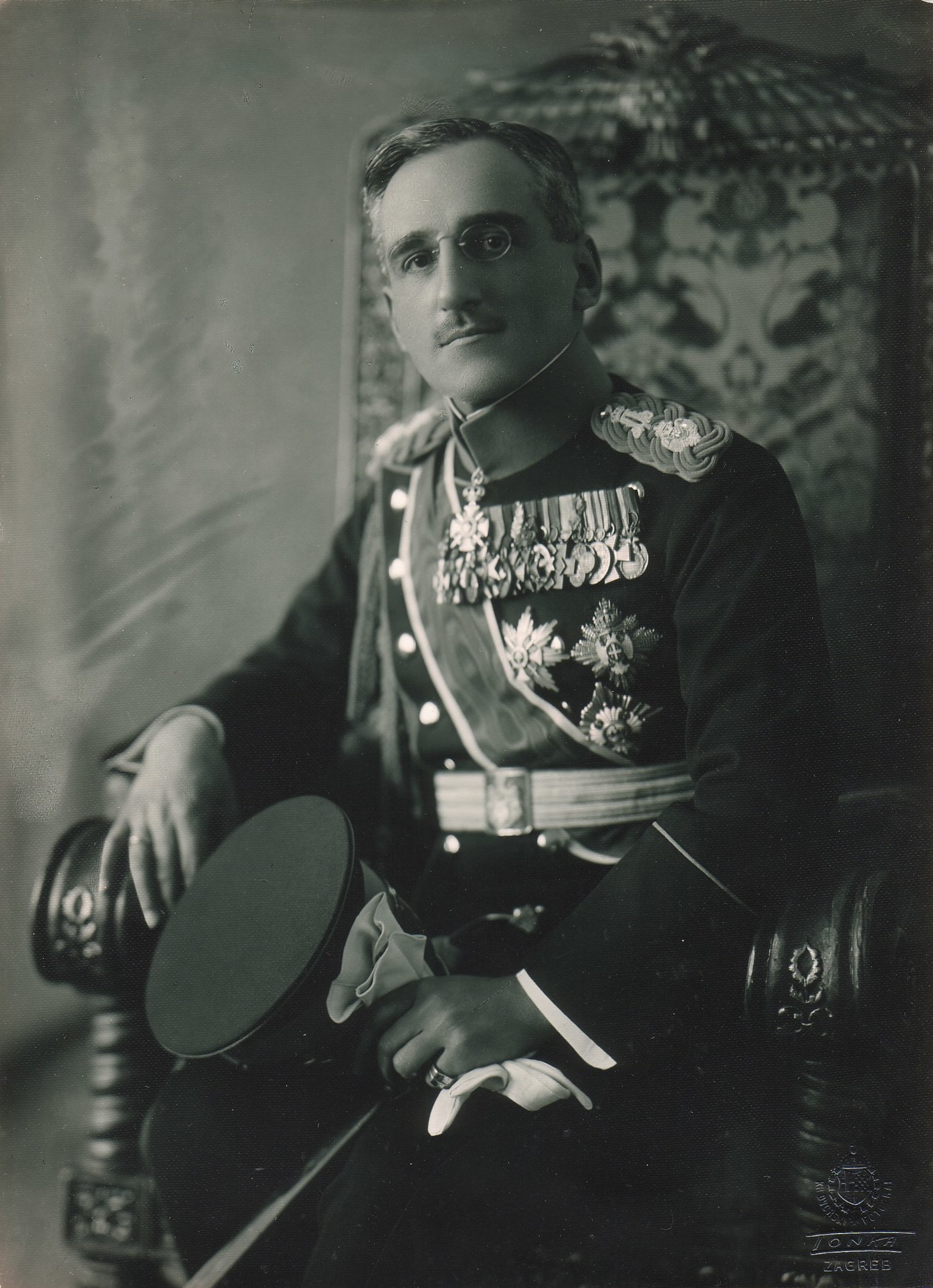
[October 9] Alexander I, king of Yugoslavia

Local Name: Aleksandar (Александар Ујединитељ)
Surnamed: "The Unifier" (Ujedinitelj)
Parents: Peter I, king of Serbia, and Zorka of Montenegro
Date of Birth: 16 Dcember 1888
House: Karadordevic
Spouse(s): Maria, daughter of Ferdinand, king of Romania, and Marie of Edinburgh
Predecessor: Peter I
Reign: 1929 – 1934
Brief: The second son of King Peter I of Serbia, Alexander became the crown prince when his brother was forced to renounce the throne due to mental instability. Alexander came into his own during the First and Second Balkan Wars where he served as the commander of the First Army. In 1914, Alexander was declared regent for his father. As World War I wore on, Alexander and his army were pushed back into Montenegro, Albania, and finally the Greek island of Corfu, but they were able to regroup and push the Central Powers out of the Balkans by the time peace was declared in 1918. In December 1918, Alexander accepted the title of King of the Serbs, Croats, and Slovenes for his father. Three years later, Alexander was that king. A coup in January 1929 allowed Alexander to take direct control over his government and he renamed the country the Kingdom of Yugoslavia, a name the kingdom had been popularly called since 1918. On 9 October 1934, Alexander was on a state visit to France when a gunman shot the king, his chauffeur, and the French foreign minister. All three died by the end of the day. The assassin was immediately cut down with a sword by a mounted French policeman before the crowd beat him to death. Alexander's assassination was one of the first recorded on film.
Date of Death: 9 October 1934
Successor: Peter II

Other Monarchs Who Died Today:

  • Clement II, pope of Rome (1047)
  • John I, king of Castile (1390)
  • Ashikaga Yoshiaki, shogun of Japan (1597)
  • Ernst Ludwig, grand duke of Hesse and by Rhine (1937)
  • Pius XII, pope of Rome (1958)

Sunday, July 29, 2012

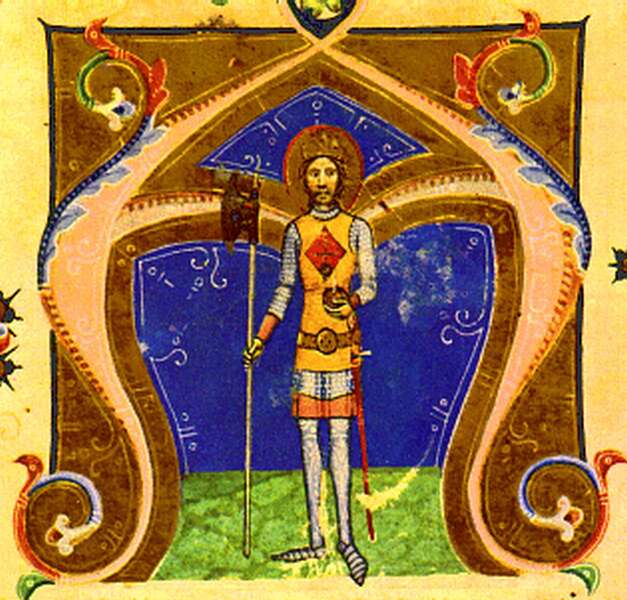
[July 29] St. Ladislaus I, king of Hungary

True Name: László
Parents: Béla I, king of Hungary, and Richeza of Poland
Date of Birth: 27 June 1046
Royal House: Arpad
Spouse: Adelaide, daughter of Rufolf I, duke of Swabia, and Adelaida of Savoy
Predecessor: Géza I
Reign: 1077 – 1095

Summary: Ladislaus was the son of a rival line of Hungarian kings related closely to Saint Stephen I, the first king of Hungary. In 1048, he was able to move to Hungary from Poland where his father was granted a third of the country as an underking to his brother, Andrew I, who had inherited the throne from King Peter following a pegan revolt. Since Hungary followed a system of tanistry, the next in line should have been Laidlsaus' father, Béla, but when Andrew had a son, Salamon, the old tradition went out the window. Andrew had his son crowned during his lifetime to ensure the succession. Ladislaus was witness to this, as was his father and two brothers, Géza and Lampert. Soon after, Ladislaus went with his father to Poland where he wished to recruit troops and depose his brother. In December 1060, Béla defeated and killed his brother and took the Hungarian crown. Béla died three years later and the Ladislaus and his brothers allowed the throne to revert to Salamon. Salamon refused and invaded the country using German troops, forcing the three brothers to flee back to Poland. Troops were provided to them by the Polish king and they invaded again in 1064. To avoid civil war, the brothers and the king made an agreement that returned one third of Hungary to Ladislaus' family. Things went much better afterwards. Salamon and the three brothers helped expand Hungary into the south. By 1071, the relationship between the king and the brothers began to deteriorate. Ladislaus remained mostly in his Hungarian lands to secure the borders in case the king wished to make a move against him. By 1074, the brothers and the king were in open war and at the Battle of Mogyorod, the brothers defeated the king, who fled Hungary. Géza was proclaimed king. Ladislaus became the commander of the military and he defeated Salamon again at Nyitra. When Géza died in 1077, Ladislaus, the next eldest, was proclaimed king, though Salamon still lived. It is likely he was crowned with a gift from Byzantine Emperor Michael VII since Salamon still had the true crown.


In 1078, Ladislaus married Adelaide, the daughter of Duke Rudolf I of Swabia and the chief rival of King Henry IV of Germany, brother-in-law to King Salamon. By 1081, Salamon was on the defensive and agreed to abdicate in exchange for significant lands. When Salamon was caught conspiring against the king a few months later, the king had the necessary recourse to imprison the former monarch. King Stephen I was canonized under the reign of Ladislaus, as well as his son Emeric. Ladislaus was a harsh king at first, which was necessary to centralize and solidify his rule in Hungary. Fifty years of civil war had ravaged the land and disorganized the government. Ladislaus took personal control over the reorganization of the Catholic Church in Hungary. When King Stephen II of Croatia died in 1091, Ladislaus actively claimed the throne through his sister, Ilona, who had been married to the former King Dmitar. The Byzantine Empire also wanted Croatia, however, and invaded eastern Hungary to distract the king. It took two years for Ladislaus to defeat the Byzantines and another four to suppress the rebellions, but by 1096, Croatia was soundly a Hungarian possession. Like so many other Hungarian kings, Ladislaus left no sons so his two nephews, Coloman and Almos, fought between themselves to be heir. Almos was named king of Croatia around 1095 but Coloman, the elder, wanted to be king after Ladislaus died. He left for Poland that year to rally support. Ladislaus left to help his nephews in Bohemia when Coloman returned with a Polish army. The king died suddenly upon hearing the news. His death was mourned for three years and a cycle of legends developed around him and his name. Multiple miracles were attributed to him and because of these, he was canonized by the Catholic Church in 1192. He is remembered as the patron saint of architecture.
Date of Death: 29 July 1095
Successor: Coloman
Canonized: 27 June 1192 (Roman Catholic Church)

Other Monarchs Who Died Today:
  • Pupienus, emperor of Rome (238)
  • Balbinus, emperor of Rome (238)
  • Olaf II, king of Norway (1030)
  • Urban II, pope of Rome (1099)
  • Philippe I, king of France (1108)
  • Urban VIII, pope of Rome (1644)
  • Umberto I, king of Italy (1900)

Thursday, May 31, 2012

[May 31] Géza II, king of Hungary


Parents: Béla II, king of Hungary, and Helena of Raska
Date of Birth: 1130
House: Árpád
Spouse: Euphrosyne, daughter of Mstislav I, grand prince of Kiev, and Liubava Dmitrievna
Predecessor: Béla II
Reign: 1141 – 1162
Summary: A child king of a relatively new kingdom, Géza was still young when his father died in 1141. His mother, Helena, served as his regent while an uncle, Belos, governed. A relative, Boris, disputed Géza's claim to the throne and in 1146 occupied the fortress at Pozsony. It took weeks for Hungarian forces to remove the pretender. It was Géza's first taste in war as well, as he personally led the armies against the troops of Boris and his Austrian ally, Henry II. When he returned to the capital, he married Euphrosyne, a daughter of the Kievan grand prince,  and took up management of his realm.

In 1147, Boris appeared in the country again in the company of King Louis VII of France, but the French king was on Crusade and promised to keep a close watch on Boris to ensure he did not escape to cause trouble again in Hungary. During the first years of his sole reign, he dealt with many problems on his borders. His allies in the Kievan 'Rus and in the south were constantly asking for aide against rival powers. Géza assisted where he could, but rarely committed more troops than necessary. In 1150, he led a campaign against a relative of Boris who had started rabble-rousing in Hungary. While Géza was away, Boris himself attacked southern Hungary supported by Byzantine troops. Géza largely ignored Boris and made peace with the Byzantine Empire, stranding Boris without an army. Further intrigue plagued the later years of Géza's reign. His brother, Stephen, attempted to take the throne from Géza with the support of their uncle, Belos, who had served as governor in earlier years. Géza defeated the conspiracy and Stephen was forced to flee first to the Holy Roman Empire and then to Constantinople. Géza's other brother, Ladislaus, also attempted a coup in 1159 but was equally defeated. Among Géza's last acts was to recognize the legitimacy of Pope Alexander III in the Investiture Controversy and abandon his rights to invest bishops within Hungary. He died the next year leaving an intact kingdom to his son, Stephen III.
Date of Death: 31 May 1162
Successor: Stephen III

Other Monarch Deaths:
Petronius Maximus, emperor of Rome (455)
Ashikaga Yoshimitsu, shogun of Japan (1408)
Martin I, king of Aragón (1410)
Friedrich Wilhelm I, king of Prussia (1740)


Labels

[brief] (102) female monarch (31) Capet (26) [abbreviated] (19) Roman Empire (17) Great monarchs (16) Japan (15) Papacy (15) England (13) saints (13) France (11) Portugal (11) [Missing Deaths] (11) Habsburg (10) Sweden (10) Byzantine Empire (9) Carolingian (9) China (9) Hohenzollern (9) Oldenburg (9) Holy Roman Empire (8) Japan (dynasty) (8) Aragón (7) Austria (7) Denmark (7) Electorate (7) Ethiopia (7) Hungary (7) Navarre (7) Norway (7) Romanov (7) Russia (7) Saxony (7) Scotland (7) Wettin (7) Wittelsbach (7) Bavaria (6) Burgundy (6) Egypt (6) Italy (6) Lorraine (6) Luxembourg (6) Persia (6) Poland (6) Sicily (6) Spain (6) Valois (6) Capet-Burgundy (5) Franks (5) Germany (5) Plantagenet (5) Prussia (5) Quraish (5) Solomon (Ethiopia) (5) Tuscany (5) Anjou (4) Aquitaine (4) Barcelona (dynasty) (4) Bohemia (4) Brittany (4) Burgundy-Aviz (4) Burma (4) Capet-Valois (4) Castile (4) Constantinople (Patriarchate) (4) Habsburg-Lorraine (4) Holstein-Gottorp-Romanov (4) India (4) Ireland (4) Jerusalem (4) Jiménez (4) Kiev (4) Mongolia (4) Naples (4) Netherlands (4) Normandy (4) Osman (4) Ottoman (4) Palaeologos (4) Savoy (4) Savoy (dynasty) (4) Trastámara (4) Wales (4) Afghanistan (3) Albania (3) Bagrationi (3) Banu Hashim (3) Blois (3) Borjigin (3) Bourbon (3) Brabant-Hesse (3) Brandenburg (3) Capet-Bourbon (3) Cologne (3) Croatia (3) Cyprus (3) Disney (3) Fairhair (3) Georgia (3) Gwynedd (3) Hainaut (3) Hesse (3) Hohenstaufen (3) Holland (3) Holstein-Gottorp (3) Inca (3) Islam (3) León (3) Limburg (3) Lithuania (3) Livonia (3) Lothier (3) Macedonia (dynasty) (3) Mainz (3) Mann (3) Medici (3) Morocco (3) México (3) Nassau (3) Nguyễn (3) Serbia (3) Stuart (Stewart) (3) Toungoo (3) Tudor (3) Turkey (3) Vaudemont (3) Vietnam (3) Welf (3) Wessex (3) published articles (3) Abberfraw (2) Aberffraw (2) Alexandria (patriarchate) (2) Angevins (2) Anglo-Saxon (2) Ardennes-Metz (2) Auvergne (2) Ayyubid (2) Basarab (2) Bernadotte (2) Billung (2) Boulogne (2) Brabant (2) Bruce (2) Burgundy-Bragança (2) Caliphate (2) Cilicia (2) Constantine (2) Crovan (2) Denmark (Dynasty) (2) Draculesti (2) Dreux (2) Dunkeld (2) Dutch Republic (2) Estridsen (2) Flanders (2) Florence (2) Further Austria (2) Greece (2) Habsburg-Spain (2) Hanover (2) Hardrada (2) Hauteville (2) Hawai'i (2) Ivrea (2) Joseon (2) Karadordevic (2) Konbaung (2) Korea (2) Maya (2) Merovingian (2) Milan (2) Ming (2) Monaco (2) Nassau-Orange (2) Nassau-Weilburg (2) Norman (2) Novgorod (2) Orange (2) Ottonian (2) Piast (2) Piedmont-Savoy (2) Poitiers (dynasty) (2) Robertian (2) Romania (2) Rurik (2) Sardinia (2) Saxe-Coburg-Gotha (2) Seljuk (2) Siam (2) Syria (2) Teutonic Knights (2) Thailand (2) Theodosian (2) Thuringia (2) Timurid (2) Tokugawa (2) United Kingdom (2) Valois-Burgundy (2) Vandal (2) Venice (2) Visconti (2) Vladimir (2) Wallachia (2) Württemberg (2) York (2) Yugoslavia (2) Zeeland (2) the Britons (2) 18th Dynasty (Egypt) (1) Abbasid (1) Adal (1) Agiad (1) Akinyele (1) Al Khalifa (1) Al-Said (1) Alawiyya (Egyptian) (1) Albret (1) Algeria (1) Algonquian (1) Amber (1) Angola (1) Anjou (dynasty) (1) Anjou-Hungary (1) Ansbach (1) Antonia (1) Antonine (1) Apulia (1) Arabia (1) Armenia (1) Arpad (1) Arsacid (1) Asen (1) Ashikaga (1) Athens (1) Avesnes (1) Avignon Papacy (1) Aviz-Beja (1) Aztec Empire (1) Baden (1) Bahrain (1) Balti (1) Barakzai (1) Barazkai (1) Barcelona (1) Battenberg (1) Belgium (1) Bengal (1) Berg (1) Berg (dynasty) (1) Bernicia (1) Bharatpur (1) Bhutan (1) Bjelbo (1) Bonaparte (1) Bonde (1) Bonngau (dynasty) (1) Borghese (1) Borja (1) Bosnia (1) Bourbon-Two Sicilies (1) Brandenburg-Ansbach (1) Brienne (1) Brutus (1) Bukhara (1) Bulgaria (1) Canossa (1) Capet-Dreux (1) Carthage (1) Celje (1) Celje (dynasty) (1) Chakri (1) Champagne (1) Champagne (dynasty) (1) Chartres (1) Cometopuli (1) Contantine (1) Cordoba (1) Craiovesti (1) Crusader States (1) Dalmatia (1) Damascus (1) Danesti (1) Debeubarth (1) Deira (1) Deira (dynasty) (1) Denmar (1) Dulo (1) Díaz (1) Early Han (1) East Anglia (1) East Francia (1) Eastern Han (1) Eastern Jin (1) Egmont (1) Estonia (1) Farnese (1) Fatimid (1) Fatimid Caliphate (1) Flanders (dynasty) (1) Flavian (1) Friuli (1) Gausi (1) Geneva (1) Geneva (dynasty) (1) Gordiani (1) Grimaldi (1) Guelders (1) Guideschi (1) Gwent (1) Gwynedd (dynasty) (1) Gyatso (1) Haag (1) Hainaut (dynasty) (1) Hanan Cuzco (1) Hashim (1) Hashimite (1) Hebrides (The Isles) (1) Hellenes (1) Herat (1) Hohenzollern-Ansbach (1) Hohenzollern-Sigmaringen (1) Holland (dynasty) (1) Hunfriding (1) Ibadan (1) Iran (1) Iturbide (1) Jaipur (1) Jin (1) Jordan (1) Julio-Claudian (1) Jungingen (1) Justinian (dynasty) (1) Kachwaha (1) Kalakaua (1) Kamehameha (1) Karrani (1) Kent (1) Kent (house) (1) Kestutis (1) Khurasan (1) Knights Templar (1) Komnenos (1) Kotromanić (1) Lakota Sioux (1) Lancaster (1) Latin Empire (1) Lebanon (1) Leuchtenberg (1) Lombards (1) Ludowinger (1) Lusignan (1) Luxembourg (dynasty) (1) Luxembourg-Limburg (1) Maan (1) Macedon (1) Magdeburg (1) Maine (1) Majorca (1) Malaysia (1) Manghit (1) Maratha Empire (1) Marinid (1) Matsunaga (1) Maurya (1) Mecklenburg (1) Mecklenburg-Strelitz (1) Meissen (1) Mercia (1) Mercia (dynasty) (1) Miniconjou (1) Moldavia (1) Montenegro (1) Montferrat (1) Morgannwg (1) Mortain (1) Mountbatten (1) Mughal (1) Muhammad Ali (1) Munster (1) Musat (1) Myanmar (1) Nakagawa (1) Ndongo and Matana (1) Nemanjic (1) Nepal (1) Nervo-Trajan (1) Neuchâtel (1) Nigeria (1) Nominoë (1) Northumbria (1) O'Brien (1) Obrenović (1) Odowa (1) Olgovich (1) Olympus (1) Orléans-Longueville (1) Ostrogoths (1) Ottawa (1) Pahlavi (1) Palatinate of the Rhine (1) Parma (1) Penthièvre (1) Petrović-Njegoš (1) Poděbrady (1) Pointiers (Ramnulfids) (1) Poitiers (1) Poitiers-Lusignan (1) Polignac (1) Powys (1) Prasat Thong (1) Premyslid (1) Provence (1) Přemyslid (1) Q'umarkaj (1) Qin (1) Qing (Manchu) (1) Reginar (1) Reginarid (1) Rethel (1) Rethel-Boulogne (1) Ribagorza (1) Rouergue (1) Roupenians (1) Sa Malietoa (1) Safavid (1) Salian (1) Salzburg (1) Samoa (1) Sarantapechos (1) Saud (1) Saudi Arabia (1) Second Triumvirate of Rome (1) Selangor (1) Selangor (dynasty) (1) Sforza (1) Shah (Nepal) (1) Shi'a Imamate (1) Shishman (1) Shivaji (1) Silesia (1) Simmern (1) Sinsinwar Jat (1) Skowronski (1) Slovenia (1) Sobieski (1) South Africa (1) South America (1) Sparta (1) Spoleto (1) Sture (1) Sudan (1) Sussex (1) Sverre (1) Swabia (1) Swasi (dynasty) (1) Swaziland (1) Swiss Confederation (1) Tang (1) Tenochtitlan (1) Teotihuacán (1) Terter (1) Tibet (1) Tikal (1) Tolkien (1) Toulouse (1) Tours (dynasty) (1) Transylvania (1) Tunisia (1) Umayyad (1) Unruoching (1) Valencia (1) Valois-Angoulême (1) Valois-Anjou (1) Valois-Orléans (1) Vasa (1) Vermandois (1) Visigoths (1) Vokil (1) Wangchuck (1) Wied-Neuwied (1) Windsor-Mountbatten (1) Württemberg (dynasty) (1) Yamato (1) Ying (Qin) (1) Yuan (1) Zanzibar (1) Zhao (Song) (1) Zhou (1) Zhu (1) Zogu (1) Zulu Nation (1) Zápolya (1) Zähringen (1) bretwalda (1) cardinal (1) fantasy (1) fiction (1) shogunate (1) terms (1) Árpád (1) Öuchi (1)