
Showing posts with label Afghanistan. Show all posts
Showing posts with label Afghanistan. Show all posts
Monday, October 1, 2012
[October 1] Abdur Rahman Khan, emir of Afghanistan
Surnamed: "The Iron Amir"
Parents: Mohammad Afzal Khan, emir of Afghanistan
Date of Birth: around 1840
House: Barakzai
Predecessor: Ayub
Reign: 1880 – 1901
Brief: The early years of Abdur Rahman's life were dominated by political infighting over the succession to the Afghan throne. In 1868, Abdur was finally forced to flee to Persia after briefly serving as governor of northern Afghanistan for his brother, Azam Khan. After eleven years in exile, the British government invited him to return to Afghanistan and take over the government following the conclusion of the Second Anglo-Afghan War in 1880. It only took a few years to remove most of the British presence from the land and secure his throne from would-be usurper relatives. Balanced between British India on one side and the Russian Empire on the other, Abdur Rahman attempted to remain as a neutral buffer between the two states. By the time of his death, he had consolidated full control over Afghanistan like none of the rulers before him, defeating local tribes and silencing rebellious family members, though he did all this through blatant coercion, espionage, and despotism. The internationally-recognized border of Afghanistan with Pakistan was determined by international conference during his reign. His son succeeded to the emirate after him.
Brief: The early years of Abdur Rahman's life were dominated by political infighting over the succession to the Afghan throne. In 1868, Abdur was finally forced to flee to Persia after briefly serving as governor of northern Afghanistan for his brother, Azam Khan. After eleven years in exile, the British government invited him to return to Afghanistan and take over the government following the conclusion of the Second Anglo-Afghan War in 1880. It only took a few years to remove most of the British presence from the land and secure his throne from would-be usurper relatives. Balanced between British India on one side and the Russian Empire on the other, Abdur Rahman attempted to remain as a neutral buffer between the two states. By the time of his death, he had consolidated full control over Afghanistan like none of the rulers before him, defeating local tribes and silencing rebellious family members, though he did all this through blatant coercion, espionage, and despotism. The internationally-recognized border of Afghanistan with Pakistan was determined by international conference during his reign. His son succeeded to the emirate after him.
Date of Death: 1 October 1901
Successor: Habibullah KhanOther Monarchs Who Died Today:
- Eadwig, king of the English (959)
- Alan III, duke of Brittany (1040)
- Gerard de Ridefort, grand master of the Knights Templar (1189)
- Boniface IX, pope of Rome (1404)
- Mindon Min, king of Burma (1878)

Monday, July 23, 2012
[July 23] Mohammed Zahir Shah, king of Afghanistan
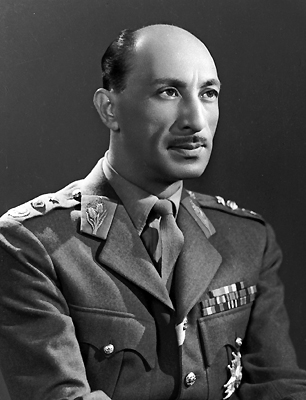
Date of Birth: 16 October 1914
Royal House: Barakzai
Spouse: Humaira Begum, daughter of Sardar Ahmad Shah Khan and Zarin Begum
Predecessor: Mohammed Nadir Shah
Reign: 1933 – 1973
Summary: An ethnic Persian, Zahir Shah was born in Kabul to Nadir Shah, the senior member of the royal family. Zahir's father gained the throne in 1929 when Habibullah Ghazi was executed. His father was a distant relative of the previous king, but his line had been exiled to British India until 1901 when Emir Abdur Rahman Khan, emir of Afghanistan at the time, invited the family back. Kabul had many royal princes of many different lines when Zahir was young, and he went to a special school just for them. After he finished, he traveled to France where his father was acting as a diplomatic envoy. When he returned in the late 1920s, he enrolled in an infantry school then was appointed a privy counselor under his father. He eventually served as deputy war minister and minister of education. His father was assassinated in 1933 and Zahir was chosen as the new king.
For the first three decades of his reign, he did little in the way of ruling. His uncles, Sardar Mohammad Hashim Khan and Sardar Shah Mahmud Khan, ruled in his stead as regents. During this time, Afghanistan joined the LEague of Nations and was recognized by the United States. The kingdom joined into trade agreements with the Axis powers throughout the 1930s. Afghanistan mostly remained out of World War II despite its Axis ties, and in the aftermath of the war, Zahir Shah attempted to modernize Afghanistan. He founded the first university but other major improvements failed due to political infighting and general factionalism in the government and between clans. In 1964, Zahir took direct control over the government and introduced a new constitution which granted free elections, a parliament, civil rights, women's rights, and universal suffrage. He remained the chief-of-state as a constitutional monarch. The next nine years remained stable, though little progress was made in modernizing Afghanistan. When Zahir Shah left for Italy in 1973 to undergo eye surgery, he did not yet know that his cousin, Mohammed Daoud Khan, was going to stage a coup against his government. In August, Zahir Shah abdicated his throne in favour of a republican government in Afghanistan, desiring to avoid civil war.
Already in Italy, Zahir Shah moved into an apartment in Rome where he attended to his garden, and played golf and chess. The Soviet's backed the Afghan government soon after the coup and barred Zahir from returning from exile. When open war broke out in 1983, Zahir Shah attempted to form a government-in-exile, but factionalism ended that plan. The king finally returned to Afghanistan in 2002 after the Taliban Islamist government was overthrown in the wake of the US invasion. Many wished for a return to the monarchy of Zahir Shah, but the United States asked the former king to step out of politics. He returned to his former palace and many of his family members were granted important government posts in the transitional government. Beginning in 2002, Zahir Shah began to experience various injuries, including bruised ribs, a broken femur, intestinal problems, and nose bleed. By 2004 he could hardly speak and in 2007, he had become bedridden. Zahir Shah died in July of that year. He received a funerary procession from the presidential palace to a local mosque before being buried at the royal mausoleum, the last king of Afghanistan. His son, Ahmad Shah Khan, succeeded him as the former pretender to Afghanistan. He now lives in the United States and is well known for his poetry.
Date of Death: 23 July 2007
Successor: Ahmad Shah (as pretender)
Other Monarchs Who Died Today:
- Hassan II, king of Morocco (1999)
Saturday, February 18, 2012
[February 18] Timur, emperor of Samarkand
 |
| Timur at the Siege of Balkh |
Parents: Muhammad Taraqai and Tekina Mohbegim
Date of Birth: 8 April 1336
Royal House: Timurid
Spouse: Saray Milk-khanum, among others
Reign: 1370 – 1405
Summary: Many people know of the name Tamerlane, or in actuality Timür-e Lang, or Timur the Lame. Yet few know why he is famous or what he did. In actuality, he did little that had not already been accomplished. During his early years, he was known to claim the legacy of Genghis Khan, though he himself was of Turkish origin. He was Muslim, but it is unclear if he practiced the Sunni or the Shi'a form and both he held in high regard. He joined the army of the Chagatai Khanate, which ruled most of Central Asia, in 1360. He was a successful soldier but the Chagatai Khanate fell into civil war upon the death of Kurgan, its khan. Timur took the lead and turned the once-powerful Chagatai khanate into a figurehead organization under his indirect leadership. Timur began feuding for power with his brother, Husayn, and the brother was finally killed in 1370 and Timur took the throne of the Chagatai Khanate at Samarkand. Timur never took the title of khan, preferring the lesser title of amir and throughout his reign he continued to rule in the name of the Chagatai ruler of Transoxania, but the ruler at that point held no power.
In 1370, Timur began his regional conquest. For 35 years, he would become the dominant power in Central Asian politics creating an empire that would span across Persia to the Kurdish Steppe, encompass all of the Turkic people of Afghanistan, and stretch to the Indus River in Pakistan. He maintained conflicted alliances with many of his neighbors. Tokhtamysh, the khan of the Golden Horde north of Kazakhstan, was a refugee in his court before becoming khan. Timur and Tokhtamysh feuded frequently but Timur still supported him in his campaigns against Muscovy (Russia). When Abu Sa'id died, the Ilkhanate lost its leadership and Timur came to claim the title of "King of Kings". Timur was brutal in his conquest of Persia, killing tens of thousands and burning cities to the ground. War with Tokhtamysh was renewed when Timur was marching on Moscow and it consumed much of the 1380s and 1390s. In 1395, Timur finally defeated Tokhtamysh and destabilized the Golden Horde economy, sinking the region into poverty for the next two hundred years. With Central Asia under his control, Timur in 1398 invaded India, attacking Delhi. He continued his slaughter through Pakistan as he made his way to the Indian capital, finally sacking it in early 1399. That same year, Timur turned on the burgeoning Ottoman Empire in Turkey as well as the Mamluk sultanate in Egypt. Both were pushing into his Arabian territories and Tamerlane would not have it. He invaded Armenia and Georgia, enslaving the population and dispersing much of the citizenry. He sacked Baghdad in 1401 after a massacre of thousands. He then invaded Ankara and killed Ottoman Sultan Bayezid I. This prompted a decade-long interregnum in the Ottoman Empire. In 1404, Timur set up plans to invade China with the help of the recently-deposed Northern Yuan dynasty. Unfortunately for Timur, he died of fever or plague before reaching the Chinese border. While history has branded him as one of the only people capable of ruling out of Afghanistan, Timur was in fact a despotic and cruel tyrant whose memory in the region is not forgotten by those whose ancestors were suppressed and killed by him.
In 1370, Timur began his regional conquest. For 35 years, he would become the dominant power in Central Asian politics creating an empire that would span across Persia to the Kurdish Steppe, encompass all of the Turkic people of Afghanistan, and stretch to the Indus River in Pakistan. He maintained conflicted alliances with many of his neighbors. Tokhtamysh, the khan of the Golden Horde north of Kazakhstan, was a refugee in his court before becoming khan. Timur and Tokhtamysh feuded frequently but Timur still supported him in his campaigns against Muscovy (Russia). When Abu Sa'id died, the Ilkhanate lost its leadership and Timur came to claim the title of "King of Kings". Timur was brutal in his conquest of Persia, killing tens of thousands and burning cities to the ground. War with Tokhtamysh was renewed when Timur was marching on Moscow and it consumed much of the 1380s and 1390s. In 1395, Timur finally defeated Tokhtamysh and destabilized the Golden Horde economy, sinking the region into poverty for the next two hundred years. With Central Asia under his control, Timur in 1398 invaded India, attacking Delhi. He continued his slaughter through Pakistan as he made his way to the Indian capital, finally sacking it in early 1399. That same year, Timur turned on the burgeoning Ottoman Empire in Turkey as well as the Mamluk sultanate in Egypt. Both were pushing into his Arabian territories and Tamerlane would not have it. He invaded Armenia and Georgia, enslaving the population and dispersing much of the citizenry. He sacked Baghdad in 1401 after a massacre of thousands. He then invaded Ankara and killed Ottoman Sultan Bayezid I. This prompted a decade-long interregnum in the Ottoman Empire. In 1404, Timur set up plans to invade China with the help of the recently-deposed Northern Yuan dynasty. Unfortunately for Timur, he died of fever or plague before reaching the Chinese border. While history has branded him as one of the only people capable of ruling out of Afghanistan, Timur was in fact a despotic and cruel tyrant whose memory in the region is not forgotten by those whose ancestors were suppressed and killed by him.
Date of Death: 18 February 1405
Successor: Khalil Sultan
Other Monarchs Who Died Today:
- Tarasius, patriarch of Constantinople (806)
- Gregory V, pope of Rome (999)
- Yaropolk II, prince of Kiev (1139)
- Kublai Khan, khagan of the Mongol Empire and emperor of China (1294)
- Albert II, duke of Mecklenburg (1379)
Subscribe to:
Posts (Atom)