Showing posts with label Cologne. Show all posts

Wednesday, November 7, 2012

[November 7] St. Engelbert I, archbishop of Cologne

Parents: Engelbert I, count of Berg, and Margarete of Guelders
Born: circa 1185
House: Berg
Predecessor: Bruno IV and Dietrich I
Reign: 1216 – 1225
Brief: Engelbert entered the clergy at the age of twelve when he began schooling in Cologne. He was made provost of St. George chapel and eventually was made the provost of Cologne Cathedral in 1216. He began collecting over provostships at St. Severin, Aachen, Deventer, and Zutphen. He was offered the title bishop of Münster in 1203, but declined it since he was only eighteen. In 1206, Engelbert was excommunicated for supporting his cousin, the archbishop of Cologne, who supported Philip of Swabia as Holy Roman Emperor. Engelbert was pardoned in 1208 and joined the Albigensian Crusade against the Cathars of southern France in 1212 as penance. When he returned to Germany, he was made archbishop of Cologne.

Engelbert became a close confidant of Emperor Frederick II, joined him as imperial administer and acting as guardian for the emperor's son, Henry. In Cologne, he cleaned up the archbishopric and its finances, protecting them from rivals. He claimed the county of Berg in 1218 when his brother died, though Duke Walram III of Limburg claimed it as well. The dispute was resolved in 1220 and Engelbert served as count until his death. In Cologne, Engelbert reorganized the secular lands into what many considered a full ecclesiastical state. A conflict erupted in 1225 with a cousin in Essen who had been defrauding nuns. Engelbert wished to bring his cousin to trial for his crimes. The cousin, Frederick, confronted Engelbert and murdered him, though the intent was probably to capture the archbishop. He was buried in Cologne Cathedral in early 1226 and was immediately declared a martyr. Although he was never formally canonized, a saint biography and a feast day have both been appointed to him.
Date of Death: 7 November 1225
Successor: Heinrich I

Other Monarchs Who Died Today:
  • Umar, caliph of Sunni Islam (644)

Tuesday, August 14, 2012

[August 14] Rainald of Dassel, archbishop of Cologne


Parents: Reinold I, count of Dassel
Date of Birth: circa 1120

Predecessor: Frederick II von Berg
Reign: 1159 – 1167
Summary: Born into a wealthy Saxon noble family, Rainald was not the eldest son in the family and was destined for ecclesiastics rather than a life in politics or in the military. He began his schooling at Hildesheim in 1146 where he obtained the position of subdeacon. By 1148, he was a general provost and attended the Council of Rheims where he opposed changes to clerical dress. With the embassy of Holy Roman Emperor Frederick I, Rainald ventured to Rome in 1153 where he met Pope Eugene III and first revealed his political acumen. 
In 1154, he was made provost of Petersberg at Goslar and St. Mortiz at Hildesheim and was offered the episcopal seat at Hildesheim, but he declined the position. Two years later, Emperor Frederick made Rainald chancellor of the Empire, one of the highest posts in the Imperial bureaucracy. At the Diet of Besançon in 1157, Rainald fought for the rights of the German kings over that of the papacy, suggesting that while Catholicism should be emphasized and strengthened in Germany, the pope and all of Rome should submit to Imperial authority. With these proclamations, Rainald became one of the most politically contentious clerics in Christendom. For his devotion to Frederick, Rainald was made archbishop of Cologne while he was away in Italy.

When a schism occurred between Pope Alexander III and an antipope, Victor IV, Rainald supported the antipope and, in 1160, went to France and England to try and convince the kings there to support the claims of Victor IV. While passing through Milan, he was almost killed and forced to flee. For this injustice, Frederick sacked the city in 1162 after a prolonged siege. Nor surprisingly, Pope Alexander excommunicated Rainald in 1163 for supporting the wrong pope. Rainald responded by proclaiming the right of the emperor to dispose of the papal see. When Victor died in 1164, Rainald elected Paschall III to replace him as antipope. Soon after, the archbishop returned to Germany bringing with him relics of the Three Magi taken from the ruins of Milan. Germany was up in arms against the legitimate pope because of Reinald's rabble-rousing. With the tentative support of the king of England, Rainald took a leading role in the attempted canonization of Charlemagne in 1165. With Christian I of Buch, the archbishop of Mainz, Rainald travelled back to Italy in 1167 where he defeated a Roman army at the Battle of Monte Porzio. But the overpowered archbishop of Cologne died soon after, probably from a malarial infection, and was buried at Cologne Cathedral. Much of his progress and legacy died with him.
Date of Death: 14 August 1167
Successor: Philip I von Heinsberg


Other Monarchs Who Died Today:

  • Tiberius II, emperor of Constantinople (582)
  • Duncan I, king of Scots (1040)
  • Minamoto no Yoriie, shogun of Japan (1204)
  • Philip I, duke of Brabant (1430)
  • João I, king of Portugal (1433)
  • Pius II, pope of Rome (1464)
  • Saito Tatsuoki, daimyo in Japan (1573)

Sunday, April 15, 2012

[April 15] Adolf I, archbishop of Cologne

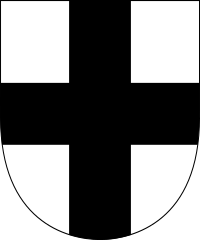
The Banner of the
Archbishopric of Cologne
Parents: Eberhard, count of Berg-Altena, and Adelheid
Date of Birth: circa 1157
House: Bonngau
Predecessor: Bruno III
Reign: 1193 – 1205
Date of Death: 15 April 1220
Successor: Bruno IV

Labels

[brief] (102) female monarch (31) Capet (26) [abbreviated] (19) Roman Empire (17) Great monarchs (16) Japan (15) Papacy (15) England (13) saints (13) France (11) Portugal (11) [Missing Deaths] (11) Habsburg (10) Sweden (10) Byzantine Empire (9) Carolingian (9) China (9) Hohenzollern (9) Oldenburg (9) Holy Roman Empire (8) Japan (dynasty) (8) Aragón (7) Austria (7) Denmark (7) Electorate (7) Ethiopia (7) Hungary (7) Navarre (7) Norway (7) Romanov (7) Russia (7) Saxony (7) Scotland (7) Wettin (7) Wittelsbach (7) Bavaria (6) Burgundy (6) Egypt (6) Italy (6) Lorraine (6) Luxembourg (6) Persia (6) Poland (6) Sicily (6) Spain (6) Valois (6) Capet-Burgundy (5) Franks (5) Germany (5) Plantagenet (5) Prussia (5) Quraish (5) Solomon (Ethiopia) (5) Tuscany (5) Anjou (4) Aquitaine (4) Barcelona (dynasty) (4) Bohemia (4) Brittany (4) Burgundy-Aviz (4) Burma (4) Capet-Valois (4) Castile (4) Constantinople (Patriarchate) (4) Habsburg-Lorraine (4) Holstein-Gottorp-Romanov (4) India (4) Ireland (4) Jerusalem (4) Jiménez (4) Kiev (4) Mongolia (4) Naples (4) Netherlands (4) Normandy (4) Osman (4) Ottoman (4) Palaeologos (4) Savoy (4) Savoy (dynasty) (4) Trastámara (4) Wales (4) Afghanistan (3) Albania (3) Bagrationi (3) Banu Hashim (3) Blois (3) Borjigin (3) Bourbon (3) Brabant-Hesse (3) Brandenburg (3) Capet-Bourbon (3) Cologne (3) Croatia (3) Cyprus (3) Disney (3) Fairhair (3) Georgia (3) Gwynedd (3) Hainaut (3) Hesse (3) Hohenstaufen (3) Holland (3) Holstein-Gottorp (3) Inca (3) Islam (3) León (3) Limburg (3) Lithuania (3) Livonia (3) Lothier (3) Macedonia (dynasty) (3) Mainz (3) Mann (3) Medici (3) Morocco (3) México (3) Nassau (3) Nguyễn (3) Serbia (3) Stuart (Stewart) (3) Toungoo (3) Tudor (3) Turkey (3) Vaudemont (3) Vietnam (3) Welf (3) Wessex (3) published articles (3) Abberfraw (2) Aberffraw (2) Alexandria (patriarchate) (2) Angevins (2) Anglo-Saxon (2) Ardennes-Metz (2) Auvergne (2) Ayyubid (2) Basarab (2) Bernadotte (2) Billung (2) Boulogne (2) Brabant (2) Bruce (2) Burgundy-Bragança (2) Caliphate (2) Cilicia (2) Constantine (2) Crovan (2) Denmark (Dynasty) (2) Draculesti (2) Dreux (2) Dunkeld (2) Dutch Republic (2) Estridsen (2) Flanders (2) Florence (2) Further Austria (2) Greece (2) Habsburg-Spain (2) Hanover (2) Hardrada (2) Hauteville (2) Hawai'i (2) Ivrea (2) Joseon (2) Karadordevic (2) Konbaung (2) Korea (2) Maya (2) Merovingian (2) Milan (2) Ming (2) Monaco (2) Nassau-Orange (2) Nassau-Weilburg (2) Norman (2) Novgorod (2) Orange (2) Ottonian (2) Piast (2) Piedmont-Savoy (2) Poitiers (dynasty) (2) Robertian (2) Romania (2) Rurik (2) Sardinia (2) Saxe-Coburg-Gotha (2) Seljuk (2) Siam (2) Syria (2) Teutonic Knights (2) Thailand (2) Theodosian (2) Thuringia (2) Timurid (2) Tokugawa (2) United Kingdom (2) Valois-Burgundy (2) Vandal (2) Venice (2) Visconti (2) Vladimir (2) Wallachia (2) Württemberg (2) York (2) Yugoslavia (2) Zeeland (2) the Britons (2) 18th Dynasty (Egypt) (1) Abbasid (1) Adal (1) Agiad (1) Akinyele (1) Al Khalifa (1) Al-Said (1) Alawiyya (Egyptian) (1) Albret (1) Algeria (1) Algonquian (1) Amber (1) Angola (1) Anjou (dynasty) (1) Anjou-Hungary (1) Ansbach (1) Antonia (1) Antonine (1) Apulia (1) Arabia (1) Armenia (1) Arpad (1) Arsacid (1) Asen (1) Ashikaga (1) Athens (1) Avesnes (1) Avignon Papacy (1) Aviz-Beja (1) Aztec Empire (1) Baden (1) Bahrain (1) Balti (1) Barakzai (1) Barazkai (1) Barcelona (1) Battenberg (1) Belgium (1) Bengal (1) Berg (1) Berg (dynasty) (1) Bernicia (1) Bharatpur (1) Bhutan (1) Bjelbo (1) Bonaparte (1) Bonde (1) Bonngau (dynasty) (1) Borghese (1) Borja (1) Bosnia (1) Bourbon-Two Sicilies (1) Brandenburg-Ansbach (1) Brienne (1) Brutus (1) Bukhara (1) Bulgaria (1) Canossa (1) Capet-Dreux (1) Carthage (1) Celje (1) Celje (dynasty) (1) Chakri (1) Champagne (1) Champagne (dynasty) (1) Chartres (1) Cometopuli (1) Contantine (1) Cordoba (1) Craiovesti (1) Crusader States (1) Dalmatia (1) Damascus (1) Danesti (1) Debeubarth (1) Deira (1) Deira (dynasty) (1) Denmar (1) Dulo (1) Díaz (1) Early Han (1) East Anglia (1) East Francia (1) Eastern Han (1) Eastern Jin (1) Egmont (1) Estonia (1) Farnese (1) Fatimid (1) Fatimid Caliphate (1) Flanders (dynasty) (1) Flavian (1) Friuli (1) Gausi (1) Geneva (1) Geneva (dynasty) (1) Gordiani (1) Grimaldi (1) Guelders (1) Guideschi (1) Gwent (1) Gwynedd (dynasty) (1) Gyatso (1) Haag (1) Hainaut (dynasty) (1) Hanan Cuzco (1) Hashim (1) Hashimite (1) Hebrides (The Isles) (1) Hellenes (1) Herat (1) Hohenzollern-Ansbach (1) Hohenzollern-Sigmaringen (1) Holland (dynasty) (1) Hunfriding (1) Ibadan (1) Iran (1) Iturbide (1) Jaipur (1) Jin (1) Jordan (1) Julio-Claudian (1) Jungingen (1) Justinian (dynasty) (1) Kachwaha (1) Kalakaua (1) Kamehameha (1) Karrani (1) Kent (1) Kent (house) (1) Kestutis (1) Khurasan (1) Knights Templar (1) Komnenos (1) Kotromanić (1) Lakota Sioux (1) Lancaster (1) Latin Empire (1) Lebanon (1) Leuchtenberg (1) Lombards (1) Ludowinger (1) Lusignan (1) Luxembourg (dynasty) (1) Luxembourg-Limburg (1) Maan (1) Macedon (1) Magdeburg (1) Maine (1) Majorca (1) Malaysia (1) Manghit (1) Maratha Empire (1) Marinid (1) Matsunaga (1) Maurya (1) Mecklenburg (1) Mecklenburg-Strelitz (1) Meissen (1) Mercia (1) Mercia (dynasty) (1) Miniconjou (1) Moldavia (1) Montenegro (1) Montferrat (1) Morgannwg (1) Mortain (1) Mountbatten (1) Mughal (1) Muhammad Ali (1) Munster (1) Musat (1) Myanmar (1) Nakagawa (1) Ndongo and Matana (1) Nemanjic (1) Nepal (1) Nervo-Trajan (1) Neuchâtel (1) Nigeria (1) Nominoë (1) Northumbria (1) O'Brien (1) Obrenović (1) Odowa (1) Olgovich (1) Olympus (1) Orléans-Longueville (1) Ostrogoths (1) Ottawa (1) Pahlavi (1) Palatinate of the Rhine (1) Parma (1) Penthièvre (1) Petrović-Njegoš (1) Poděbrady (1) Pointiers (Ramnulfids) (1) Poitiers (1) Poitiers-Lusignan (1) Polignac (1) Powys (1) Prasat Thong (1) Premyslid (1) Provence (1) Přemyslid (1) Q'umarkaj (1) Qin (1) Qing (Manchu) (1) Reginar (1) Reginarid (1) Rethel (1) Rethel-Boulogne (1) Ribagorza (1) Rouergue (1) Roupenians (1) Sa Malietoa (1) Safavid (1) Salian (1) Salzburg (1) Samoa (1) Sarantapechos (1) Saud (1) Saudi Arabia (1) Second Triumvirate of Rome (1) Selangor (1) Selangor (dynasty) (1) Sforza (1) Shah (Nepal) (1) Shi'a Imamate (1) Shishman (1) Shivaji (1) Silesia (1) Simmern (1) Sinsinwar Jat (1) Skowronski (1) Slovenia (1) Sobieski (1) South Africa (1) South America (1) Sparta (1) Spoleto (1) Sture (1) Sudan (1) Sussex (1) Sverre (1) Swabia (1) Swasi (dynasty) (1) Swaziland (1) Swiss Confederation (1) Tang (1) Tenochtitlan (1) Teotihuacán (1) Terter (1) Tibet (1) Tikal (1) Tolkien (1) Toulouse (1) Tours (dynasty) (1) Transylvania (1) Tunisia (1) Umayyad (1) Unruoching (1) Valencia (1) Valois-Angoulême (1) Valois-Anjou (1) Valois-Orléans (1) Vasa (1) Vermandois (1) Visigoths (1) Vokil (1) Wangchuck (1) Wied-Neuwied (1) Windsor-Mountbatten (1) Württemberg (dynasty) (1) Yamato (1) Ying (Qin) (1) Yuan (1) Zanzibar (1) Zhao (Song) (1) Zhou (1) Zhu (1) Zogu (1) Zulu Nation (1) Zápolya (1) Zähringen (1) bretwalda (1) cardinal (1) fantasy (1) fiction (1) shogunate (1) terms (1) Árpád (1) Öuchi (1)