Showing posts with label France. Show all posts

Tuesday, April 11, 2017

Meandering Adventures of Cognatic Inheritance

There are numerous ways in which titles can be passed, but primogeniture, where the eldest child inherits all of the titles, is one of the most well-recognised inheritance systems in the West. But this system has a problem: which child is considered the oldest? Is it the first-born, male or female (absolute primogeniture)? Is it the eldest male (agnatic primogeniture)? Or is it the eldest male, or the eldest female if there is no male (cognatic primogeniture)? In different countries, there are different rules, and these are but three of them.

For the sake of this discussion, let us just focus on one: cognatic primogeniture. Cognatic succession can be anathema to a dynasty. If a dynasty is patrilineal, then cognatic succession can allow a title—or all the tiles—to separate from that patrilineal line. Thus, cognatic titles can appear over generations as wayward travellers, traversing several dynasties in only a few generations. Such problems rarely impact agnatic succession systems, or seniority, or elective monarchies because all of those systems favour men more absolutely. But cognatic succession systems, even if they favour elder male children over female children, inevitably will revert the succession to a female line (a cognate).

There are numerous polities throughout Western European history that have allowed women to succeed, and sometimes those titles pass through numerous female holders. Generally—although not always—a female title holder will share her titles with her husband so long as she is alive, at which point the titles pass to her eldest child or to her nearest relative. Thus, just because a system allows female transmission of titles does not mean she gains exclusive use of those titles. Some women certainly insist upon exclusive regnal prerogatives, but not all of them. In other words, men still often become counts or kings when their wives hold the rights. Legally, this practice is called suo uxoris (by right of wife) and suo uxoris titles rarely outlast the woman from whom the titles derive.

There are a number of important cases of monarchies which were ruled, and indeed dictated, by the precepts of cognatic succession. Some of the most famous—England, Denmark, Russia, and Spain—rarely actually operated off of cognatic succession or, when they did, they often skipped women in favour of eldest sons. But a few polities, specifically many in France, experienced multiple female rulers throughout their existences.

The Lost Kingdom of Spain
Perhaps the most notorious European kingdom to experience the potential upheavals of cognatic succession was the Pyrenean kingdom of Navarre. Established in the mid-ninth century as one of two crusader states that began the expulsion of the Moors from Spain, Navarre's dalliance with cognatic succession did not begin until the Jiménez line of kings went extinct in 1234. Because of its Basque origins, Navarre had accepted the tenets of cognatic succession even if it never used such laws. The crown passed to a French lord, Thibaut IV, count of Champagne, whose mother had been the sister of the last Jiménez king, Sancho VII. For the next 80 years, the Champagnois ruled Navarre.

The kings and queens of Navarre, 1150 – 1643
Jeanne I, queen of Navarre and countess
of Champagne and Brie
In 1274, the last Champengois ruler, Jeanne I, married the future Philippe IV of France, thereby unifying Navarre with the French crown for the next 54 years. Philippe adopted the title of king at the time of his marriage, and their son Louis became the next king of Navarre in 1305 when Jeanne died. His brothers, Philippe and Charles, and then his daughter, Jeanne II, all held the royal title during their lifetime. But with Jeanne, the title once again was held alongside her husband, Philippe III. When she died in 1349, her son, Charles II, and then grandson, Charles III, followed her on the throne.

Yet another upheaval came in 1425 when Charles III's daughter, Zuria I, succeeded him. Her husband, Juan II (future king of Aragón) seized the royal title more decisively than was usual and when she died in 1441, he kept the royal title against her will, depriving his son and eldest daughter their due rights. Their younger daughter, Leonor, succeeded briefly in 1479 only after he had died. Her grandson, François Phoebus, reigned for four years after her death, and then her daughter, Catherine, became the next queen, ruling alongside her husband, Jean III d'Albret. During their reign, most of the kingdom was conquered by Aragón, leaving only a small portion on the northern side of the Pyrenees for them to rule.

Jeanne III d'Albret, queen of Navarre and
countess of Foix
Catherine died in 1517 leaving the crown to her son, Henri II. He, in turn, left yet another daughter, Jeanne III, as his heir. Jeanne took the throne in 1555 alongside her husband, Antoine de Vendôme, who ruled briefly until 1562. When Jeanne died in 1572, their son, Henri III, succeeded and began the ultimate end of Navarrese independence. Shortly after succeeding, he became the heir to the French throne through their laws of strict agnatic primogeniture. He became king of France as Henri IV in 1589, unifying for a second time the French and Navarrese crowns. But this time, it became permanent. His son, Louis XIII of France, permanently ended Navarre's independence in 1620, permanently unifying the kingdom to France. Thus, when the titular Louis XVII died in a French revolutionary prison in 1795, the claim to Navarre did not pass to his sister, but rather to his uncle, Louis XVIII, and subsequent French kings. France and Navarre, united twice, became bound together permanently due to cognatic succession.

The Itinerant French County
The case of cognatic succession can get just as extreme, if not more so, when impacting a county. The tiny county of Boulogne on the French side of the English Channel is one such case. Originally granted to Baudouin II of Flanders as a fief, it passed through a series of men until the line came to an end with Mathilde I in 1125. Mathilde was married to none other than Stephen of Blois, the future king of England. Stephen never became count of Blois, but he did assert his wife's titles from 1125 until 1151, when Mathilde died. At this point, the title passed to two of his sons in succession before falling to his eldest surviving daughter, Marie I. Like Mathilde, Marie ruled alongside her husband Mathieu of Alsace, but their marriage was not amicable. In 1170, they divorced, but Mathieu continued to claim the comital title until his death in 1173 (she lived until 1182). While this practice was unusual, it was not unheard of and paralleled the usurpation of Juan II of Aragón, above.

The rulers of Boulogne and later rulers of Auvergne, 1087 – 1653
Mathieu and Marie had a daughter, Ida, who became one of the most highly desirable heiresses in northern France. She married four times and each of her four husbands took her titles as his own. Her final marriage to Renaud, count of Aumâle, was forced upon her by the king against her wishes. Her husband proved a recalcitrant vassal, too, and fought against Philippe II Auguste of France until he was ultimately imprisoned. Ida's daughter by Renaud, Mathilde II, succeeded her in 1216 and was almost immediately betrothed to Philippe Hurepel, Philippe's son of questionable legitimacy. Suddenly, the Capetian family had taken hold of Boulogne through cognatic marriage.

Jeanne II, duchess of Berry and countess of Boulogne
Philippe Hurepel, though, did not live more than a decade and in 1235, Mathilde married the future king of Portugal, Afonso [III]. But both marriages proved childless and the succession passed to her nearest senior heir, who happened to be another woman: Adelaide, wife of Guillaume III of Auvergne. For the next four generations, Boulogne and Auvergne would be linked together via a succession of male rulers. However, both titles were transmittable via cognatic primogeniture and eventually fell to Jeanne I, who married in 1338 Philippe, son of the duke of Burgundy. She later married, after his death, King Jean II of France, once again binding the fate of Boulogne to that of the Capetians. But the county escaped outright annexation through sheer dynastic bad luck when her son, Philippe, died young in 1461. Her titles then passed to her paternal uncle, Jean II. Jean's granddaughter, Jeanne II, almost dragged the dynasty into the Capetian fold for a third time since she was married to Jean, duke of Berry, an uncle of King Charles VI. Indeed, the county was elevated to a duchy at this time (although the duchy was, oddly, separate from the county). But their childlessness allowed the titles to be transmitted to yet another female relative, Marie II, whose husband had already died by the time she succeeded to Boulogne and Auvergne.

Catherine de' Medici, queen of France
and countess of Auvergne
For the first time in Boulogne's history, there was a female regnant countess not beholden to her husband's whims or the demand that she be married again after being widowed. Marie lived until 1437, at which point her male progeny succeeded her, members of the House of La Tour. The county of Boulogne was annexed to the royal domain in 1501 after the last male of the line died, but the county of Auvergne passed to his daughter, Anne, whose husband was so preoccupied with Scottish affairs that she, too, had virtually full control over her ancestral county. When she died in 1524, the Auvergne title passed to her niece, Catherine de' Medici, who became queen of France through her marriage with Henri II and served as regent for her three sons, who reigned in succession, the last of the Valois kings of France. Auvergne became an embattled title from this point forward. The title was claimed by her son-in-law, Charles III, duke of Lorraine, until 1608, when it was seized by Catherine's daughter Marguerite, who had been married to Henri IV of France until they divorced in 1599. When Louis XIII of France became king in 1610, his government seized the Auvergne title claiming next-of-kin, although there were others who had a better claim. Concurrently in 1589, the Auvergne lands (but not titles) went to Charles, the illegitimate son of King Charles IX, who claimed them invariably until his death in 1650, after which his son, Louis-Emanuel claimed them for a few more years. At his death, the lands were seized by Louis XIII. The long history of cognatic descent in Boulogne and Auvergne saw it pass through numerous major and minor noble houses before it ultimately was appended to the many claims of the House of Bourbon, just as Navarre had been annexed slightly earlier.

Cognatic succession, therefore, can work in opposition to the generally clean successions provided by male-dominated modes. While from a gender standpoint it should make no difference whether a title passes to a son or a daughter, the geo-political situation in Western Europe until recently meant that most titles were held and descended through male lines to stop rogue cognatic titles such as Navarre and Boulogne-Auvergne from causing trouble. Their capacity to briefly attach themselves to others' titles meant that polities allowing cognatic succession such as these proved difficult to permanently attach to any one dynasty for more than a few generations.

Thursday, March 9, 2017

The Succession to Burgundy in 1461

The Burgundian state under
Philip the Bold, 1363 – 1404
In 1461, Philippe de Rouvres, the last duke of the senior line of the Capetian house of Burgundy, died leaving no obvious heir. He had no sisters, uncles, or aunts, although he did leave behind a wife, Marguerite III, countess of Flanders, Artois, Burgundy, Nevers, and Rethel. This came at a time of crisis in France. The Hundred Years War had only just paused the previous year and tensions were still high. Philippe, the young duke, was expected to live a long life and continue a dynasty that had existed since the eleventh century. Yet over the course of that century, almost every cadet line had ended after only a few generations, the most recent having ended in 1298.

In lieu of an obvious heir, the Burgundians had to figure out who should come next. There were two obvious candidates and an arguably more rightful, albeit overlooked option. The obvious choices were Carlos II, king of Navarre, and Jean II, king of France.

Carlos II the Bad, king of Navarre
Both Carlos and Jean were descended from sisters of Philippe's grandfather, Odo-Eudes IV. The elder sister was Marguerite, who married Louis X of France, had a daughter with him, the future Jeanne, and then promptly fell into ill-repute for sneaking off with a knight (the Tour de Nesle affair). She died under mysterious circumstances in 1315 while in a French prison, allowing her husband to remarry and promptly die shortly afterwards. That daughter, though, survived and became queen of Navarre in 1328. Carlos II, Jeanne's son and heir, bases his claim on her descent. Carlos, however, had become infamous in France as one of the most dangerous and recalcitrant vassals in French history. Due to his royal descent, he occasionally claimed the French throne, and he also stirred up all sorts of trouble in Paris between 1356 and 1360, when King Jean II was sitting comfortably in the Tower of London in England, a prisoner of Edward III. Although Carlos and Jean patched things up in 1360, they still were hardly friends. Nonetheless, Carlos could legitimately claim male-preference primogeniture as the reason for why he should become the next duke of Burgundy. The descent of his grandmother, as the eldest sister of Duke Robert II, should take precedent over a younger line.

Jean II the Good,
king of France
Jean II, however, was not about to allow the quarrelsome Navarrese king become the major power in both the south and east of France. Jean's mother was Jeanne the Lame, the younger daughter of Duke Robert II of Burgundy. This made him one degree closer to a previous duke. Jean was also the senior agnate of the entire Capetian dynasty and, as king of France, he was suzerain over Burgundy. Thus, he could use any or all of these excuses to claim Burgundian throne. Indeed, he won the debate, but he used his weakest argument to assert his claim. He argued that he was the head of the family and, as such, the title should revert to him since he was seniormost of the line. But there are two problems with this. First, Burgundy had never been a French apanage duchy. Indeed, Burgundy first joined the royal line through the merger of the former Burgundian royal line in the tenth century to a Capetian cadet branch. Therefore, women could inherit the throne and pass it on to their descendants through a process called substitution. The next agnate in line, then, was Carlos of Navarre. Following this same logic, Carlos also held the proximity of blood according to Roman and Burgundian law since he represented his deceased mother and grandmother. Jean may appear closer, but Carlos represents his grandmother, who was older than Jean's mother. Naturally, Carlos resisted Jean's encroachment on his rights, but to no effect. The recent treaties he had signed bound him to French authority and he essentially had no ability to adequately assert his case.

Pedro I the Just
king of Portugal
Second, while Jean may be the head agnate of the Capetian dynasty, there is still a single cadet branch of the Burgundian tree extant in 1361 and this line should get precedent over any of Jean's agnatic claims. Agnatic law says that when a male line goes extinct, one goes back in time along that line until another male line is found. In 1361, that line would have fallen squarely on Pedro I, king of Portugal, the agnatic heir to Philippe I of Burgundy. When Robert the Old, the first Capetian duke of Burgundy, died, his youngest grandson ventured into Castile, married a Castilian princess and was given the county of Portugal as a dowry. His son, Afonso, declared himself king of Portugal and fought a short war against León to assert his title. He and his legitimate descendants continued to rule Portugal until 1383, when Pedro's son Fernando I died leaving behind a daughter who was inconveniently married to the king of Castile. But in 1361, Pedro was still quite alive, making him the senior agnate of the Burgundian branch of the Capetian dynasty and the heir general to Philippe de Rouvres. Following Jean II's own logic, Pedro should become duke of Burgundy.

The obvious problem with this is that Pedro was in Portugal and was also, annoyingly, close allies with the English. There was no chance Pedro would be traveling to Burgundy anytime soon to claim his birthright. Instead, Jean seized the duchy and subsumed it within his royal title. When he died in 1364, his son, Charles V, granted it to his brother (following the will of his father), who became Philip the Bold, the first duke of the house of Capet-Valois-Burgundy. The duchy was now securely under dynastic control again. Philip married Marguerite III of Flanders in 1369 and received all her lands when her father died in 1384. Meanwhile, the legitimate Portuguese line went extinct in 1385, causing it to descend upon the illegitimate house of Aviz. The Iberian kings had lost their claim to Burgundy. Philippe could now rest assured that his claims were secure and his future bright. The rest is history.

Wednesday, December 5, 2012

[December 5] François II, king of France

Parents: Henri II, king of France, and Catherine de' Medici
Date of Birth: 19 January 1544
House: Capet-Valois-Angoulême
Spouse(s): Mary I, queen of Scots, daughter of James V, king of Scots, and Mary of Guise
Predecessor: Henri II
Reign: 1559 – 1560
Brief: One of the child kings of the later Valois dynasty, François rules for only a scant year and a half before dying from an ear infection caused by one of numerous possible diseases. During his brief life, however, a lot happened in France. In 1548, he married six-year-old Mary I, queen of Scots, and became the king consort of Scotland. In 1558, the two were crowned rulers of Scotland formally and, had François lived, their children would have been destined to be rulers of both France and Scotland (and, presumably, England). François became king of France in July 1559 and, though only fifteen, was deemed fit to rule France as an adult. He worked with his uncles, and Mary's mother, from the House of Guise, and immediately began persecuting Protestants in France. A conspiracy rose against the king and his Guise advisors which sought to replace the Valois dynasty with that of the Bourbons, who supported Protestantism. Conciliation attempts tried to ease the tension, but things only became worse and François was finally forced to directly confront the Protestant uprising by arresting its leader, his cousin, the prince of Condé in late 1560. Scotland rose up in revolt that same year, since François and Mary had signed a secret charter turning the kingdom into a crown fief of France if Mary died without children. Scotland declared itself free of French influence and a Protestant state, and Mary sequestered herself from government. Unfortunately for them, François died soon after, leaving Mary grieved with little military support to reassert herself in Scotland.
Date of Death: 6 December 1560
Successor: Charles IX

Other Monarchs Who Died Today:
  • Ramon Berenguer II, count of Barcelona (1082)
  • John III, duke of Brabant (1355)
  • Pedro II, emperor of Brasil (1891)

Saturday, October 6, 2012

[October 6] Charles II, emperor of Rome

Surnamed: "The Bald"
Parents: Louis I, emperor of Rome, and Judith
Date of Birth: 13 June 823
House: Carolingian
Spouse(s): (1) Ermentrude, daughter of Odo I, count of Orléans, and Engeltrude, then (2) Richilde, daughter of Bivin, count of Ardennes
Predecessor: Louis II
Reign: 875 – 877
Brief: The youngest son of Emperor Louis the Pious, Charles was a somewhat unexpected heir who was given West Francia following the Treaty of Verdun n 843. In the fighting prior to the treaty, Charles allied with his brother, Louis, against Emperor Lothair I, defeating him in 841. As king in what would one day be France, Charles ruled a relatively peaceful land except for the southern regions where constant warfare with the Moors occasionally drew his interest. After some infighting throughout the 860s, Charles and Louis divided the lands of Lothair II according to the Treaty of Mersen. Viking attacks from the north and rebellions in Brittany dominated the remaining years of his administration in West Francia. In a surprise move, the king was crowned Emperor Charles II in 875 following the death of his nephew. This sparked a new round of civil war between the rival branches of the Carolingians. To make matters worse, increased attacks by the Moors in Italy forced Charles to send an army to help the pope, though few of his nobles would back the expedition. Emperor Charles died while returning from the short campaign in southern Italy and was buried in Burgundy.
Date of Death: 6 October 877
Successor: Charles III (as Emperor), Louis II (in West Francia)

Other Monarchs Who Died Today:

  • Samuil, tsar of Bulgaria (1014)
  • Dawit I, emperor of Ethiopia (1413)
  • Charles Emmanuel IV, king of Sardinia (1819)
  • Duc Duc, emperor of Vietnam (1883)

Saturday, September 1, 2012

[September 1] Louis XIV, king of France & Navarre

Surnamed: "The Sun King" (le Roi-Soleil)
Date of Birth: 5 September 1938
Parents: Louis XIII, king of France, and Anne of Austria
House: Bourbon
Spouse(s): (1) Maria Theresa, daughter of Philip IV, king of Spain & Portugal, and Elisabeth of France, then (2) Françoise, daughter of Constant d'Aubigné and Jeanne de Cardillac
Predecessor: Louis XIII
Reign: 1643 – 1715
Summary: The longest-reigning monarch in European history, Louis XIV began his rule as a five-year-old child, leaving the management of the state to various regents. Anne of Austria, his mother, served as the chief regent, with Cardinal Mazarin as the prime minister. In 1648, the Thirty Years' War ended with Dutch independence from Spain formalized. As the war ended, the Fronde, a French civil war, erupted. It was led by dissatisfied aristocrats who feared a centralized French monarchy. Anne fled Paris with her sons and some courtiers until the French army returned and reestablished order in the kingdom. A second Fronde, this time led by many members of the royal family, broke out, but ended when Louis came of age. 

Mazarin's death in 1661 began Louis' formal rule in France. Although he had been of age for three years already, he chose to allow his prime minister to rule. In 1665, Louis chose Jean-Baptiste Colbert as his controller of finances in a role that he would one day regret. Over the next few years, Louis attempted to gather all the varied legal codes from throughout France into one tome that was later known as the Code Louis. As a patron, Louis expanded many of his palaces and supported all forms of art. At Versailles, he built a new chateau to rival all of those of Europe. He remodeled Paris as well, demolishing city walls and expanding boulevards. Most of Louis' reign was frought with war, many that he started or maintained. The War of Devolution in the Spanish Netherlands began in 1665 and acted as a prelude to the War of the Spanish Succession in 1700. The Franco-Dutch War in 1672 helped bring William of Orange to power in the Netherlands and also brought enmity between the two monarchs. Outside of Europe, France expanded its holdings to nearly every habitable continent, especially America and India. Louis famously began requiring all his nobles attend him at court in Versailles on a regular basis, a means to control the aristocracy. He included military nobles in this game to ensure the loyalty of the army and navy. Religion, though, was something he had little control over. In 1685, he revoked the Edict of Nantes and began to actively persecute non-Catholics living in France. Up to 200,000 Huguenots fled France in the ensuing years. The War of the League of Augsburg began in 1688 and was a direct response to French aggression in Germany. Piggybacking off this war, the Glorious Revolution in France deposed the French-friendly Stuarts with the Dutchman William of Orange, who had been hurt by France before. Louis funded Irish revolt and backed the deposed English king James II, but to no avail. The Augsburg War ended in 1697 with France having the upper hand. Another war, this time over the Spanish Succession, consumed the remainder of Louis' reign. His grandson, Philip of Anjou, was the declared heir of the dying King Charles II of Spain. When the king died, Louis went to war over Philip's claim. Attempts to avoid war failed and world war followed, with theaters in Europe, Asia, and the Americas (Queen Anne's War). The Treaty of Utrecht in 1713 ended the war, with the Treaty of Rastatt ending the conflict between France and Austria. Philip retained his new throne as Philip V of Spain, while Austria gained the Austrian Netherlands and parts of Italy. Louis died of gangrene at Versailles in 1715, only days before his 77th birthday. His son, the Grand Dauphin, his grandson, the Petit Dauphin, and his great-grandson, the Duke of Brittany, had all predeceased him. A brother of the duke of Brittany, Louis, Duke of Anjou, therefore, became his successor as Louis XV.
Date of Death: 1 September 1715
Successor: Louis XV

Other Monarchs Who Died Today:
  • Baldwin V, count of Flanders (1067)
  • Adrian IV, pope of Rome (1159)
  • Kujo Yoritsune, shogun of Japan (1256)
  • Guru Ram Das, Sikh Guru (1581)

Wednesday, August 22, 2012

[August 22] Philippe VI, king of France

Parents: Charles, count of Valois, and Margaret, countess of Anjou
Date of Birth: 1293
House: Capet-Valois
Spouse(s): (1) Jeanne, daughter of Robert II, duke of Burgundy, and Agnes of France, then (2) Blanche, daughter of Philippe, count of Évreux, and Jeanne II, queen of Navarre
Predecessor: Charles IV
Reign: 1328 – 1350
Summary: With three male first cousins and significant claims from a female first cousin, it was unlikely that Philippe would ever ascend to the French throne. His father, Charles of Valois, had fought for years to secure a throne outside of France, all for naught. Thus, when Charles died, all Philippe had were some French lands in Anjou, Maine, and Valois. False-starts consumed Philippe's earlier years. His cousin, Louis X, died leaving a pregnant wife who bore Jean I, who died a few days later. Then an uncle, rather than a daughter, succeeded, followed by that uncle's brother. In 1328, Charles IV died leaving yet another pregnant wife. When the child was stillborn, the fight was on between Philippe, the senior male claimant to the throne, and Isabella's son, Edward III, the primogeniture heir. Other females were also excluded in order for Philippe to succeed, but the French magnates supported his bid for the throne. Centuries later, this law would be codified as the Salic Law, which forced male-only lines to succeed before any female line could inherit. Resolutions with Navarre, which held the truly legitimate claim to the throne, allowed Philippe to inherit France while Jeanne, his first cousin-once removed, inherited Navarre and vast lands in Normandy.

Even though he was now king, Philippe VI had a lot of problems throughout the early years of his reign. He inherited his cousin's war with Flanders. Conflict with England was common, with disputes over Aquitaine occurring throughout the 1330s and support of Scotland enraging Edward III by 1336. Further disputes ended when Philippe condemned Robert III of Artois to death in 1336 and chased him into England, where Edward III not only offered him refuge, but made him Earl of Richmond. On 24 May 1337, Philippe declared war on England by declaring all English lands in Aquitaine forfeited to the French crown for supporting rebellion and disobedience. The longest continuous war in European history—the Hundred Years' War—had begun. France had many early successes in the war, destroying English lands in France and along the English coast through piracy. At the 1340 Battle of Sluys, the English destroyed the French fleet stationed in Zeeland and the war entered a new phase. The War of the Breton Succession broke out in 1341, which allowed the English to set up base in Brittany in support of one of the claimants. Edward attempted to end the war in 1343 by exchanging Brittany for Aquitaine, but Philippe refused. England then routed the French and invaded Normandy where they burned and sacked much of the countryside. The Battle of Crécy ensued and was an English victory with the French army all but destroyed. The English went on to capture Calais while Philippe limped home to regroup. By the end of his reign, Philippe had lost much of his early gains in the war and Edward III had a firm upper hand in France. The French magnates refused to tax their people for more Valois warmongering and the black death swept through France, killing one-third of the population. Labor shortages caused prices to soar and the country went into an economic crisis. When Philippe married his daughter's betrothed, Blanche of Navarre, the magnates and Philippe's son had had enough. Philippe died in disgrace a year later, having brought perpetual war to France with little to show for it.
Date of Death: 22 August 1350
Successor: Jean II

Other Monarchs Who Died Today:
  • Konoe, emperor of Japan (1155)
  • Ferdinand II, king of Léon (1188)
  • Gregory IX, pope of Rome (1241)
  • Nicholas III, pope of Rome (1280)
  • John II, count of Hainaut (1304)
  • Vladislav II, voivode of Wallachia (1456)
  • Richard III, king of England (1485)
  • John George II, elector of Saxony (1680)
  • Xianfeng, emperor of China (1861)

Saturday, July 14, 2012

[July 14] Philippe II, king of France

Surnamed: "Auguste (Augustus)" and "Dieudonné (God-given)"
Parents: Louis VII, king of France, and Adèle of Champagne
Date of Birth: 21 August 1165
Royal House: Capet
Spouse: (1) Isabella, daughter of Baldwin V, count of Hainaut, and Margaret I, countess of Flanders, then (2) Ingeborg, daughter of Valdemar I, king of Denmark, and Sofia of Minsk, then (3) Agnes, daughter of Bertold IV, count of Andechs, and Agnes of Rocklitz
Predecessor: Louis VII
Reign: 1180 – 1223
Summary: Philippe was born late in the life of his father, giving him his first surname: "God-given". His father, Louis VII, had him crowned co-king at the age of fourteen and married him to Isabella of Hainaut the next year. This brought the county of Artois into the French domain. From the time of his coronation onwards, he was the true king of France. His father was ailing after having suffered a stroke, and slowly became senile. Philippe was still a very young ruler who exercised complete power, angering his nobles and family members alike. When his father died in 1180, his consolidation of power was complete.

Philippe II was an army-builder and fought hard to avoid falling back on his nobles. His royal army at the time of his ascension was composed of around 3,000 soldiers. By the end of his reign, he could call upon more than 20,000 soldiers and his navy included 10 fleet ships and many smaller boats. His victory over the count of Flanders in 1181 earned him his infamous nickname "Augustus" because of his expansion of the French domain. Throughout his life, he would continue to uphold that nickname. When Henry the Young King of England died in 1183, Philippe insisted that his lands, all French, be returned to France. A war was avoided when Henry's widow, Margaret, was married to Béla III of Hungary, forcing the dower to be transferred. But when English royal duke, Geoffrey II of Brittany, died in 1186, Philippe insisted that the duke's son, Arthur, should be placed under the guardianship of France rather than England. War naturally followed although nothing was resolved. Philippe at first allied with Richard the Lionheart and John Lackland, two sons of the English monarch. Over the next three years, Richard and Philippe would ravage England's lands, forcing King Henry II of England to acknowledge Richard as his heir before dying in 1189. Henry's death coincided with the fall of Jerusalem to Saladin, and with that the short Franco-English War ended. Philippe and Richard ventured to the Holy Land together on the Third Crusade between 1189 and 1192. Once in Palestine, Philippe became ill with dysentery while Richard became the hero of Acre. The two finally split over political and military disagreements and Philippe returned to France. With Richard still away, Philippe took advantage of the king's absence and began his reconquest of Western France. He gained the support of Prince John and invaded Normandy. He made significant progress until Richard returned in 1194 eager to fight the French king. The two kings played cat-and-mouse for a number of months before finally agreeing to a truce. The two resumed the fight in 1195 then agreed to another truce. When Count Baldwin of Flanders switched to the English side in 1197, the tide finally turned against the French. The new Holy Roman Emperor Otto IV was Richard's nephew and ally, and many Norman lords were returning to Richard. By 1198, Richard had reclaimed almost all of his lost lands and Philippe was desperate for a peace treaty. Richard died before a truce could be decided upon. In 1200, King John of England agreed to the Treaty of Le Goulet that ended the war and settled boundaries between France and Normandy. John's mismanagement of Aquitaine caused the entire duchy to rise in rebellion  in 1201. Philippe supported the rebellion and then went back into open warfare with England following the death of Duke Arthur of Brittany, the legitimate heir to England. By 1204, most of Normandy and Aquitaine were in French hands. When John refused to travel to Paris and account for the murder of Arthur, Philippe used his power as French overlord to forcibly take John's French lands away. When the Holy Roman Empire broke out into civil war following the death of Philip of Swabia in 1208, Philippe took the initiative and attempted to invade England. While he was never given the opportunity, he was able to briefly install his son, Louis, as the English king until John died a few months later and John's son, Henry III, was nominated as king. The last ten years of Philippe's life were spent resolving the Champagne succession issue and improving Paris. He built the Louvre and continued the construction of Notre-Dame while also approving the charter for the University of Paris. He was a wine connoisseur and commissioned the Battle of the Wines in 1224. He died a year earlier and was buried in Saint Denis Basilica, the resting place of all French monarchs. His son, Louis, succeeded him.
Date of Death: 14 July 1223
Successor: Louis VIII

Other Monarchs Who Died Today:
  • Arnulf, duke of Bavaria (937)

Monday, May 21, 2012

[May 21] Louis V, king of the West Franks

Surnamed: "The Indolent" (le Fainéant)
Parents: Lothair, king of the West Franks, and Emma of Italy

Date of Birth: circa 967
House: Carolingian
Spouse: Adelaide, daughter of Fulk II, count of Anjou, and Gerberga
Predecessor: Lothair
Reign: 986 – 987
Summary: The last Carolingian rulers of a major region, Louis V lived a regrettably short life. He was crowned king of the West Franks during the lifetime of his father in 978. He married in 982 to Adelaide, the daughter of the count of Anjou, and immediately after the couple were proclaimed the king and queen of Aquitaine, a title granted to the heir-apparent of the Frankish king for hundreds of years off and on. Unfortunately, Louis and Adelaide were poorly matched, with Adelaide being more than twice Louis' age and on her third marriage. Within two years, she divorced the prince and settled in Arles. With no wife, Louis could produce no children, and thus the Carolingian line in West Francia was destined to end with his passing. It had already ended in Germany in 911. Only two cadet branches, the dukes of Lower Lorraine and the dukes of Vendôme, still descended in direct legitimate descent from Charlemagne. When Lothair died in 986, Louis became king and immediately inherited all of his father's problems.


His major problem was the Robertines, a rival family that had already installed three kings in West Francia in the previous decades. The Holy Roman Emperor Otto I defended the Robertines and continuously undermined the authority of the Carolingian kings by installing clergy that opposed them in West Francia. One such appointment, Archbishop Adalberon of Reims, tried to reconcile the two rival families of the Carolingians and Ottonians but failed. Lothair had tried Adalberon on charges of treason while Lothair's widow married a descendant of Otto I. Louis V tried to resolve the dispute, but died too soon to see it conclude. Louis died while hunting boar. He fell from his horse and suffered a cranial injury that eventually ended in a seizure that took his life. Charles, duke of Lower Lorraine, was the closest surviving heir of Louis but the clergy, including Adalberon and a future pope, argued in favor of Hugues Capet, a Robertine. Hugues was elected king of the West Franks and Carolingian rule in West Francia came to an inglorious end.
Date of Death: 21 May 987
Successor: Hugues

Other Monarch Deaths:
Olaf, king of the Isles (1237)
Conrad IV, king of Germany (1254)
Christian I, king of Denmark, Norway & Sweden (1481)
Pandolfo Petrucci, patriarch of Siena (1512)

Saturday, April 7, 2012

[April 7] Charles VIII, king of France


Surname: "The Affable" (l'Affable)
Parents: Louis XI, king of France, and Charlotte of Savoy
Date of Birth: 30 June 1470
House: Capet-Valois
Spouse: Anne, duchess of Brittany
Predecessor: Louis XI
Reign: 1483 – 1498
Date of Death: 7 April 1498
Successor: Louis XII

Other Monarchs Who Died Today:
Taksin, king of Thailand (1782)
Abdul Hamid I, sultan of the Ottoman Empire (1789)

Thursday, March 1, 2012

[March 1] Lothair, king of West Francia

Richard II, duke of Normandy (right), and Lothair, king
of France (left), with the abbot of Mont Saint Michel

Parents: Louis IV, king of the West Franks, and Gerberga of Saxony
Date of Birth: 941
House: Carolingian
Spouse: Emma, daughter of Lothair II, king of Italy, and Adelaide of Burgundy
Reign: 954 – 986
Predecessor: Louis IV
Summary: Nothing is known of the childhood of Lothair. He became king at the age of thirteen and was under a guardianship led by the duke of the Franks, Hugh the Great, who had advised his father during his reign. Lothair grew up with Hugh's son, also named Hugh, who would soon become the king of the Franks once Lothair's own young son died childless. Lothair was given full powers of kingship at thirteen, a rare feat, and his major problem initially was with the duke of Normandy, who sought land in the north of France. Hugh the Great died in the siege of Poitiers in 955 and Lothair acted as mediator between his two sons, granting the younger Hugh the title duke of Paris and the younger son, Otto, the title duke of Burgundy. Meanwhile, Lothair's guardianship was transferred to Bruno, the archbishop of Cologne.

Lothair formally came of age in 959 and wasted little time in angering all his vassals. Baldwin III of Flanders bequeathed the entirety of Flanders to the young king but it took him many years to secure the lands. Lothair then rashly invaded Lorraine and almost captured Emperor Otto II at the old Carolingian capital city of Aachen. Otto reverse-attacked and invaded France, destroying everything in his path to Paris. He was eventually forced to retreat and took heavy losses by Lothair's allies. The king and the emperor finally made peace in 980 and Lothair was appointed guardian over Otto's son, Otto III, in 983. Lothair invaded Lorraine again in 985 and this time took four prominent captives. He attempted to fortify the duchy against another attack by Germany but the local archbishop and Hugh refused to support his decision. The king was forced to release his prisoners and his campaign in Lorraine ended. The final year of Lothair's life was miserable. Barcelona was asked by the caliph of Córdoba and Lothair could not provide any resources to assist the local count. This permanently severed fealty ties between France and the Spanish March. Lothair died knowing that Hugh was the true king of West Francia and that he had become a mostly powerless figurehead. The truth of that realization would come in year when his son died, leaving all of France to Hugh and his progeny.
Date of Death: 1 March 986
Successor: Louis V

Other Monarchs Who Died Today:
  • Valerius Valens, emperor of Rome (317 CE)
  • Stephen II, king of Hungary (1131)
  • Thomas I, count of Savoy (1233)
  • Buyantu, emperor of China (1320)
  • Amadeus VI, count of Savoy (1383)
  • Leopold II, Holy Roman Emperor (1792)
  • Nicholas I, king of Montenegro (1921)

    Monday, January 9, 2012

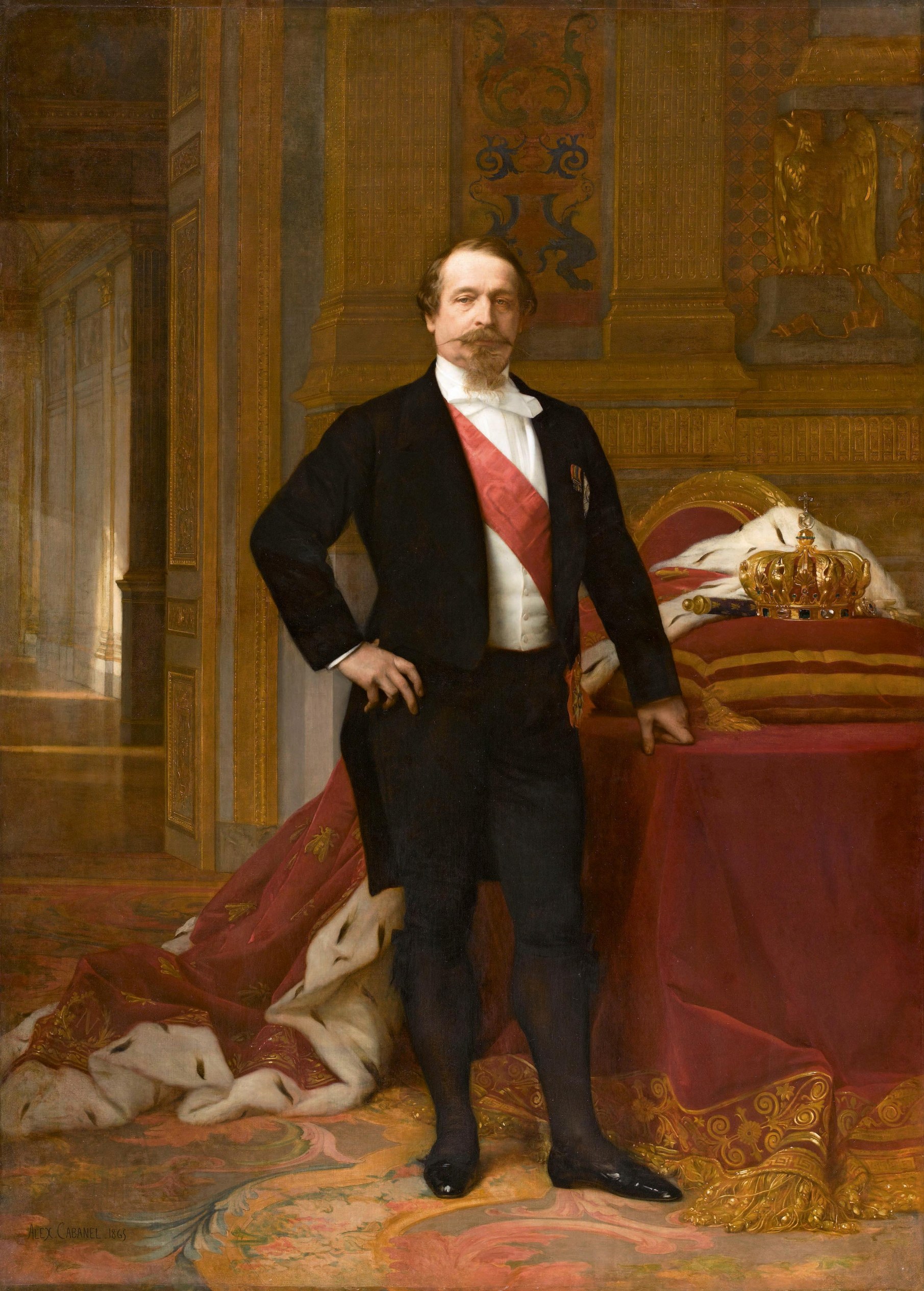
    [January 9] Napoleon III, emperor of France

    True Name: Charles Louis Napoléon Bonaparte
    Parents: Louis I, king of Holland, and Hortense de Beauharnais
    Date of birth: 20 April 1808
    Royal House: Bonaparte
    Spouse: Eugénie de Montijo
    Predecessor: None; the Second French Republic
    Reign: 1852 – 1870
    Summary: Louis-Napoléon was born at the height of the French Empire. His parents were the rulers of a French puppet state, the Kingdom of Holland. When the empire fell in 1815, he with his family fled to Switzerland and then Italy, where Louis-Napoléon began a campaign against the Austrian occupation of parts of northern Italy. In France, the restoration of the Capetian Bourbon dynasty gave way to a populist monarchy ruled by a junior line of that dynasty. A large Bonapartist movement began which sought to restore Bonaparte power to France. From 1815 until 1832, the heir-general of the Bonaparte family was the Duke of Reichstadt, Napoleon II, the only child of Napoleon I. When he died, the Bonaparte claim passed to Joseph, Napoleon I's eldest brother. His death in 1844 passed the claim to a younger line headed by Louis-Napoléon's father, Louis, who himself died in 1846. Louis-Napoléon was now heir-general and living in exile in England after an attempted coup in 1846. He returned to France in 1848 and, after many odd troubles, was elected president of the Second French Republic on 10 December. 

    Louis-Napoléon then led a coup d'etat against his own government in 1851 and took the throne the following year as Napoleon III. As emperor, he fought throughout his reign to reassert France's primacy in Europe. During he 1850s, he helped Italy unify under the House of Savoy, sparking warfare with Austria in the process. In the Middle East, France fought with the United Kingdom against Russia in the Crimean War. The French Colonial Empire expanded in Asia and in Africa during his tenure as well. Attempts to install a new emperor in Mexico failed utterly in 1867 due to Mexican resistance and American diplomatic pressure. In France, Napoleon industrialized much of the country turning it into a 19th century industrial powerhouse. Paris was renovated to the state that it appears today, creating new boulevards and the central hub of the Arc du Triumph. The brief Franco-Prussian War proved to be Napoleon's undoing. Even as Germany finally unified under the Hohenzollern King of Prussia, France fell apart. At the Battle of Sedan, Napoleon III was captured and forced to abdicate. France continued to fight the war for another year under the Third French Republic and the Paris Commune, but Napoleon went into exile again to England where he died three years later. He ended up being the last monarch of France, despite initial attempts to restore the Bourbon dynasty again.
    Date of Death: 9 January 1873
    Successor: None: monarchy abolished and replaced with the Third French Republic


    Other Monarchs Who Died Today:
    • Xizong, Jin emperor of China (1150)
    • Abû 'Uthmân Sa'îd, ruler of Minorça (1282)
    • John Cicero, elector of Brandenburg (1499)
    • Anna, duchess of Brittany (1514)
    • Victor Emmanuel II, king of Italy (1878)

    Labels

    [brief] (102) female monarch (31) Capet (26) [abbreviated] (19) Roman Empire (17) Great monarchs (16) Japan (15) Papacy (15) England (13) saints (13) France (11) Portugal (11) [Missing Deaths] (11) Habsburg (10) Sweden (10) Byzantine Empire (9) Carolingian (9) China (9) Hohenzollern (9) Oldenburg (9) Holy Roman Empire (8) Japan (dynasty) (8) Aragón (7) Austria (7) Denmark (7) Electorate (7) Ethiopia (7) Hungary (7) Navarre (7) Norway (7) Romanov (7) Russia (7) Saxony (7) Scotland (7) Wettin (7) Wittelsbach (7) Bavaria (6) Burgundy (6) Egypt (6) Italy (6) Lorraine (6) Luxembourg (6) Persia (6) Poland (6) Sicily (6) Spain (6) Valois (6) Capet-Burgundy (5) Franks (5) Germany (5) Plantagenet (5) Prussia (5) Quraish (5) Solomon (Ethiopia) (5) Tuscany (5) Anjou (4) Aquitaine (4) Barcelona (dynasty) (4) Bohemia (4) Brittany (4) Burgundy-Aviz (4) Burma (4) Capet-Valois (4) Castile (4) Constantinople (Patriarchate) (4) Habsburg-Lorraine (4) Holstein-Gottorp-Romanov (4) India (4) Ireland (4) Jerusalem (4) Jiménez (4) Kiev (4) Mongolia (4) Naples (4) Netherlands (4) Normandy (4) Osman (4) Ottoman (4) Palaeologos (4) Savoy (4) Savoy (dynasty) (4) Trastámara (4) Wales (4) Afghanistan (3) Albania (3) Bagrationi (3) Banu Hashim (3) Blois (3) Borjigin (3) Bourbon (3) Brabant-Hesse (3) Brandenburg (3) Capet-Bourbon (3) Cologne (3) Croatia (3) Cyprus (3) Disney (3) Fairhair (3) Georgia (3) Gwynedd (3) Hainaut (3) Hesse (3) Hohenstaufen (3) Holland (3) Holstein-Gottorp (3) Inca (3) Islam (3) León (3) Limburg (3) Lithuania (3) Livonia (3) Lothier (3) Macedonia (dynasty) (3) Mainz (3) Mann (3) Medici (3) Morocco (3) México (3) Nassau (3) Nguyễn (3) Serbia (3) Stuart (Stewart) (3) Toungoo (3) Tudor (3) Turkey (3) Vaudemont (3) Vietnam (3) Welf (3) Wessex (3) published articles (3) Abberfraw (2) Aberffraw (2) Alexandria (patriarchate) (2) Angevins (2) Anglo-Saxon (2) Ardennes-Metz (2) Auvergne (2) Ayyubid (2) Basarab (2) Bernadotte (2) Billung (2) Boulogne (2) Brabant (2) Bruce (2) Burgundy-Bragança (2) Caliphate (2) Cilicia (2) Constantine (2) Crovan (2) Denmark (Dynasty) (2) Draculesti (2) Dreux (2) Dunkeld (2) Dutch Republic (2) Estridsen (2) Flanders (2) Florence (2) Further Austria (2) Greece (2) Habsburg-Spain (2) Hanover (2) Hardrada (2) Hauteville (2) Hawai'i (2) Ivrea (2) Joseon (2) Karadordevic (2) Konbaung (2) Korea (2) Maya (2) Merovingian (2) Milan (2) Ming (2) Monaco (2) Nassau-Orange (2) Nassau-Weilburg (2) Norman (2) Novgorod (2) Orange (2) Ottonian (2) Piast (2) Piedmont-Savoy (2) Poitiers (dynasty) (2) Robertian (2) Romania (2) Rurik (2) Sardinia (2) Saxe-Coburg-Gotha (2) Seljuk (2) Siam (2) Syria (2) Teutonic Knights (2) Thailand (2) Theodosian (2) Thuringia (2) Timurid (2) Tokugawa (2) United Kingdom (2) Valois-Burgundy (2) Vandal (2) Venice (2) Visconti (2) Vladimir (2) Wallachia (2) Württemberg (2) York (2) Yugoslavia (2) Zeeland (2) the Britons (2) 18th Dynasty (Egypt) (1) Abbasid (1) Adal (1) Agiad (1) Akinyele (1) Al Khalifa (1) Al-Said (1) Alawiyya (Egyptian) (1) Albret (1) Algeria (1) Algonquian (1) Amber (1) Angola (1) Anjou (dynasty) (1) Anjou-Hungary (1) Ansbach (1) Antonia (1) Antonine (1) Apulia (1) Arabia (1) Armenia (1) Arpad (1) Arsacid (1) Asen (1) Ashikaga (1) Athens (1) Avesnes (1) Avignon Papacy (1) Aviz-Beja (1) Aztec Empire (1) Baden (1) Bahrain (1) Balti (1) Barakzai (1) Barazkai (1) Barcelona (1) Battenberg (1) Belgium (1) Bengal (1) Berg (1) Berg (dynasty) (1) Bernicia (1) Bharatpur (1) Bhutan (1) Bjelbo (1) Bonaparte (1) Bonde (1) Bonngau (dynasty) (1) Borghese (1) Borja (1) Bosnia (1) Bourbon-Two Sicilies (1) Brandenburg-Ansbach (1) Brienne (1) Brutus (1) Bukhara (1) Bulgaria (1) Canossa (1) Capet-Dreux (1) Carthage (1) Celje (1) Celje (dynasty) (1) Chakri (1) Champagne (1) Champagne (dynasty) (1) Chartres (1) Cometopuli (1) Contantine (1) Cordoba (1) Craiovesti (1) Crusader States (1) Dalmatia (1) Damascus (1) Danesti (1) Debeubarth (1) Deira (1) Deira (dynasty) (1) Denmar (1) Dulo (1) Díaz (1) Early Han (1) East Anglia (1) East Francia (1) Eastern Han (1) Eastern Jin (1) Egmont (1) Estonia (1) Farnese (1) Fatimid (1) Fatimid Caliphate (1) Flanders (dynasty) (1) Flavian (1) Friuli (1) Gausi (1) Geneva (1) Geneva (dynasty) (1) Gordiani (1) Grimaldi (1) Guelders (1) Guideschi (1) Gwent (1) Gwynedd (dynasty) (1) Gyatso (1) Haag (1) Hainaut (dynasty) (1) Hanan Cuzco (1) Hashim (1) Hashimite (1) Hebrides (The Isles) (1) Hellenes (1) Herat (1) Hohenzollern-Ansbach (1) Hohenzollern-Sigmaringen (1) Holland (dynasty) (1) Hunfriding (1) Ibadan (1) Iran (1) Iturbide (1) Jaipur (1) Jin (1) Jordan (1) Julio-Claudian (1) Jungingen (1) Justinian (dynasty) (1) Kachwaha (1) Kalakaua (1) Kamehameha (1) Karrani (1) Kent (1) Kent (house) (1) Kestutis (1) Khurasan (1) Knights Templar (1) Komnenos (1) Kotromanić (1) Lakota Sioux (1) Lancaster (1) Latin Empire (1) Lebanon (1) Leuchtenberg (1) Lombards (1) Ludowinger (1) Lusignan (1) Luxembourg (dynasty) (1) Luxembourg-Limburg (1) Maan (1) Macedon (1) Magdeburg (1) Maine (1) Majorca (1) Malaysia (1) Manghit (1) Maratha Empire (1) Marinid (1) Matsunaga (1) Maurya (1) Mecklenburg (1) Mecklenburg-Strelitz (1) Meissen (1) Mercia (1) Mercia (dynasty) (1) Miniconjou (1) Moldavia (1) Montenegro (1) Montferrat (1) Morgannwg (1) Mortain (1) Mountbatten (1) Mughal (1) Muhammad Ali (1) Munster (1) Musat (1) Myanmar (1) Nakagawa (1) Ndongo and Matana (1) Nemanjic (1) Nepal (1) Nervo-Trajan (1) Neuchâtel (1) Nigeria (1) Nominoë (1) Northumbria (1) O'Brien (1) Obrenović (1) Odowa (1) Olgovich (1) Olympus (1) Orléans-Longueville (1) Ostrogoths (1) Ottawa (1) Pahlavi (1) Palatinate of the Rhine (1) Parma (1) Penthièvre (1) Petrović-Njegoš (1) Poděbrady (1) Pointiers (Ramnulfids) (1) Poitiers (1) Poitiers-Lusignan (1) Polignac (1) Powys (1) Prasat Thong (1) Premyslid (1) Provence (1) Přemyslid (1) Q'umarkaj (1) Qin (1) Qing (Manchu) (1) Reginar (1) Reginarid (1) Rethel (1) Rethel-Boulogne (1) Ribagorza (1) Rouergue (1) Roupenians (1) Sa Malietoa (1) Safavid (1) Salian (1) Salzburg (1) Samoa (1) Sarantapechos (1) Saud (1) Saudi Arabia (1) Second Triumvirate of Rome (1) Selangor (1) Selangor (dynasty) (1) Sforza (1) Shah (Nepal) (1) Shi'a Imamate (1) Shishman (1) Shivaji (1) Silesia (1) Simmern (1) Sinsinwar Jat (1) Skowronski (1) Slovenia (1) Sobieski (1) South Africa (1) South America (1) Sparta (1) Spoleto (1) Sture (1) Sudan (1) Sussex (1) Sverre (1) Swabia (1) Swasi (dynasty) (1) Swaziland (1) Swiss Confederation (1) Tang (1) Tenochtitlan (1) Teotihuacán (1) Terter (1) Tibet (1) Tikal (1) Tolkien (1) Toulouse (1) Tours (dynasty) (1) Transylvania (1) Tunisia (1) Umayyad (1) Unruoching (1) Valencia (1) Valois-Angoulême (1) Valois-Anjou (1) Valois-Orléans (1) Vasa (1) Vermandois (1) Visigoths (1) Vokil (1) Wangchuck (1) Wied-Neuwied (1) Windsor-Mountbatten (1) Württemberg (dynasty) (1) Yamato (1) Ying (Qin) (1) Yuan (1) Zanzibar (1) Zhao (Song) (1) Zhou (1) Zhu (1) Zogu (1) Zulu Nation (1) Zápolya (1) Zähringen (1) bretwalda (1) cardinal (1) fantasy (1) fiction (1) shogunate (1) terms (1) Árpád (1) Öuchi (1)