Showing posts with label Great monarchs. Show all posts

Wednesday, November 14, 2012

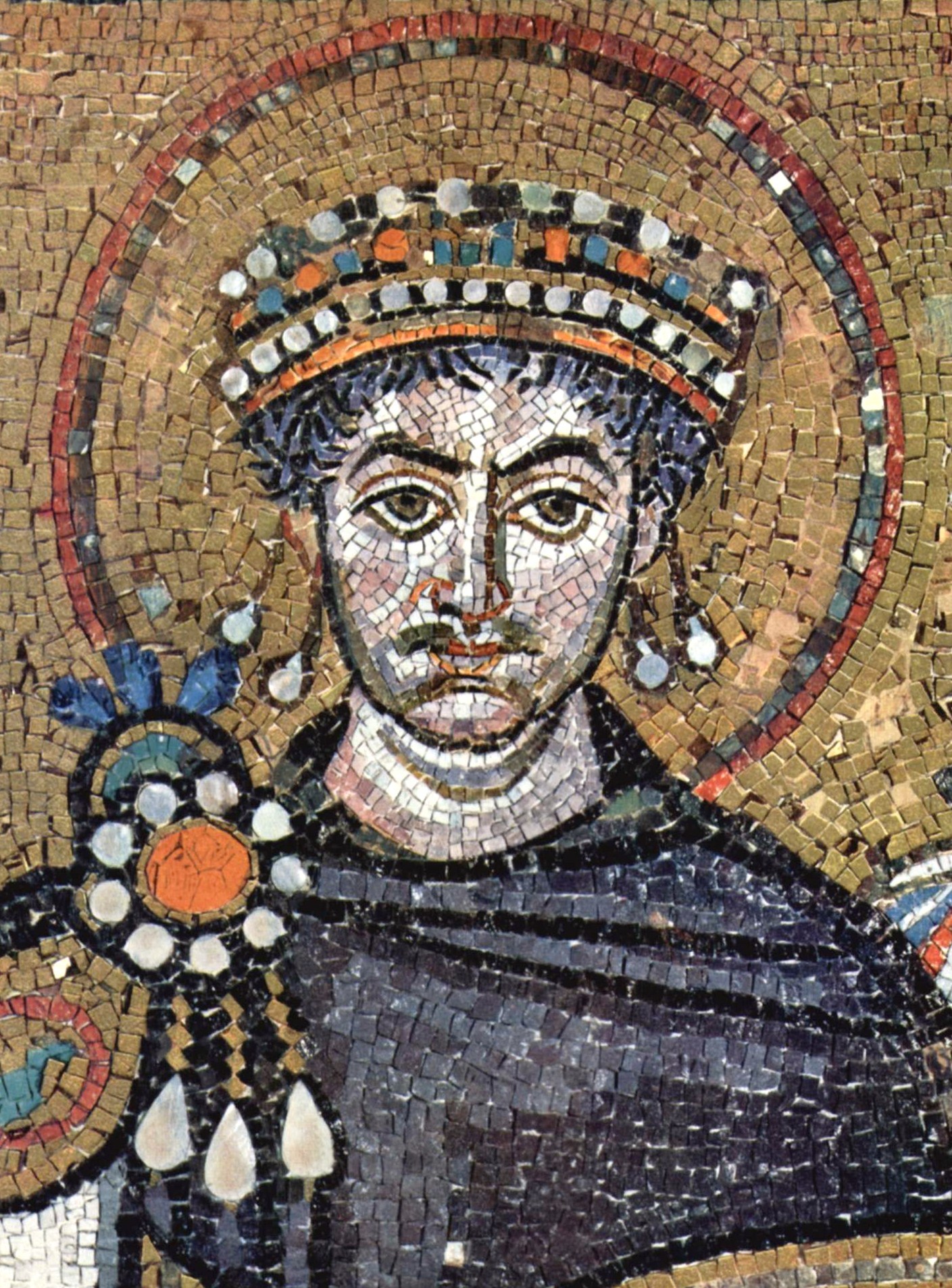
[November 14] St. Justinian I, emperor of Constantinople

Local Name: Petrus Sabbatius Justinianus
Surnamed: "The Great"
Parents: Sabbatius and Vigilantia, sister of Justin I, emperor of Constantinople
Born: circa 482
House: Justinian
Spouse(s): Theodora, daughter of Acacius and Theodora
Predecessor: Justin I
Reign: 527 – 565
Brief: Born into a Greek peasant family, Justinian rose to prominence when he was adopted as the heir of Emperor Justin, his uncle, in the 520s. As Justin's health declined, Justinian took control of the Roman government in Constantinople. He created a meritocracy rather than catering to family members, marrying his mistress, Theodora, in 525. Justinian reformed the judicial codes in the empire, forming the backbone of future judicial law across much of the east and, eventually, the west. During this time, the emperor set out on a campaign to rebuild the Roman Empire beginning in 530. He conquered North Africa from the Vandals, eliminating their entire empire; he intervened in Italy, deposing the Ostrogoths and reclaiming Rome itself for the Eastern Empire; and he waged constant warfare with the Sassanids of Persia in a bid to define borders between the two states. Regarding Christianity, Justinian directly oversaw the management of the Orthodox Church in Constantinople, while trying at the same time to work with the popes in Rome rather than against them. The emperor died in 565 leaving the empire to his nephew, Justin II. The Orthodox Church later canonized him, though this was not recognized in the west.
Date of Death: 14 November 565
Successor: Justin II

Other Monarchs Who Died Today:
  • Miguel, king of Portugal (1866)
  • Guangxu, emperor of China (1908)

Monday, November 12, 2012

[November 12] Cnut II, king of Denmark, Norway & England

Local Name: Knút inn ríki
Surnamed: "The Great"
Parents: Sweyn, king of Denmark & Norway, and Sigrid
Born: circa 985
House: Hairhair
Predecessor: Harold II (Denmark), Edmund II (England), and Olaf II (Norway)
Reign: 1018 – 1035
Brief: Cnut decisively entered history with his father's invasion of England in 1013 which left the prince in control of thee Danish fleet and army. A year later, Sweyn died and Cnut found himself on the defensive, fleeting to Denmark as an English army chased him out of England. He negotiated with his brother, Harald, and took a second fleet to England in 1015, fighting with Edmund II of England for fourteen months before finally forcing the Anglo-Saxon king's capitulation. Edmund died a few weeks later, leaving all of England under Danish control. He quickly consolidated his rule, marrying the queen mother Emma of Normandy and tracking down all surviving members of the house of Wessex. Though he originally sought to rule through his own men, Cnut eventually allowed local lords to rule in his name. In 1018, Harald in Denmark died and Cnut returned to claim the throne. There was no rebellion there, so Cnut went on a pilgrimage to Rome to witness the coronation of Holy Roman Emperor Conrad II. On his return trip, Cnut rallied forces in England and Denmark and claimed the Norwegian throne from Olaf II, who abdicated. Cnut was kind to the church and restored local institutions in all three kingdoms that he ruled over. He eventually died in 1035 and was buried at Winchester, leaving the entire kingdom to Harthacnut, who was unable to maintain control over England or Norway initially.
Date of Death: 12 November 1035
Successor: Harthacnut

Other Monarchs Who Died Today:
  • Boniface III, pope of Rome (607)
  • Duncan II, king of Scots (1094)
  • Louis III, king of Naples (1434)

Saturday, November 10, 2012

[November 10] St. Leo I, pope of Rome

Surnamed: "The Great"
Born: circa 391
Predecessor: Sixtus III
Reign: 440 – 461
Brief: A Tuscan by birth, Leo served as a deacon of the church from around 431 and was highly praised by his contemporaries. When Pope Sixtus III died in 440, Leo was unanimously elected to succeed him, a rather rare occurrence. Almost at once, Leo reasserted the authority of the Papacy over the various bishops in Italy, obtaining a decree from Emperor Valentinian III that recognized the primacy of the Pope. He then worked to assert his authority over the other patriarchates including pressuring Alexandria to recognize his supremacy, and working to suppress the growing power of the patriarchate of Contantinople. At the Council of Chalcedon in 451, Leo decisively confirmed his power over his peers through his Tome, which had originally been written for the Second Council of Ephesus in 449 but was not read at that time. Anticipating the breakup of the Western Empire, Leo worked diligently to assert the power of the pope in the West in the hope that it may succeed the Empire when it fell. In 452, Leo accompanied two royal dignitaries to confront Attila the Hun who was invading Italy. While the specifics are unknown, Attilla turned his armies away. Four years later, the Vandals successfully sacked Rome, though Leo helped reduce the total damage. Leo died in 461 leaving a legacy of Papal power-building for future popes to work from and enhance.
Date of Death: 10 November 461
Successor: Hilarius

Other Monarchs Who Died Today:
  • Celestine IV, pope of Rome (1241)
  • Wladyslaw III, king of Poland (1444)
  • Paul III, pope of Rome (1549)
  • Michael, king of Poland (1673)

Saturday, October 27, 2012

[October 27] Vytautas, grand duke of Lithuania

Local Name: Witold Kiejstutowicz
Surnamed: "The Great"
Parents: Kestutis, grand duke of Lithuania, and Birute
Born: circa 1350
House: Kestutis
Spouse(s): (1) Anna of Smolensk, and after a second unknown wife, (3) Juliana, daughter of Ivan Olshanski
Reign: 1392 – 1430
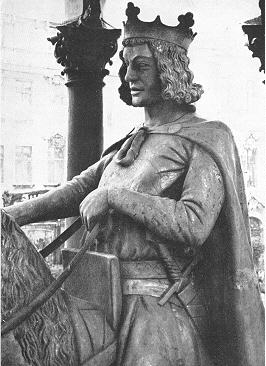
Brief: Vytautas enters history as a general supporting his father, Kestutis, during the Lithuanian Civil War. Kestutis died soon after this early mention, and Vytautas escaped to the Teutonic Knights in Estonia where he found the support he needed. Vytautas was baptized and fought against the Lithuanian grand duke Jogaila with the support of the Knights. In 1384, he switched sides and joined Jogaila, burning Teutonic castles and reclaiming Lithuanian land. The Union of Kreva was soon signed with Poland in 1385, uniting the two states under one monarch, with Vytautas becoming the king of Poland. Things quickly fell apart and the aspiring grand duke fled back to the Teutonic Knights to renegotiate an alliance. Again, in 1391, Vytautas abandoned the Knights and burned castles as he returned to Lithuania to serve as grand duke under King Jogaila (now named Wladyslaw II Jagiello). From this point forward, Vytautas remained faithful to Lithuania, fighting against the Timurids on behalf of the Golden Horde in the hope of reclaiming lands long ago taken by the Horde. He then joined a crusade against the Mongols which resulted in various territorial swaps and some political problems, but pushed the Mongols back. After he returned, Vytautas began a new war with the Teutonic Knights, burning castles and conquering large pieces of land. By the end of the war in 1411, the Teutonic Knights were little more than a political entity in the north, no longer a threat to anyone. For the remainder of his reign, Vytautas worked with Poland to consolidate rule and leadership, agreeing to unify the two countries on his death and earning the title "king" from the Holy Roman Emperor, though he was never formally invested with the crown. The grand duke died before a second crown arrived in 1430. 
Date of Death: 27 October 1430
Successor: Svitrigaila

Other Monarchs Who Died Today:
  • Æthelstan, king of England (939)
  • Hugh IV, duke of Burgundy (1271)
  • John II, duke of Brabant (1312)
  • Albert II, Holy Roman Emperor (1439)
  • Ulugh Beg, shah of Samarkand (1449)
  • Ivan III, grand prince of Moscow (1505)
  • Jellaldin Mohammed Akbar, emperor of India (1605)

Friday, October 26, 2012

[October 26] Ælfred, king of Wessex

Surnamed: "The Great"
Parents: Æthelwulf, king of Wessex, and Osburh
Born: 849
House: Wessex
Spouse(s): Ealhswith, daughter of Æthelred, ealdorman of the Gaini, and Eadburh of Mercia
Reign: 871 – 899
Brief: Prior to his coronation, Alfred travelled with his father throughout Europe. As the fourth son, it was unlikely that he would ever rule. Each brother succeeded the prior in turn, with Alfred rising to prominence during the reign of Æthelred I. He was in charge of the Wessex military and fought against the Danes in up to ten battles in 870-871, the last at Merton causing the death of Æthelred and the ascension of Alfred to the kingship. The Danes settled around York while Alfred consolidated his rule. In 876, the Danes invaded the interior of England and Alfred was put on the defensive, losing all of his allies to the Viking threat. He fought back starting in 787 by raising an army and attacking Danish strongholds throughout England. Alfred won the battle and forced the conversion of the Danes to Christianity and may have delineated the borders between the two kingdoms around 880. A long peace ensued during which time Alfred reoccupied the former capital of London and began to rebuild the city. Anglo-Saxon kingdoms throughout England submitted to Alfred's authority during this time. Alfred reformed the legal system, the economy, and the status of religion within Wessex and his dependencies. Danish attacks increased in the early 890s but Alfred was prepared this time. He fought them off at every turn and died in 899, probably from Crohn's disease.
Date of Death: 26 October 899
Successor: Edward the Elder

Other Monarchs Who Died Today:
  • Andrew II, king of Hungary (1235)
  • Horio Tadaharu, daimyo in Japan (1633)

Thursday, October 18, 2012

[October 18] Sancho III, king of Navarre

Surnamed: "The Great" (El Mayor)
Parents: García II, king of Navarre, and Jimena of Cea
Born: circa 992
House: Jiménez
Spouse(s): Muniadona Mayor, daughter of Sancho, count of Castile, and Urraca of Castile
Predecessor: García II
Reign: 1004 – 1035
Brief: Becoming king of Navarre as a minor, Sancho had great aspirations for his country and for Iberia in general. As early as 1015, he was working to expand his frontiers into Umayyad Spain. Opportunities arose to annex Sobrarbe and Ribagorza, and the county of Barcelona was forced to become a vassal to the Navarrese king. Next, he managed to annex Castile in 1027 following the untimely death of its count. The majority of Christian Spain was now under Sancho's control. Borders now secured, Sancho improved the major thoroughfare through the Pyrenees to Gascony where his ally, the duke of Gascony, could send pilgrims and knights to fight in the Reconquista. In 1034, after years of fighting, Sancho subdued and annexed León, the ancestral senior kingdom in Iberia, and had himself crowned Emperor of Spain. Unfortunately, a year later he was assassinated. His Iberian empire was divided between his many sons, never to be reunited again.
Date of Death: 18 October 1035
Successor: García III

Other Monarchs Who Died Today:
  • Jin Mingdi, emperor of China (325)
  • Leopold IV, duke of Bavaria (1141)
  • Gregory XII, pope of Rome (1417)
  • Pius III, pope of Rome (1503)
  • Fasilides, emperor of Ethiopia (1667)
  • Ludwig III, king of Bavaria (1921)

Friday, October 12, 2012

[October 13] Iyasus I, emperor of Ethiopia

Surnamed: "The Great"
Local Name: ኢያሱ
Parents: Yohannes I, emperor of Ethiopia, and Sabla Wangel
Born: circa 1662
House: Solomon
Predecessor: Yohannes I
Reign: 1682 – 1706
Brief: Serving as governor of the Gojjam province until he was declared heir in 1682, Iyasus was a kind-hearted emperor. He was known for his devotion to administration, calling councils on both theological and governmental matters. He encouraged trade and lowered tariffs. A rebel uprising in 1684 forced him to suppress a usurper, Yeshaq. Iyasus was a diplomat who sent out envoys to many European countries including France. In 1699, an envoy returned with a French physician, Charles Poncet, who wrote about his stay in Ethiopia and his impressions of the emperor, which were overwhelmingly favorable. After a campaign in 1706, Iyasus retired to an island on Lake Tana, sparking an uprising by his son Tekle Haymanot. Iyasus was assassinated when he attempted to return to his capital and retake his throne. 
Date of Death: 13 October 1706
Successor: Tekle Haymanot I

Other Monarchs Who Died Today:

  • Claudius, emperor of Rome (54)
  • Robert I, count of Flanders (1093)
  • Maximilian I Joseph, king of Bavaria (1825)

Thursday, September 27, 2012

[September 27] Maximilian I, duke of Bavaria

Surnamed: "The Great"
Parents: William V, duke of Bavaria, and Renata of Lorraine
Date of Birth: 17 April 1573
House: Wittelsbach
Spouse(s): (1) Elisabeth Renata, daughter of Charles III, duke of Lorraine, and Claude of France, then (2) Maria Anna, daughter of Ferdinand II, Holy Roman Emperor, and Maria Anna of Bavaria
Predecessor: William V
Reign: 1597 – 1651
Brief: Raised by Jesuits, Maximilian was instrumental as a Catholic leader during the Thirty Years' War. When the Protestant Union was formed by princes in Northern Germany, Maximilian became the military leader of the rival Catholic League in 1609. In 1623, after years of warfare in and around Germany, Maximilian's head general conquered the Palatinate of the Rhine and the electoral dignity of that branch of the Wittelsbachs was revoked the transferred to Maximilian I, who became the first elector of Bavaria. While Bavaria lost the Thirty Years' War after Swedish and French troops sacked Munich in 1632, Maximilian was able to retain the electoral dignity and some of his conquered Palatinate lands at the end of the war in 1648. Maximilian died three years later at Ingolstaft and was buried in Munich.
Date of Death: 27 September 1651
Successor: Ferdinand Maria

Other Monarchs Who Died Today:

  • Raymond VII, count of Toulouse (1249)
  • Go-Nara, emperor of Japan (1557)
  • Urban VII, pope of Rome (1590)
  • Innocent XII, pope of Rome (1700)

Monday, September 17, 2012

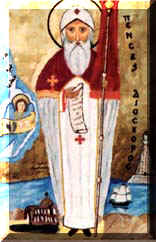
[September 17] Dioscorus I, patriarch of Alexandria

Predecessor: Cyril I
Reign: 444 – 454
Brief: At the Second Council of Ephesus, Discorus was appointed the head arbiter between supporters of Eutyches, a Nestorian, and those of Flavian. He decided in favor of Eutyches, which upset Pope Leo I, a defender of Flavian. Dioscorus was deposed by the Council of Chalcedon but many in Egypt continued to support him, creating the permanent divide between the Coptic Catholic Church and the Melchite Catholic Church. While in many circles, Discorus is considered a heretic, in the Oriental Orthodox Church he is considered a saint and a great father of the church.
Date of Death: 17 September 454
Successor: Proterius I I

Other Monarchs Who Died Today:

  • Robert III, count of Flanders (1322)
  • Constantine II, tsar of Bulgaria (1422)
  • Felipe IV & III, king of Spain & Portugal (1665)

Wednesday, July 11, 2012

[July 11] Narai, king of Siam


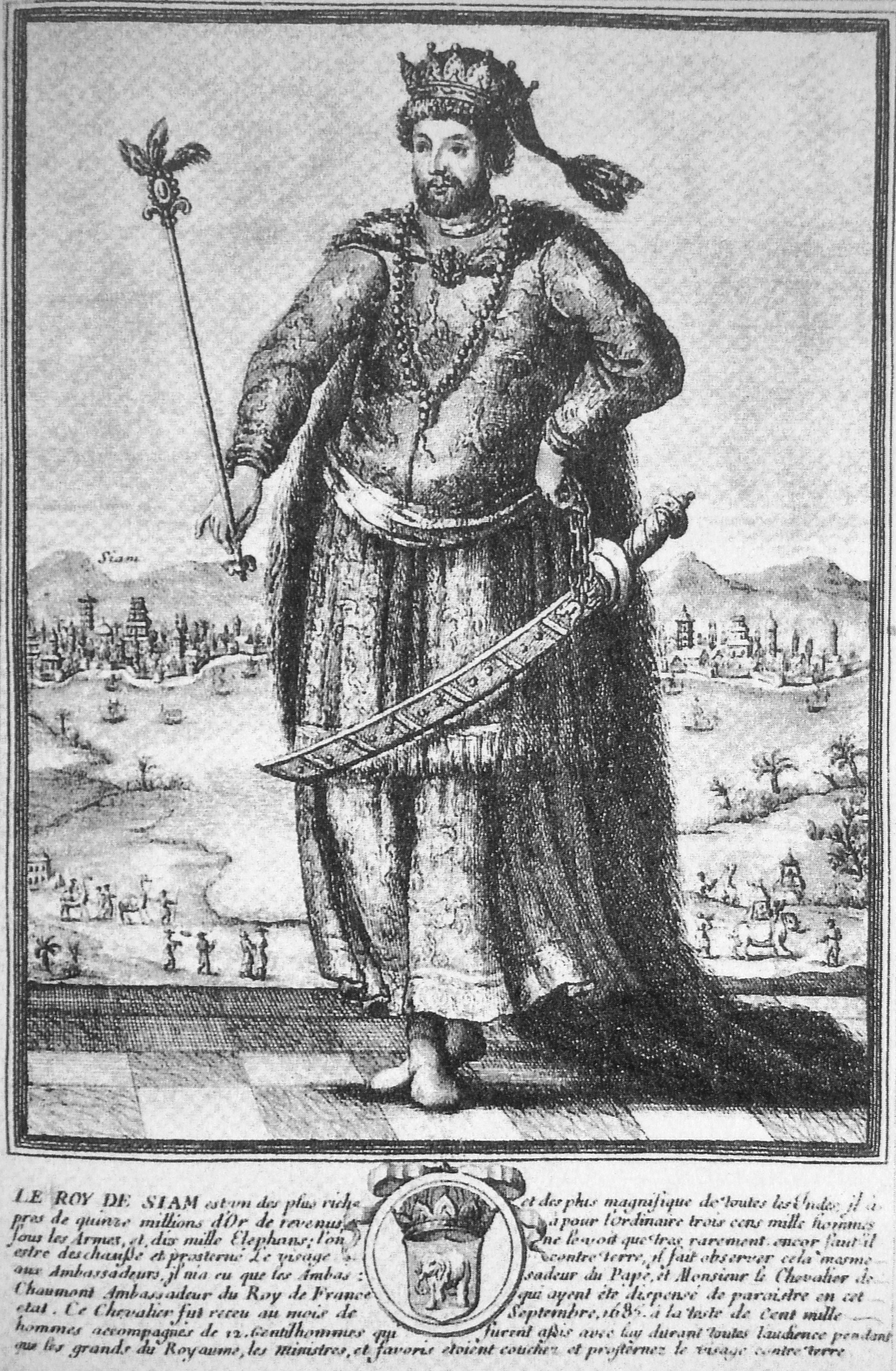
True Name: Somdet Phra Narai (สมเด็จพระนารายณ์มหาราช)
Surnamed: "The Great"
Parents: Prasat Thong, king of Siam, and Siri Galyani
Date of Birth: 1633
Royal House: Prasat Thong
Spouse: Suriyong Rasmi, among others
Predecessor: Sri Sudharmmaraja

Reign: 1656 – 1688
Summary: The Prasat Thong dynasty was still new when Narai was born in 1633 to the usurping king of the kingdom of Siam. He was not the eldest son of the king, but he was of his mother, Siri Galyani, a daughter of the last king of the Sukhothai dynasty. Thus, Narai was the heir of the old dynasty and his rise to greatness would legitimize that transition. After working with his uncle to depose his half-brother, Sanpet VI. Sudharmmaraja, his uncle, took the throne and Narai immediately began plotting his uncle's downfall. By October 1656, his uncle was captured and Narai had him publicly executed. Narai was now the undisputed ruler of Siam. 

Foreign powers dominated Siam at the time, with the Dutch controlling trade in the south and the English making forays into the north from India. China, too, was making incursions into Siam and Narai made it his first action as king to retake control over the northern provinces. While trying to balance English and Dutch influences in his court, he obtained Jesuit architects to build his palace at Lopburi, thereby moving the capital away from Ayutthaya, the traditional Thai capital, for the first time. Jesuits sent from France attempted to convert Narai on numerous occasions, but the king wouldn't have it. He allowed them to stay and preach, but the Siam monarchy would remain devotedly Buddhist. As part of his foreign policy, Narai sent diplomats to Europe and Asia, where they were treated as wonders of the world and afforded many contemporary luxuries. During the last decade of his reign, France became a dominant force in Indochina. Narai allowed French troops to garrison at various Siamese ports where the troops began training the local army in Western tactics. Throughout his entire reign, Narai had been consolidating power using foreign soldiers to subdue local lords. In 1688, the king became ill and decided to resolve the succession dispute that would inevitably come upon his death. He appointed his daughter as his heir and gave the throne to whomever married her. Instead, a councilor named Phetracha took the throne in a coup and murdered his two rivals. Narai died a few days later. As his first act, Phetracha expelled the French troops from Siam and turned away all connection to the West. Missionaries were allowed to stay, but the French were soundly condemned. Phetracha married Narai's daughter, Sudavadi, thereby legitimizing his ascent to the throne.
Date of Death: 11 July 1688
Successor: Phetracha

Other Monarchs Who Died Today:
  • Anthemius, emperor of Rome (472)
  • Rudolph II, king of Burgundy (937)
  • Amalric I, king of Jerusalem (1174)
  • Otto I, duke of Bavaria (1183)
  • Robert II, count of Artois (1302)
  • Joachim I, elector of Brandenburg (1535)

Monday, July 2, 2012

[July 2] St. Stefan III, voivode of Moldavia

True Name: Ștefan cel Mare și Sfânt
Surnamed: "The Great"
Parents: Bogdan II, voivode of Moldavia, and Oltea
Date of Birth: 1433
Royal House: Musat
Spouse: Evdokia, daughter of Alexander Oaleka, duke of Slutsk-Kapyl, and Sophia of Lithuania
Predecessor: Petru III
Reign: 1457 – 1504
Summary: Stefan's life was in peril almost from the time of his birth. His father was Bogdan II, the voivode (prince) of Moldavia for two years in the late 1440s. His uncle, Petru, killed his father in a raid and took the title voivode for himself. Moldavia, located in eastern Romania and Moldova, went into civil war for seven years between Petru III and Alexandrel, a nephew of an earlier voivode. Stefan, meanwhile, fled to neighboring Transylvania where he obtained protection from John Hunyadi. He then moved to the court of his cousin, Vlad III Dracula (Vlad the Impaler) in Wallachia where he was able to muster enough troops to raid Moldavia and depose his uncle, Petru. Petru fled to Poland and Stefan at last was crowned voivode. He later raided Poland to try and find Petru but instead signed a treaty of submission with Poland wherein Petru was forever banned from reentering Moldavia.


Stefan proved to be a very able and successful general. He repelled invasions from Hungary, Poland, and the Ottoman Empire continuously throughout his reign. In 1467, the Hungarian king invaded Moldavia and Stefan defeated him at the Battle of Baia. In 1471, he invaded Ottoman-occupied Wallachia and was successful in reclaiming some of the principality for the Christians. Sultan Mehmed II invaded in 1475 but at the Battle of Vaslui, not only were the Ottomans stopped, but they ceased incursions into Europe for a number of years. Stefan failed at the Battle of Valea Alba the next year against the Ottomans, but the Turks were unable to make any significant progress due to a plague in the Ottoman army. Still, the rest of Europe was comfortable just watching the Moldavians attack and counter attack. Stefan felt it his duty to restore Wallachia to Christians. He dealt in numerous uprisings and coups within the principality, eventually installing Vlad Calugarul, a brother of Vlad III, on the Wallachian throne and ensuring a Christian neighbor for the remainder of his reign. More warfare and problems with Poland resulted in a treaty with the Ottoman Empire signed in 1503 that preserved Moldavian independence at the expense of an annual tribute to the Turks. In his final year, he rebelled at Polish invasion and defeated them decisively at the Battle of the Cosmin Forest. At a skirmish in 1462, Stefan had wounded his leg. Over the succeeding forty years, numerous injuries would compound to make his led nearly useless. When gout set in, Stefan decided to cauterize his wound after advice from the Hungarian king and Venetian doge. Stefan died two days after the agonizingly painful surgery. His opposition to the Ottomans earned him a place in the Romanian Orthodox Church as a saint.
Date of Death: 2 July 1504
Successor: Bogdan III

Other Monarchs Who Died Today:

  • Adolf, king of germany (1298)
  • Eberhard III, duke of Württemberg (1674)
  • Manuel II, king of Portugal (1932)

Sunday, June 10, 2012

[June 10] Alexander III, king of Macedon

Surnamed: "The Great"
Parents: Philip II, king of Macedon, and Olympias of Epirus
Date of Birth: 20 July 356 BCE
House: Macedonian
Spouse: (1) Roxana, daughter of Osyartes of Bactria, (2) Stateira II, daughter of Darius III, shahanshah of Persia, and Stateira I, and (3) Parysatis II, daughter of Artaxerxes III, shahanshah of Persia
Predecessor: Philip II
Reign: 336 – 323 BCE
Summary: Alexander was born in Pella, the capital of Macedon located somewhere in northern Greece or Macedonia. Alexander was tutored be Leonidas and Lysimachus in the manner of a Macedonian noble. When he was ten, he received his first horse, which he named Bucephalas. Alexander kept this horse until the end of his days. In 343 BCE, King Philip chose the philosopher Aristotle to tutor his son, and the Temple of the Nymphs at Mieza was the appointed classroom. Alexander fell in love with the epics of Homer while also learning every known science. When Philip left for war, Alexander remained in Pella as the regent and heir apparent. He was given his first chance to rule when Thrace rebelled and Alexander leveled it and founded a new settlement there populated by Greeks called Alexandropolis. It would not be the last city Alexander named after himself. Philip continued to give his son powers and increased the size of his army. In 338 BCE, the two marched together to Thermoplyae and then continued marching south to subdue Greek city-states that were rebelling against Macedonian rule. Once in the far south of Greece, Philip established the League of Corinth between almost all the city-states in Greece and declared war against the Persian Empire. Upon his return to Pella, Philip fell in love with a local lady and Alexander was forced to flee to Illyria. Six months later, the two parties were reunited. In 336 BCE, Philip was assassinated by the captain of his bodyguards. Alexander was proclaimed king at the age of 20.

The new king quickly killed his rival family members. Much of Greece rebelled soon after and Alexander spent the first months of his reign consolidating power in the south. Once secured, he moved north and secured his northern borders. The south rebelled again, and Alexander was forced to raze Thebes to the ground and split it between other rival cities. Once all his rebellions were ended, he moved on toward Persia leaving a lieutenant, Antipater, behind as regent. In twelve years, Alexander conquered all of Persia, Egypt, Asia Minor, and Afghanistan. He marched his army directly toward the Tigris River, sacking or conquering everything he passed. One-by-one, he took Syria, the Levant, Tyre, and Egypt. Jerusalem saw Alexander as a savior against the autocratic rule of the later Persian overlords. In Egypt, he founded Alexandria, a city that would soon become the wealthy center of Ptolemaic Egypt. Alexander then moved north to Mesopotamia and conquered it all before continuing into the Persian heartland. Darius III, emperor of Persia, continued to flee, abandoning the old Persian capital at Susa and the new one at Persepolis. Darius was finally stabbed by Bactrian captors and a pretender arose and fled into the mountains. Alexander eventually defeated the usurper and took the title King of Kings (Shahanshah) and adopted some Persian dress. India became the next target of Alexander's desire, but it would overstretch him. He crossed the Indus at the Battle of the Hydaspes in 326 BCE and subdued the local lord, making him the new satrap of India. His horse, Bucephalas, died during the engagement. Near the Gnages River, Alexander's army finally mutinied. He never passed into the Indian heartland but was forced to turn for home. In Persia, Alexander began to centralize his rule and established well-defined satrapies throughout his realm. He returned to Babylon and died there after a short fever in 323 BCE. His tomb became a pilgrimage site for many centuries to come. Alexander's empire became the stuff of legend but was divided between his posthumous son, Alexander IV, and a half-brother, Philip III. Within months, though, a civil war broke out that saw the rise of four separate kingdoms formed from former satrapies. In Egypt, the Ptolemys took control. In Persia and Mesopotamia, the Seleucids. In Asia Minor, Pergamon briefly took control, and in Macedon, Alexander and Philip were soon murdered and replaced by upstart generals.
Date of Death: 10 June 323 BCE
Successor: Alexander IV and Philip III

Other Monarch Deaths:
Ernest, margrave of Austria (1075)
Frederick I, Holy Roman Emperor (1190)
Ernest, duke of Austria (1424)
Hsinyushin, king of Burma (1776)

Friday, May 18, 2012

[May 18] Sejong, king of Korea

True Name: 세종대왕 世宗大王
Surname: "The Great"

Parents: Taejong, king of Korea, and Wongyeong
Date of Birth: 15 May 1397
House: Joseon
Spouse: Soheon, among others
Predecessor: Taejong
Reign: 1418 – 1450
Summary: Despite being the third son of King Taejong, Sejong was always the favorite. He was made grand prince in 1399 in spite of his brothers. He was helped along the way a bit. His eldest brother didn't want to be king, so he acted the fool until he was banished from Seoul. The brother wandered through the mountains, while the second brother became a Buddhist monk. In August 1418 Taejong abdicated in favor of Sejong. He retained control over the military and had a great influence over court life until he died in 1422. From that point forward, Sejong was the sole ruler of Korea.

Beginning in 1419. Sejong began plans to remove Japanese pirates off of Korea's coastline. The end result of this was a long war that was not finally resolved until 1443 with the Treaty of Gyehae, but the threat of Japan was finally removed. In the north, Sejong sent a general to deal with Manchu incursions that had begun to threaten his borders. Four forts were built to secure the northern borders. The domestic and political management of his realm is where Sejong shines. He wanted to protect and enlighten his people, and did so in numerous ways. He improved the agricultural life of the peasants and encouraged creative thought and invention. His most successful inventor, a peasant named Jang Yeong-sil, he brought to court and promoted despite protests from the aristocracy. Sejong also corrected the calendar to better reflect Korean dates rather than Chinese dates. Sejong's most impressive feat, though, was the creation of the Korean written language, Hangul. While the aristocracy retained Chinese as their written language, the peasants suddenly became literate and began using Hangul in everyday life. Sejong continued to rule an enlightened people even after he went blind in his later years. He eventually died of diabetes-related causes in 1450, whereafter he was succeeded by his son Munjong. Civil war broke out two years after when Munjong died leaving the throne to a grandson of Sejong's and his second son. The two fought long and undermined the peace that Sejong had established in Korea.
Date of Death: 18 May 1450
Successor: Munjong

Other Monarch Deaths:
Wladyslaw, duke of Opole (1401)
Túpac Amaru II, pretender to the Inca (1781)

Monday, May 7, 2012

[May 7] Otto I, Holy Roman Emperor

Surame: "The Great"
Parents: Henry I, king of Germany, and Matilda of Ringelheim
Date of Birth: 23 November 912
House: Ottonian
Spouse: Eadgyth, daughter of Edward I, king of Wessex, and Æfflæd, then Adelaide, daughter of Rudolf II, king of Burgundy, and Bertha of Swabia
Predecessor: Henry I
Reign: 936 – 973
Summary: Otto was born to Henry the Fowler's second wife in 912. Little of his youth is known but he first was active in the military during his father's campaigns against the Slavs. Otto's first illegitimate son, William, was born in 929 during these campaigns and that son would later become the Archbishop of Mainz. When Conrad I, king of Germany, died in 918, Otto's father was elected the new king. Henry was the first Saxon, rather than Frank, to rule over East Francia. Henry was given the right of sole succession in Germany making Otto the heir apparent. His two brothers were promised lands and titles instead. Henry then made an alliance with the king of Wessex in England and married Otto to one of the king's daughters. When Henry died in 936, Otto became the duke of Saxony and king of Germany, both hereditary titles. Unlike his father, Otto attempted in all his manners to appear the successor of Charlemagne. While he aspired to France, he accepted rulership of Germany and Lotharingia (Lorraine) first. Four other German rulers submitted formally to his authority. Otto began his reign with a unified kingdom not seen for many years.

Troubles started for Otto almost immediately. In 937, Bavaria rose up in rebellion and Otto was forced to depose the duke and install a loyal duke instead. The original duke was eventually restored but rose up again a year later and was much more successful this time around. The Bavarian duke recruited leaders from all around Germany in his second uprising and joined with France as well since King Louis IV wished to retake Lorraine. Otto finally reconciled with the disaffected parties and forced them to show public penance on Christmas of 941. The half-decade of rebellions was over. For the next ten years, Otto consolidated his power in Germany, arranging royal marriages and arranging a merit-based system of promotion. Germany became a true international state during this time and Otto centralized authority under himself directly, at the expense of the other German dukes and his two brothers. Internationally, Otto was continuously butting heads with France throughout his reign because, while Otto claimed succession from Charlemagne, in France Charlemagne's descendants, the Carolingians, still ruled. Burgundy and Bohemia, two independent, realms, both entered into long-term associations with Germany and could, by this time, be considered quasi-vassal states of the latter. In the east, Otto fought a long and continuous war against the Slavs. The Slavs in the north joined forces with the Danish king and caused a constant nuisance there. Political infighting in Italy gave Otto the chance to unify most of Charlemagne's empire once and for all. Otto sent his son, Luidolf, sough in 951 to overthrow the current Roman Imperial claimant, Berengar II. Luidolf arrived, however, unopposed. Otto quickly came in on October 10, 951, he was crowned king of Italy as soon as he arrived. Liudolf soon after went into open civil war against his father and he singlehandedly led the rest of Germany in rebellion. When Magyars from Hungary invaded Germany in 954, Otto blamed his son and the rebels. Sentiment quickly returned to Otto and he reasserted himself in Germany. Within two years, most of the leaders of the rebellion, including his own son, were dead. Meanwhile, Otto was able to centralize his authority even further with through the fear of invasion from the Magyars. It took another year, but Otto was finally able to defeat them as well. In 957, Otto led a second campaign into Italy and this time demanded that the pope crown him Roman Emperor. With his coronation, the titles "king of Germany" and "king of Italy" were linked in dynastic union under the all-encompassing title "Holy Roman Emperor." A few years later, Otto called a synod to discuss the relationship between the Papacy and the Empire. They agreed that the pope would remain spiritual leader while the emperor would rule as secular leader. Problems regarding this agreement arose again many years later in the Investiture Controversy. Almost as soon as Otto left, Italy rose up in rebellion. Otto arranged for his illegitimate son to act as regent for his legitimate surviving son, Otto (II). Otto then marched to Italy and captured all the rebel leaders. The emperor then sought further assurances by marrying his son to a Byzantine princess, thereby legitimizing his own title of Roman Emperor in the eyes of the eastern empire. Otto fell ill with fever in 973 and died at the age of 60. His son succeeded without opposition.
Date of Death: 7 May 973
Successor: Otto II

Other Monarch Deaths:
Feodor III, tsar of Russia (1682)

Saturday, April 14, 2012

[April 14] Mstislav I, grand prince of Kiev

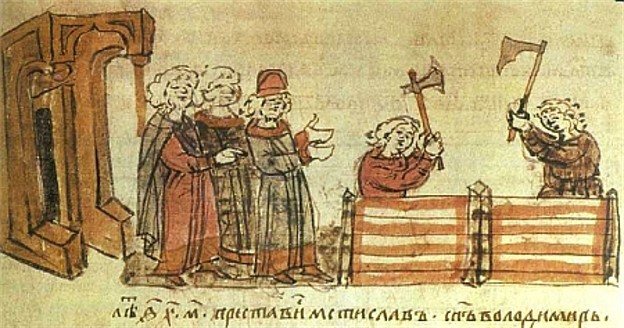
Surname: "The Great"
True Name: Мстислав Владимирович Великий
Parents: Vladimir II Monomakh, grand prince of Kiev, and Gytha of Wessex

Date of Birth: 1 June 1076
House: Rurik
Spouse: Christina, daughter of Inge I, king of Sweden
Predecessor: Vladimir II
Reign: 1125 – 1132
Date of Death: 14 April 1132
Successor: Yaropolk II

Other Monarchs Who Died Today:
Boleslaw, duke of Greater Poland (1279)

Wednesday, April 11, 2012

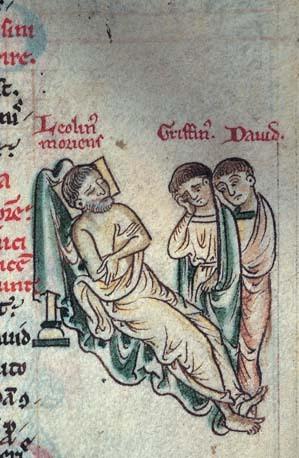
[April 11] Llywelyn, king of Gwynedd

King Llywelyn on his deathbed
with his sons, Gruffydd and Dafydd
Surname: "The Great" (Fawr)
Parents: Iorwerth Drwyndwn, prince of Gwynedd, and Marared
Date of Birth: circa 1173
House: Gwynedd-Abberffraw
Spouse: Joan, illegitimate daughter of John, king of England, and Clemence
Predecessor: Dafydd
Reign: 1195 – 1240
Date of Death: 11 April 1240
Successor: Dafydd

Other Monarchs Who Died Today:
Romanus III, emperor of Constantinople (1034)
Stephen IV, king of Hungary (1165)

Labels

[brief] (102) female monarch (31) Capet (26) [abbreviated] (19) Roman Empire (17) Great monarchs (16) Japan (15) Papacy (15) England (13) saints (13) France (11) Portugal (11) [Missing Deaths] (11) Habsburg (10) Sweden (10) Byzantine Empire (9) Carolingian (9) China (9) Hohenzollern (9) Oldenburg (9) Holy Roman Empire (8) Japan (dynasty) (8) Aragón (7) Austria (7) Denmark (7) Electorate (7) Ethiopia (7) Hungary (7) Navarre (7) Norway (7) Romanov (7) Russia (7) Saxony (7) Scotland (7) Wettin (7) Wittelsbach (7) Bavaria (6) Burgundy (6) Egypt (6) Italy (6) Lorraine (6) Luxembourg (6) Persia (6) Poland (6) Sicily (6) Spain (6) Valois (6) Capet-Burgundy (5) Franks (5) Germany (5) Plantagenet (5) Prussia (5) Quraish (5) Solomon (Ethiopia) (5) Tuscany (5) Anjou (4) Aquitaine (4) Barcelona (dynasty) (4) Bohemia (4) Brittany (4) Burgundy-Aviz (4) Burma (4) Capet-Valois (4) Castile (4) Constantinople (Patriarchate) (4) Habsburg-Lorraine (4) Holstein-Gottorp-Romanov (4) India (4) Ireland (4) Jerusalem (4) Jiménez (4) Kiev (4) Mongolia (4) Naples (4) Netherlands (4) Normandy (4) Osman (4) Ottoman (4) Palaeologos (4) Savoy (4) Savoy (dynasty) (4) Trastámara (4) Wales (4) Afghanistan (3) Albania (3) Bagrationi (3) Banu Hashim (3) Blois (3) Borjigin (3) Bourbon (3) Brabant-Hesse (3) Brandenburg (3) Capet-Bourbon (3) Cologne (3) Croatia (3) Cyprus (3) Disney (3) Fairhair (3) Georgia (3) Gwynedd (3) Hainaut (3) Hesse (3) Hohenstaufen (3) Holland (3) Holstein-Gottorp (3) Inca (3) Islam (3) León (3) Limburg (3) Lithuania (3) Livonia (3) Lothier (3) Macedonia (dynasty) (3) Mainz (3) Mann (3) Medici (3) Morocco (3) México (3) Nassau (3) Nguyễn (3) Serbia (3) Stuart (Stewart) (3) Toungoo (3) Tudor (3) Turkey (3) Vaudemont (3) Vietnam (3) Welf (3) Wessex (3) published articles (3) Abberfraw (2) Aberffraw (2) Alexandria (patriarchate) (2) Angevins (2) Anglo-Saxon (2) Ardennes-Metz (2) Auvergne (2) Ayyubid (2) Basarab (2) Bernadotte (2) Billung (2) Boulogne (2) Brabant (2) Bruce (2) Burgundy-Bragança (2) Caliphate (2) Cilicia (2) Constantine (2) Crovan (2) Denmark (Dynasty) (2) Draculesti (2) Dreux (2) Dunkeld (2) Dutch Republic (2) Estridsen (2) Flanders (2) Florence (2) Further Austria (2) Greece (2) Habsburg-Spain (2) Hanover (2) Hardrada (2) Hauteville (2) Hawai'i (2) Ivrea (2) Joseon (2) Karadordevic (2) Konbaung (2) Korea (2) Maya (2) Merovingian (2) Milan (2) Ming (2) Monaco (2) Nassau-Orange (2) Nassau-Weilburg (2) Norman (2) Novgorod (2) Orange (2) Ottonian (2) Piast (2) Piedmont-Savoy (2) Poitiers (dynasty) (2) Robertian (2) Romania (2) Rurik (2) Sardinia (2) Saxe-Coburg-Gotha (2) Seljuk (2) Siam (2) Syria (2) Teutonic Knights (2) Thailand (2) Theodosian (2) Thuringia (2) Timurid (2) Tokugawa (2) United Kingdom (2) Valois-Burgundy (2) Vandal (2) Venice (2) Visconti (2) Vladimir (2) Wallachia (2) Württemberg (2) York (2) Yugoslavia (2) Zeeland (2) the Britons (2) 18th Dynasty (Egypt) (1) Abbasid (1) Adal (1) Agiad (1) Akinyele (1) Al Khalifa (1) Al-Said (1) Alawiyya (Egyptian) (1) Albret (1) Algeria (1) Algonquian (1) Amber (1) Angola (1) Anjou (dynasty) (1) Anjou-Hungary (1) Ansbach (1) Antonia (1) Antonine (1) Apulia (1) Arabia (1) Armenia (1) Arpad (1) Arsacid (1) Asen (1) Ashikaga (1) Athens (1) Avesnes (1) Avignon Papacy (1) Aviz-Beja (1) Aztec Empire (1) Baden (1) Bahrain (1) Balti (1) Barakzai (1) Barazkai (1) Barcelona (1) Battenberg (1) Belgium (1) Bengal (1) Berg (1) Berg (dynasty) (1) Bernicia (1) Bharatpur (1) Bhutan (1) Bjelbo (1) Bonaparte (1) Bonde (1) Bonngau (dynasty) (1) Borghese (1) Borja (1) Bosnia (1) Bourbon-Two Sicilies (1) Brandenburg-Ansbach (1) Brienne (1) Brutus (1) Bukhara (1) Bulgaria (1) Canossa (1) Capet-Dreux (1) Carthage (1) Celje (1) Celje (dynasty) (1) Chakri (1) Champagne (1) Champagne (dynasty) (1) Chartres (1) Cometopuli (1) Contantine (1) Cordoba (1) Craiovesti (1) Crusader States (1) Dalmatia (1) Damascus (1) Danesti (1) Debeubarth (1) Deira (1) Deira (dynasty) (1) Denmar (1) Dulo (1) Díaz (1) Early Han (1) East Anglia (1) East Francia (1) Eastern Han (1) Eastern Jin (1) Egmont (1) Estonia (1) Farnese (1) Fatimid (1) Fatimid Caliphate (1) Flanders (dynasty) (1) Flavian (1) Friuli (1) Gausi (1) Geneva (1) Geneva (dynasty) (1) Gordiani (1) Grimaldi (1) Guelders (1) Guideschi (1) Gwent (1) Gwynedd (dynasty) (1) Gyatso (1) Haag (1) Hainaut (dynasty) (1) Hanan Cuzco (1) Hashim (1) Hashimite (1) Hebrides (The Isles) (1) Hellenes (1) Herat (1) Hohenzollern-Ansbach (1) Hohenzollern-Sigmaringen (1) Holland (dynasty) (1) Hunfriding (1) Ibadan (1) Iran (1) Iturbide (1) Jaipur (1) Jin (1) Jordan (1) Julio-Claudian (1) Jungingen (1) Justinian (dynasty) (1) Kachwaha (1) Kalakaua (1) Kamehameha (1) Karrani (1) Kent (1) Kent (house) (1) Kestutis (1) Khurasan (1) Knights Templar (1) Komnenos (1) Kotromanić (1) Lakota Sioux (1) Lancaster (1) Latin Empire (1) Lebanon (1) Leuchtenberg (1) Lombards (1) Ludowinger (1) Lusignan (1) Luxembourg (dynasty) (1) Luxembourg-Limburg (1) Maan (1) Macedon (1) Magdeburg (1) Maine (1) Majorca (1) Malaysia (1) Manghit (1) Maratha Empire (1) Marinid (1) Matsunaga (1) Maurya (1) Mecklenburg (1) Mecklenburg-Strelitz (1) Meissen (1) Mercia (1) Mercia (dynasty) (1) Miniconjou (1) Moldavia (1) Montenegro (1) Montferrat (1) Morgannwg (1) Mortain (1) Mountbatten (1) Mughal (1) Muhammad Ali (1) Munster (1) Musat (1) Myanmar (1) Nakagawa (1) Ndongo and Matana (1) Nemanjic (1) Nepal (1) Nervo-Trajan (1) Neuchâtel (1) Nigeria (1) Nominoë (1) Northumbria (1) O'Brien (1) Obrenović (1) Odowa (1) Olgovich (1) Olympus (1) Orléans-Longueville (1) Ostrogoths (1) Ottawa (1) Pahlavi (1) Palatinate of the Rhine (1) Parma (1) Penthièvre (1) Petrović-Njegoš (1) Poděbrady (1) Pointiers (Ramnulfids) (1) Poitiers (1) Poitiers-Lusignan (1) Polignac (1) Powys (1) Prasat Thong (1) Premyslid (1) Provence (1) Přemyslid (1) Q'umarkaj (1) Qin (1) Qing (Manchu) (1) Reginar (1) Reginarid (1) Rethel (1) Rethel-Boulogne (1) Ribagorza (1) Rouergue (1) Roupenians (1) Sa Malietoa (1) Safavid (1) Salian (1) Salzburg (1) Samoa (1) Sarantapechos (1) Saud (1) Saudi Arabia (1) Second Triumvirate of Rome (1) Selangor (1) Selangor (dynasty) (1) Sforza (1) Shah (Nepal) (1) Shi'a Imamate (1) Shishman (1) Shivaji (1) Silesia (1) Simmern (1) Sinsinwar Jat (1) Skowronski (1) Slovenia (1) Sobieski (1) South Africa (1) South America (1) Sparta (1) Spoleto (1) Sture (1) Sudan (1) Sussex (1) Sverre (1) Swabia (1) Swasi (dynasty) (1) Swaziland (1) Swiss Confederation (1) Tang (1) Tenochtitlan (1) Teotihuacán (1) Terter (1) Tibet (1) Tikal (1) Tolkien (1) Toulouse (1) Tours (dynasty) (1) Transylvania (1) Tunisia (1) Umayyad (1) Unruoching (1) Valencia (1) Valois-Angoulême (1) Valois-Anjou (1) Valois-Orléans (1) Vasa (1) Vermandois (1) Visigoths (1) Vokil (1) Wangchuck (1) Wied-Neuwied (1) Windsor-Mountbatten (1) Württemberg (dynasty) (1) Yamato (1) Ying (Qin) (1) Yuan (1) Zanzibar (1) Zhao (Song) (1) Zhou (1) Zhu (1) Zogu (1) Zulu Nation (1) Zápolya (1) Zähringen (1) bretwalda (1) cardinal (1) fantasy (1) fiction (1) shogunate (1) terms (1) Árpád (1) Öuchi (1)