Showing posts with label Germany. Show all posts

Friday, December 7, 2012

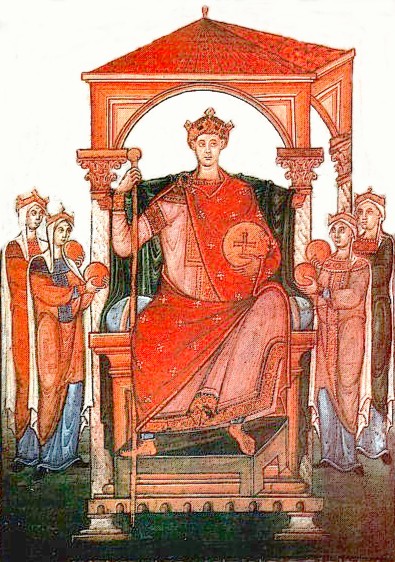
[December 7] Otto II, Holy Roman Emperor

Sobriquet: "The Red" (Rufus)
Parents: Otto I, Holy Roman Emperor, and Adelaide of Italy
Date of Birth: 955
House: Ottonian
Spouse(s): Theophanu, daughter of Constantine Skeleros and Sophia Phokaina
Predecessor: Otto I
Reign: 973 – 983
Brief: Otto was not the oldest son of his father but he was the only legitimate one left alive by 957. He was raised by his illegitimate brother, William, archbishop of Mainz, and the margrave of Saxony, Odo.  He was elected co-king of Germany in 961 at the age of six alongside his father and in 967 was crowned co-emperor. Unfortunately, he languished for many years without any authority or proper training, only succeeding to power when his father died of a fever in 973. In 976, a civil war broke out between Otto and his cousin Henry II, duke of Bavaria, over the titles to Swabia. Otto won the battle and, as punishment, reduced the size of Bavaria and Swabia. A second rebellion the next year ended with Henry II arrested and his son sent to a monastery. Otto II spent much of the rest of his reign conquering southern Italy for the Holy Roman Empire. This brought him into conflict with the Byzantine Empire and the Fatimid Caliphate who both claimed Sicily and parts of Naples. His lieutenant in the south, Pandulf, duke of Spoleto, Salerno, and Benevento, died in 981 leaving his three sons each with a duchy, which weakened Otto's power in Italy. Otto lost at the Battle of Stilo in 982 and many of his officers were killed, leaving southern Italy open to further Moorish and Byzantine aggression. Otto called together the German nobles in northern Italy to elect his son as his successor and then took his army to the Slavic lands to suppress a great rebellion against Christianity there. While fighting, the pope died and Otto was forced back to Italy to select a new candidate. Unfortunately, while there, Otto died of a malaria outbreak, his toddler son succeeding him to the throne under a regency government led by the escaped pretender Henry II. 
Date of Death: 7 December 983
Successor: Otto III

Other Monarchs Who Died Today:
  • Eutychian, pope of Rome (283)
  • Innocent IV, pope of Rome (1254)
  • Boleslaus V, king of Poland (1279)

Thursday, November 8, 2012

[November 8] Louis IV, king of East Francia

Surnamed: "The Child"
Parents: Arnulf, king of East Francia, and Ota of Hesse
Born: September 893
House: Carolingian
Predecessor: Arnulf
Reign: 899 – 911
Brief: Born the only legitimate son of Roman Emperor and king of East Francia Arnulf of Carinthia, Louis the Child ascended the throne of the East Franks at the age of six. His coronation in 900 was the earliest recorded at the time, but the child king was powerless as his German empire fell around him. From the beginning, East Francia was ravaged by the Magyars. The boy was sickly and his government was controlled by a few nobles and bishops. When his half-broter Zwrntibold died in 900, The remnants of Lotharingia (Lorraine) were added to East Francia, expanding the state into a nascent Holy Roman Empire. In 903, under the leadership of his regents, Louis promulgated the first customs tax in Germany. Louis' army was constantly on the defensive against the Magyars despite a few victories. The army was almost complete destroyed in 910, soon after Louis took direct command of his army. Louis died distraught at the age of eighteen. His death brought a power vacuum to East Francia until Henry the Fowler helped fill it. Conrad of Franconia was elected as his successor, fighting the urge to elect the Carolingian king of West Francia and reunite the old empire once more. The nobles in Lorraine chose Charles the Simple, however, and the Holy Roman Empire would remain divided for another thousand years.
Date of Death: 8 November 911
Successor: Conrad I

Other Monarchs Who Died Today:
  • Agapetus II, pope of Rome (955)
  • Baldwin IV, count of Hainaut (1171)
  • Conrad, count palatine of the Rhine (1195)
  • Louis VIII, king of France (1226)
  • Natsuka Masaie, daimyo in Japan (1600)
  • Jahangir, emperor of India (1627)
  • Francisco I, king of the Two Sicilies (1830)

Monday, June 4, 2012

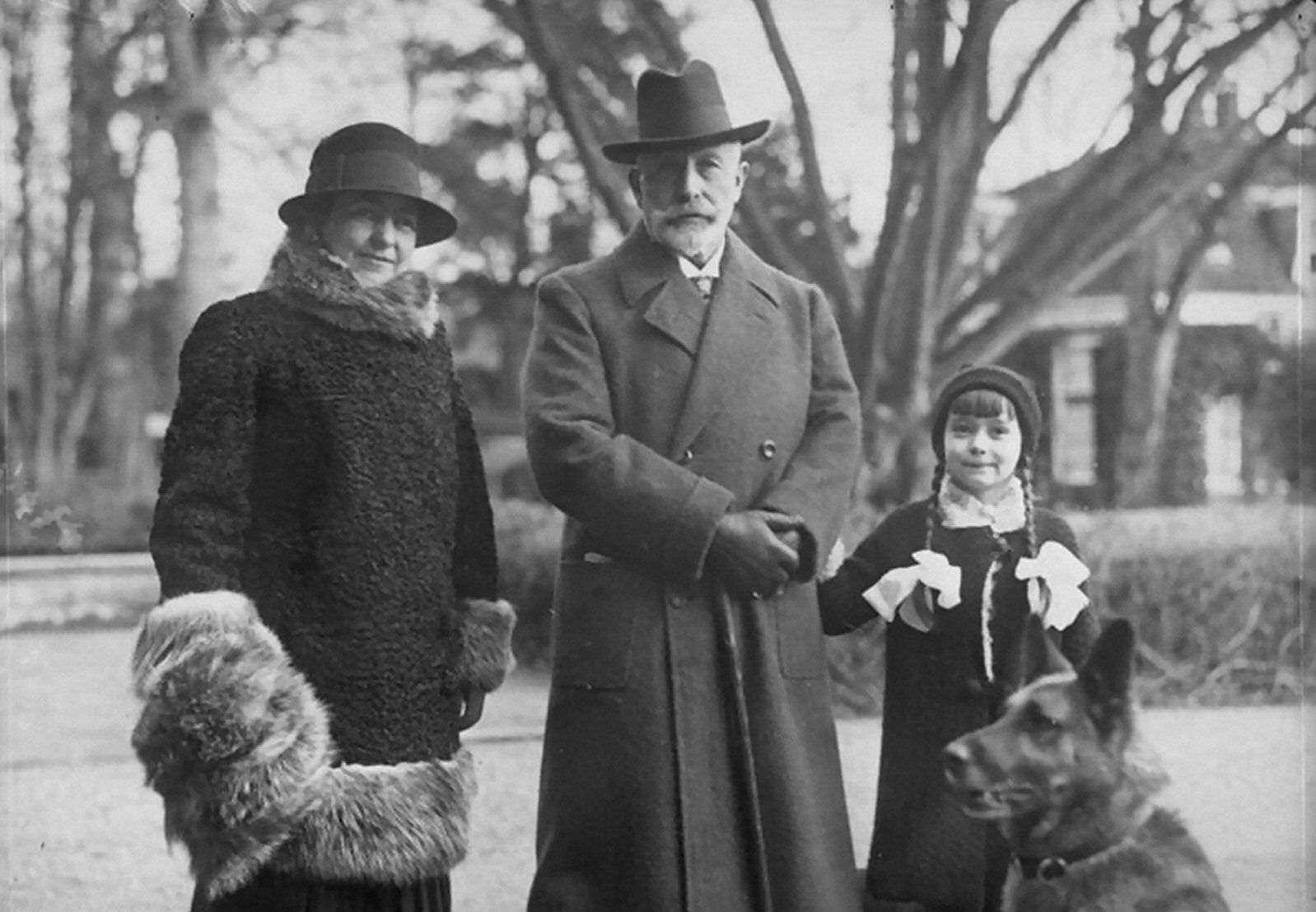
[June 4] Wilhelm II, emperor of Germany


Full Name: Friedrich Wilhelm Viktor Albrecht von Preußen
Parents: Frederick III, emperor of Germany, and Victoria of the United Kingdom
Date of Birth: 27 January 1859
House: Hohenzollern
Spouse: (1) Augusta Victoria, daughter of Frederick VIII, duke of Schleswig-Holstein, and Adelheid of Hohenlohe-Langenburg, then (2) Hermine, daughter of Heinrich XXII, prince of Greiz, and Ida Mathilde Adelheid of Schaumburg-Lippe
Predecessor: Frederick III
Reign: 1888 – 1918
Summary: In the world of monarchs, Emperor Wilhelm II of Germany is often viewed as one of the most vile, comparable to the likes of Attila the Hun, Genghis Khan, or Napoleon I. In many ways, he is very much like them in his vision, but his status as the last monarch of the German Empire and the promoter of the First World War has left an indelible mark on his name. He was the eldest son of the eldest daughter of Queen Victoria of the United Kingdom, and as such held a high status among her grandchildren, many of whom ruled or sat beside rulers of monarchies in Europe. Wilhelm was raised in the military arts at a very young age and the prince was rarely seen out of uniform. This strongly effected his later development as emperor. Wilhelm watched in awe as his grandfather and father unified Germany in the 1860s, yet by the 1870s, Wilhelm had grown distant from his family, partially due to the machinations of Otto von Bismarck. When Emperor Wilhelm I died in 1888, Prince Wilhelm's father was already in the advanced stages of throat cancer. Three months later, Wilhelm II was the third and final German Emperor. 

Bismarck continued to try and administer the empire for Wilhelm, but the young emperor wanted none of it. By 1890, Bismarck was forced out of the government and Wilhelm took over control of the government directly. Wilhelm II supported the arts and sciences, promoted workers rights, and sought expansion both in Europe and abroad. Attempts to colonize areas in Asia and Africa largely failed, requiring heavy resources to support little if any profit. To support his goal of expansion, Wilhelm financed a complete overhaul of the German navy with the goal of rivaling the navy of Britain. This all led to the unfortunate events of 1914. Wilhelm was a personal friend of the Archduke Franz Ferdinand and his assassination on 28 June 1914 led to Wilhelm agreeing to help Austria tracked down the Black Hand leadership, which was responsible for the kill. Austria agreed to declare war on Serbia, which in turn triggered Russia to declare war on Austria. Germany had no choice but to respond and decided that attacking France would be the better first move in a war that was sure to include France and Britain. World War I thus began. Throughout the war, Wilhelm became increasingly distant from the government and military, becoming merely a ceremonial figure in the shadow of Chief Field Marshall Paul von Hindenburg. When the United States joined in the war in 1917, Woodrow Wilson made it clear that those who support the German Emperor would not be privy to the peace negotiations. All support for the German Emperor failed, even though Wilhelm was hardly even an active member of the government. The German army and navy broke out in revolt against Wilhelm. With little choice, on 9 November 1918 Wilhelm II abdicated the thrones of the German Empire and the Kingdom of Prussia with other regional sub-monarchs abdicating by the end of the year. Wilhelm boarded a train for the Netherlands and began his life in exile. Queen Wilhelmina of the Netherlands refused to hand over the former emperor to the war crimes courts after the Treaty of Versailles, but Wilhelm remained trapped in a foreign country. During the 1920s and 1930s, he witnessed from a distance the rise of Adolf Hitler and, though he deeply disliked and distrusted the new German leader, he wrote to him regularly congratulating him for his political victories and desire to restore Germany's glory. When Germany conquered the Netherlands in 1940, Wilhelm retired completely from public life. He died at his home in Doorn, Netherlands, surrounded by a Nazi honor guard. He was buried on the grounds of his estate there, having pledged never to be buried in Germany until the monarchy is restored. His eldest son, Wilhelm Victor, succeeded him in his pretentions to the German throne.
Date of Death: 4 June 1941

Other Monarch Deaths:
Conrad II, Holy Roman Emperor (1039)
Huizong, emperor of China (1135)
Przemysl I, duke of Poland (1257)
Dipendra, king of Nepal (2001)

Monday, May 7, 2012

[May 7] Otto I, Holy Roman Emperor

Surame: "The Great"
Parents: Henry I, king of Germany, and Matilda of Ringelheim
Date of Birth: 23 November 912
House: Ottonian
Spouse: Eadgyth, daughter of Edward I, king of Wessex, and Æfflæd, then Adelaide, daughter of Rudolf II, king of Burgundy, and Bertha of Swabia
Predecessor: Henry I
Reign: 936 – 973
Summary: Otto was born to Henry the Fowler's second wife in 912. Little of his youth is known but he first was active in the military during his father's campaigns against the Slavs. Otto's first illegitimate son, William, was born in 929 during these campaigns and that son would later become the Archbishop of Mainz. When Conrad I, king of Germany, died in 918, Otto's father was elected the new king. Henry was the first Saxon, rather than Frank, to rule over East Francia. Henry was given the right of sole succession in Germany making Otto the heir apparent. His two brothers were promised lands and titles instead. Henry then made an alliance with the king of Wessex in England and married Otto to one of the king's daughters. When Henry died in 936, Otto became the duke of Saxony and king of Germany, both hereditary titles. Unlike his father, Otto attempted in all his manners to appear the successor of Charlemagne. While he aspired to France, he accepted rulership of Germany and Lotharingia (Lorraine) first. Four other German rulers submitted formally to his authority. Otto began his reign with a unified kingdom not seen for many years.

Troubles started for Otto almost immediately. In 937, Bavaria rose up in rebellion and Otto was forced to depose the duke and install a loyal duke instead. The original duke was eventually restored but rose up again a year later and was much more successful this time around. The Bavarian duke recruited leaders from all around Germany in his second uprising and joined with France as well since King Louis IV wished to retake Lorraine. Otto finally reconciled with the disaffected parties and forced them to show public penance on Christmas of 941. The half-decade of rebellions was over. For the next ten years, Otto consolidated his power in Germany, arranging royal marriages and arranging a merit-based system of promotion. Germany became a true international state during this time and Otto centralized authority under himself directly, at the expense of the other German dukes and his two brothers. Internationally, Otto was continuously butting heads with France throughout his reign because, while Otto claimed succession from Charlemagne, in France Charlemagne's descendants, the Carolingians, still ruled. Burgundy and Bohemia, two independent, realms, both entered into long-term associations with Germany and could, by this time, be considered quasi-vassal states of the latter. In the east, Otto fought a long and continuous war against the Slavs. The Slavs in the north joined forces with the Danish king and caused a constant nuisance there. Political infighting in Italy gave Otto the chance to unify most of Charlemagne's empire once and for all. Otto sent his son, Luidolf, sough in 951 to overthrow the current Roman Imperial claimant, Berengar II. Luidolf arrived, however, unopposed. Otto quickly came in on October 10, 951, he was crowned king of Italy as soon as he arrived. Liudolf soon after went into open civil war against his father and he singlehandedly led the rest of Germany in rebellion. When Magyars from Hungary invaded Germany in 954, Otto blamed his son and the rebels. Sentiment quickly returned to Otto and he reasserted himself in Germany. Within two years, most of the leaders of the rebellion, including his own son, were dead. Meanwhile, Otto was able to centralize his authority even further with through the fear of invasion from the Magyars. It took another year, but Otto was finally able to defeat them as well. In 957, Otto led a second campaign into Italy and this time demanded that the pope crown him Roman Emperor. With his coronation, the titles "king of Germany" and "king of Italy" were linked in dynastic union under the all-encompassing title "Holy Roman Emperor." A few years later, Otto called a synod to discuss the relationship between the Papacy and the Empire. They agreed that the pope would remain spiritual leader while the emperor would rule as secular leader. Problems regarding this agreement arose again many years later in the Investiture Controversy. Almost as soon as Otto left, Italy rose up in rebellion. Otto arranged for his illegitimate son to act as regent for his legitimate surviving son, Otto (II). Otto then marched to Italy and captured all the rebel leaders. The emperor then sought further assurances by marrying his son to a Byzantine princess, thereby legitimizing his own title of Roman Emperor in the eyes of the eastern empire. Otto fell ill with fever in 973 and died at the age of 60. His son succeeded without opposition.
Date of Death: 7 May 973
Successor: Otto II

Other Monarch Deaths:
Feodor III, tsar of Russia (1682)

Thursday, December 23, 2010

The Many Varied Dynasties of the First Two German Reichs (Germany)

There is a whole lot to cover today, so I am going to change my formatting around a little bit for this penultimate dynastology. Today I will be covering the various dynasties that ruled the Holy Roman Empire and German Empire from the rise of the Ottonians to the fall of the German Empire in 1918. I will not in any way be able to cover everything and in many places, I will be quickly summarizing. This is intentional. I want to cover the dynastic history mostly and am leaving much of the history out of this post. Hopefully it will be both enjoyable and enlightening. Now, on to the dynasties!
 _____________________________________________________________

The Holy Roman Empire at its Height, c. 970
The Ottonian Dynasty
Founder: Liudolf, Count of Saxony before 866 

Most Famous Monarch: Otto I the Great, Holy Roman Emperor 962 – 973 

Ruled: Saxony, Bavaria, the Holy Roman Empire 

Claim to Fame: The Ottonians restored the Roman Empire that Charlemagne had founded 150 years earlier. The Carolingian line had died out many years prior to the reign of Henry the Fowler, the first King of Germany of the Ottonian line. Otto the Great was instrumental in the unification of the Eastern Frankish states into a single entity, which became known soon after as the Holy Roman Empire.  

Last monarch: St. Henry II, Holy Roman Emperor, who died in 1024 (Henry II was also the only German Emperor to ever be canonized) 

What Happened? The dynasty simply died out because Henry II had taken a vow of chastity. The line passed to the Salian Dynasty, which were distant cousins of Henry II. 
 _____________________________________________________________

The Salian Dynasty
Henry IV, Holy Roman EmperorFounder: Conrad the Red, duke of Lorraine until 955

Most Famous Monarch: Henry IV, Holy Roman Emperor 1084 – 1106

Ruled: Lorraine, Carinthia, Speyer, the Papacy, the Holy Roman Empire

Claim to Fame: The dynasty linked the Holy Roman Empire closely with the Catholic Church, which caused a lot of problems with the next dynasty. The Investiture Controversy  was a conflict between the Pope and Emperor over who had true control over appointing (investing) religious leaders in Imperial land. Oddly, the end result wasn't just the loss of control over much of Italy, but a loss of control over vassal states within the Empire itself.

Last monarch: Henry V, Holy Roman Emperor 1111 to 1125

What Happened? Henry V died in combat. He had no legitimate heirs so the line died out. His designated heir was Frederick II of Swabia, his nephew, and so the line passed to him.

_____________________________________________________________

 The House of Hohenstaufen
Frederick I Barbarossa, Holy Roman EmperorFounder: Frederick I, duke of Swabia until 1105

Most Famous Monarch: Frederick I Barbarossa ("the Red Beard"), Holy Roman Emperor 1155 – 1190
Ruled: Swabia, Sicily, the Holy Roman Empire

Claim to Fame: Barbarossa was known as a ruthless fighter who spent his entire life in war and accomplished virtually nothing for it. He invaded Italy with a huge army only to be slowly pushed back. His traditional allies in northern Italy worked against him and, despite being crowned emperor by the pope, he never managed to assert imperial authority over the Catholic Church or the Empire itself. Barbarossa ended up dying in the Holy Land while on crusade, leaving his family squabbling over its ruins.

Last monarch: Conradin, king of Sicily until 1268 and titular Holy Roman Emperor

What happened? Conradin was executed as a traitor after being excommunicated by the pope. The Kingdom of Sicily was divided between the Angevins and Aragonese, Swabia disintegrated and was incorporated into several neighboring states, and the Holy Roman Empire fell into nineteen years of civil war. The emperor never had absolute power again.

_____________________________________________________________

The House of Este-Welf, commonly known as Guelph
Founder: Welf I, duke of Bavaria until 1101

Most Famous Monarch: Henry the Lion, duke of Saxony and Bavaria until 1195

Ruled: Bavaria, Saxony, Brunswick, Great Britain, Ireland, the United Kingdom, Hanover
Lands of the Guelph dynasty, c. 1165
Claim to Fame: The Welf family has many claims to fame, but I will only discuss two. The first is that of Henry the Lion. Henry tried desperately to conquer and unify Saxony and Bavaria, two of his ancestral duchies. If completed, it would have made him the most powerful monarch in Germany. Henry failed, though, by alienating pretty much everyone else in Germany. When Frederick Barbarossa came around, Henry lost everything. He was exiled to Normandy as a landless royal in 1180 but returned three years later to secure some vestige of his short-lived empire. Henry was exiled again and only returned once Barbarossa was dead. He ravaged his former lands for a few years before contenting himself with the small duchy of Brunswick, which would remain the family's core unit until 1866.

Last Monarch: Ernst August III, duke of Brunswick until 1918

What happened? Power shifted from Hanover to the United Kingdom in the 18th and 19th centuries, leaving Hanover poor and neglected. When attention did return to the duchy, it was too late and the German Empire took it over. Wilhelm II granted Brunswick to one last Welf in 1913, but the empire fell soon after. The dynasty still continues, but no longer rules any country.
_____________________________________________________________

The House of Luxembourg
The Seven Imperial Electors voting for Henry VII of LuxembourgFounder: Waleran I, count of Limburg from 1065 – 1082

Most Famous Monarch: Charles IV, Holy Roman Emperor 1355 – 1378

Ruled: Limburg, Lorraine, Bohemia, the Holy Roman Empire

Claim to Fame: It was Charles IV who promulgated the Golden Bull of 1356, setting in place the rules of the election of future emperors. He also was one of the most well-recognized emperors in Imperial history. He was elected King of the Romans twice: the first time was as an anti-emperor against Louis IV; the second was to confirm the earlier election after Louis died. He was crowned King of Italy and Holy Roman Emperor. He also was crowned King of Burgundy, something that was rarely done by the 14th century.

Last Monarch: Sigismund, Holy Roman Emperor 1433 – 1437

What happened? Sigismund didn't produce any sons and so all his territories passed to his daughter, Elisabeth, who married Albert von Habsburg and helped empower the Habsburgs to take control of the empire a few decades later.
_____________________________________________________________

The House of Vaudemont, commonly divided as Habsburg-Lorraine and Hesse

Charles, Emperor of Austria and King of HungaryFounder: Adalbert, duke of Upper Lorraine from 1047 – 1048

Most Famous Monarch: Francis Ferdinand, Archduke and Heir of Austria 1889 – 1914

Ruled: Metz, Lorraine, Bar, Austria, Hungary, Bohemia, Hesse

Claim to Fame: The fame of the House of Vaudemont is that people who DIDN'T rule are more famous than those who did. Like Marie Antoinette, the queen of Louis XVI of France who probably did not say "Let them eat cake!" when French protesters were laying siege to Versailles and who lost her head a few years later. Yeah, she's not exactly the most important historical figure but I can guarantee you most people know her more than the name of her father, Francis I of Austria. Another famous Vaudemont was Franz Ferdinand, the most common answer to "Whose assassination caused World War I?" Franz wasn't even close to being Austrian emperor yet and no one knows the name of royal heirs in history. He is only important because his death led to a massive world war. I'd like to know more about the Hessians...and not just their participation as mercenaries in the American Revolutionary War...

Last Monarch: Charles, Emperor of Austria 1916 – 1918; Ernest Louis, Grand Duke of Hesse(-Darmstadt) 1892 – 1918

What happened? The same fate that befell the German Empire befell the two distant branches of the House of Vaudemont. Ernest Louis was forced to abdicate after serving for four years in the German military. The Hesse grand duchy quickly joined the Weimar Republic. Charles likewise didn't abdicate, but he did step down from being the head of state of both Austria and Hungary, leaving the decision of his abdication to the people. After Austria & Hungary declared themselves republics two months later, Charles and his family left. Both the Hessian and Habsburg-Lorraine lines continue to provide pretenders to the thrones, the current pretender to Austria being the now-ancient Dr. Otto von Habsburg, who just turned 98 years old.
____________________________________________________________

The House of Wettin

Leopold I, King of the BelgiansFounder: Dietrich I, count in Liesgau until c. 982 

Most Famous Monarch: Elizabeth II, Queen of the United Kingdom of Great Britain & Northern Ireland since 1952 

Ruled: Thuringia, Saxony, Poland, the United Kingdom, Portugal, Bulgaria, Belgium 

Claim to Fame: Perhaps the most interesting thing about the House of Wettin is that it never became an imperial dynasty. Indeed, it was one of the most powerful and influential families in Germany for many centuries, yet never succeeded in obtaining the imperial throne. The family's two branches both led interesting lives—one as imperial electors right up to the end in 1806 when they declared Saxony a kingdom, and one that continued to subdivide until magically the family began ruling the United Kingdom, Portugal, Bulgaria, and Belgium...in addition to all the small territories in Germany.

Last Monarch: There isn't one! Elizabeth II still rules in the United Kingdom and Albert II still rules in Belgium. Pretenders from Saxony and Bulgaria still exist from the Wettin line as well, although the Portuguese Wettins died out not long after the last monarch was deposed.

What happened? All Wettin holdings in Germany were ended in 1918 and integrated into the Weimar Republic. Many lines survive to this day outside of Germany.
_____________________________________________________________

The House of Hohenzollern

Founder: Burkhard I, count of Zollern until 1061 

Most Famous Monarch: Frederick II the Great, King in Prussia & Elector of Brandenburg 1740 – 1786

Ruled: Nuremberg, Ansbach, Brandenburg, Prussia, Hohenzollern, Germany, Romania

The German Empire, 1871 to 1918
Claim to Fame: Like the Wettins, the Hohenzollerns never made it to the imperial throne, though they were electors from the start. But they did get quite bold. After ending the line of Grand Masters of the Teutonic Knights in Prussia, the Hohenzollerns incorporated the lands into their sprawling domain. The problem was Poland was right in the way between Brandenburg (in Germany) and Prussia (in northern Poland-Lithuania). So the Hohenzollerns spent the majority of their career trying to take those lands from Poland, all the while picking up pieces of everyone else's land. By the late 19th century, they just decided to take it all and declared the German Empire (Second Reich). It was short-lived but the unity stuck.

Last Monarch: Michael I, king of the Romanians 1927 – 1930, 1940 – 1947

What happened? After Germany's defeat in World War I, Germany declared the Weimar Republic and the Hohenzollerns (and all the other vassal monarchs) got the boot. The dynasty continued in Romania until 1947 when the communists overthrew the king and declared the People's Republic of Romania. Both Germany and Romania still have pretenders to the throne from the Hohenzollern line.
_____________________________________________________________

The House of Württemberg

William II, King of WürttembergFounder: Conrad I, count of Württemberg

Most Famous Monarch: Ulrich, duke of Württemberg 1498 – 1550

Ruled: Württemberg

Claim to Fame: Württemberg really has no claim to fame. It remained one of the largest of the small states in Germany and it was lucky in that it rarely divided itself, thereby avoiding spreading its resources thin. Ulrich led the march to convert the state to Protestantism after Martin Luther posted his theses in Saxony. The conversion stuck and Württemberg became the second state in Germany to become Protestant. When his line died out in the 18th century, a rival Catholic line took control, but they converted to Protestantism a few generations later. Napoleon upgraded the duchy to a kingdom in 1806 and no one told them otherwise after Napoleon fell. It became the smallest of the German kingdoms when the Hohenzollerns created the German Empire in 1871.

Last Monarch: William II, king of Württemberg 1891 – 1918

What happened? Actually, bad luck happened. Unlike William II in Germany and many of the other German monarchs, William II of Württemberg was pretty popular. The only explanation for his downfall is that the people of Württemberg were caught up in the moment with the rest of Germany and simply deposed him. He was the last of his line, but another cadet branch of the family still survives as pretenders to the Württemberg throne.
_____________________________________________________________

There are many other dynasties in German history but there is no way I can go through them all. Above are the most important; those dynasties that contributed the most to German history. Other dynasties of note are the House of Mecklenburg, the House of Zahringen, the House of Supplinburg, the House of Lippe, the House of Schwarzburg and the House of Waldeck. They all contributed to the history of Germany. Also, you cannot forget the dynasties I have already covered in great detail: Habsburg, Oldenburg, Wittelsbach, and more. They, too, are important. Each helped for the modern German state and regional identities, and each still remains suitable candidates for royal marriages. Indeed, we may well see some of these families on thrones again one day...assuming they aren't already on a throne...
Labels

[brief] (102) female monarch (31) Capet (26) [abbreviated] (19) Roman Empire (17) Great monarchs (16) Japan (15) Papacy (15) England (13) saints (13) France (11) Portugal (11) [Missing Deaths] (11) Habsburg (10) Sweden (10) Byzantine Empire (9) Carolingian (9) China (9) Hohenzollern (9) Oldenburg (9) Holy Roman Empire (8) Japan (dynasty) (8) Aragón (7) Austria (7) Denmark (7) Electorate (7) Ethiopia (7) Hungary (7) Navarre (7) Norway (7) Romanov (7) Russia (7) Saxony (7) Scotland (7) Wettin (7) Wittelsbach (7) Bavaria (6) Burgundy (6) Egypt (6) Italy (6) Lorraine (6) Luxembourg (6) Persia (6) Poland (6) Sicily (6) Spain (6) Valois (6) Capet-Burgundy (5) Franks (5) Germany (5) Plantagenet (5) Prussia (5) Quraish (5) Solomon (Ethiopia) (5) Tuscany (5) Anjou (4) Aquitaine (4) Barcelona (dynasty) (4) Bohemia (4) Brittany (4) Burgundy-Aviz (4) Burma (4) Capet-Valois (4) Castile (4) Constantinople (Patriarchate) (4) Habsburg-Lorraine (4) Holstein-Gottorp-Romanov (4) India (4) Ireland (4) Jerusalem (4) Jiménez (4) Kiev (4) Mongolia (4) Naples (4) Netherlands (4) Normandy (4) Osman (4) Ottoman (4) Palaeologos (4) Savoy (4) Savoy (dynasty) (4) Trastámara (4) Wales (4) Afghanistan (3) Albania (3) Bagrationi (3) Banu Hashim (3) Blois (3) Borjigin (3) Bourbon (3) Brabant-Hesse (3) Brandenburg (3) Capet-Bourbon (3) Cologne (3) Croatia (3) Cyprus (3) Disney (3) Fairhair (3) Georgia (3) Gwynedd (3) Hainaut (3) Hesse (3) Hohenstaufen (3) Holland (3) Holstein-Gottorp (3) Inca (3) Islam (3) León (3) Limburg (3) Lithuania (3) Livonia (3) Lothier (3) Macedonia (dynasty) (3) Mainz (3) Mann (3) Medici (3) Morocco (3) México (3) Nassau (3) Nguyễn (3) Serbia (3) Stuart (Stewart) (3) Toungoo (3) Tudor (3) Turkey (3) Vaudemont (3) Vietnam (3) Welf (3) Wessex (3) published articles (3) Abberfraw (2) Aberffraw (2) Alexandria (patriarchate) (2) Angevins (2) Anglo-Saxon (2) Ardennes-Metz (2) Auvergne (2) Ayyubid (2) Basarab (2) Bernadotte (2) Billung (2) Boulogne (2) Brabant (2) Bruce (2) Burgundy-Bragança (2) Caliphate (2) Cilicia (2) Constantine (2) Crovan (2) Denmark (Dynasty) (2) Draculesti (2) Dreux (2) Dunkeld (2) Dutch Republic (2) Estridsen (2) Flanders (2) Florence (2) Further Austria (2) Greece (2) Habsburg-Spain (2) Hanover (2) Hardrada (2) Hauteville (2) Hawai'i (2) Ivrea (2) Joseon (2) Karadordevic (2) Konbaung (2) Korea (2) Maya (2) Merovingian (2) Milan (2) Ming (2) Monaco (2) Nassau-Orange (2) Nassau-Weilburg (2) Norman (2) Novgorod (2) Orange (2) Ottonian (2) Piast (2) Piedmont-Savoy (2) Poitiers (dynasty) (2) Robertian (2) Romania (2) Rurik (2) Sardinia (2) Saxe-Coburg-Gotha (2) Seljuk (2) Siam (2) Syria (2) Teutonic Knights (2) Thailand (2) Theodosian (2) Thuringia (2) Timurid (2) Tokugawa (2) United Kingdom (2) Valois-Burgundy (2) Vandal (2) Venice (2) Visconti (2) Vladimir (2) Wallachia (2) Württemberg (2) York (2) Yugoslavia (2) Zeeland (2) the Britons (2) 18th Dynasty (Egypt) (1) Abbasid (1) Adal (1) Agiad (1) Akinyele (1) Al Khalifa (1) Al-Said (1) Alawiyya (Egyptian) (1) Albret (1) Algeria (1) Algonquian (1) Amber (1) Angola (1) Anjou (dynasty) (1) Anjou-Hungary (1) Ansbach (1) Antonia (1) Antonine (1) Apulia (1) Arabia (1) Armenia (1) Arpad (1) Arsacid (1) Asen (1) Ashikaga (1) Athens (1) Avesnes (1) Avignon Papacy (1) Aviz-Beja (1) Aztec Empire (1) Baden (1) Bahrain (1) Balti (1) Barakzai (1) Barazkai (1) Barcelona (1) Battenberg (1) Belgium (1) Bengal (1) Berg (1) Berg (dynasty) (1) Bernicia (1) Bharatpur (1) Bhutan (1) Bjelbo (1) Bonaparte (1) Bonde (1) Bonngau (dynasty) (1) Borghese (1) Borja (1) Bosnia (1) Bourbon-Two Sicilies (1) Brandenburg-Ansbach (1) Brienne (1) Brutus (1) Bukhara (1) Bulgaria (1) Canossa (1) Capet-Dreux (1) Carthage (1) Celje (1) Celje (dynasty) (1) Chakri (1) Champagne (1) Champagne (dynasty) (1) Chartres (1) Cometopuli (1) Contantine (1) Cordoba (1) Craiovesti (1) Crusader States (1) Dalmatia (1) Damascus (1) Danesti (1) Debeubarth (1) Deira (1) Deira (dynasty) (1) Denmar (1) Dulo (1) Díaz (1) Early Han (1) East Anglia (1) East Francia (1) Eastern Han (1) Eastern Jin (1) Egmont (1) Estonia (1) Farnese (1) Fatimid (1) Fatimid Caliphate (1) Flanders (dynasty) (1) Flavian (1) Friuli (1) Gausi (1) Geneva (1) Geneva (dynasty) (1) Gordiani (1) Grimaldi (1) Guelders (1) Guideschi (1) Gwent (1) Gwynedd (dynasty) (1) Gyatso (1) Haag (1) Hainaut (dynasty) (1) Hanan Cuzco (1) Hashim (1) Hashimite (1) Hebrides (The Isles) (1) Hellenes (1) Herat (1) Hohenzollern-Ansbach (1) Hohenzollern-Sigmaringen (1) Holland (dynasty) (1) Hunfriding (1) Ibadan (1) Iran (1) Iturbide (1) Jaipur (1) Jin (1) Jordan (1) Julio-Claudian (1) Jungingen (1) Justinian (dynasty) (1) Kachwaha (1) Kalakaua (1) Kamehameha (1) Karrani (1) Kent (1) Kent (house) (1) Kestutis (1) Khurasan (1) Knights Templar (1) Komnenos (1) Kotromanić (1) Lakota Sioux (1) Lancaster (1) Latin Empire (1) Lebanon (1) Leuchtenberg (1) Lombards (1) Ludowinger (1) Lusignan (1) Luxembourg (dynasty) (1) Luxembourg-Limburg (1) Maan (1) Macedon (1) Magdeburg (1) Maine (1) Majorca (1) Malaysia (1) Manghit (1) Maratha Empire (1) Marinid (1) Matsunaga (1) Maurya (1) Mecklenburg (1) Mecklenburg-Strelitz (1) Meissen (1) Mercia (1) Mercia (dynasty) (1) Miniconjou (1) Moldavia (1) Montenegro (1) Montferrat (1) Morgannwg (1) Mortain (1) Mountbatten (1) Mughal (1) Muhammad Ali (1) Munster (1) Musat (1) Myanmar (1) Nakagawa (1) Ndongo and Matana (1) Nemanjic (1) Nepal (1) Nervo-Trajan (1) Neuchâtel (1) Nigeria (1) Nominoë (1) Northumbria (1) O'Brien (1) Obrenović (1) Odowa (1) Olgovich (1) Olympus (1) Orléans-Longueville (1) Ostrogoths (1) Ottawa (1) Pahlavi (1) Palatinate of the Rhine (1) Parma (1) Penthièvre (1) Petrović-Njegoš (1) Poděbrady (1) Pointiers (Ramnulfids) (1) Poitiers (1) Poitiers-Lusignan (1) Polignac (1) Powys (1) Prasat Thong (1) Premyslid (1) Provence (1) Přemyslid (1) Q'umarkaj (1) Qin (1) Qing (Manchu) (1) Reginar (1) Reginarid (1) Rethel (1) Rethel-Boulogne (1) Ribagorza (1) Rouergue (1) Roupenians (1) Sa Malietoa (1) Safavid (1) Salian (1) Salzburg (1) Samoa (1) Sarantapechos (1) Saud (1) Saudi Arabia (1) Second Triumvirate of Rome (1) Selangor (1) Selangor (dynasty) (1) Sforza (1) Shah (Nepal) (1) Shi'a Imamate (1) Shishman (1) Shivaji (1) Silesia (1) Simmern (1) Sinsinwar Jat (1) Skowronski (1) Slovenia (1) Sobieski (1) South Africa (1) South America (1) Sparta (1) Spoleto (1) Sture (1) Sudan (1) Sussex (1) Sverre (1) Swabia (1) Swasi (dynasty) (1) Swaziland (1) Swiss Confederation (1) Tang (1) Tenochtitlan (1) Teotihuacán (1) Terter (1) Tibet (1) Tikal (1) Tolkien (1) Toulouse (1) Tours (dynasty) (1) Transylvania (1) Tunisia (1) Umayyad (1) Unruoching (1) Valencia (1) Valois-Angoulême (1) Valois-Anjou (1) Valois-Orléans (1) Vasa (1) Vermandois (1) Visigoths (1) Vokil (1) Wangchuck (1) Wied-Neuwied (1) Windsor-Mountbatten (1) Württemberg (dynasty) (1) Yamato (1) Ying (Qin) (1) Yuan (1) Zanzibar (1) Zhao (Song) (1) Zhou (1) Zhu (1) Zogu (1) Zulu Nation (1) Zápolya (1) Zähringen (1) bretwalda (1) cardinal (1) fantasy (1) fiction (1) shogunate (1) terms (1) Árpád (1) Öuchi (1)