Showing posts with label Burgundy-Bragança. Show all posts

Thursday, November 15, 2012

[November 15] Maria II, queen of Portugal

Surnamed: "The Educator" (A Educadora) and "The Good Mother" (A Boa Mãe)
Parents: Pedro IV, king of Portugal, and Maria Leopoldina of Austria
Born: 4 April 1819
House: Capet-Burgundy-Aviz-Bragança
Spouse(s): (1) Auguste, 2nd duke of Leuchtenberg, son of Eugène de Beauharnais and Augusta of Bavaria, then (2) Fernando II, son of Ferdinand of Saxe-Coburg & Gotha and Maria Antonia Koháry de Csábrág
Predecessor: Pedro IV
Reign: 1826 – 1828, 1834 – 1853
Brief: Maria II has the unique distinction of being the only European monarch in modern history to be born outside of Europe, being born in Brasil in 1819. Her father, Pedro, was the eldest son of King João VI and was Emperor of Brasil since 1822. A younger son, Miguel, had been exiled after prompting revolutions against his father during the Napoleonic Wars. Maria, his eldest granddaughter, was nominated as his heir until "the legitimate heir" returned to Portugal. Unfortunately, João did not note which son was his legitimate heir. Pedro sought a compromise: marry his daughter to his brother. This would solve any succession crisis. Miguel agreed, but when he finally arrived in Portugal, he proclaimed himself king and deposed his niece. Pedro replied violently in 1831, abdicating the Brasilian throne to his son, Pedro II, and invading Portugal with forces loyal to Maria. Miguel was finally forced to abdicate in 1834, leading a long life of exile abroad. Maria II was now in firm control over Brasil. After a short marriage to a grandson of Empress Josephine (Napoleon's wife), Maria married a prince of Saxe-Coburg & Gotha, who received the title "king consort" a year later. She successfully suppressed an insurrection in 1846, and completely avoided the crises of 1848. She focused on expanding education and public health in Portugal. Maria II died in 1853 due to complications from childbirth, leaving the country to her teenaged son, Pedro V.
Date of Death: 15 November 1853
Successor: Pedro V

Other Monarchs Who Died Today:
  • Penda, king of Mercia (655)
  • Constantine VIII, emperor of Constantinople (1028)
  • Leopold III, margrave of Austria (1136)
  • Jungjong, king of Korea (1544)
  • Tsangyang Gyatso, dalai lama of Tibet (1706)

Tuesday, July 31, 2012

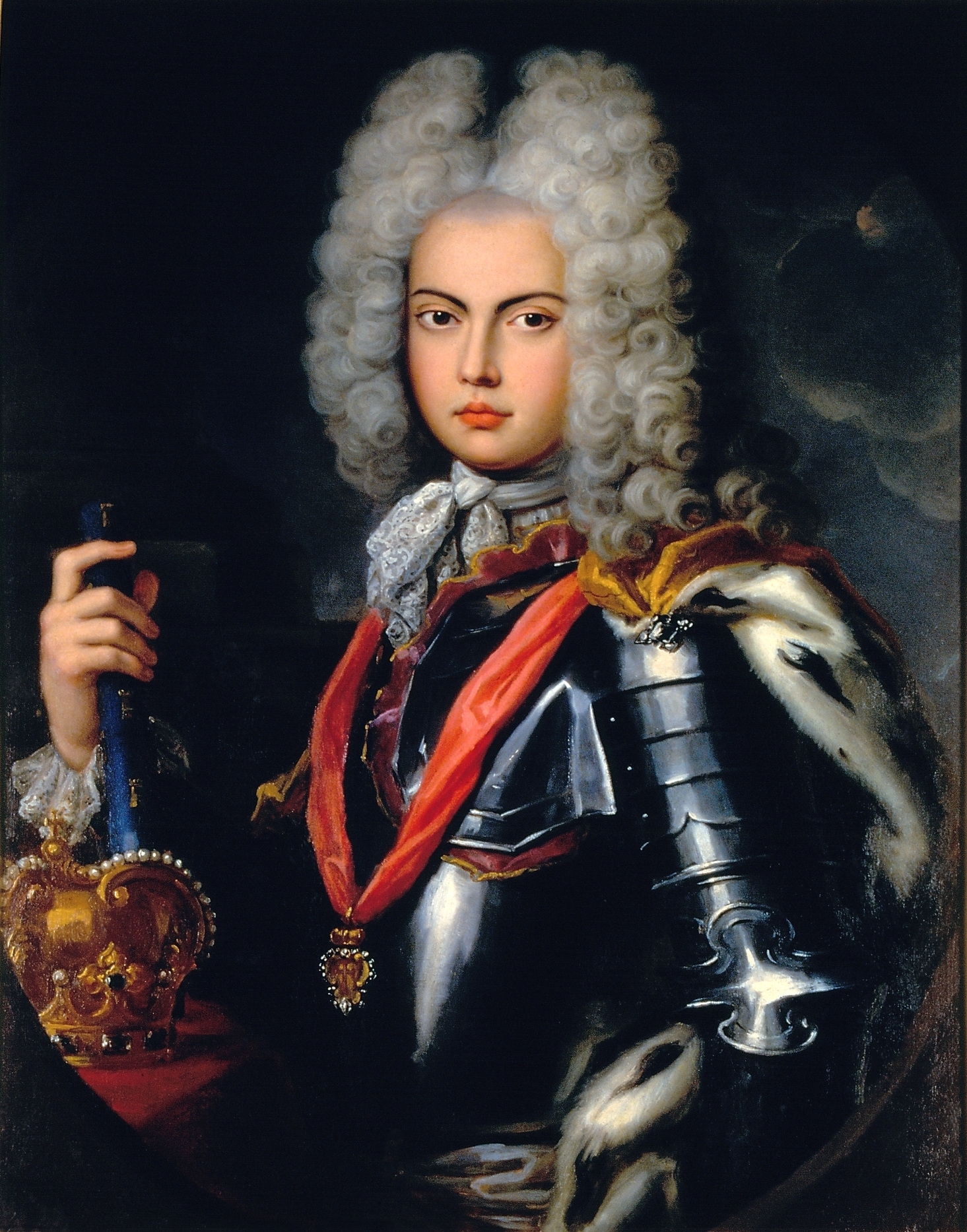
[July 31] João V, king of Portugal

Surnamed: "The Magnanimous"
Full Name: João Francisco António José Bento Bernardo
Parents: Pedro II, king of Portugal, and Maria Sofia of the Palatine-Neuburg
Date of Birth: 22 October 1689
Royal House: Capet-Burgundy-Avis-Bragança
Spouse: Maria Anna, daughter of Leopold I, Holy Roman Emperor, and Eleonore Magdalena of the Palatine-Neuburg
Predecessor: Pedro II
Reign: 1706 – 1750
Summary: A son of the relatively new ruling dynasty in Portugal, João was destined to succeed his father from birth, being the first male born to his father and the long-awaited heir. His father was already elderly when he was born but surprisingly lived another seventeen years, finally dying in 1706. João succeeded his father at that time.


João became involved in politics immediately, sending his general, the Marquês das Minas, into Castile and capturing Madrid briefly for the Grand Alliance. He married a first cousin in 1708 and strengthened his alliance with the Habsburgs who were still slightly miffed about Portugal declaring independence from Spain seventy years earlier. João continued his war with Spain and France for the War of the Spanish Succession until 1713 and 1715 respectively. Gold and diamonds found in Brasil strengthened the Portuguese economy and made João one of the wealthiest monarchs in Europe. The increased funds allowed the king to rule without parliamentary oversight and João never called the Cortes once during his forty-four year reign, ruling as an absolute monarch. Mimicking the court of Louis XVI in France, João centralized his government at the Royal Palace of Mafra and summoned all his high lords to live there, taming the upper nobility. João purchased great works of art from throughout Europe with his vast treasure troves. He expanded the royal library and added original musical manuscripts. Virtually all of these treasures were destroyed by an earthquake and ensuing tsunami and fire in 1755. It was a loss that the art world never truly recovered from. After the Spanish war, João kept Portugal out of European conflicts during his reign, preferring instead to expand the local economy, patronize the arts, and ensure Portugal's continued independence. He spent a large portion of his wealth on ensuring that the church support his family's position. It was only in 1748, though, that Pope Benedict XIV finally recognized the Bragança dynasty as the legitimate rulers of Portugal, bestowing upon them the title "Most Faithful King." But by that time, João had already removed himself from politics, having suffered a minor stroke in 1742 which left him partially paralyzed. The government and centralization began to fall apart in his last years as they were directly dependent on a strong absolute monarch, which João was failing to be. The aging king died in 1750 and his son, José, succeeded him to the throne.
Date of Death: 31 July 1750
Successor: José

Other Monarchs Who Died Today:
  • Na'od, emperor of Ethiopia (1508)
  • Kien Phuc, emperor of Vietnam (1884)
  • Baudouin I, king of Belgium (1993)
  • Friedrich Franz, pretender to Mecklenburg-Schwerin (2001)

Labels

[brief] (102) female monarch (31) Capet (26) [abbreviated] (19) Roman Empire (17) Great monarchs (16) Japan (15) Papacy (15) England (13) saints (13) France (11) Portugal (11) [Missing Deaths] (11) Habsburg (10) Sweden (10) Byzantine Empire (9) Carolingian (9) China (9) Hohenzollern (9) Oldenburg (9) Holy Roman Empire (8) Japan (dynasty) (8) Aragón (7) Austria (7) Denmark (7) Electorate (7) Ethiopia (7) Hungary (7) Navarre (7) Norway (7) Romanov (7) Russia (7) Saxony (7) Scotland (7) Wettin (7) Wittelsbach (7) Bavaria (6) Burgundy (6) Egypt (6) Italy (6) Lorraine (6) Luxembourg (6) Persia (6) Poland (6) Sicily (6) Spain (6) Valois (6) Capet-Burgundy (5) Franks (5) Germany (5) Plantagenet (5) Prussia (5) Quraish (5) Solomon (Ethiopia) (5) Tuscany (5) Anjou (4) Aquitaine (4) Barcelona (dynasty) (4) Bohemia (4) Brittany (4) Burgundy-Aviz (4) Burma (4) Capet-Valois (4) Castile (4) Constantinople (Patriarchate) (4) Habsburg-Lorraine (4) Holstein-Gottorp-Romanov (4) India (4) Ireland (4) Jerusalem (4) Jiménez (4) Kiev (4) Mongolia (4) Naples (4) Netherlands (4) Normandy (4) Osman (4) Ottoman (4) Palaeologos (4) Savoy (4) Savoy (dynasty) (4) Trastámara (4) Wales (4) Afghanistan (3) Albania (3) Bagrationi (3) Banu Hashim (3) Blois (3) Borjigin (3) Bourbon (3) Brabant-Hesse (3) Brandenburg (3) Capet-Bourbon (3) Cologne (3) Croatia (3) Cyprus (3) Disney (3) Fairhair (3) Georgia (3) Gwynedd (3) Hainaut (3) Hesse (3) Hohenstaufen (3) Holland (3) Holstein-Gottorp (3) Inca (3) Islam (3) León (3) Limburg (3) Lithuania (3) Livonia (3) Lothier (3) Macedonia (dynasty) (3) Mainz (3) Mann (3) Medici (3) Morocco (3) México (3) Nassau (3) Nguyễn (3) Serbia (3) Stuart (Stewart) (3) Toungoo (3) Tudor (3) Turkey (3) Vaudemont (3) Vietnam (3) Welf (3) Wessex (3) published articles (3) Abberfraw (2) Aberffraw (2) Alexandria (patriarchate) (2) Angevins (2) Anglo-Saxon (2) Ardennes-Metz (2) Auvergne (2) Ayyubid (2) Basarab (2) Bernadotte (2) Billung (2) Boulogne (2) Brabant (2) Bruce (2) Burgundy-Bragança (2) Caliphate (2) Cilicia (2) Constantine (2) Crovan (2) Denmark (Dynasty) (2) Draculesti (2) Dreux (2) Dunkeld (2) Dutch Republic (2) Estridsen (2) Flanders (2) Florence (2) Further Austria (2) Greece (2) Habsburg-Spain (2) Hanover (2) Hardrada (2) Hauteville (2) Hawai'i (2) Ivrea (2) Joseon (2) Karadordevic (2) Konbaung (2) Korea (2) Maya (2) Merovingian (2) Milan (2) Ming (2) Monaco (2) Nassau-Orange (2) Nassau-Weilburg (2) Norman (2) Novgorod (2) Orange (2) Ottonian (2) Piast (2) Piedmont-Savoy (2) Poitiers (dynasty) (2) Robertian (2) Romania (2) Rurik (2) Sardinia (2) Saxe-Coburg-Gotha (2) Seljuk (2) Siam (2) Syria (2) Teutonic Knights (2) Thailand (2) Theodosian (2) Thuringia (2) Timurid (2) Tokugawa (2) United Kingdom (2) Valois-Burgundy (2) Vandal (2) Venice (2) Visconti (2) Vladimir (2) Wallachia (2) Württemberg (2) York (2) Yugoslavia (2) Zeeland (2) the Britons (2) 18th Dynasty (Egypt) (1) Abbasid (1) Adal (1) Agiad (1) Akinyele (1) Al Khalifa (1) Al-Said (1) Alawiyya (Egyptian) (1) Albret (1) Algeria (1) Algonquian (1) Amber (1) Angola (1) Anjou (dynasty) (1) Anjou-Hungary (1) Ansbach (1) Antonia (1) Antonine (1) Apulia (1) Arabia (1) Armenia (1) Arpad (1) Arsacid (1) Asen (1) Ashikaga (1) Athens (1) Avesnes (1) Avignon Papacy (1) Aviz-Beja (1) Aztec Empire (1) Baden (1) Bahrain (1) Balti (1) Barakzai (1) Barazkai (1) Barcelona (1) Battenberg (1) Belgium (1) Bengal (1) Berg (1) Berg (dynasty) (1) Bernicia (1) Bharatpur (1) Bhutan (1) Bjelbo (1) Bonaparte (1) Bonde (1) Bonngau (dynasty) (1) Borghese (1) Borja (1) Bosnia (1) Bourbon-Two Sicilies (1) Brandenburg-Ansbach (1) Brienne (1) Brutus (1) Bukhara (1) Bulgaria (1) Canossa (1) Capet-Dreux (1) Carthage (1) Celje (1) Celje (dynasty) (1) Chakri (1) Champagne (1) Champagne (dynasty) (1) Chartres (1) Cometopuli (1) Contantine (1) Cordoba (1) Craiovesti (1) Crusader States (1) Dalmatia (1) Damascus (1) Danesti (1) Debeubarth (1) Deira (1) Deira (dynasty) (1) Denmar (1) Dulo (1) Díaz (1) Early Han (1) East Anglia (1) East Francia (1) Eastern Han (1) Eastern Jin (1) Egmont (1) Estonia (1) Farnese (1) Fatimid (1) Fatimid Caliphate (1) Flanders (dynasty) (1) Flavian (1) Friuli (1) Gausi (1) Geneva (1) Geneva (dynasty) (1) Gordiani (1) Grimaldi (1) Guelders (1) Guideschi (1) Gwent (1) Gwynedd (dynasty) (1) Gyatso (1) Haag (1) Hainaut (dynasty) (1) Hanan Cuzco (1) Hashim (1) Hashimite (1) Hebrides (The Isles) (1) Hellenes (1) Herat (1) Hohenzollern-Ansbach (1) Hohenzollern-Sigmaringen (1) Holland (dynasty) (1) Hunfriding (1) Ibadan (1) Iran (1) Iturbide (1) Jaipur (1) Jin (1) Jordan (1) Julio-Claudian (1) Jungingen (1) Justinian (dynasty) (1) Kachwaha (1) Kalakaua (1) Kamehameha (1) Karrani (1) Kent (1) Kent (house) (1) Kestutis (1) Khurasan (1) Knights Templar (1) Komnenos (1) Kotromanić (1) Lakota Sioux (1) Lancaster (1) Latin Empire (1) Lebanon (1) Leuchtenberg (1) Lombards (1) Ludowinger (1) Lusignan (1) Luxembourg (dynasty) (1) Luxembourg-Limburg (1) Maan (1) Macedon (1) Magdeburg (1) Maine (1) Majorca (1) Malaysia (1) Manghit (1) Maratha Empire (1) Marinid (1) Matsunaga (1) Maurya (1) Mecklenburg (1) Mecklenburg-Strelitz (1) Meissen (1) Mercia (1) Mercia (dynasty) (1) Miniconjou (1) Moldavia (1) Montenegro (1) Montferrat (1) Morgannwg (1) Mortain (1) Mountbatten (1) Mughal (1) Muhammad Ali (1) Munster (1) Musat (1) Myanmar (1) Nakagawa (1) Ndongo and Matana (1) Nemanjic (1) Nepal (1) Nervo-Trajan (1) Neuchâtel (1) Nigeria (1) Nominoë (1) Northumbria (1) O'Brien (1) Obrenović (1) Odowa (1) Olgovich (1) Olympus (1) Orléans-Longueville (1) Ostrogoths (1) Ottawa (1) Pahlavi (1) Palatinate of the Rhine (1) Parma (1) Penthièvre (1) Petrović-Njegoš (1) Poděbrady (1) Pointiers (Ramnulfids) (1) Poitiers (1) Poitiers-Lusignan (1) Polignac (1) Powys (1) Prasat Thong (1) Premyslid (1) Provence (1) Přemyslid (1) Q'umarkaj (1) Qin (1) Qing (Manchu) (1) Reginar (1) Reginarid (1) Rethel (1) Rethel-Boulogne (1) Ribagorza (1) Rouergue (1) Roupenians (1) Sa Malietoa (1) Safavid (1) Salian (1) Salzburg (1) Samoa (1) Sarantapechos (1) Saud (1) Saudi Arabia (1) Second Triumvirate of Rome (1) Selangor (1) Selangor (dynasty) (1) Sforza (1) Shah (Nepal) (1) Shi'a Imamate (1) Shishman (1) Shivaji (1) Silesia (1) Simmern (1) Sinsinwar Jat (1) Skowronski (1) Slovenia (1) Sobieski (1) South Africa (1) South America (1) Sparta (1) Spoleto (1) Sture (1) Sudan (1) Sussex (1) Sverre (1) Swabia (1) Swasi (dynasty) (1) Swaziland (1) Swiss Confederation (1) Tang (1) Tenochtitlan (1) Teotihuacán (1) Terter (1) Tibet (1) Tikal (1) Tolkien (1) Toulouse (1) Tours (dynasty) (1) Transylvania (1) Tunisia (1) Umayyad (1) Unruoching (1) Valencia (1) Valois-Angoulême (1) Valois-Anjou (1) Valois-Orléans (1) Vasa (1) Vermandois (1) Visigoths (1) Vokil (1) Wangchuck (1) Wied-Neuwied (1) Windsor-Mountbatten (1) Württemberg (dynasty) (1) Yamato (1) Ying (Qin) (1) Yuan (1) Zanzibar (1) Zhao (Song) (1) Zhou (1) Zhu (1) Zogu (1) Zulu Nation (1) Zápolya (1) Zähringen (1) bretwalda (1) cardinal (1) fantasy (1) fiction (1) shogunate (1) terms (1) Árpád (1) Öuchi (1)