Monday, December 31, 2012

[December 31] Commodus, emperor of Rome

Full Name: Marcus Aurelius Commodus Antoninus
Parents: Marcus Aurelius, emperor of Rome, and Faustina the Younger
Date of Birth: 31 August 161
House: Antonine
Spouse(s): Bruttia, daughter of Gaius Bruttius Praesens, consul of Rome
Predecessor: Marcus Aurelius
Reign: 180 – 192
Brief: Commodus was one of few heirs born to a reigning emperor before the era of Constantine in the 300s. His elder twin, Titus, died at the age of four and Commodus became sole heir. He was elected caesar with his younger brother in 166. In 175, Commodus joined the college of pontiffs and entered public life. Marcus Aurelius elevated his son to Augustus (co-emperor) in 177 and nominated him consul,  the youngest such Senator in history to the time. Marcus Aurelius died in 180 while fighting on the Danubian front, after which Commodus took control over the Roman Empire. Though often portrayed as a weak and selfish ruler, Commodus' reign is, in fact, poorly documented and it did not lead directly to the fall of Rome nearly two centuries later. His reign was externally peaceful, signing a treaty with the Danube tribes and relegating the government to loyal advisors. Throughout his reign, Commodus dealt with assassination attempts, attempted coups, and upstart usurpers, forcing him to become more directly involved in his government. Until 188, Commodus left the government under the management of a man named Cleander, whose mismanagement of affairs led to famine and his eventual beheading by Commodus. Commodus' megalomania peaked in 191 following a fire that destroyed much of the city of Rome. The emperor proclaimed a new Rome and himself, a new Romulus. He renamed the city, the months of the year, the legions, the fleet, the Senate, and even the people. On 31 December 192, after a failed poisoning, Commodus was strangled to death in his bath by a former wrestling partner. The city and everything was restored to Rome, though Commodus was later, under Septimus Severus, deified as per the standard procedures of the day. His death prompted the Year of the Five Emperors in 193.
Date of Death: 31 December 192
Successor: Pertinax

Other Monarchs Who Died Today:
  • St. Silvester I, pope of Rome (335)
  • Ottokar III, margrave of Styria (1164)
  • Leopold V, duke of Austria (1194)
  • Frederick III, duke of Lorraine (1302)
  • Shimazy Tadayoshi, daimyo in Japan (1568)
  • Dorgon, emperor of China (1650)
  • Charles III Philip, count palatine of the Rhine (1742)
  • Sabah III Al-Salim, emir of Kuwait (1977)

Sunday, December 30, 2012

[December 30] Ferdinand Charles, archduke of Further Austria

Parents: Leopold V, archduke of Further Austria, and Claudia de' Medici
Date of Birth: 17 May 1628
House: Habsburg
Spouse(s): Anna de' Medici, daughter of Cosimo II, grand duke of Tuscany, and Maria Magdalena of Austria
Predecessor: Leopold V
Reign: 1630 – 1662
Brief: During the 16th and 17th centuries, the archduchy of Austria was divided up among rival cadet branches of the family. Ferdinand Charles was delegated ruler of Further Austria based out of Tyrol near the Italian border. For the first sixteen years of his rule, he was a minor and his mother, Claudia de' Medici, ruled in his name until 1646. Once he became archduke, Ferdinand Charles ruled with an iron fist. He dissolved the Tyrolian Diet in 1648 and executed his chancellor in 1651, ruling alone afterwards. He enjoyed a luxurious lifestyle and paid for it by selling titles of nobility and family heirlooms under his care. He was paid a portion of gold from France for lands ceded to France in a previous war—he wasted all of this on luxuries. For all his greed, Ferdinand Charles was a lover of Italian opera and had an opera house at his court for performances. When he died in 1662, few mourned his passing and his brother, Sigismund Francis, bishop of Augsburg, Gurk, and Trent, inherited Further Austria.
Date of Death: 30 December 1662
Successor: Sigismund Francis

Other Monarchs Who Died Today:
  • Felix I, pope of Rome (274)
  • Richard II, pretender to England (1460)
  • Innocent IV, pope of Rome (1591)

Saturday, December 29, 2012

[December 29] Spotted Elk, chief of the Miniconjou Sioux

Chief Spotted Elk dead after the Wounded Knee Massacre, 1890.
Sobriquet: "Big Foot" (Sithanka)
Local Name: Unpan Gleská
Parents: One Horn, chief of the Miniconjou Lakota Sioux
Date of Birth: 1826
House: Miniconjou
Predecessor: One Horn
Reign: 1877 – 1890
Brief: Tragedy dominated the life of Spotted Elk. He was known as a peaceful leader of his tribe of Lakota Sioux, and was renown for his diplomatic successes with the American government. He was also well-known among his own people, often being called upon to resolve intertribal disputes. Prior to his elevation to chief, Spotted Elk fought in the Great Sioux War of 1876, allied with Chief Sitting Bull and Crazy Horse, though his tribe eventually surrendered to the US Army. Once relocated to a reservation, Spotted Elk encouraged sustainable agriculture and the building of schools. He advocated peace with American settlers, and was the first Native American to raise corn to US governmental standards. But economic deprivation still dominated the reservation, and Spotted Elk fell under the sway of Wavoka, who led the "Ghost Dance" movement. The government had outlawed the Ghost Dance but it spread throughout the Lakota Sioux tribes like wildfire. Fearing the government, Spotted Elk took his tribe as well as the remnants of Sitting Bull's tribe to the Pine Ridge Reservation in the hope that through unity, peace could be achieved. But peace was not to come. Major Samuel M. Whitside of the 7th US Cavalry intercepted the fleeing natives and arrested them, taking them to Wounded Knee Creek. On the morning of December 29, 1890, a gunshot went off prompting a retaliatory strike by the US Army, killing 200 men, women, and children, including Chief Spotted Elk. The Wounded Knee Massacre remains one of the bloodiest and worst US atrocities against the American Indians and the Miniconjou Lakota Sioux never recovered from the bloodshed.
Date of Death: 29 December 1890

Other Monarchs Who Died Today:
  • Gemmei, empress of Japan (721)

Friday, December 28, 2012

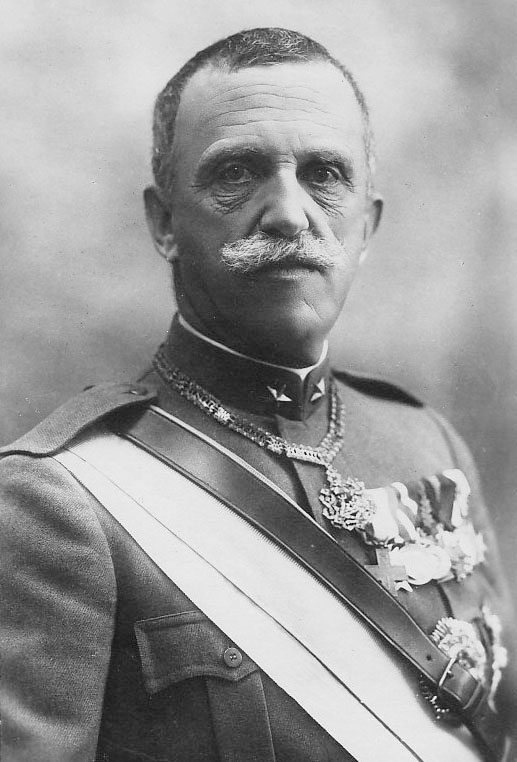
[December 28] Victor Emmanuel III, king of Italy

Local Name: Vittorio Emanuele
Parents: Umberto I, king of Italy, and Margherita of Savoy
Date of Birth: 11 November 1869
House: Savoy
Spouse(s): Elena, daughter of Nikola I, king of Montenegro, and Milena Vukotic
Predecessor: Umberto II
Reign: 1900 – 1946
Brief: Italy's fourth king since the peninsula's unification in the 1860s, Victor Emmanuel III was arguably one of the weakest rulers. Small in stature (barely 5 feet), he overcompensated by directly involving himself in the constitutional monarchy over which he ruled. Between 1900 and 1922, he intervened in ten separate parliamentary crises. Although at first against joining World War I, in 1915 he personally brought Italy into the Triple Entente with France, Britain, and Russia. The Italians remained staunchly against the war, but didn't hold a grudge against the king since he often visited the front lines in the north with his wife, endearing the people to the royal family. After the war, Benito Mussolini staged a march on Rome, quickly becoming prime minister and leader of the government. By 1926, Mussolini was in charge of all branches of government and pressing his fascist agenda, while Victor Emmanuel remained silent. He remained popular to the masses even though he sided with the fascists, but when he assumed the crowns of Ethiopia and Albania in the late 1930s, his popularity plummeted. In 1940, Mussolini dragged Italy into World War II, and as Italy quickly lost battles, so too did Victor Emmanuel lose supporters. Three years later, Mussolini was removed from office and Italy publicly joined the Allies. The Germans swarmed into Italian conquered territories and northern Italy, forcing the king to flee south. By 1944, Victor Emmanuel had passed much of his power to his son, Umberto. Finally, in 1946, the king abdicated in the hope that the Italian monarchy would survive if he were not leading the country. It failed. Umberto II ruled for less than a month and then the family was forced into exile to Egypt. Victor Emmanuel III died in 1947 in Alexandria and was buried there.
Date of Death: 28 December 1947
Successor: Umberto II

Other Monarchs Who Died Today:
  • Theonas, patriarch of Alexandria (300)
  • Yoshiakira, shogun of Japan (1367)
  • Clement VIII, antipope of Rome (1446)
  • Piero, patriarch of Florence (1503) -
  • Mary II, queen of England & Scotland (1694)
  • Mustafa II, sultan of the Ottoman Empire (1703)

Thursday, December 27, 2012

[December 27] George, margrave of Brandenburg-Ansbach

Sobriquet: "The Pious" (Der Fromme)
Parents: Frederick I, margrave of Brandenburg-Ansbach, and Sophia of Poland
Date of Birth: 4 March 1484
House: Hohenzollern
Spouse(s): (1) Beatrice, daughter of Bernardin, prince of Krk & Modrus, and Donna Luisa Marzano d'Aragona, then (2) Hedwig, daughter of Charles I, duke of Münsterberg-Oels, and Anna of Sagan, then (3) Emilie, daughter of Henry IV, duke of Saxony, and Catherine of Mecklenburg
Predecessor: Frederick I
Reign: 1536 – 1543
Brief: Young and a third son of his father, Frederick, George decided early on to enter the service of his uncle, King Vladislaus II of Bohemia and Hungary, at the age of twenty-two. He rose in ranks quickly and was placed in charge of the duchy of Oppeln in 1515. The next year, we was elected to the Hungarian council of state and became tutor for the future King Louis II. George became the leader of one of the political factions within Hungary, fighting against the faction of the Magyar. Within a few years of the preachings of Martin Luther, George became a convert to Lutheranism and began allowing its spread in northern Hungary (Slovakia) and within his own home of Ansbach. He fought with his elder brother, Casimir, for many years until 1536, when Casimir died and George could spread Lutheranism without resistance. George remained a close friend of Luther and wrote to him frequently. In 1529, he met John of Saxony and they agreed to form a German league of Protestants in the north. George attended numerous meetings between imperial and Protestant delegates, as well as councils between the church and Lutherans, but he died leaving much undone. His legacy in the Reformation is nearly as strong as that of John of Saxony, though he is much less remembered.
Date of Death: 27 December 1543
Successor: George Frederick

Other Monarchs Who Died Today:
  • Zosimus, pope of Rome (418)
  • Svyatoslav II, grand prince of Kiev (1076)

Labels

[brief] (102) female monarch (31) Capet (26) [abbreviated] (19) Roman Empire (17) Great monarchs (16) Japan (15) Papacy (15) England (13) saints (13) France (11) Portugal (11) [Missing Deaths] (11) Habsburg (10) Sweden (10) Byzantine Empire (9) Carolingian (9) China (9) Hohenzollern (9) Oldenburg (9) Holy Roman Empire (8) Japan (dynasty) (8) Aragón (7) Austria (7) Denmark (7) Electorate (7) Ethiopia (7) Hungary (7) Navarre (7) Norway (7) Romanov (7) Russia (7) Saxony (7) Scotland (7) Wettin (7) Wittelsbach (7) Bavaria (6) Burgundy (6) Egypt (6) Italy (6) Lorraine (6) Luxembourg (6) Persia (6) Poland (6) Sicily (6) Spain (6) Valois (6) Capet-Burgundy (5) Franks (5) Germany (5) Plantagenet (5) Prussia (5) Quraish (5) Solomon (Ethiopia) (5) Tuscany (5) Anjou (4) Aquitaine (4) Barcelona (dynasty) (4) Bohemia (4) Brittany (4) Burgundy-Aviz (4) Burma (4) Capet-Valois (4) Castile (4) Constantinople (Patriarchate) (4) Habsburg-Lorraine (4) Holstein-Gottorp-Romanov (4) India (4) Ireland (4) Jerusalem (4) Jiménez (4) Kiev (4) Mongolia (4) Naples (4) Netherlands (4) Normandy (4) Osman (4) Ottoman (4) Palaeologos (4) Savoy (4) Savoy (dynasty) (4) Trastámara (4) Wales (4) Afghanistan (3) Albania (3) Bagrationi (3) Banu Hashim (3) Blois (3) Borjigin (3) Bourbon (3) Brabant-Hesse (3) Brandenburg (3) Capet-Bourbon (3) Cologne (3) Croatia (3) Cyprus (3) Disney (3) Fairhair (3) Georgia (3) Gwynedd (3) Hainaut (3) Hesse (3) Hohenstaufen (3) Holland (3) Holstein-Gottorp (3) Inca (3) Islam (3) León (3) Limburg (3) Lithuania (3) Livonia (3) Lothier (3) Macedonia (dynasty) (3) Mainz (3) Mann (3) Medici (3) Morocco (3) México (3) Nassau (3) Nguyễn (3) Serbia (3) Stuart (Stewart) (3) Toungoo (3) Tudor (3) Turkey (3) Vaudemont (3) Vietnam (3) Welf (3) Wessex (3) published articles (3) Abberfraw (2) Aberffraw (2) Alexandria (patriarchate) (2) Angevins (2) Anglo-Saxon (2) Ardennes-Metz (2) Auvergne (2) Ayyubid (2) Basarab (2) Bernadotte (2) Billung (2) Boulogne (2) Brabant (2) Bruce (2) Burgundy-Bragança (2) Caliphate (2) Cilicia (2) Constantine (2) Crovan (2) Denmark (Dynasty) (2) Draculesti (2) Dreux (2) Dunkeld (2) Dutch Republic (2) Estridsen (2) Flanders (2) Florence (2) Further Austria (2) Greece (2) Habsburg-Spain (2) Hanover (2) Hardrada (2) Hauteville (2) Hawai'i (2) Ivrea (2) Joseon (2) Karadordevic (2) Konbaung (2) Korea (2) Maya (2) Merovingian (2) Milan (2) Ming (2) Monaco (2) Nassau-Orange (2) Nassau-Weilburg (2) Norman (2) Novgorod (2) Orange (2) Ottonian (2) Piast (2) Piedmont-Savoy (2) Poitiers (dynasty) (2) Robertian (2) Romania (2) Rurik (2) Sardinia (2) Saxe-Coburg-Gotha (2) Seljuk (2) Siam (2) Syria (2) Teutonic Knights (2) Thailand (2) Theodosian (2) Thuringia (2) Timurid (2) Tokugawa (2) United Kingdom (2) Valois-Burgundy (2) Vandal (2) Venice (2) Visconti (2) Vladimir (2) Wallachia (2) Württemberg (2) York (2) Yugoslavia (2) Zeeland (2) the Britons (2) 18th Dynasty (Egypt) (1) Abbasid (1) Adal (1) Agiad (1) Akinyele (1) Al Khalifa (1) Al-Said (1) Alawiyya (Egyptian) (1) Albret (1) Algeria (1) Algonquian (1) Amber (1) Angola (1) Anjou (dynasty) (1) Anjou-Hungary (1) Ansbach (1) Antonia (1) Antonine (1) Apulia (1) Arabia (1) Armenia (1) Arpad (1) Arsacid (1) Asen (1) Ashikaga (1) Athens (1) Avesnes (1) Avignon Papacy (1) Aviz-Beja (1) Aztec Empire (1) Baden (1) Bahrain (1) Balti (1) Barakzai (1) Barazkai (1) Barcelona (1) Battenberg (1) Belgium (1) Bengal (1) Berg (1) Berg (dynasty) (1) Bernicia (1) Bharatpur (1) Bhutan (1) Bjelbo (1) Bonaparte (1) Bonde (1) Bonngau (dynasty) (1) Borghese (1) Borja (1) Bosnia (1) Bourbon-Two Sicilies (1) Brandenburg-Ansbach (1) Brienne (1) Brutus (1) Bukhara (1) Bulgaria (1) Canossa (1) Capet-Dreux (1) Carthage (1) Celje (1) Celje (dynasty) (1) Chakri (1) Champagne (1) Champagne (dynasty) (1) Chartres (1) Cometopuli (1) Contantine (1) Cordoba (1) Craiovesti (1) Crusader States (1) Dalmatia (1) Damascus (1) Danesti (1) Debeubarth (1) Deira (1) Deira (dynasty) (1) Denmar (1) Dulo (1) Díaz (1) Early Han (1) East Anglia (1) East Francia (1) Eastern Han (1) Eastern Jin (1) Egmont (1) Estonia (1) Farnese (1) Fatimid (1) Fatimid Caliphate (1) Flanders (dynasty) (1) Flavian (1) Friuli (1) Gausi (1) Geneva (1) Geneva (dynasty) (1) Gordiani (1) Grimaldi (1) Guelders (1) Guideschi (1) Gwent (1) Gwynedd (dynasty) (1) Gyatso (1) Haag (1) Hainaut (dynasty) (1) Hanan Cuzco (1) Hashim (1) Hashimite (1) Hebrides (The Isles) (1) Hellenes (1) Herat (1) Hohenzollern-Ansbach (1) Hohenzollern-Sigmaringen (1) Holland (dynasty) (1) Hunfriding (1) Ibadan (1) Iran (1) Iturbide (1) Jaipur (1) Jin (1) Jordan (1) Julio-Claudian (1) Jungingen (1) Justinian (dynasty) (1) Kachwaha (1) Kalakaua (1) Kamehameha (1) Karrani (1) Kent (1) Kent (house) (1) Kestutis (1) Khurasan (1) Knights Templar (1) Komnenos (1) Kotromanić (1) Lakota Sioux (1) Lancaster (1) Latin Empire (1) Lebanon (1) Leuchtenberg (1) Lombards (1) Ludowinger (1) Lusignan (1) Luxembourg (dynasty) (1) Luxembourg-Limburg (1) Maan (1) Macedon (1) Magdeburg (1) Maine (1) Majorca (1) Malaysia (1) Manghit (1) Maratha Empire (1) Marinid (1) Matsunaga (1) Maurya (1) Mecklenburg (1) Mecklenburg-Strelitz (1) Meissen (1) Mercia (1) Mercia (dynasty) (1) Miniconjou (1) Moldavia (1) Montenegro (1) Montferrat (1) Morgannwg (1) Mortain (1) Mountbatten (1) Mughal (1) Muhammad Ali (1) Munster (1) Musat (1) Myanmar (1) Nakagawa (1) Ndongo and Matana (1) Nemanjic (1) Nepal (1) Nervo-Trajan (1) Neuchâtel (1) Nigeria (1) Nominoë (1) Northumbria (1) O'Brien (1) Obrenović (1) Odowa (1) Olgovich (1) Olympus (1) Orléans-Longueville (1) Ostrogoths (1) Ottawa (1) Pahlavi (1) Palatinate of the Rhine (1) Parma (1) Penthièvre (1) Petrović-Njegoš (1) Poděbrady (1) Pointiers (Ramnulfids) (1) Poitiers (1) Poitiers-Lusignan (1) Polignac (1) Powys (1) Prasat Thong (1) Premyslid (1) Provence (1) Přemyslid (1) Q'umarkaj (1) Qin (1) Qing (Manchu) (1) Reginar (1) Reginarid (1) Rethel (1) Rethel-Boulogne (1) Ribagorza (1) Rouergue (1) Roupenians (1) Sa Malietoa (1) Safavid (1) Salian (1) Salzburg (1) Samoa (1) Sarantapechos (1) Saud (1) Saudi Arabia (1) Second Triumvirate of Rome (1) Selangor (1) Selangor (dynasty) (1) Sforza (1) Shah (Nepal) (1) Shi'a Imamate (1) Shishman (1) Shivaji (1) Silesia (1) Simmern (1) Sinsinwar Jat (1) Skowronski (1) Slovenia (1) Sobieski (1) South Africa (1) South America (1) Sparta (1) Spoleto (1) Sture (1) Sudan (1) Sussex (1) Sverre (1) Swabia (1) Swasi (dynasty) (1) Swaziland (1) Swiss Confederation (1) Tang (1) Tenochtitlan (1) Teotihuacán (1) Terter (1) Tibet (1) Tikal (1) Tolkien (1) Toulouse (1) Tours (dynasty) (1) Transylvania (1) Tunisia (1) Umayyad (1) Unruoching (1) Valencia (1) Valois-Angoulême (1) Valois-Anjou (1) Valois-Orléans (1) Vasa (1) Vermandois (1) Visigoths (1) Vokil (1) Wangchuck (1) Wied-Neuwied (1) Windsor-Mountbatten (1) Württemberg (dynasty) (1) Yamato (1) Ying (Qin) (1) Yuan (1) Zanzibar (1) Zhao (Song) (1) Zhou (1) Zhu (1) Zogu (1) Zulu Nation (1) Zápolya (1) Zähringen (1) bretwalda (1) cardinal (1) fantasy (1) fiction (1) shogunate (1) terms (1) Árpád (1) Öuchi (1)