Saturday, December 29, 2012

[December 29] Spotted Elk, chief of the Miniconjou Sioux

Chief Spotted Elk dead after the Wounded Knee Massacre, 1890.
Sobriquet: "Big Foot" (Sithanka)
Local Name: Unpan Gleská
Parents: One Horn, chief of the Miniconjou Lakota Sioux
Date of Birth: 1826
House: Miniconjou
Predecessor: One Horn
Reign: 1877 – 1890
Brief: Tragedy dominated the life of Spotted Elk. He was known as a peaceful leader of his tribe of Lakota Sioux, and was renown for his diplomatic successes with the American government. He was also well-known among his own people, often being called upon to resolve intertribal disputes. Prior to his elevation to chief, Spotted Elk fought in the Great Sioux War of 1876, allied with Chief Sitting Bull and Crazy Horse, though his tribe eventually surrendered to the US Army. Once relocated to a reservation, Spotted Elk encouraged sustainable agriculture and the building of schools. He advocated peace with American settlers, and was the first Native American to raise corn to US governmental standards. But economic deprivation still dominated the reservation, and Spotted Elk fell under the sway of Wavoka, who led the "Ghost Dance" movement. The government had outlawed the Ghost Dance but it spread throughout the Lakota Sioux tribes like wildfire. Fearing the government, Spotted Elk took his tribe as well as the remnants of Sitting Bull's tribe to the Pine Ridge Reservation in the hope that through unity, peace could be achieved. But peace was not to come. Major Samuel M. Whitside of the 7th US Cavalry intercepted the fleeing natives and arrested them, taking them to Wounded Knee Creek. On the morning of December 29, 1890, a gunshot went off prompting a retaliatory strike by the US Army, killing 200 men, women, and children, including Chief Spotted Elk. The Wounded Knee Massacre remains one of the bloodiest and worst US atrocities against the American Indians and the Miniconjou Lakota Sioux never recovered from the bloodshed.
Date of Death: 29 December 1890

Other Monarchs Who Died Today:
  • Gemmei, empress of Japan (721)

Friday, December 28, 2012

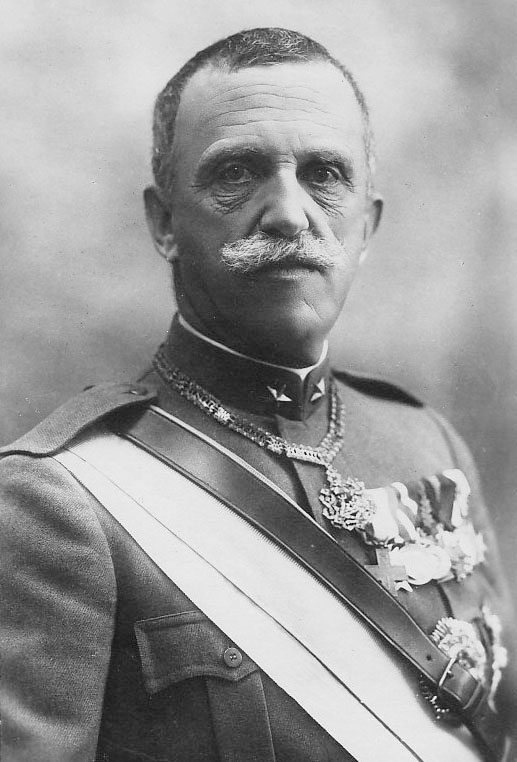
[December 28] Victor Emmanuel III, king of Italy

Local Name: Vittorio Emanuele
Parents: Umberto I, king of Italy, and Margherita of Savoy
Date of Birth: 11 November 1869
House: Savoy
Spouse(s): Elena, daughter of Nikola I, king of Montenegro, and Milena Vukotic
Predecessor: Umberto II
Reign: 1900 – 1946
Brief: Italy's fourth king since the peninsula's unification in the 1860s, Victor Emmanuel III was arguably one of the weakest rulers. Small in stature (barely 5 feet), he overcompensated by directly involving himself in the constitutional monarchy over which he ruled. Between 1900 and 1922, he intervened in ten separate parliamentary crises. Although at first against joining World War I, in 1915 he personally brought Italy into the Triple Entente with France, Britain, and Russia. The Italians remained staunchly against the war, but didn't hold a grudge against the king since he often visited the front lines in the north with his wife, endearing the people to the royal family. After the war, Benito Mussolini staged a march on Rome, quickly becoming prime minister and leader of the government. By 1926, Mussolini was in charge of all branches of government and pressing his fascist agenda, while Victor Emmanuel remained silent. He remained popular to the masses even though he sided with the fascists, but when he assumed the crowns of Ethiopia and Albania in the late 1930s, his popularity plummeted. In 1940, Mussolini dragged Italy into World War II, and as Italy quickly lost battles, so too did Victor Emmanuel lose supporters. Three years later, Mussolini was removed from office and Italy publicly joined the Allies. The Germans swarmed into Italian conquered territories and northern Italy, forcing the king to flee south. By 1944, Victor Emmanuel had passed much of his power to his son, Umberto. Finally, in 1946, the king abdicated in the hope that the Italian monarchy would survive if he were not leading the country. It failed. Umberto II ruled for less than a month and then the family was forced into exile to Egypt. Victor Emmanuel III died in 1947 in Alexandria and was buried there.
Date of Death: 28 December 1947
Successor: Umberto II

Other Monarchs Who Died Today:
  • Theonas, patriarch of Alexandria (300)
  • Yoshiakira, shogun of Japan (1367)
  • Clement VIII, antipope of Rome (1446)
  • Piero, patriarch of Florence (1503) -
  • Mary II, queen of England & Scotland (1694)
  • Mustafa II, sultan of the Ottoman Empire (1703)

Thursday, December 27, 2012

[December 27] George, margrave of Brandenburg-Ansbach

Sobriquet: "The Pious" (Der Fromme)
Parents: Frederick I, margrave of Brandenburg-Ansbach, and Sophia of Poland
Date of Birth: 4 March 1484
House: Hohenzollern
Spouse(s): (1) Beatrice, daughter of Bernardin, prince of Krk & Modrus, and Donna Luisa Marzano d'Aragona, then (2) Hedwig, daughter of Charles I, duke of Münsterberg-Oels, and Anna of Sagan, then (3) Emilie, daughter of Henry IV, duke of Saxony, and Catherine of Mecklenburg
Predecessor: Frederick I
Reign: 1536 – 1543
Brief: Young and a third son of his father, Frederick, George decided early on to enter the service of his uncle, King Vladislaus II of Bohemia and Hungary, at the age of twenty-two. He rose in ranks quickly and was placed in charge of the duchy of Oppeln in 1515. The next year, we was elected to the Hungarian council of state and became tutor for the future King Louis II. George became the leader of one of the political factions within Hungary, fighting against the faction of the Magyar. Within a few years of the preachings of Martin Luther, George became a convert to Lutheranism and began allowing its spread in northern Hungary (Slovakia) and within his own home of Ansbach. He fought with his elder brother, Casimir, for many years until 1536, when Casimir died and George could spread Lutheranism without resistance. George remained a close friend of Luther and wrote to him frequently. In 1529, he met John of Saxony and they agreed to form a German league of Protestants in the north. George attended numerous meetings between imperial and Protestant delegates, as well as councils between the church and Lutherans, but he died leaving much undone. His legacy in the Reformation is nearly as strong as that of John of Saxony, though he is much less remembered.
Date of Death: 27 December 1543
Successor: George Frederick

Other Monarchs Who Died Today:
  • Zosimus, pope of Rome (418)
  • Svyatoslav II, grand prince of Kiev (1076)

Wednesday, December 26, 2012

[December 26] Galeazzo, duke of Milan

Parents: Francesco, duke of Milan, and Bianca Maria Visconti
House: Sforza
Spouse(s): (1) Dorotea, daughter of Ludovico II, marquess of Mantua, and Barbara of Brandenburg, then (2) Bona, daughter of Louis, duke of Savoy, and Anne of Cyprus
Predecessor: Francesco I
Reign: 1466 – 1476
Brief: Galeazzo was leading a military expedition in France against Burgundy when he heard that his father had died, leaving him the duchy of Milan. Returning to Milan, Galeazzo was forced to assume a false identity to pass through Savoy, home of the family's rival. Though ruling jointly with his mother during the first year of his reign, Galeazzo ended up ousting her to rule alone. A great lover of music, Galeazzo was known more for his cruelty. He was a rabid womanizer and was known to torture anyone who spoke against him. Surprisingly, he ruled for ten years before high-ranking members of the Milanese court had him assassinated. His eldest son succeeded him.
Date of Death: 26 December 1476
Successor: Gian Galeazzo

Other Monarchs Who Died Today:
  • Dionysius, pope of Rome (268)
  • Zosimus, pope of Rome (418)
  • Arthur III, duke of Brittany (1458)
  • Babur, sultan of the Moghul empire (1530)

Tuesday, December 25, 2012

[December 25] Suraq Mal, maharaja of Bharatpur

Local Name: महाराजा सूरज मल
Parents: Badan Singh, maharaja of Bharatpur, and Rani Devki of Jat
Date of Birth: February 1707
House: Sinsinwar Jat
Spouse(s): (1) Kishori, daughter of Chowdhary Kashi Ram Jat of Hodal, (2) Hansia, daughter of Chowdhary Rati Ram Jat of Salempur, (3) Ganga, (4) Kalyani, (5) Gauri, (6) Khattu, and others
Predecessor: Badan Singh
Reign: 1756 – 1763
Brief: The kingdom of Bharatpur was a recent creation of the Mughal Empire when Suraq Mal succeeded his father, who had served as the first raja. Suraq Mal entered history in 1730 building fortresses to protect the cities of Deeg and Kumher. He would continue these projects far into his reign. By 1746, Suraq Mal was the real power behind the throne and the leader of the Bharatpur army. He expanded outward from their small base, conquering and annexing large swaths of land in northwest India. By 1754, he had sacked Delhi but declined usurping the Moghul throne since he shared enemies with the Moghul emperor. He continued his fight against his neighbors for his entire life, eventually dying in an ambush. As maharaja, he brought wealth and prestige to the state and built many fortresses that still exist today. He never wavered in his resolve and some modern writers have called him "the Plato of the Jat people" and the "Jat Odysseus" because of his vast campaigns. Today, the Jat people can claim at least a part of their higher status in Indian society to the successes of Suraq Mal.
Date of Death: 25 December 1763
Successor: Jawahar Singh

Other Monarchs Who Died Today:
  • Adrian I, pope of Rome (795)
  • Leo V, emperor of Constantinople (820)
  • Taisho, emperor of Japan (1926)

Labels

[brief] (102) female monarch (31) Capet (26) [abbreviated] (19) Roman Empire (17) Great monarchs (16) Japan (15) Papacy (15) England (13) saints (13) France (11) Portugal (11) [Missing Deaths] (11) Habsburg (10) Sweden (10) Byzantine Empire (9) Carolingian (9) China (9) Hohenzollern (9) Oldenburg (9) Holy Roman Empire (8) Japan (dynasty) (8) Aragón (7) Austria (7) Denmark (7) Electorate (7) Ethiopia (7) Hungary (7) Navarre (7) Norway (7) Romanov (7) Russia (7) Saxony (7) Scotland (7) Wettin (7) Wittelsbach (7) Bavaria (6) Burgundy (6) Egypt (6) Italy (6) Lorraine (6) Luxembourg (6) Persia (6) Poland (6) Sicily (6) Spain (6) Valois (6) Capet-Burgundy (5) Franks (5) Germany (5) Plantagenet (5) Prussia (5) Quraish (5) Solomon (Ethiopia) (5) Tuscany (5) Anjou (4) Aquitaine (4) Barcelona (dynasty) (4) Bohemia (4) Brittany (4) Burgundy-Aviz (4) Burma (4) Capet-Valois (4) Castile (4) Constantinople (Patriarchate) (4) Habsburg-Lorraine (4) Holstein-Gottorp-Romanov (4) India (4) Ireland (4) Jerusalem (4) Jiménez (4) Kiev (4) Mongolia (4) Naples (4) Netherlands (4) Normandy (4) Osman (4) Ottoman (4) Palaeologos (4) Savoy (4) Savoy (dynasty) (4) Trastámara (4) Wales (4) Afghanistan (3) Albania (3) Bagrationi (3) Banu Hashim (3) Blois (3) Borjigin (3) Bourbon (3) Brabant-Hesse (3) Brandenburg (3) Capet-Bourbon (3) Cologne (3) Croatia (3) Cyprus (3) Disney (3) Fairhair (3) Georgia (3) Gwynedd (3) Hainaut (3) Hesse (3) Hohenstaufen (3) Holland (3) Holstein-Gottorp (3) Inca (3) Islam (3) León (3) Limburg (3) Lithuania (3) Livonia (3) Lothier (3) Macedonia (dynasty) (3) Mainz (3) Mann (3) Medici (3) Morocco (3) México (3) Nassau (3) Nguyễn (3) Serbia (3) Stuart (Stewart) (3) Toungoo (3) Tudor (3) Turkey (3) Vaudemont (3) Vietnam (3) Welf (3) Wessex (3) published articles (3) Abberfraw (2) Aberffraw (2) Alexandria (patriarchate) (2) Angevins (2) Anglo-Saxon (2) Ardennes-Metz (2) Auvergne (2) Ayyubid (2) Basarab (2) Bernadotte (2) Billung (2) Boulogne (2) Brabant (2) Bruce (2) Burgundy-Bragança (2) Caliphate (2) Cilicia (2) Constantine (2) Crovan (2) Denmark (Dynasty) (2) Draculesti (2) Dreux (2) Dunkeld (2) Dutch Republic (2) Estridsen (2) Flanders (2) Florence (2) Further Austria (2) Greece (2) Habsburg-Spain (2) Hanover (2) Hardrada (2) Hauteville (2) Hawai'i (2) Ivrea (2) Joseon (2) Karadordevic (2) Konbaung (2) Korea (2) Maya (2) Merovingian (2) Milan (2) Ming (2) Monaco (2) Nassau-Orange (2) Nassau-Weilburg (2) Norman (2) Novgorod (2) Orange (2) Ottonian (2) Piast (2) Piedmont-Savoy (2) Poitiers (dynasty) (2) Robertian (2) Romania (2) Rurik (2) Sardinia (2) Saxe-Coburg-Gotha (2) Seljuk (2) Siam (2) Syria (2) Teutonic Knights (2) Thailand (2) Theodosian (2) Thuringia (2) Timurid (2) Tokugawa (2) United Kingdom (2) Valois-Burgundy (2) Vandal (2) Venice (2) Visconti (2) Vladimir (2) Wallachia (2) Württemberg (2) York (2) Yugoslavia (2) Zeeland (2) the Britons (2) 18th Dynasty (Egypt) (1) Abbasid (1) Adal (1) Agiad (1) Akinyele (1) Al Khalifa (1) Al-Said (1) Alawiyya (Egyptian) (1) Albret (1) Algeria (1) Algonquian (1) Amber (1) Angola (1) Anjou (dynasty) (1) Anjou-Hungary (1) Ansbach (1) Antonia (1) Antonine (1) Apulia (1) Arabia (1) Armenia (1) Arpad (1) Arsacid (1) Asen (1) Ashikaga (1) Athens (1) Avesnes (1) Avignon Papacy (1) Aviz-Beja (1) Aztec Empire (1) Baden (1) Bahrain (1) Balti (1) Barakzai (1) Barazkai (1) Barcelona (1) Battenberg (1) Belgium (1) Bengal (1) Berg (1) Berg (dynasty) (1) Bernicia (1) Bharatpur (1) Bhutan (1) Bjelbo (1) Bonaparte (1) Bonde (1) Bonngau (dynasty) (1) Borghese (1) Borja (1) Bosnia (1) Bourbon-Two Sicilies (1) Brandenburg-Ansbach (1) Brienne (1) Brutus (1) Bukhara (1) Bulgaria (1) Canossa (1) Capet-Dreux (1) Carthage (1) Celje (1) Celje (dynasty) (1) Chakri (1) Champagne (1) Champagne (dynasty) (1) Chartres (1) Cometopuli (1) Contantine (1) Cordoba (1) Craiovesti (1) Crusader States (1) Dalmatia (1) Damascus (1) Danesti (1) Debeubarth (1) Deira (1) Deira (dynasty) (1) Denmar (1) Dulo (1) Díaz (1) Early Han (1) East Anglia (1) East Francia (1) Eastern Han (1) Eastern Jin (1) Egmont (1) Estonia (1) Farnese (1) Fatimid (1) Fatimid Caliphate (1) Flanders (dynasty) (1) Flavian (1) Friuli (1) Gausi (1) Geneva (1) Geneva (dynasty) (1) Gordiani (1) Grimaldi (1) Guelders (1) Guideschi (1) Gwent (1) Gwynedd (dynasty) (1) Gyatso (1) Haag (1) Hainaut (dynasty) (1) Hanan Cuzco (1) Hashim (1) Hashimite (1) Hebrides (The Isles) (1) Hellenes (1) Herat (1) Hohenzollern-Ansbach (1) Hohenzollern-Sigmaringen (1) Holland (dynasty) (1) Hunfriding (1) Ibadan (1) Iran (1) Iturbide (1) Jaipur (1) Jin (1) Jordan (1) Julio-Claudian (1) Jungingen (1) Justinian (dynasty) (1) Kachwaha (1) Kalakaua (1) Kamehameha (1) Karrani (1) Kent (1) Kent (house) (1) Kestutis (1) Khurasan (1) Knights Templar (1) Komnenos (1) Kotromanić (1) Lakota Sioux (1) Lancaster (1) Latin Empire (1) Lebanon (1) Leuchtenberg (1) Lombards (1) Ludowinger (1) Lusignan (1) Luxembourg (dynasty) (1) Luxembourg-Limburg (1) Maan (1) Macedon (1) Magdeburg (1) Maine (1) Majorca (1) Malaysia (1) Manghit (1) Maratha Empire (1) Marinid (1) Matsunaga (1) Maurya (1) Mecklenburg (1) Mecklenburg-Strelitz (1) Meissen (1) Mercia (1) Mercia (dynasty) (1) Miniconjou (1) Moldavia (1) Montenegro (1) Montferrat (1) Morgannwg (1) Mortain (1) Mountbatten (1) Mughal (1) Muhammad Ali (1) Munster (1) Musat (1) Myanmar (1) Nakagawa (1) Ndongo and Matana (1) Nemanjic (1) Nepal (1) Nervo-Trajan (1) Neuchâtel (1) Nigeria (1) Nominoë (1) Northumbria (1) O'Brien (1) Obrenović (1) Odowa (1) Olgovich (1) Olympus (1) Orléans-Longueville (1) Ostrogoths (1) Ottawa (1) Pahlavi (1) Palatinate of the Rhine (1) Parma (1) Penthièvre (1) Petrović-Njegoš (1) Poděbrady (1) Pointiers (Ramnulfids) (1) Poitiers (1) Poitiers-Lusignan (1) Polignac (1) Powys (1) Prasat Thong (1) Premyslid (1) Provence (1) Přemyslid (1) Q'umarkaj (1) Qin (1) Qing (Manchu) (1) Reginar (1) Reginarid (1) Rethel (1) Rethel-Boulogne (1) Ribagorza (1) Rouergue (1) Roupenians (1) Sa Malietoa (1) Safavid (1) Salian (1) Salzburg (1) Samoa (1) Sarantapechos (1) Saud (1) Saudi Arabia (1) Second Triumvirate of Rome (1) Selangor (1) Selangor (dynasty) (1) Sforza (1) Shah (Nepal) (1) Shi'a Imamate (1) Shishman (1) Shivaji (1) Silesia (1) Simmern (1) Sinsinwar Jat (1) Skowronski (1) Slovenia (1) Sobieski (1) South Africa (1) South America (1) Sparta (1) Spoleto (1) Sture (1) Sudan (1) Sussex (1) Sverre (1) Swabia (1) Swasi (dynasty) (1) Swaziland (1) Swiss Confederation (1) Tang (1) Tenochtitlan (1) Teotihuacán (1) Terter (1) Tibet (1) Tikal (1) Tolkien (1) Toulouse (1) Tours (dynasty) (1) Transylvania (1) Tunisia (1) Umayyad (1) Unruoching (1) Valencia (1) Valois-Angoulême (1) Valois-Anjou (1) Valois-Orléans (1) Vasa (1) Vermandois (1) Visigoths (1) Vokil (1) Wangchuck (1) Wied-Neuwied (1) Windsor-Mountbatten (1) Württemberg (dynasty) (1) Yamato (1) Ying (Qin) (1) Yuan (1) Zanzibar (1) Zhao (Song) (1) Zhou (1) Zhu (1) Zogu (1) Zulu Nation (1) Zápolya (1) Zähringen (1) bretwalda (1) cardinal (1) fantasy (1) fiction (1) shogunate (1) terms (1) Árpád (1) Öuchi (1)