Monday, December 3, 2012

[December 3] Anastasius IV, pope of Rome

Birth Name: Corrado Demetri della Suburra
Parents: Benedictus de Suburra
Date of Birth: circa 1073
Predecessor: Eugene III
Reign: 1153 – 1154
Brief: A Roman clerk, Corrado became a cardinal-priest under Pope Paschall II around 114 and was promoted to bishop under Honorius II. During the double-election of 1130, Corrado fought against Anaclectus II and stayed loyal to Pope Innocent II, serving as his vicar in Italy after the pope had fled to France. By the time he was elected to the pontificate in 1153, he was the dean of the College of Cardinals and one of its oldest members. As Pope Anastasius IV, the man resolved a number of disputes with the Holy Roman Empire and the See of York in England. But the pope died only eighteen months after his nomination, being succeeded by Pope Adrian IV in 1154.
Date of Death: 3 December 1154
Successor: Adrian IV

Other Monarchs Who Died Today:
  • Diocletian, emperor of Rome (311)
  • Vasili III, grand prince of Moscow (1533)

Sunday, December 2, 2012

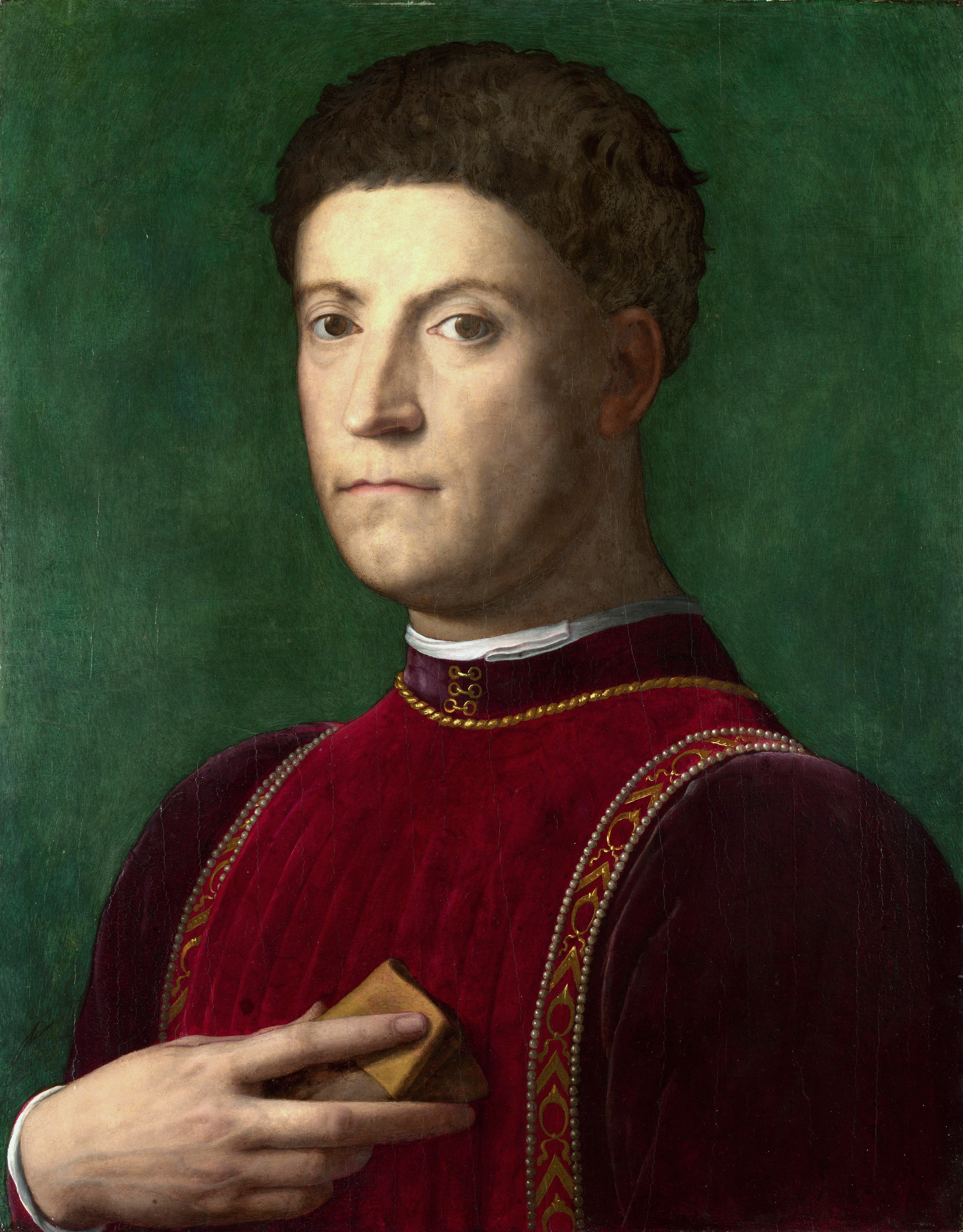
[December 2] Piero, patriarch of Florence

Soubriquet: "The Gouty" (il Gottoso)
Parents: Cosimo, patriarch of Florence, and Contessina de' Bardi
Date of Birth: 1416
House: Medici
Spouse(s): Lucrezia, daughter of Francesco di Simone Tornabuoni and Nanna di Niccolo di Luigi
Predecessor: Cosimo
Reign: 1464 – 1469
Brief: Raised without a strong knowledge of Florentine politics due to ill health, Piero was never meant to become the patriarch of Florence. His elder brother, Giovanni, was designated heir but predeceased Cosimo. Piero became gonfaloniere, a Florentine political leader, in 1461 and succeeded his father three years later. Immediately after taking office, Piero recalled all overdue loans to the Medici Bank, bankrupting numerous local merchants and angering the populace. The Duke of Modena attempted to stage a coup in Florence, enlisting members of the local nobility including a Medici cousin in the attempt. The coup failed, as did another the next year sponsored by Venice. In 1467, Piero went to war with Venice over support of the new Duke of Milan. The Venetians were defeated by a joint Florentine, Neapolitan, Papal, and Milanese alliance. Culturally, Piero sponsored the arts in Florence, commissioning numerous works that featured himself and his family. He stepped down from office in favor of his son, Lorenzo, in 1469 and died the next year of gout and lung disease.
Date of Death: 2 December 1470
Successor: Lorenzo I

Other Monarchs Who Died Today:
  • Hanazono, emperor of Japan (1348)
  • Albert VI, archduke of Austria (1463)

Saturday, December 1, 2012

[December 1] Alexander I, emperor of Russia

Local Name: Aleksandr I Pavlovich (Александр I Павлович)
Soubriquet: "The Blessed" (Blagoslovennyi)
Parents: Paul, emperor of Russia, and Sophie Dorothea of Württemberg
Date of Birth: 23 December 1777
House: Holstein-Gottorp-Romanov
Spouse(s): Louise Elizabeth Alexeievna, daughter of Charles Louis of Baden and Amalie of Hesse-Darmstadt
Predecessor: Paul
Reign: 1801 – 1825
Brief: The only European monarch to have defeated Emperor Napoleon I at his own game, Alexander was raised by his autocratic grandmother, Catherine the Great, and by a French enlightenment tutor, Frédéric-César de La Harpe, embracing both philosophies in an unnatural amalgam. When his father was assassinated in March 1801, possibly with his own collusion, Alexander set on a campaign of governmental reform and centralization. He also turned Russia on a course toward constitutional monarchy, establishing an upper chamber of Lords and reforming the Governing Senate into his Supreme  Court. After first recognizing Napoleon as leader of the French Republic, Alexander realized that Napoleon was an autocrat and against basic freedoms. The young emperor rallied together an alliance with his neighbors but found himself along in 1807 when France defeated Austria. The two countries made peace, with plans to divide Europe in half between them, but over the course of the next five years, these plans fell apart and the two countries again prepared for war. Napoleon invaded Russia in 1812 and burned Moscow before his army was utterly devastated on its long return to France. From the end of the war until the end of his life, Alexander became increasingly autocratic, abandoning much of his love for enlightenment philosophy and instead embracing the methods of Klemens Wenzel von Metternich, the Austrian prime minister. Emperor Alexander I died in 1825 after catching a cold which developed into typhus. His wife died a few months later. Legends suggest that Alexander actually lived and continued his life as a hermit until 1864, living under the name Feodor Kuzmich, who was sainted by the Russian Orthodox Church in 1984.
Date of Death: 1 December 1825
Successor: Nicholas I

Other Monarchs Who Died Today:
  • Henry I, king of England (1135)
  • Magnus II, king of Sweden (1377)
  • Go-Komatsu, emperor of Japan (1433)
  • Leo X, pope of Rome (1521)
  • Pius VIII, pope of Rome (1830)

Friday, November 30, 2012

[November 30] Leka I, titular king of the Albanians

Parents: Zog I, king of the Albanians, and Géraldine Apponyi de Nagyappony
Date of Birth: 5 April 1939
House: Zogu
Spouse(s): Susan, daughter of Alan Robert Cullen-Ward and Phyllis Dorothea Murray-Prior
Predecessor: Zog
Reign: 1961 – 2011
Brief: Forced into exile only two days after his birth, Leka I was never destined to see the Albanian throne. The Italians invaded Albania in 1939, with Victor Emmanuel III proclaiming himself King of Albania, though he would come to regret the invasion later in life. He travelled around Europe in his exile, settling in England by 1940. The family moved to Egypt where Leka attended English schools, and then he studied at Aiglon College in Switzerland before passing out of Sandhurst Royal Military Academy in Britain. He became a lieutenant in the British Army then a businessman. In 1957, he was designated his father's heir, and four years later he was proclaimed King of the Albanians by the Albanian National Assembly-in-Exile. He was married in 1975 to an Australian and his reception had numerous other deposed heads of state in attendance. Fearing a communist assassination attempt on his life, Leka began gathering arms and bodyguards around himself, which prompted the Spanish government to kick him out of the country. On his flight into Africa, he ran into Albanian communists who tried to capture him but were turned away when the titular king produced an RPG launcher. He finally set up a new base in Johannesburg, South Africa, where he was given diplomatic protection. After the fall of communism in Albania, Leka I returned to his homeland in 1993, renouncing his titles in exchange for citizenship. A referendum was held in 1997 to reestablish a monarchy, but the bid failed partially due to communist interference. The king left the country and was found guilty in absentia of sedition, which was pardoned two years later when 72 members of Parliament requested the royal family to return. The party that backed his family is a minority member of a coalition that had promised future referendums on monarchy. However, for Leka I, he withdrew from politics entirely in 2006 and died five years later. His son, Leka II, now heads the family's campaign for recognition.
Date of Death: 30 November 1780
Successor: Leka II

Other Monarchs Who Died Today:
  • Edmund II, king of England (1016)
  • Charles XII, king of Sweden (1718)

Thursday, November 29, 2012

[November 29] Maria Theresa, queen of Bohemia

Full Name: Maria Theresa Walburga Amalia Christina
Parents: Charles VI, Holy Roman Emperor, and Elisabeth Christina of Burnswick-Wolfenbüttel
Date of Birth: 13 May 1717
House: Habsburg
Spouse(s): François, duke of Lorraine, son of Leopold, duke of Lorraine, and Élisabeth Charlotte d'Orléans
Predecessor: Charles VI
Reign: 1740 – 1780
Brief: The resultant final heir of the House of Habsburg, Maria Theresa was destined to be queen of Bohemia and archduchess of Austria from at least 1713, when her father passed his Pragmatic Sanction. Most of the rest of his reign was spent securing the law that would allow his daughter to succeed to the throne, but it was all for nothing. This was partially because Emperor Charles VI had already signed a Mutual Pact of Succession with his elder brother that ensured that the daughters of Emperor Joseph I would supersede any daughters of Charles. But by the time Charles died, little mattered to the land-hungry magnates of Europe who only wished to dissect Austria for themselves. Raised by Jesuits and kept under harsh security, Maria Theresa was not a great student and her father did not teach her how to rule his empire. At the age of nineteen, Maria Theresa married the duke of Lorraine, who lost Lorraine the next year but gained the Grand Duchy of Tuscany as compensation. When Charles finally died in 1740 of mushroom poisoning, he left Austria in financial bankruptcy and a small unprepared army. Maria Theresa did not have a clue how to run her new government.

Taking her father's advice, Maria Theresa campaigned to have her husband elected Holy Roman Emperor, since she could not gain the title herself. To give him a free vote from Bohemia, the queen made him joint-ruler of Austria and Bohemia, though Hungary waited a year before approving the joint leadership. Despite his joint role, Maria Theresa did not trust her husband and did not allow him to make decisions within her empire. Outside of Austria, the queen's neighbors began banging swords in a move that would prompt the War of the Austrian Succession. Charles Albert, duke of Bavaria, was married to the senior Habsburg heiress and wanted a piece of Austria. Frederick II, king of Prussia, wanted Silesia and took it from her through force after negotiations failed. The Bavarian duke invaded Bohemia in 1741 while Maria Theresa was pregnant with her second child. She threw everything into the war effort to keep Charles Albert from succeeding, but the Bavarian duke was nominated Holy Roman Emperor in early 1742. On the same day, Austrian troops occupied his Bavarian capital of Munich, sullying the coronation. In 1745, Charles Albert died, ending the Bavarian fight. François was elected Holy Roman Emperor Franz I later that year and the war ended in 1748 with the cession of Parma to Spain. For ten years, Maria Theresa had peace until Prussia invaded Saxony in 1756 sparking the Seven Years' War. Luckily, the war ended with little changed for Austria, though the queen desperately wanted Silesia back from Prussia. Domestically, Maria Theresa modernized much of the Austrian military, creating a standing army and unifying Bohemia and Austria more closely. She ended capital punishment and outlawed witch burning and torture. When Franz I died in 1765, Maria Theresa removed herself from government, leaving the management to her eldest son, Joseph II. She died in 1780, probably after a prolonged smallpox attack that left her sick with pneumonia. She was the last direct Habsburg descendant on record, her cousin having predecesed her, and her successors would be known as the House of Habsburg-Lorraine.
Date of Death: 29 November 1780
Successor: Joseph II

Other Monarchs Who Died Today:
  • Chlothar I, king of the Franks (561)
  • Gregory III, pope of Rome (741)
  • Otto II, duke of Bavaria (1253)
  • Clement IV, pope of Rome (1268)
  • Philippe IV, king of France (1314)
  • Charles IV, Holy Roman Emperor (1378)
  • Nanda, king of Burma (1600)
  • Frederick V, count palatine of the Rhine (1632)

Labels

[brief] (102) female monarch (31) Capet (26) [abbreviated] (19) Roman Empire (17) Great monarchs (16) Japan (15) Papacy (15) England (13) saints (13) France (11) Portugal (11) [Missing Deaths] (11) Habsburg (10) Sweden (10) Byzantine Empire (9) Carolingian (9) China (9) Hohenzollern (9) Oldenburg (9) Holy Roman Empire (8) Japan (dynasty) (8) Aragón (7) Austria (7) Denmark (7) Electorate (7) Ethiopia (7) Hungary (7) Navarre (7) Norway (7) Romanov (7) Russia (7) Saxony (7) Scotland (7) Wettin (7) Wittelsbach (7) Bavaria (6) Burgundy (6) Egypt (6) Italy (6) Lorraine (6) Luxembourg (6) Persia (6) Poland (6) Sicily (6) Spain (6) Valois (6) Capet-Burgundy (5) Franks (5) Germany (5) Plantagenet (5) Prussia (5) Quraish (5) Solomon (Ethiopia) (5) Tuscany (5) Anjou (4) Aquitaine (4) Barcelona (dynasty) (4) Bohemia (4) Brittany (4) Burgundy-Aviz (4) Burma (4) Capet-Valois (4) Castile (4) Constantinople (Patriarchate) (4) Habsburg-Lorraine (4) Holstein-Gottorp-Romanov (4) India (4) Ireland (4) Jerusalem (4) Jiménez (4) Kiev (4) Mongolia (4) Naples (4) Netherlands (4) Normandy (4) Osman (4) Ottoman (4) Palaeologos (4) Savoy (4) Savoy (dynasty) (4) Trastámara (4) Wales (4) Afghanistan (3) Albania (3) Bagrationi (3) Banu Hashim (3) Blois (3) Borjigin (3) Bourbon (3) Brabant-Hesse (3) Brandenburg (3) Capet-Bourbon (3) Cologne (3) Croatia (3) Cyprus (3) Disney (3) Fairhair (3) Georgia (3) Gwynedd (3) Hainaut (3) Hesse (3) Hohenstaufen (3) Holland (3) Holstein-Gottorp (3) Inca (3) Islam (3) León (3) Limburg (3) Lithuania (3) Livonia (3) Lothier (3) Macedonia (dynasty) (3) Mainz (3) Mann (3) Medici (3) Morocco (3) México (3) Nassau (3) Nguyễn (3) Serbia (3) Stuart (Stewart) (3) Toungoo (3) Tudor (3) Turkey (3) Vaudemont (3) Vietnam (3) Welf (3) Wessex (3) published articles (3) Abberfraw (2) Aberffraw (2) Alexandria (patriarchate) (2) Angevins (2) Anglo-Saxon (2) Ardennes-Metz (2) Auvergne (2) Ayyubid (2) Basarab (2) Bernadotte (2) Billung (2) Boulogne (2) Brabant (2) Bruce (2) Burgundy-Bragança (2) Caliphate (2) Cilicia (2) Constantine (2) Crovan (2) Denmark (Dynasty) (2) Draculesti (2) Dreux (2) Dunkeld (2) Dutch Republic (2) Estridsen (2) Flanders (2) Florence (2) Further Austria (2) Greece (2) Habsburg-Spain (2) Hanover (2) Hardrada (2) Hauteville (2) Hawai'i (2) Ivrea (2) Joseon (2) Karadordevic (2) Konbaung (2) Korea (2) Maya (2) Merovingian (2) Milan (2) Ming (2) Monaco (2) Nassau-Orange (2) Nassau-Weilburg (2) Norman (2) Novgorod (2) Orange (2) Ottonian (2) Piast (2) Piedmont-Savoy (2) Poitiers (dynasty) (2) Robertian (2) Romania (2) Rurik (2) Sardinia (2) Saxe-Coburg-Gotha (2) Seljuk (2) Siam (2) Syria (2) Teutonic Knights (2) Thailand (2) Theodosian (2) Thuringia (2) Timurid (2) Tokugawa (2) United Kingdom (2) Valois-Burgundy (2) Vandal (2) Venice (2) Visconti (2) Vladimir (2) Wallachia (2) Württemberg (2) York (2) Yugoslavia (2) Zeeland (2) the Britons (2) 18th Dynasty (Egypt) (1) Abbasid (1) Adal (1) Agiad (1) Akinyele (1) Al Khalifa (1) Al-Said (1) Alawiyya (Egyptian) (1) Albret (1) Algeria (1) Algonquian (1) Amber (1) Angola (1) Anjou (dynasty) (1) Anjou-Hungary (1) Ansbach (1) Antonia (1) Antonine (1) Apulia (1) Arabia (1) Armenia (1) Arpad (1) Arsacid (1) Asen (1) Ashikaga (1) Athens (1) Avesnes (1) Avignon Papacy (1) Aviz-Beja (1) Aztec Empire (1) Baden (1) Bahrain (1) Balti (1) Barakzai (1) Barazkai (1) Barcelona (1) Battenberg (1) Belgium (1) Bengal (1) Berg (1) Berg (dynasty) (1) Bernicia (1) Bharatpur (1) Bhutan (1) Bjelbo (1) Bonaparte (1) Bonde (1) Bonngau (dynasty) (1) Borghese (1) Borja (1) Bosnia (1) Bourbon-Two Sicilies (1) Brandenburg-Ansbach (1) Brienne (1) Brutus (1) Bukhara (1) Bulgaria (1) Canossa (1) Capet-Dreux (1) Carthage (1) Celje (1) Celje (dynasty) (1) Chakri (1) Champagne (1) Champagne (dynasty) (1) Chartres (1) Cometopuli (1) Contantine (1) Cordoba (1) Craiovesti (1) Crusader States (1) Dalmatia (1) Damascus (1) Danesti (1) Debeubarth (1) Deira (1) Deira (dynasty) (1) Denmar (1) Dulo (1) Díaz (1) Early Han (1) East Anglia (1) East Francia (1) Eastern Han (1) Eastern Jin (1) Egmont (1) Estonia (1) Farnese (1) Fatimid (1) Fatimid Caliphate (1) Flanders (dynasty) (1) Flavian (1) Friuli (1) Gausi (1) Geneva (1) Geneva (dynasty) (1) Gordiani (1) Grimaldi (1) Guelders (1) Guideschi (1) Gwent (1) Gwynedd (dynasty) (1) Gyatso (1) Haag (1) Hainaut (dynasty) (1) Hanan Cuzco (1) Hashim (1) Hashimite (1) Hebrides (The Isles) (1) Hellenes (1) Herat (1) Hohenzollern-Ansbach (1) Hohenzollern-Sigmaringen (1) Holland (dynasty) (1) Hunfriding (1) Ibadan (1) Iran (1) Iturbide (1) Jaipur (1) Jin (1) Jordan (1) Julio-Claudian (1) Jungingen (1) Justinian (dynasty) (1) Kachwaha (1) Kalakaua (1) Kamehameha (1) Karrani (1) Kent (1) Kent (house) (1) Kestutis (1) Khurasan (1) Knights Templar (1) Komnenos (1) Kotromanić (1) Lakota Sioux (1) Lancaster (1) Latin Empire (1) Lebanon (1) Leuchtenberg (1) Lombards (1) Ludowinger (1) Lusignan (1) Luxembourg (dynasty) (1) Luxembourg-Limburg (1) Maan (1) Macedon (1) Magdeburg (1) Maine (1) Majorca (1) Malaysia (1) Manghit (1) Maratha Empire (1) Marinid (1) Matsunaga (1) Maurya (1) Mecklenburg (1) Mecklenburg-Strelitz (1) Meissen (1) Mercia (1) Mercia (dynasty) (1) Miniconjou (1) Moldavia (1) Montenegro (1) Montferrat (1) Morgannwg (1) Mortain (1) Mountbatten (1) Mughal (1) Muhammad Ali (1) Munster (1) Musat (1) Myanmar (1) Nakagawa (1) Ndongo and Matana (1) Nemanjic (1) Nepal (1) Nervo-Trajan (1) Neuchâtel (1) Nigeria (1) Nominoë (1) Northumbria (1) O'Brien (1) Obrenović (1) Odowa (1) Olgovich (1) Olympus (1) Orléans-Longueville (1) Ostrogoths (1) Ottawa (1) Pahlavi (1) Palatinate of the Rhine (1) Parma (1) Penthièvre (1) Petrović-Njegoš (1) Poděbrady (1) Pointiers (Ramnulfids) (1) Poitiers (1) Poitiers-Lusignan (1) Polignac (1) Powys (1) Prasat Thong (1) Premyslid (1) Provence (1) Přemyslid (1) Q'umarkaj (1) Qin (1) Qing (Manchu) (1) Reginar (1) Reginarid (1) Rethel (1) Rethel-Boulogne (1) Ribagorza (1) Rouergue (1) Roupenians (1) Sa Malietoa (1) Safavid (1) Salian (1) Salzburg (1) Samoa (1) Sarantapechos (1) Saud (1) Saudi Arabia (1) Second Triumvirate of Rome (1) Selangor (1) Selangor (dynasty) (1) Sforza (1) Shah (Nepal) (1) Shi'a Imamate (1) Shishman (1) Shivaji (1) Silesia (1) Simmern (1) Sinsinwar Jat (1) Skowronski (1) Slovenia (1) Sobieski (1) South Africa (1) South America (1) Sparta (1) Spoleto (1) Sture (1) Sudan (1) Sussex (1) Sverre (1) Swabia (1) Swasi (dynasty) (1) Swaziland (1) Swiss Confederation (1) Tang (1) Tenochtitlan (1) Teotihuacán (1) Terter (1) Tibet (1) Tikal (1) Tolkien (1) Toulouse (1) Tours (dynasty) (1) Transylvania (1) Tunisia (1) Umayyad (1) Unruoching (1) Valencia (1) Valois-Angoulême (1) Valois-Anjou (1) Valois-Orléans (1) Vasa (1) Vermandois (1) Visigoths (1) Vokil (1) Wangchuck (1) Wied-Neuwied (1) Windsor-Mountbatten (1) Württemberg (dynasty) (1) Yamato (1) Ying (Qin) (1) Yuan (1) Zanzibar (1) Zhao (Song) (1) Zhou (1) Zhu (1) Zogu (1) Zulu Nation (1) Zápolya (1) Zähringen (1) bretwalda (1) cardinal (1) fantasy (1) fiction (1) shogunate (1) terms (1) Árpád (1) Öuchi (1)