Monday, July 16, 2012

[July 16] Charles I, king of Hungary & Croatia


Parents: Charles, duke of Anjou, and Klementia of Habsburg
Date of Birth: 1288
Royal House: Capet-Anjou-Hungary
Spouse: (1) Maria, daughter of Casimir of Byton and Helena, then (2) Beatrix, daughter of Henry VII, Holy Roman Emperor, and Margaret of Brabant, then (3) Elisabeth, daughter of Wladyslaw I, king of Poland, and Hedwig of Kalisz
Predecessor: Béla V
Reign: 1312 –  1342
Summary: As circumstances go, Charles' claim to the Hungarian crown in 1312 was strong, but distant. His grandmother was the sister of Ladislaus IV. When he died, she claimed the crown but a distant cousin, Andrew III, was given it instead. Fearing that Hungary was not ready to crown a female its monarch, Mary designated her son, Charles Martel, her heir in 1292. He was also the heir to Naples. He died in 1295 and Charles inherited the rights to Hungary. Meanwhile, King Charles II of Naples appointed his younger son, rather than his elder grandson, Charles, his heir, thereby dividing the Anjou inheritance before they could ever be combined. Charles trucked around Central Europe for most of his life. In 1300, a Hungarian magnate invited him to Hungary to take the crown since no king had been universally recognized since the death of Ladislaus IV in 1290. When the rival king, Andrew III, died the next year, Charles was crowned king of Hungary, but the majority of the magnates chose Wenceslaus instead. Despite King Wenceslaus fleeing Hungary in 1305, the magnates would still not support Charles' rule. Wenceslaus abdicated in favor of Otto III, duke of Bavaria, and Otto was crowned in December. Meanwhile, Charles began aggressively conquering Hungary, seeing no other option left to them. Otto eventually fled to abandoning Hungary to the House of Anjou, yet still the magnates would not give up the Holy Crown. Eventually Pope Clement V had to force some of the major magnates to support him, and even had a replacement crown made since the prince of Transylvania would not release the official crown. Charles was crowned for a third time in 1310. By 1312, he was recognized by much of the kingdom, though some segments of society still rebelled against his authority. In 1316 he had to face a rival claim but they were put down by the next year. When Máté Csák died in 1321, Charles could finally go about the business of running his kingdoms.


Once secure in power, Charles began by restoring certain royal prerogatives to avoid future problems with the aristocracy. He created an honor system of rewards to faithful servants that could be withdrawn if he became displeased. Charles controlled inflation by creating new and creative taxes and minting some coins. By the 1330s, Hungary was minting more gold coins than any country in Europe. He worked with Poland and Bohemia to establish a mutual defense agreement against Habsburg aggression. The Congress of Visegrád where the final details were established was also one of the first joint congresses of European monarchs. He also worked with Poland and the Papacy to ensure that one of his sons inherited Poland while another inherited Naples once the current monarchs died. He attempted to secure his borders by pushing into Wallachia, Bulgaria, Serbia, and Bosnia, and then converting its residents to Catholicism from Greek Orthodoxy. This backfired in the long run, though, as Wallachia went into open rebellion and the other three states had smaller disputes. Charles moves in the Balkans helped the Ottoman Empire capture much of the region fifty years later because Charles decentralized and divided the people.  Charles died in 1342 and his son, Louis, succeeded him.
Date of Death: 16 July 1342
Successor: Louis I

Other Monarchs Who Died Today:
  • Inoocent III, pope of Rome (1216)
  • Go-Uda, emperor of Japan (1324)
  • Yu Gu, pretender to Korea (2005)

Sunday, July 15, 2012

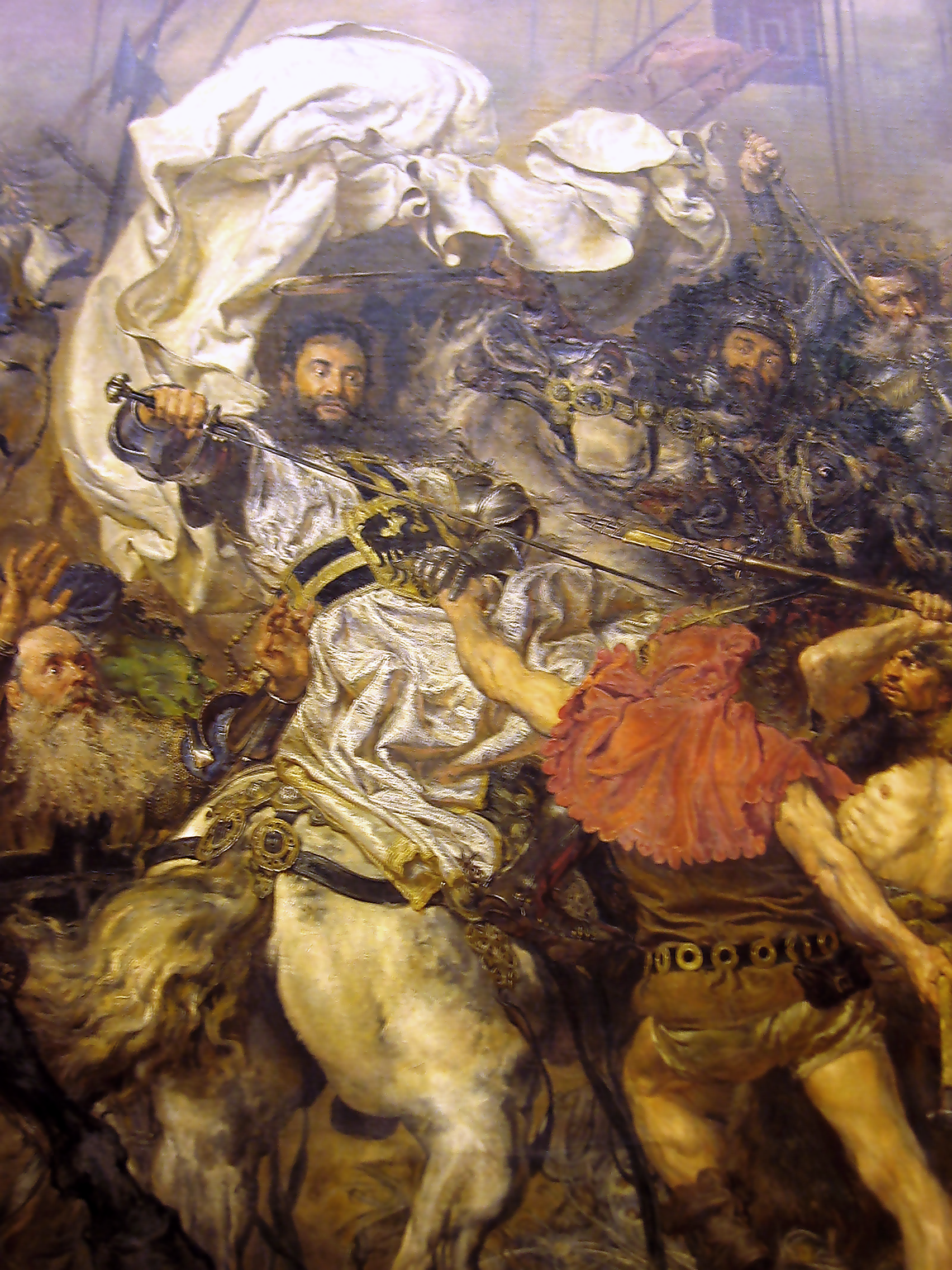
[July 15] Ulrich von Jungingen, grand master of the Teutonic Knights


Date of Birth: 1360
Royal House: Jungingen
Predecessor: Konrad von Jungingen
Reign: 1407 — 1410
Summary: Born to a Swabian noble house, Ulrich and his brother, Konrad, joined the Teutonic Knights and moved to Prussia in the 1480s. Konrad was elected Grand Master in 1393 and Ulrich benefited greatly from that promotion. In 1396, he became the komtur (commander) of Balga where he remained for eight years. Ulrich was instrumental in the treaty to obtain Gotland Island from Denmark in 1398. He also was a diplomat for the Order assigned to the Polish-Lithuanian Treaty of Salynas which brought the Duchy of Samogitia to the Order. Konrad made his brother the military leader of the Teutonic Knights in 1404 and assigned him a larger komtur at Königsberg. During his three years there, he suppressed multiple uprisings by the native Samogitian people and he retained his control via bribes to local officials and direct violent oppression. When Konrad died suddenly in 1407, Ulrich was nominated as his successor.


Despite his vast experience, Ulrich failed to resolve the Samogitia problem well. At the same time, new problems had arisen with Poland over disputed lands and the Poles were willing to attack Prussia without a moment's notice. Ulrich, knowing that a war was imminent, forged a quick alliance with Hungary, bought mercenaries from Germany, and declared war on Poland in the summer of 1409. This was the start of the Polish-Lithuanian-Teutonic War. It began well for the Order, with Ulrich's forces laying successful sieges against Dobrzyn and Kuyavia, but Ulrich's allies were indifferent. At the Battle of Grunwald, the two armies met and stared across the battlefield. Ulrich, in an attempt to antagonize the Polish king, sent over two swords with a death threat. The Lithuanians attacked and the Poles followed behind. Ulrich, certain of his victory, led the charge of his rearguard and almost captured the Polish king. Unfortunately, his attack had left vulnerable and he did not realize that most of the Order's army had regrouped behind him. His unit was surrounded and he was killed  in action. The Polish king allowed the body of the Grand Master to be returned to the Order before laying siege to Marienburg a few days later. He was succeeded by Heinrich von Plauen, a Teutonic Knight made famous for saving Castle Marienburg.
Date of Death: 15 July 1410
Successor: Heinrich von Plauen

Other Monarchs Who Died Today:
  • Rudolph I, king of the Romans (1291)
  • Wilhelm, duke of Austria (1406)
  • René, prince of Orange (1544)
  • Shimazu Takahisa, daimyo in Japan (1571)
  • George IV, king of the United Kingdom & Ireland (1830)

Saturday, July 14, 2012

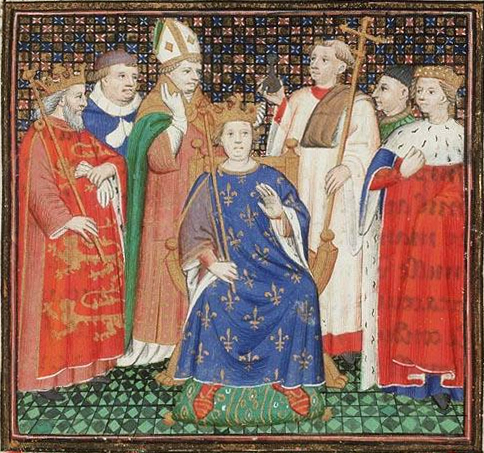
[July 14] Philippe II, king of France

Surnamed: "Auguste (Augustus)" and "Dieudonné (God-given)"
Parents: Louis VII, king of France, and Adèle of Champagne
Date of Birth: 21 August 1165
Royal House: Capet
Spouse: (1) Isabella, daughter of Baldwin V, count of Hainaut, and Margaret I, countess of Flanders, then (2) Ingeborg, daughter of Valdemar I, king of Denmark, and Sofia of Minsk, then (3) Agnes, daughter of Bertold IV, count of Andechs, and Agnes of Rocklitz
Predecessor: Louis VII
Reign: 1180 – 1223
Summary: Philippe was born late in the life of his father, giving him his first surname: "God-given". His father, Louis VII, had him crowned co-king at the age of fourteen and married him to Isabella of Hainaut the next year. This brought the county of Artois into the French domain. From the time of his coronation onwards, he was the true king of France. His father was ailing after having suffered a stroke, and slowly became senile. Philippe was still a very young ruler who exercised complete power, angering his nobles and family members alike. When his father died in 1180, his consolidation of power was complete.

Philippe II was an army-builder and fought hard to avoid falling back on his nobles. His royal army at the time of his ascension was composed of around 3,000 soldiers. By the end of his reign, he could call upon more than 20,000 soldiers and his navy included 10 fleet ships and many smaller boats. His victory over the count of Flanders in 1181 earned him his infamous nickname "Augustus" because of his expansion of the French domain. Throughout his life, he would continue to uphold that nickname. When Henry the Young King of England died in 1183, Philippe insisted that his lands, all French, be returned to France. A war was avoided when Henry's widow, Margaret, was married to Béla III of Hungary, forcing the dower to be transferred. But when English royal duke, Geoffrey II of Brittany, died in 1186, Philippe insisted that the duke's son, Arthur, should be placed under the guardianship of France rather than England. War naturally followed although nothing was resolved. Philippe at first allied with Richard the Lionheart and John Lackland, two sons of the English monarch. Over the next three years, Richard and Philippe would ravage England's lands, forcing King Henry II of England to acknowledge Richard as his heir before dying in 1189. Henry's death coincided with the fall of Jerusalem to Saladin, and with that the short Franco-English War ended. Philippe and Richard ventured to the Holy Land together on the Third Crusade between 1189 and 1192. Once in Palestine, Philippe became ill with dysentery while Richard became the hero of Acre. The two finally split over political and military disagreements and Philippe returned to France. With Richard still away, Philippe took advantage of the king's absence and began his reconquest of Western France. He gained the support of Prince John and invaded Normandy. He made significant progress until Richard returned in 1194 eager to fight the French king. The two kings played cat-and-mouse for a number of months before finally agreeing to a truce. The two resumed the fight in 1195 then agreed to another truce. When Count Baldwin of Flanders switched to the English side in 1197, the tide finally turned against the French. The new Holy Roman Emperor Otto IV was Richard's nephew and ally, and many Norman lords were returning to Richard. By 1198, Richard had reclaimed almost all of his lost lands and Philippe was desperate for a peace treaty. Richard died before a truce could be decided upon. In 1200, King John of England agreed to the Treaty of Le Goulet that ended the war and settled boundaries between France and Normandy. John's mismanagement of Aquitaine caused the entire duchy to rise in rebellion  in 1201. Philippe supported the rebellion and then went back into open warfare with England following the death of Duke Arthur of Brittany, the legitimate heir to England. By 1204, most of Normandy and Aquitaine were in French hands. When John refused to travel to Paris and account for the murder of Arthur, Philippe used his power as French overlord to forcibly take John's French lands away. When the Holy Roman Empire broke out into civil war following the death of Philip of Swabia in 1208, Philippe took the initiative and attempted to invade England. While he was never given the opportunity, he was able to briefly install his son, Louis, as the English king until John died a few months later and John's son, Henry III, was nominated as king. The last ten years of Philippe's life were spent resolving the Champagne succession issue and improving Paris. He built the Louvre and continued the construction of Notre-Dame while also approving the charter for the University of Paris. He was a wine connoisseur and commissioned the Battle of the Wines in 1224. He died a year earlier and was buried in Saint Denis Basilica, the resting place of all French monarchs. His son, Louis, succeeded him.
Date of Death: 14 July 1223
Successor: Louis VIII

Other Monarchs Who Died Today:
  • Arnulf, duke of Bavaria (937)

Friday, July 13, 2012

[July 13] John III, pope of Rome

True Name: Catelinus
Parents: Anastasius
Predecessor: Pelagius I
Reign: 561 – 574
Summary: The man named Catelinus was probably raised from a distinguished Roman family in the years of the Byzantine occupation of Rome. His father, Anastasius, was likely a Roman senator and Catelinus may have been involved in the translation of texts from the Greek Fathers of Christianity which Pope Pelagius I had begun during his tenure. Catelinus became pope sometime in 561 and took the regnal name John III.

The death of Byzantine Emperor Justinian I in 565 set about a course of action in Rome that would not cease for 250 years. Justinian's successor would look closer to home rather than occupy the historic but otherwise troublesome city of Rome. Thus, without Roman protection, in 568 the Lombards invaded the city. Rome became under constant siege by the Lombards, who sought to conquer the entire Italian Peninsula. The Lombards were Arian Christians and John III feared that their victory would destroy Roman Catholicism in Italy. With the Roman governor trapped in Ravenna unable to halt the Lombard advance, John took it upon himself to go to Naples in the south and petition the southern governor, Narses, to help. Narses agreed and returned with John to Rome. Unfortunately, the public hated Narses and when John brought him to Rome, the public turned against him as well. Unable to live in the city, John fled to the Via Appia and its catacombs outside of Rome where he carried out his papal duties largely in seclusion. While there, he mediated between two condemned bishops who the king of Burgundy supported but the public did not. John decided in favor of the bishops and sent them back to their sees. John III died soon after and was succeeded by Benedict I after an eleven-month delay in confirming the new pope due to poor communication with Constantinople.
Date of Death: 13 July 574
Successor: Benedict I

Other Monarchs Who Died Today:
  • Leo VII, pope of Rome (939)
  • Henry II, Holy Roman Emperor (1024)
  • Jianwen, emperor of China (1402)
  • Henry IX, pretender to England & Scotland (1807)

Thursday, July 12, 2012

[July 12] Michael I, tsar of Russia


True Name: Mikhail I Fyodorovich (Михаил Фёдорович)
Parents: Feodor Nikitich, patriarch of Moscow, and Kseniya Shestova
Date of Birth: 12  July 1596
Royal House: Romanov
Spouse: (1) Maria, daughter of Vladimir Timofeyevich Dolgorukov and Maria Vasilievna Barbashina-Shuiskaya, then (2) Eudoxia, daughter of Lukyan Stephanovich Streshnyov and Anna Konstantinovna Volkonskaya
Predecessor: Vasili IV
Reign: 1613 – 1645
Summary: Michael had little claim to the troubled Russian throne. His aunt, Anastasia, was a wife of Ivan the Terrible thereby linking his family to theirs. Yet in 1600, Michael and his mother were exiles living in Beloozero. Michael's father, Feodor, was accused of treason in 1598 by the new Tsar Boris Godunov, an opportunist ruling in the wake of Ivan. This left the aspiring Romanov family on the run and on the offensive. The Time of Troubles lasted for fifteen years and during that time, one third of Russia died in a terrible famine. The Polish-Lithuanian Commonwealth invaded Russia as well, and rival claimants and pretenders were flocking in droves to Moscow to try and claim the Russian throne. With Poland attempting to install its own monarch in Russia, the aristocracy decided to reassert itself and take control over the government. Michael, being related to the now-extinct Rurik line of Russian monarchs, was chosen as tsar by the Grand National Assembly. It was hoped that his ascension would end disputes and unify Russia, and it did.

It took Michael six years to remove all foreign presence of Russian soil. In the Treaty of Stolbovo in 1617, Sweden was removed, while the Truce of Deulino in 1618 removed Poland. With the second treaty, Michael's father Feodor was able to return to Russia and act as regent and counsellor to the new tsar. A leg injury from earlier in his life slowly grew worse during his reign until Michael reached a point where he could no longer walk. As he aged, he relegated increasing power to his counsellors. While many were trusted and good men, some were not and Michael constantly had to intervene in the government to remove corrupt officials. Michael was largely removed from government and trusted in strong advisors, most unaffiliated with the military. He worked hard to forge an alliance with Denmark in the years preceding his death. His wish was to wed his eldest daughter, Irene, to Valdemar Christian, an illegitimate son of King Christian IV of Denmark. However, when Valdemar arrived in Moscow, the Danish prince refused to convert to the Russian Orthodox faith and Michael had him imprisoned. Irene never married and it is thought that Michael died partially due to the regret over the failure of this alliance. In any case, Michael died in 1945 and was succeeded without contest but his eldest son, Alexis I.
Date of Death: 12 July 1645
Successor: Alexis

Other Monarchs Who Died Today:
  • Ashikaga Yoshinori, shogun of Japan (1441)
  • Richard Cromwell, lord protector of England (1712)

Labels

[brief] (102) female monarch (31) Capet (26) [abbreviated] (19) Roman Empire (17) Great monarchs (16) Japan (15) Papacy (15) England (13) saints (13) France (11) Portugal (11) [Missing Deaths] (11) Habsburg (10) Sweden (10) Byzantine Empire (9) Carolingian (9) China (9) Hohenzollern (9) Oldenburg (9) Holy Roman Empire (8) Japan (dynasty) (8) Aragón (7) Austria (7) Denmark (7) Electorate (7) Ethiopia (7) Hungary (7) Navarre (7) Norway (7) Romanov (7) Russia (7) Saxony (7) Scotland (7) Wettin (7) Wittelsbach (7) Bavaria (6) Burgundy (6) Egypt (6) Italy (6) Lorraine (6) Luxembourg (6) Persia (6) Poland (6) Sicily (6) Spain (6) Valois (6) Capet-Burgundy (5) Franks (5) Germany (5) Plantagenet (5) Prussia (5) Quraish (5) Solomon (Ethiopia) (5) Tuscany (5) Anjou (4) Aquitaine (4) Barcelona (dynasty) (4) Bohemia (4) Brittany (4) Burgundy-Aviz (4) Burma (4) Capet-Valois (4) Castile (4) Constantinople (Patriarchate) (4) Habsburg-Lorraine (4) Holstein-Gottorp-Romanov (4) India (4) Ireland (4) Jerusalem (4) Jiménez (4) Kiev (4) Mongolia (4) Naples (4) Netherlands (4) Normandy (4) Osman (4) Ottoman (4) Palaeologos (4) Savoy (4) Savoy (dynasty) (4) Trastámara (4) Wales (4) Afghanistan (3) Albania (3) Bagrationi (3) Banu Hashim (3) Blois (3) Borjigin (3) Bourbon (3) Brabant-Hesse (3) Brandenburg (3) Capet-Bourbon (3) Cologne (3) Croatia (3) Cyprus (3) Disney (3) Fairhair (3) Georgia (3) Gwynedd (3) Hainaut (3) Hesse (3) Hohenstaufen (3) Holland (3) Holstein-Gottorp (3) Inca (3) Islam (3) León (3) Limburg (3) Lithuania (3) Livonia (3) Lothier (3) Macedonia (dynasty) (3) Mainz (3) Mann (3) Medici (3) Morocco (3) México (3) Nassau (3) Nguyễn (3) Serbia (3) Stuart (Stewart) (3) Toungoo (3) Tudor (3) Turkey (3) Vaudemont (3) Vietnam (3) Welf (3) Wessex (3) published articles (3) Abberfraw (2) Aberffraw (2) Alexandria (patriarchate) (2) Angevins (2) Anglo-Saxon (2) Ardennes-Metz (2) Auvergne (2) Ayyubid (2) Basarab (2) Bernadotte (2) Billung (2) Boulogne (2) Brabant (2) Bruce (2) Burgundy-Bragança (2) Caliphate (2) Cilicia (2) Constantine (2) Crovan (2) Denmark (Dynasty) (2) Draculesti (2) Dreux (2) Dunkeld (2) Dutch Republic (2) Estridsen (2) Flanders (2) Florence (2) Further Austria (2) Greece (2) Habsburg-Spain (2) Hanover (2) Hardrada (2) Hauteville (2) Hawai'i (2) Ivrea (2) Joseon (2) Karadordevic (2) Konbaung (2) Korea (2) Maya (2) Merovingian (2) Milan (2) Ming (2) Monaco (2) Nassau-Orange (2) Nassau-Weilburg (2) Norman (2) Novgorod (2) Orange (2) Ottonian (2) Piast (2) Piedmont-Savoy (2) Poitiers (dynasty) (2) Robertian (2) Romania (2) Rurik (2) Sardinia (2) Saxe-Coburg-Gotha (2) Seljuk (2) Siam (2) Syria (2) Teutonic Knights (2) Thailand (2) Theodosian (2) Thuringia (2) Timurid (2) Tokugawa (2) United Kingdom (2) Valois-Burgundy (2) Vandal (2) Venice (2) Visconti (2) Vladimir (2) Wallachia (2) Württemberg (2) York (2) Yugoslavia (2) Zeeland (2) the Britons (2) 18th Dynasty (Egypt) (1) Abbasid (1) Adal (1) Agiad (1) Akinyele (1) Al Khalifa (1) Al-Said (1) Alawiyya (Egyptian) (1) Albret (1) Algeria (1) Algonquian (1) Amber (1) Angola (1) Anjou (dynasty) (1) Anjou-Hungary (1) Ansbach (1) Antonia (1) Antonine (1) Apulia (1) Arabia (1) Armenia (1) Arpad (1) Arsacid (1) Asen (1) Ashikaga (1) Athens (1) Avesnes (1) Avignon Papacy (1) Aviz-Beja (1) Aztec Empire (1) Baden (1) Bahrain (1) Balti (1) Barakzai (1) Barazkai (1) Barcelona (1) Battenberg (1) Belgium (1) Bengal (1) Berg (1) Berg (dynasty) (1) Bernicia (1) Bharatpur (1) Bhutan (1) Bjelbo (1) Bonaparte (1) Bonde (1) Bonngau (dynasty) (1) Borghese (1) Borja (1) Bosnia (1) Bourbon-Two Sicilies (1) Brandenburg-Ansbach (1) Brienne (1) Brutus (1) Bukhara (1) Bulgaria (1) Canossa (1) Capet-Dreux (1) Carthage (1) Celje (1) Celje (dynasty) (1) Chakri (1) Champagne (1) Champagne (dynasty) (1) Chartres (1) Cometopuli (1) Contantine (1) Cordoba (1) Craiovesti (1) Crusader States (1) Dalmatia (1) Damascus (1) Danesti (1) Debeubarth (1) Deira (1) Deira (dynasty) (1) Denmar (1) Dulo (1) Díaz (1) Early Han (1) East Anglia (1) East Francia (1) Eastern Han (1) Eastern Jin (1) Egmont (1) Estonia (1) Farnese (1) Fatimid (1) Fatimid Caliphate (1) Flanders (dynasty) (1) Flavian (1) Friuli (1) Gausi (1) Geneva (1) Geneva (dynasty) (1) Gordiani (1) Grimaldi (1) Guelders (1) Guideschi (1) Gwent (1) Gwynedd (dynasty) (1) Gyatso (1) Haag (1) Hainaut (dynasty) (1) Hanan Cuzco (1) Hashim (1) Hashimite (1) Hebrides (The Isles) (1) Hellenes (1) Herat (1) Hohenzollern-Ansbach (1) Hohenzollern-Sigmaringen (1) Holland (dynasty) (1) Hunfriding (1) Ibadan (1) Iran (1) Iturbide (1) Jaipur (1) Jin (1) Jordan (1) Julio-Claudian (1) Jungingen (1) Justinian (dynasty) (1) Kachwaha (1) Kalakaua (1) Kamehameha (1) Karrani (1) Kent (1) Kent (house) (1) Kestutis (1) Khurasan (1) Knights Templar (1) Komnenos (1) Kotromanić (1) Lakota Sioux (1) Lancaster (1) Latin Empire (1) Lebanon (1) Leuchtenberg (1) Lombards (1) Ludowinger (1) Lusignan (1) Luxembourg (dynasty) (1) Luxembourg-Limburg (1) Maan (1) Macedon (1) Magdeburg (1) Maine (1) Majorca (1) Malaysia (1) Manghit (1) Maratha Empire (1) Marinid (1) Matsunaga (1) Maurya (1) Mecklenburg (1) Mecklenburg-Strelitz (1) Meissen (1) Mercia (1) Mercia (dynasty) (1) Miniconjou (1) Moldavia (1) Montenegro (1) Montferrat (1) Morgannwg (1) Mortain (1) Mountbatten (1) Mughal (1) Muhammad Ali (1) Munster (1) Musat (1) Myanmar (1) Nakagawa (1) Ndongo and Matana (1) Nemanjic (1) Nepal (1) Nervo-Trajan (1) Neuchâtel (1) Nigeria (1) Nominoë (1) Northumbria (1) O'Brien (1) Obrenović (1) Odowa (1) Olgovich (1) Olympus (1) Orléans-Longueville (1) Ostrogoths (1) Ottawa (1) Pahlavi (1) Palatinate of the Rhine (1) Parma (1) Penthièvre (1) Petrović-Njegoš (1) Poděbrady (1) Pointiers (Ramnulfids) (1) Poitiers (1) Poitiers-Lusignan (1) Polignac (1) Powys (1) Prasat Thong (1) Premyslid (1) Provence (1) Přemyslid (1) Q'umarkaj (1) Qin (1) Qing (Manchu) (1) Reginar (1) Reginarid (1) Rethel (1) Rethel-Boulogne (1) Ribagorza (1) Rouergue (1) Roupenians (1) Sa Malietoa (1) Safavid (1) Salian (1) Salzburg (1) Samoa (1) Sarantapechos (1) Saud (1) Saudi Arabia (1) Second Triumvirate of Rome (1) Selangor (1) Selangor (dynasty) (1) Sforza (1) Shah (Nepal) (1) Shi'a Imamate (1) Shishman (1) Shivaji (1) Silesia (1) Simmern (1) Sinsinwar Jat (1) Skowronski (1) Slovenia (1) Sobieski (1) South Africa (1) South America (1) Sparta (1) Spoleto (1) Sture (1) Sudan (1) Sussex (1) Sverre (1) Swabia (1) Swasi (dynasty) (1) Swaziland (1) Swiss Confederation (1) Tang (1) Tenochtitlan (1) Teotihuacán (1) Terter (1) Tibet (1) Tikal (1) Tolkien (1) Toulouse (1) Tours (dynasty) (1) Transylvania (1) Tunisia (1) Umayyad (1) Unruoching (1) Valencia (1) Valois-Angoulême (1) Valois-Anjou (1) Valois-Orléans (1) Vasa (1) Vermandois (1) Visigoths (1) Vokil (1) Wangchuck (1) Wied-Neuwied (1) Windsor-Mountbatten (1) Württemberg (dynasty) (1) Yamato (1) Ying (Qin) (1) Yuan (1) Zanzibar (1) Zhao (Song) (1) Zhou (1) Zhu (1) Zogu (1) Zulu Nation (1) Zápolya (1) Zähringen (1) bretwalda (1) cardinal (1) fantasy (1) fiction (1) shogunate (1) terms (1) Árpád (1) Öuchi (1)