Saturday, June 16, 2012

[June 16] Marie, princess of Neuchâtel

Parents: Henri II, duke of Longueville, and Louise de Bourbon-Estouteville
Date of Birth: 5 March 1625
House: Valois-Orléans-Longueville
Spouse: Henri II, duke of Nemours
Predecessor: John Louis Charles
Reign: 1694 – 1707
Summary: The line of the Longueville dukes was well known and respected in France despite being descended from an illegitimate son of Louis I, duke of Orléans, the younger son of King Charles V of France. Marie's father, Henri II, was a peer of France and served as the governor of Picardy and Normandy during the civil war known as the Fronde. In 1648, in his capacity as prince of Neuchâtel, Henri II finalized the removal of the Swiss Confederation from the Habsburg-controlled Holy Roman Empire. Thus, the Neuchâtel that Marie inherited from her three brothers in 1694 was wholly independent of any external power save the loose confederation of Swiss Cantons that surrounded it. While the rights to Longueville went extinct with the death of her youngest brother, Jean Louis Charles,  upon his death, Neuchâtel remained a family possession ruled by the only daughter of the line, Marie. 

Marie ruled her small principality from the safety of France. In 1657, she had married Henri of Savoy, the duke of Nemours. He died only two years later leaving her alone and childless. Much of her remaining fifty years were spent fighting for control over her marriage lands which she had a right to until death. Her stepmother did not help the matter as she fought for the rights of her own daughters to Neuchâtel and Longueville. Distraught, Marie spent all of her thirteen-year reign in Paris, writing memoirs and reporting on Parisian news to an early weekly gazette. It is unlikely that Marie ever visited Neuchâtel while she was its princess, being in her seventies and eighties. She may have visited it earlier in life, though. When she died in 1707, the rights to the territory passed to Frederick I, king in Prussia, whole ruled the territory in dynastic union until Napoléon Bonaparte deposed his descendant some hundred years later. Neuchâtel finally joined the Swiss Confederation as a full member in 1814. It became a republic in 1848 deposing the reinstated Hohenzollern monarch.
Date of Death: 16 June 1707
Successor: Frederick I

Other Monarch Deaths:
Christian, duke of Brunswick-Lüneburg-Wolfenbüttel (1623)

Friday, June 15, 2012

[June 15] Philip III, duke of Burgundy

Surnamed: "The Good"
Parents: John II, duke of Burgundy, and Margaret of Bavaria
Date of Birth: 31 July 1396
House: Valois-Burgundy
Spouse: (1) Michelle, daughter of Charles VI, king of France, and Isabella of Bavaria-Ingolstadt, then (2) Bonne, daughter of Philip, count of Eu, and Marie, duchess of Auvergne, then (3) Isabella, daughter of John I, king of Portugal, and Philippa of Lancaster
Predecessor: John II (in Burgundy
Reign: 1419 – 1467
Summary: Philip may well be the most important figure in Burgundian history due to his inheritance of much of the Low Countries during his reign. He was married at the age of four to a French princess and, after she died, married two more women in quick succession. Only his third marriage, to a Portuguese princess, did he produce any children and only one, Charles, survived to succeed him. Philip, however, had at least eighteen illegitimate children, some of whom rose to prominence in the clergy. When Philip's father was assassinated in 1419, Philip became duke of Burgundy and count of Flanders, Artois and Franche-Comté. Since he suspected French involvement in the assassination, Philip allied himself with England during the Hundred Years' War.

Philip became famous in 1430 for capturing Joan of Arc at Compiègne and handing her over to the English where she was tried and burned at the stake for heresy. However, he largely stayed out of the war and eventually, in 1435, decided in favor of Charles VII as king of France against the claims of the English. In 1429, he purchased the marquisate of Namur, followed in 1432 with the conquest of Hainault, Holland, Frisia, and Zealand in what was known as the Hook and Cod War. The duchies of Brabant and Limburg as well as the margraviate of Antwerp were inherited in 1430, and Luxembourg was purchased in 1443. Many years later, in 1456, Philip installed his son as bishop of Utrecht and his nephew as prince-bishop of Liège. Thus, Philip controlled an area encompassing most of what is today Netherlands, Belgium, and Luxembourg in one vast territory that became known as the Burgundian Inheritance. Philip's fame comes not entirely from his military conquests or expansion, but also from his famous royal court. The court of Burgundy flourished during his reign and the duke regularly changed capitals. His court was known as the most splendid in Europe and between the arts and the luxuries, it is no wonder that alliances with Burgundy were regularly sought. Philip died in 1467 after having fought a short war with France to ensure the succession of his son, Charles, who later became known as Charles the Bold and was the penultimate Valois dukes of Burgundy.
Date of Death: 15 June 1467
Successor: Charles

Other Monarch Deaths:
Robert I, king of France (923)
Go-Sanjo, emperor of Japan (1073)
Frederick II, duke of Austria (1246)
Andronikos III, emperor of Constantinople (1341)
John VI, emperor of Constantinople (1383)
Murad I, sultan of the Ottoman Empire (1389)
Frederick III, emperor of Germany (1888)

Thursday, June 14, 2012

[June 14] Antoine, duke of Lorraine

Surnamed: "The Good"
Parents: René II, duke of Lorraine, and Philippa of Guelders
Date of Birth: 4 June 1489
House: Vaudémont
Spouse: Renée, daughter of Gilbert, count of Montpensier, and Clara Gonzaga
Predecessor: René II
Reign: 1508 – 1544
Summary: Like most pseudo-independent dukes in France during the late Valois period, Antoine was raised at the court of the French king, Louis XII, with his younger brother Claude. While there, he became excellent friends with the future king, François I. He remained loyal to the kings of France throughout his reign, first following Louis XII to northern Italy on campaign in 1509 and then following François in 1515. He left his mother in charge with the bishop of Toul, Hugues des Hazards, as chief advisor. He was forced to return and take up his position as duke prior to the battle of Pavia in 1525, abandoning François immediately before he was taken prisoner at the battle.

In Lorraine, Antoine had to face the spreading influence of the Protestant Reformation which had taken hold of northern Germany in the past six years. In 1523, he had published an edict condemning the Reformation, but two years later, it was moving in. The German Peasants' War broke out in Alsace in 1524 and Antoine was facing an all-out rebellion. Rebels captured the towns of Saverne and Saint-Dié in 1524 and another uprising disabled Bitcherland. Throughout 1525, the duke was busy suppressing revolts in his land, eventually recapturing his fallen towns but at great expense. When François and Holy Roman Emperor Charles V went into open warfare on his borders, Antoine felt it best to remain neutral in the conflict, protecting both his lands and the spread of his revolt. At the Treaty of Nuremberg, Lorraine was officially made a fully independent state of France and the Empire, cutting all ties to its problem of dual fealty. When Charles of Egmond died in 1538, Antoine asserted his right, through his mother, to Guelders and Zutphen in the Low Countries, but politics in the Netherlands were too unstable to gain the possessions. Antoine left two sons, François and Nicholas, the former of whom succeeded him to Lorraine in 1544. The latter became regent for François's son in 1445 after François unexpectedly died.
Date of Death: 14 June 1544
Successor: François I

Other Monarch Deaths:
Qinzong, emperor of China (1161)

Wednesday, June 13, 2012

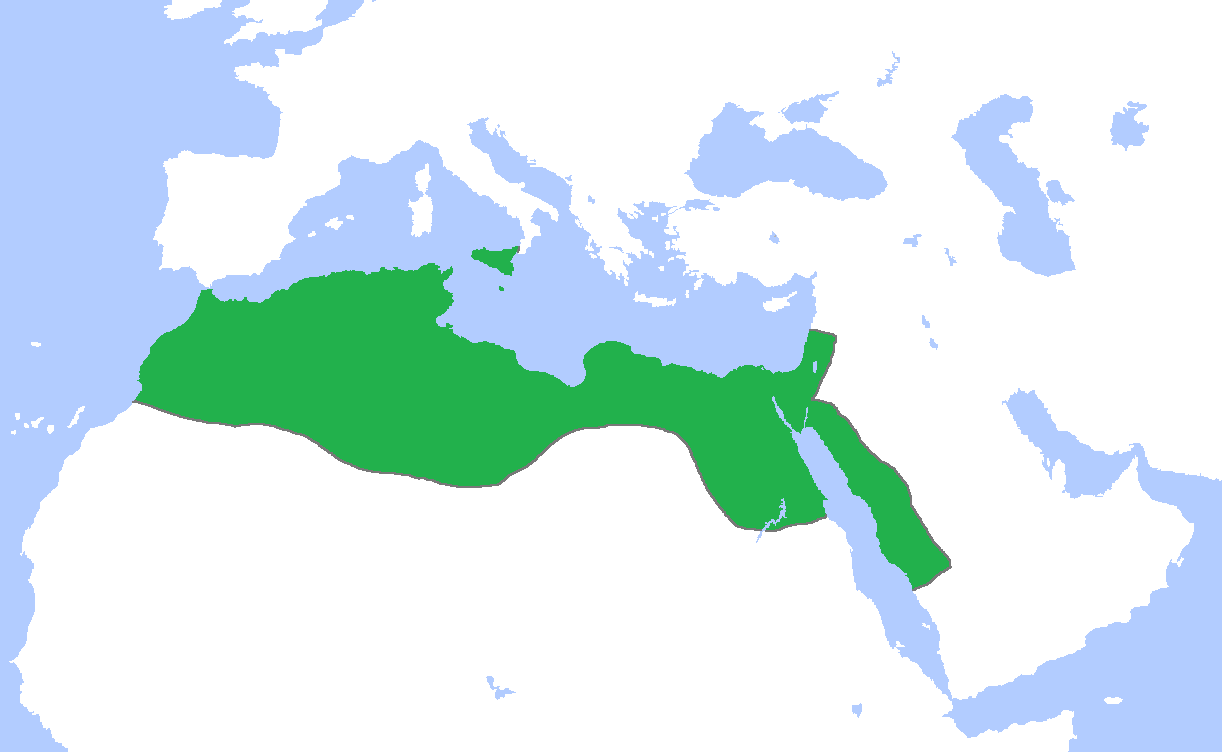
[June 13] Ali az-Zahir, caliph of the Fatimid Empire

The Fatimid Empire in the years preceding Ali's reign
True Name:  الظاهر بالله
Parents: Abu 'Ali Mansur Tariqu I-Hakim, caliph of the Fatimid Empire
Date of Birth: 20 June 1005
House: Fatimid
Predecessor: Al-Hakim
Reign: 1021 – 1036
Summary: The Fatimid Empire was a Sevener Shi'a dynasty that arose in Egypt in rebellion against the Sunni Caliphate of the Abbasids. When Ali az-Zahir first became caliph of the Fatimids in 1021, he was still young and his sister, Sitt al-Mulk, ruled until her death in 1023. Her favorites took control thereafter leaving Ali a pawn of Fatimid politics.

Under his poor management, the Fatimid Caliphate fell into disorder, with famine and plague in Egypt leading to chaos throughout the empire. Palestine and Syria broke out in a full-scale revolt led by the Bedouins, a Sunni Islam group of Arabian nomads. One-by-one, Fatimid General Anushtegin ad-Dizbiri was able to separate and defeat the rebels, once again centralizing Fatimid control. In 1028, 'Ali ibn Ahmad Jarjarai killed his colleagues and took the position of grand vizier in a hostile takeover. He retained his post long into the term of Ali's successor. Ali sought good diplomatic relations with the Byzantine Empire despite disagreements over Aleppo in Syria. He also approved the rebuilding of the Church of the Holy Sepulchre in Jerusalem which had been destroyed ten years earlier. He died in 1036 with a record of being fairly ineffectual, and his son succeeded him without dispute.
Date of Death: 13 June 1036
Successor: Al-Mustansir

Other Monarch Deaths:
Ludwig II, king of Bavaria (1866)
Khalid, king of Saudi Arabia (1982)

Tuesday, June 12, 2012

[June 12] Charles Emmanuel II, duke of Savoy

Parents: Victor Amadeus I, duke of Savoy, and Christine of France
Date of Birth: 20 June 1634
House: Savoy
Spouse: (1) François Medeleine, daughter of Gaston, duke of Orléans and Marquerite of Lorraine, then (2) Marie Jeanne, daughter of Charles Amadeus, duke of Savoy, and Élisabeth of Bourbon
Predecessor: Francis Hyacinth
Reign: 1638 – 1675
Summary: Born in Turin to the prominent northern Italian Savoy dynasty,  Charles Emmanuel was as much French as Italian. His mother and his paternal grandmother were both French, as was his second wife, Marie Jeanne. Charles Emmanuel became duke at the very young age of four, so his mother governed the state for him until he reached maturity and continued as his chief advisor.

Charles Emmanuel has little credit to his name but he was the inspiration for English poetry...angry poetry directed at his persecution and massacre of the Vaudois (Waldensians), a Protestant group which had taken hold in Savoy. John Milton wrote his On the Late Massacre in Piedmont concerning Charles Emmanuel's massacre, while Lord Protector Oliver Cromwell threatened naval action against Savoy if the duke did not stop. The Puritans of England secretly funded the Protestants in Savoy throughout this era.  When his mother died in 1663, Charles Emmanuel finally left his pleasure rooms and became the duke he always should have been. He tried to gain sea access through Genoa in 1672 resulting in a short war which he lost. In France, despite his connections, the Sun King's court was not overly amused at his problems in Italy. He did eventually gain a seaport with help from France at Nice, and he also built a road through the Swiss Alps to France. He centralized the army, dispersing former mercenary bands and replacing them with a standing army, and he enlarged the state's cavalry strength. The Palazzo Reale in Turin was constructed by him during a short beautification campaign. Charles Emmanuel died in 1675 after which time his wife ruled as regent for five years for their young son, Victor Amadeus II, who would become the first Savoyard king of Sardinia.
Date of Death: 12 June 1675
Successor: Victor Amadeus II

Other Monarch Deaths:
Leo III, pope of Rome (816)
Æthelflæd, queen of the Mercians (918)
Egwale Seyon, emperor of Ethiopia (1818)

Labels

[brief] (102) female monarch (31) Capet (26) [abbreviated] (19) Roman Empire (17) Great monarchs (16) Japan (15) Papacy (15) England (13) saints (13) France (11) Portugal (11) [Missing Deaths] (11) Habsburg (10) Sweden (10) Byzantine Empire (9) Carolingian (9) China (9) Hohenzollern (9) Oldenburg (9) Holy Roman Empire (8) Japan (dynasty) (8) Aragón (7) Austria (7) Denmark (7) Electorate (7) Ethiopia (7) Hungary (7) Navarre (7) Norway (7) Romanov (7) Russia (7) Saxony (7) Scotland (7) Wettin (7) Wittelsbach (7) Bavaria (6) Burgundy (6) Egypt (6) Italy (6) Lorraine (6) Luxembourg (6) Persia (6) Poland (6) Sicily (6) Spain (6) Valois (6) Capet-Burgundy (5) Franks (5) Germany (5) Plantagenet (5) Prussia (5) Quraish (5) Solomon (Ethiopia) (5) Tuscany (5) Anjou (4) Aquitaine (4) Barcelona (dynasty) (4) Bohemia (4) Brittany (4) Burgundy-Aviz (4) Burma (4) Capet-Valois (4) Castile (4) Constantinople (Patriarchate) (4) Habsburg-Lorraine (4) Holstein-Gottorp-Romanov (4) India (4) Ireland (4) Jerusalem (4) Jiménez (4) Kiev (4) Mongolia (4) Naples (4) Netherlands (4) Normandy (4) Osman (4) Ottoman (4) Palaeologos (4) Savoy (4) Savoy (dynasty) (4) Trastámara (4) Wales (4) Afghanistan (3) Albania (3) Bagrationi (3) Banu Hashim (3) Blois (3) Borjigin (3) Bourbon (3) Brabant-Hesse (3) Brandenburg (3) Capet-Bourbon (3) Cologne (3) Croatia (3) Cyprus (3) Disney (3) Fairhair (3) Georgia (3) Gwynedd (3) Hainaut (3) Hesse (3) Hohenstaufen (3) Holland (3) Holstein-Gottorp (3) Inca (3) Islam (3) León (3) Limburg (3) Lithuania (3) Livonia (3) Lothier (3) Macedonia (dynasty) (3) Mainz (3) Mann (3) Medici (3) Morocco (3) México (3) Nassau (3) Nguyễn (3) Serbia (3) Stuart (Stewart) (3) Toungoo (3) Tudor (3) Turkey (3) Vaudemont (3) Vietnam (3) Welf (3) Wessex (3) published articles (3) Abberfraw (2) Aberffraw (2) Alexandria (patriarchate) (2) Angevins (2) Anglo-Saxon (2) Ardennes-Metz (2) Auvergne (2) Ayyubid (2) Basarab (2) Bernadotte (2) Billung (2) Boulogne (2) Brabant (2) Bruce (2) Burgundy-Bragança (2) Caliphate (2) Cilicia (2) Constantine (2) Crovan (2) Denmark (Dynasty) (2) Draculesti (2) Dreux (2) Dunkeld (2) Dutch Republic (2) Estridsen (2) Flanders (2) Florence (2) Further Austria (2) Greece (2) Habsburg-Spain (2) Hanover (2) Hardrada (2) Hauteville (2) Hawai'i (2) Ivrea (2) Joseon (2) Karadordevic (2) Konbaung (2) Korea (2) Maya (2) Merovingian (2) Milan (2) Ming (2) Monaco (2) Nassau-Orange (2) Nassau-Weilburg (2) Norman (2) Novgorod (2) Orange (2) Ottonian (2) Piast (2) Piedmont-Savoy (2) Poitiers (dynasty) (2) Robertian (2) Romania (2) Rurik (2) Sardinia (2) Saxe-Coburg-Gotha (2) Seljuk (2) Siam (2) Syria (2) Teutonic Knights (2) Thailand (2) Theodosian (2) Thuringia (2) Timurid (2) Tokugawa (2) United Kingdom (2) Valois-Burgundy (2) Vandal (2) Venice (2) Visconti (2) Vladimir (2) Wallachia (2) Württemberg (2) York (2) Yugoslavia (2) Zeeland (2) the Britons (2) 18th Dynasty (Egypt) (1) Abbasid (1) Adal (1) Agiad (1) Akinyele (1) Al Khalifa (1) Al-Said (1) Alawiyya (Egyptian) (1) Albret (1) Algeria (1) Algonquian (1) Amber (1) Angola (1) Anjou (dynasty) (1) Anjou-Hungary (1) Ansbach (1) Antonia (1) Antonine (1) Apulia (1) Arabia (1) Armenia (1) Arpad (1) Arsacid (1) Asen (1) Ashikaga (1) Athens (1) Avesnes (1) Avignon Papacy (1) Aviz-Beja (1) Aztec Empire (1) Baden (1) Bahrain (1) Balti (1) Barakzai (1) Barazkai (1) Barcelona (1) Battenberg (1) Belgium (1) Bengal (1) Berg (1) Berg (dynasty) (1) Bernicia (1) Bharatpur (1) Bhutan (1) Bjelbo (1) Bonaparte (1) Bonde (1) Bonngau (dynasty) (1) Borghese (1) Borja (1) Bosnia (1) Bourbon-Two Sicilies (1) Brandenburg-Ansbach (1) Brienne (1) Brutus (1) Bukhara (1) Bulgaria (1) Canossa (1) Capet-Dreux (1) Carthage (1) Celje (1) Celje (dynasty) (1) Chakri (1) Champagne (1) Champagne (dynasty) (1) Chartres (1) Cometopuli (1) Contantine (1) Cordoba (1) Craiovesti (1) Crusader States (1) Dalmatia (1) Damascus (1) Danesti (1) Debeubarth (1) Deira (1) Deira (dynasty) (1) Denmar (1) Dulo (1) Díaz (1) Early Han (1) East Anglia (1) East Francia (1) Eastern Han (1) Eastern Jin (1) Egmont (1) Estonia (1) Farnese (1) Fatimid (1) Fatimid Caliphate (1) Flanders (dynasty) (1) Flavian (1) Friuli (1) Gausi (1) Geneva (1) Geneva (dynasty) (1) Gordiani (1) Grimaldi (1) Guelders (1) Guideschi (1) Gwent (1) Gwynedd (dynasty) (1) Gyatso (1) Haag (1) Hainaut (dynasty) (1) Hanan Cuzco (1) Hashim (1) Hashimite (1) Hebrides (The Isles) (1) Hellenes (1) Herat (1) Hohenzollern-Ansbach (1) Hohenzollern-Sigmaringen (1) Holland (dynasty) (1) Hunfriding (1) Ibadan (1) Iran (1) Iturbide (1) Jaipur (1) Jin (1) Jordan (1) Julio-Claudian (1) Jungingen (1) Justinian (dynasty) (1) Kachwaha (1) Kalakaua (1) Kamehameha (1) Karrani (1) Kent (1) Kent (house) (1) Kestutis (1) Khurasan (1) Knights Templar (1) Komnenos (1) Kotromanić (1) Lakota Sioux (1) Lancaster (1) Latin Empire (1) Lebanon (1) Leuchtenberg (1) Lombards (1) Ludowinger (1) Lusignan (1) Luxembourg (dynasty) (1) Luxembourg-Limburg (1) Maan (1) Macedon (1) Magdeburg (1) Maine (1) Majorca (1) Malaysia (1) Manghit (1) Maratha Empire (1) Marinid (1) Matsunaga (1) Maurya (1) Mecklenburg (1) Mecklenburg-Strelitz (1) Meissen (1) Mercia (1) Mercia (dynasty) (1) Miniconjou (1) Moldavia (1) Montenegro (1) Montferrat (1) Morgannwg (1) Mortain (1) Mountbatten (1) Mughal (1) Muhammad Ali (1) Munster (1) Musat (1) Myanmar (1) Nakagawa (1) Ndongo and Matana (1) Nemanjic (1) Nepal (1) Nervo-Trajan (1) Neuchâtel (1) Nigeria (1) Nominoë (1) Northumbria (1) O'Brien (1) Obrenović (1) Odowa (1) Olgovich (1) Olympus (1) Orléans-Longueville (1) Ostrogoths (1) Ottawa (1) Pahlavi (1) Palatinate of the Rhine (1) Parma (1) Penthièvre (1) Petrović-Njegoš (1) Poděbrady (1) Pointiers (Ramnulfids) (1) Poitiers (1) Poitiers-Lusignan (1) Polignac (1) Powys (1) Prasat Thong (1) Premyslid (1) Provence (1) Přemyslid (1) Q'umarkaj (1) Qin (1) Qing (Manchu) (1) Reginar (1) Reginarid (1) Rethel (1) Rethel-Boulogne (1) Ribagorza (1) Rouergue (1) Roupenians (1) Sa Malietoa (1) Safavid (1) Salian (1) Salzburg (1) Samoa (1) Sarantapechos (1) Saud (1) Saudi Arabia (1) Second Triumvirate of Rome (1) Selangor (1) Selangor (dynasty) (1) Sforza (1) Shah (Nepal) (1) Shi'a Imamate (1) Shishman (1) Shivaji (1) Silesia (1) Simmern (1) Sinsinwar Jat (1) Skowronski (1) Slovenia (1) Sobieski (1) South Africa (1) South America (1) Sparta (1) Spoleto (1) Sture (1) Sudan (1) Sussex (1) Sverre (1) Swabia (1) Swasi (dynasty) (1) Swaziland (1) Swiss Confederation (1) Tang (1) Tenochtitlan (1) Teotihuacán (1) Terter (1) Tibet (1) Tikal (1) Tolkien (1) Toulouse (1) Tours (dynasty) (1) Transylvania (1) Tunisia (1) Umayyad (1) Unruoching (1) Valencia (1) Valois-Angoulême (1) Valois-Anjou (1) Valois-Orléans (1) Vasa (1) Vermandois (1) Visigoths (1) Vokil (1) Wangchuck (1) Wied-Neuwied (1) Windsor-Mountbatten (1) Württemberg (dynasty) (1) Yamato (1) Ying (Qin) (1) Yuan (1) Zanzibar (1) Zhao (Song) (1) Zhou (1) Zhu (1) Zogu (1) Zulu Nation (1) Zápolya (1) Zähringen (1) bretwalda (1) cardinal (1) fantasy (1) fiction (1) shogunate (1) terms (1) Árpád (1) Öuchi (1)