Monday, May 21, 2012

[May 21] Louis V, king of the West Franks

Surnamed: "The Indolent" (le Fainéant)
Parents: Lothair, king of the West Franks, and Emma of Italy

Date of Birth: circa 967
House: Carolingian
Spouse: Adelaide, daughter of Fulk II, count of Anjou, and Gerberga
Predecessor: Lothair
Reign: 986 – 987
Summary: The last Carolingian rulers of a major region, Louis V lived a regrettably short life. He was crowned king of the West Franks during the lifetime of his father in 978. He married in 982 to Adelaide, the daughter of the count of Anjou, and immediately after the couple were proclaimed the king and queen of Aquitaine, a title granted to the heir-apparent of the Frankish king for hundreds of years off and on. Unfortunately, Louis and Adelaide were poorly matched, with Adelaide being more than twice Louis' age and on her third marriage. Within two years, she divorced the prince and settled in Arles. With no wife, Louis could produce no children, and thus the Carolingian line in West Francia was destined to end with his passing. It had already ended in Germany in 911. Only two cadet branches, the dukes of Lower Lorraine and the dukes of Vendôme, still descended in direct legitimate descent from Charlemagne. When Lothair died in 986, Louis became king and immediately inherited all of his father's problems.


His major problem was the Robertines, a rival family that had already installed three kings in West Francia in the previous decades. The Holy Roman Emperor Otto I defended the Robertines and continuously undermined the authority of the Carolingian kings by installing clergy that opposed them in West Francia. One such appointment, Archbishop Adalberon of Reims, tried to reconcile the two rival families of the Carolingians and Ottonians but failed. Lothair had tried Adalberon on charges of treason while Lothair's widow married a descendant of Otto I. Louis V tried to resolve the dispute, but died too soon to see it conclude. Louis died while hunting boar. He fell from his horse and suffered a cranial injury that eventually ended in a seizure that took his life. Charles, duke of Lower Lorraine, was the closest surviving heir of Louis but the clergy, including Adalberon and a future pope, argued in favor of Hugues Capet, a Robertine. Hugues was elected king of the West Franks and Carolingian rule in West Francia came to an inglorious end.
Date of Death: 21 May 987
Successor: Hugues

Other Monarch Deaths:
Olaf, king of the Isles (1237)
Conrad IV, king of Germany (1254)
Christian I, king of Denmark, Norway & Sweden (1481)
Pandolfo Petrucci, patriarch of Siena (1512)

Sunday, May 20, 2012

[May 20] Hieronymus, archbishop of Salzburg


True Name: Hieronymus Joseph Franz de Paula
Parents: Rudolf Wenzel Joseph Colloredo, count of Wallsee and Melz
Date of Birth: 31 May 1732
Predecessor: Sigismund III
Reign: 1772 – 1812
Summary: A younger son of an official of the Holy Roman Empire, it was unlikely Hieronymus would rise high in any position. He was brought up in a strict Catholic household and was educated at Theresianum Academy in Vienna. He later studied philosophy at the University of Vienna and theology at the Collegium Germanicum et Hungaricum in Rome. After many years of schooling and teaching, Hieronymus was granted the archbishopric of Salzburg in the winter of 1771 in the 13th round of balloting by the German cardinals. Salzburg served as the chief archbishopric of Germany during this time, and Hieronymus remained loyal to the Holy Roman and Austrian emperors throughout his reign.

Despite the independence of Salzburg from other secular lords in the region, Hieronymus followed the path of Austria in most policies. He made Catholicism in his state mimic certain aspects of the Protestant movement. He banned witch-burnings and other Catholic superstitions. He also allowed some preaching and hymns in German, which branded him as a "secret Lutheran" by some Catholic leaders. When the Napoleonic Wars began, French troops occupied Salzburg and Hieronymus fled. Salzburg was secularized in 1803 and Hieronymus resigned his post as head of state. Salzburg became a part of Austria in 1806 and then Bavaria in 1809. In 1816, it was returned to Austria which remains its home country today. Hieronymus retained his head of the diocese until 1812, though he never returned to Salzburg.
Date of Death: 20 May 1812
Successor: Sigismund IV

Other Monarch Deaths:
Ecgfrith, king of Northumbria (685)
John XXI, pope of Rome (1277)
Ashikaha Yoshiharu, shogun of Japan (1550)
John II, king of Jerusalem (1285)
Osman II, sultan of the Ottoman Empire (1622)
Wladislaus IV, king of Poland (1648)

Saturday, May 19, 2012

[May 19] Stephen II, count of Blois

True Name: Estienne Henri
Parents: Theobald III, count of Blois, and Garsinde du Maine

Date of Birth: circa 1045
House: Tours
Spouse: Adela, daughter of William I, king of England, and Matilda of Flanders
Predecessor: Theobald III
Reign: 1089 – 1102
Summary: Stephen was born into a French noble family that controlled the regions of Blois and Chartres in France. He married the daughter of William the Conqueror of England, thereby linking his family with Normandy and England. His reputation was already on the rise when his father, Theobald III, died in 1089, leaving Blois to him. Stephen was already ruling much of the land since 1074.

During the First Crusade, Stephen was one of the leaders and was quite enthusiastic about the progress the crusade was making. He was head of the council of war held at the Siege of Nicaea in 1096. In 1098, he returned home, having failed to end the Siege of Antioch and capturing Jerusalem, as he had hoped. Adela, ever his support figure, encouraged him to make a second pilgrimage to the Holy Land in 1101 with others who had returned prematurely from the First Crusade. It was on this journey that Stephen was killed at the Second Battle of Ramla the next year. Adela and Stephen had eleven children, nine of whom lived to adulthood. His eldest son, William, inherited Blois and Chartes but declined the rivalry for the English throne in 1135. William was forced to abdicate in 1107 and Theobald II, Stephen's second son, took over Blois and Chartes and eventually became count of Champagne. He too declined the rivalry, leaving the claim to the English throne to pass to Stephen, the third son of the couple. In an interesting twist, both William and Theobald had surviving issue and, according to legitimists, had better rights to the English throne than Stephen.
Date of Death: 19 May 1102
Successor: William

Other Monarch Deaths:
Vladimir Monamakh, grand prince of Kiev (1125)
Celestine V, pope of Rome (1296)
Dmitry Donskoy, grand prince of Moscow (1389)
Go-Kashiwabara, emperor of Japan (1526)

Friday, May 18, 2012

[May 18] Sejong, king of Korea

True Name: 세종대왕 世宗大王
Surname: "The Great"

Parents: Taejong, king of Korea, and Wongyeong
Date of Birth: 15 May 1397
House: Joseon
Spouse: Soheon, among others
Predecessor: Taejong
Reign: 1418 – 1450
Summary: Despite being the third son of King Taejong, Sejong was always the favorite. He was made grand prince in 1399 in spite of his brothers. He was helped along the way a bit. His eldest brother didn't want to be king, so he acted the fool until he was banished from Seoul. The brother wandered through the mountains, while the second brother became a Buddhist monk. In August 1418 Taejong abdicated in favor of Sejong. He retained control over the military and had a great influence over court life until he died in 1422. From that point forward, Sejong was the sole ruler of Korea.

Beginning in 1419. Sejong began plans to remove Japanese pirates off of Korea's coastline. The end result of this was a long war that was not finally resolved until 1443 with the Treaty of Gyehae, but the threat of Japan was finally removed. In the north, Sejong sent a general to deal with Manchu incursions that had begun to threaten his borders. Four forts were built to secure the northern borders. The domestic and political management of his realm is where Sejong shines. He wanted to protect and enlighten his people, and did so in numerous ways. He improved the agricultural life of the peasants and encouraged creative thought and invention. His most successful inventor, a peasant named Jang Yeong-sil, he brought to court and promoted despite protests from the aristocracy. Sejong also corrected the calendar to better reflect Korean dates rather than Chinese dates. Sejong's most impressive feat, though, was the creation of the Korean written language, Hangul. While the aristocracy retained Chinese as their written language, the peasants suddenly became literate and began using Hangul in everyday life. Sejong continued to rule an enlightened people even after he went blind in his later years. He eventually died of diabetes-related causes in 1450, whereafter he was succeeded by his son Munjong. Civil war broke out two years after when Munjong died leaving the throne to a grandson of Sejong's and his second son. The two fought long and undermined the peace that Sejong had established in Korea.
Date of Death: 18 May 1450
Successor: Munjong

Other Monarch Deaths:
Wladyslaw, duke of Opole (1401)
Túpac Amaru II, pretender to the Inca (1781)

Thursday, May 17, 2012

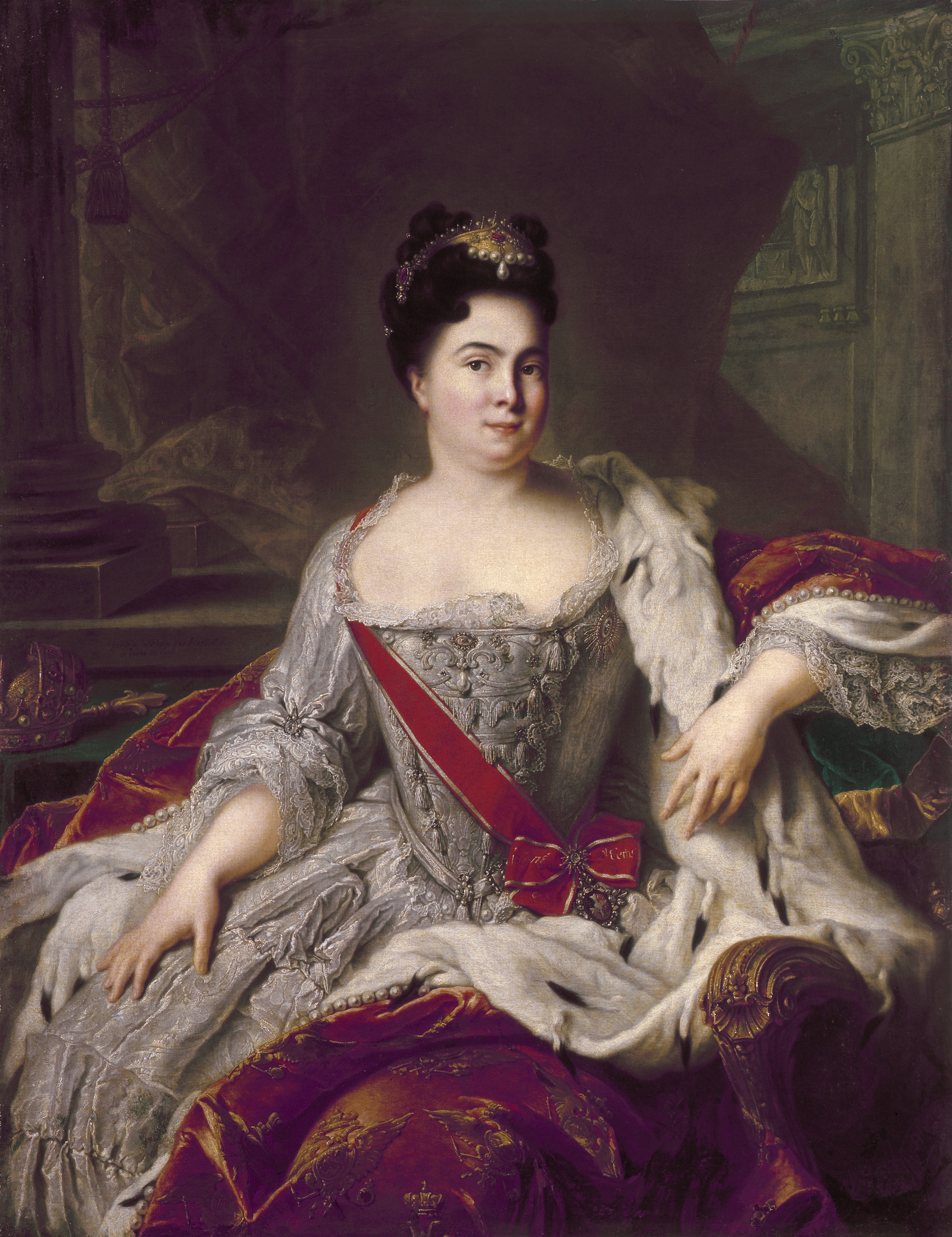
[May 17] Catherine I, empress of Russia

True Name: Yekaterina I Alekseyevna (Екатерина I Алексеевна)
Parents: Samuel Skowronski and Elisabeth Moritz
Date of Birth: 15 April 1684
House: Skowronski
Spouse: Peter I, emperor of Russia
Predecessor: Peter I
Reign: 1725 – 1727
Summary: Catherine set a good example in Russia for female rule, but like many of the other female rulers, she did so in an extraordinarily bad way. She was born with the name Marta, a Polish peasant girl and Roman Catholic, and raised by a Lutheran pastor in Latvia. She served as a housemaid and she was never taught to read or write. In fear that her beauty would overtake his son, the pastor married her off to a Swedish dragoon, Johan Cruse, but the pair remained together for only a week in 1702. Soon after, the pastor and his family, including Marta, moved to Moscow. She eventually became a part of Prince Alexander Menshikov's household, the best friend of Peter the Great of Russia. Menshikov and Marta formed an alliance and Peter met Marta in 1703. Shortly after, Marta became the emperor's mistress. Marta converted to Russian Orthodoxy in 1705 and took the name Catherine Alexeyevna. She rarely left Peter's side after that. Peter and Catherine married secretly in 1707. Of their twelve children, only two lived to adulthood, Yelizaveta and Anna. The two were very much in love and lived in a small log cabin in St. Petersburg despite the status of the emperor. In 1711, tradition states that Catherine saved Peter and the Russian Empire when she suggested bribing the enemy with her and the other women's jewelry. The ploy worked and Peter lived to fight another day. Peter married Catherine again officially in February 1712. Catherine became the tsarina of Russia and eventually became empress. A strange twist came in 1724 when Peter the Great named Catherine his co-ruler. He died the next year without having named a successor. Catherine, fearing an aristocratic takeover, arranged a coup with Menshikov. She was popularly proclaimed Empress and Autocrat of all the Russias by the Russian military.

Menshikov, Peter Tlstoy, and the Supreme Privy Council did most of the ruling during Catherine's short reign. It is unlikely Catherine planned to rule directly or for a prolonged period of time, but that she wished to act as a transitional monarch while a new monarch, one that would favor the new meritocracy, was found. What happened, though, was that Catherine established a new order in Russia. She was the first female ruler of the empire that was only found a decade earlier. Her successors, including her daughter, Elizabeth, and Catherine II would dominate Russian politics for the eighteenth century. As empress, Catherine downsized the military to cut spending. The resulting tax relief gave her a reputation of just and fair rule. Russia joined the Habsburg league in 1726 to defend her son-in-law, the Duke of Holstein, against incursions by Great Britain. She died only two years after becoming empress. The cause of her death was probably abscess of the lungs, and she was buried in St. Petersburg. She was succeeded by her step-grandson, Peter II, the son of Alexei, the eldest surviving son of Peter the Great by his first wife, Eudoxia.
Date of Death: 17 May 1727
Successor: Peter II

Other Monarch Deaths:
Sima Yan, emperor of China (290)
Go-Fushimi, emperor of Japan (1336)
Louis VI, duke of Bavaria and Elector of Brandenburg (1365)
Charles, raja of Sarawak (1917)

Labels

[brief] (102) female monarch (31) Capet (26) [abbreviated] (19) Roman Empire (17) Great monarchs (16) Japan (15) Papacy (15) England (13) saints (13) France (11) Portugal (11) [Missing Deaths] (11) Habsburg (10) Sweden (10) Byzantine Empire (9) Carolingian (9) China (9) Hohenzollern (9) Oldenburg (9) Holy Roman Empire (8) Japan (dynasty) (8) Aragón (7) Austria (7) Denmark (7) Electorate (7) Ethiopia (7) Hungary (7) Navarre (7) Norway (7) Romanov (7) Russia (7) Saxony (7) Scotland (7) Wettin (7) Wittelsbach (7) Bavaria (6) Burgundy (6) Egypt (6) Italy (6) Lorraine (6) Luxembourg (6) Persia (6) Poland (6) Sicily (6) Spain (6) Valois (6) Capet-Burgundy (5) Franks (5) Germany (5) Plantagenet (5) Prussia (5) Quraish (5) Solomon (Ethiopia) (5) Tuscany (5) Anjou (4) Aquitaine (4) Barcelona (dynasty) (4) Bohemia (4) Brittany (4) Burgundy-Aviz (4) Burma (4) Capet-Valois (4) Castile (4) Constantinople (Patriarchate) (4) Habsburg-Lorraine (4) Holstein-Gottorp-Romanov (4) India (4) Ireland (4) Jerusalem (4) Jiménez (4) Kiev (4) Mongolia (4) Naples (4) Netherlands (4) Normandy (4) Osman (4) Ottoman (4) Palaeologos (4) Savoy (4) Savoy (dynasty) (4) Trastámara (4) Wales (4) Afghanistan (3) Albania (3) Bagrationi (3) Banu Hashim (3) Blois (3) Borjigin (3) Bourbon (3) Brabant-Hesse (3) Brandenburg (3) Capet-Bourbon (3) Cologne (3) Croatia (3) Cyprus (3) Disney (3) Fairhair (3) Georgia (3) Gwynedd (3) Hainaut (3) Hesse (3) Hohenstaufen (3) Holland (3) Holstein-Gottorp (3) Inca (3) Islam (3) León (3) Limburg (3) Lithuania (3) Livonia (3) Lothier (3) Macedonia (dynasty) (3) Mainz (3) Mann (3) Medici (3) Morocco (3) México (3) Nassau (3) Nguyễn (3) Serbia (3) Stuart (Stewart) (3) Toungoo (3) Tudor (3) Turkey (3) Vaudemont (3) Vietnam (3) Welf (3) Wessex (3) published articles (3) Abberfraw (2) Aberffraw (2) Alexandria (patriarchate) (2) Angevins (2) Anglo-Saxon (2) Ardennes-Metz (2) Auvergne (2) Ayyubid (2) Basarab (2) Bernadotte (2) Billung (2) Boulogne (2) Brabant (2) Bruce (2) Burgundy-Bragança (2) Caliphate (2) Cilicia (2) Constantine (2) Crovan (2) Denmark (Dynasty) (2) Draculesti (2) Dreux (2) Dunkeld (2) Dutch Republic (2) Estridsen (2) Flanders (2) Florence (2) Further Austria (2) Greece (2) Habsburg-Spain (2) Hanover (2) Hardrada (2) Hauteville (2) Hawai'i (2) Ivrea (2) Joseon (2) Karadordevic (2) Konbaung (2) Korea (2) Maya (2) Merovingian (2) Milan (2) Ming (2) Monaco (2) Nassau-Orange (2) Nassau-Weilburg (2) Norman (2) Novgorod (2) Orange (2) Ottonian (2) Piast (2) Piedmont-Savoy (2) Poitiers (dynasty) (2) Robertian (2) Romania (2) Rurik (2) Sardinia (2) Saxe-Coburg-Gotha (2) Seljuk (2) Siam (2) Syria (2) Teutonic Knights (2) Thailand (2) Theodosian (2) Thuringia (2) Timurid (2) Tokugawa (2) United Kingdom (2) Valois-Burgundy (2) Vandal (2) Venice (2) Visconti (2) Vladimir (2) Wallachia (2) Württemberg (2) York (2) Yugoslavia (2) Zeeland (2) the Britons (2) 18th Dynasty (Egypt) (1) Abbasid (1) Adal (1) Agiad (1) Akinyele (1) Al Khalifa (1) Al-Said (1) Alawiyya (Egyptian) (1) Albret (1) Algeria (1) Algonquian (1) Amber (1) Angola (1) Anjou (dynasty) (1) Anjou-Hungary (1) Ansbach (1) Antonia (1) Antonine (1) Apulia (1) Arabia (1) Armenia (1) Arpad (1) Arsacid (1) Asen (1) Ashikaga (1) Athens (1) Avesnes (1) Avignon Papacy (1) Aviz-Beja (1) Aztec Empire (1) Baden (1) Bahrain (1) Balti (1) Barakzai (1) Barazkai (1) Barcelona (1) Battenberg (1) Belgium (1) Bengal (1) Berg (1) Berg (dynasty) (1) Bernicia (1) Bharatpur (1) Bhutan (1) Bjelbo (1) Bonaparte (1) Bonde (1) Bonngau (dynasty) (1) Borghese (1) Borja (1) Bosnia (1) Bourbon-Two Sicilies (1) Brandenburg-Ansbach (1) Brienne (1) Brutus (1) Bukhara (1) Bulgaria (1) Canossa (1) Capet-Dreux (1) Carthage (1) Celje (1) Celje (dynasty) (1) Chakri (1) Champagne (1) Champagne (dynasty) (1) Chartres (1) Cometopuli (1) Contantine (1) Cordoba (1) Craiovesti (1) Crusader States (1) Dalmatia (1) Damascus (1) Danesti (1) Debeubarth (1) Deira (1) Deira (dynasty) (1) Denmar (1) Dulo (1) Díaz (1) Early Han (1) East Anglia (1) East Francia (1) Eastern Han (1) Eastern Jin (1) Egmont (1) Estonia (1) Farnese (1) Fatimid (1) Fatimid Caliphate (1) Flanders (dynasty) (1) Flavian (1) Friuli (1) Gausi (1) Geneva (1) Geneva (dynasty) (1) Gordiani (1) Grimaldi (1) Guelders (1) Guideschi (1) Gwent (1) Gwynedd (dynasty) (1) Gyatso (1) Haag (1) Hainaut (dynasty) (1) Hanan Cuzco (1) Hashim (1) Hashimite (1) Hebrides (The Isles) (1) Hellenes (1) Herat (1) Hohenzollern-Ansbach (1) Hohenzollern-Sigmaringen (1) Holland (dynasty) (1) Hunfriding (1) Ibadan (1) Iran (1) Iturbide (1) Jaipur (1) Jin (1) Jordan (1) Julio-Claudian (1) Jungingen (1) Justinian (dynasty) (1) Kachwaha (1) Kalakaua (1) Kamehameha (1) Karrani (1) Kent (1) Kent (house) (1) Kestutis (1) Khurasan (1) Knights Templar (1) Komnenos (1) Kotromanić (1) Lakota Sioux (1) Lancaster (1) Latin Empire (1) Lebanon (1) Leuchtenberg (1) Lombards (1) Ludowinger (1) Lusignan (1) Luxembourg (dynasty) (1) Luxembourg-Limburg (1) Maan (1) Macedon (1) Magdeburg (1) Maine (1) Majorca (1) Malaysia (1) Manghit (1) Maratha Empire (1) Marinid (1) Matsunaga (1) Maurya (1) Mecklenburg (1) Mecklenburg-Strelitz (1) Meissen (1) Mercia (1) Mercia (dynasty) (1) Miniconjou (1) Moldavia (1) Montenegro (1) Montferrat (1) Morgannwg (1) Mortain (1) Mountbatten (1) Mughal (1) Muhammad Ali (1) Munster (1) Musat (1) Myanmar (1) Nakagawa (1) Ndongo and Matana (1) Nemanjic (1) Nepal (1) Nervo-Trajan (1) Neuchâtel (1) Nigeria (1) Nominoë (1) Northumbria (1) O'Brien (1) Obrenović (1) Odowa (1) Olgovich (1) Olympus (1) Orléans-Longueville (1) Ostrogoths (1) Ottawa (1) Pahlavi (1) Palatinate of the Rhine (1) Parma (1) Penthièvre (1) Petrović-Njegoš (1) Poděbrady (1) Pointiers (Ramnulfids) (1) Poitiers (1) Poitiers-Lusignan (1) Polignac (1) Powys (1) Prasat Thong (1) Premyslid (1) Provence (1) Přemyslid (1) Q'umarkaj (1) Qin (1) Qing (Manchu) (1) Reginar (1) Reginarid (1) Rethel (1) Rethel-Boulogne (1) Ribagorza (1) Rouergue (1) Roupenians (1) Sa Malietoa (1) Safavid (1) Salian (1) Salzburg (1) Samoa (1) Sarantapechos (1) Saud (1) Saudi Arabia (1) Second Triumvirate of Rome (1) Selangor (1) Selangor (dynasty) (1) Sforza (1) Shah (Nepal) (1) Shi'a Imamate (1) Shishman (1) Shivaji (1) Silesia (1) Simmern (1) Sinsinwar Jat (1) Skowronski (1) Slovenia (1) Sobieski (1) South Africa (1) South America (1) Sparta (1) Spoleto (1) Sture (1) Sudan (1) Sussex (1) Sverre (1) Swabia (1) Swasi (dynasty) (1) Swaziland (1) Swiss Confederation (1) Tang (1) Tenochtitlan (1) Teotihuacán (1) Terter (1) Tibet (1) Tikal (1) Tolkien (1) Toulouse (1) Tours (dynasty) (1) Transylvania (1) Tunisia (1) Umayyad (1) Unruoching (1) Valencia (1) Valois-Angoulême (1) Valois-Anjou (1) Valois-Orléans (1) Vasa (1) Vermandois (1) Visigoths (1) Vokil (1) Wangchuck (1) Wied-Neuwied (1) Windsor-Mountbatten (1) Württemberg (dynasty) (1) Yamato (1) Ying (Qin) (1) Yuan (1) Zanzibar (1) Zhao (Song) (1) Zhou (1) Zhu (1) Zogu (1) Zulu Nation (1) Zápolya (1) Zähringen (1) bretwalda (1) cardinal (1) fantasy (1) fiction (1) shogunate (1) terms (1) Árpád (1) Öuchi (1)