Friday, April 20, 2012

[April 20] Pontiac, chief of the Ottawa

Pontiac's council that prompted the rebellion in 1763.
True Name: Obwandiyag
Date of Birth: circa 1720
House: Odowa
Reign: around 1747 – 1769
Summary: Pontiac was raised as a member of the Odawa faction of Algonquin Native Americans. He first became known in 1747 when he allied his tribe with New France in the Seven Years' War (French & Indian War) against the British colonials. It is possible that he was responsible for the victory over the Braddock Expedition in 1755. When the British won the war and all of New France fell to Great Britain, the Natives became increasingly restless. The British held back provisions from the Natives and the Natives became upset with their new trading partners. A Native prophet, Neolin, inspired a religious revival among the Algonquin tribes and Pontiac decided it was time to resist the British and their exclusionist policies. In 1763, Pontiac led the largest Native uprising to date. His own tribe put Fort Detroit to siege while other allies sieged forts throughout Ohio, Michigan, Indiana, and Pennsylvania. In recognition of their past alliance, the Natives did not attack regions populated primarily by French settlers. Pontiac failed in his mission when his tribe was unable to take Fort Detroit. The entire tribe fled to Illinois where they resumed militant resistance to British expansion. In 1766, the British sent a diplomat to Pontiac to negotiate an end to hostilities, which was finally achieved in July of that year. Pontiac had become the most respected Native leader among the British. But when a local rivalry flared up in 1768, Pontiac fled to Missouri and was killed early the next year. The Ottowa tribe never achieved importance again after his death.
Date of Death: 19 April 1689

Other Monarch Deaths:
Clement V, pope of Rome (1314)
Zhengde, emperor of China (1521)
Christian X, king of Denmark (1947)

Thursday, April 19, 2012

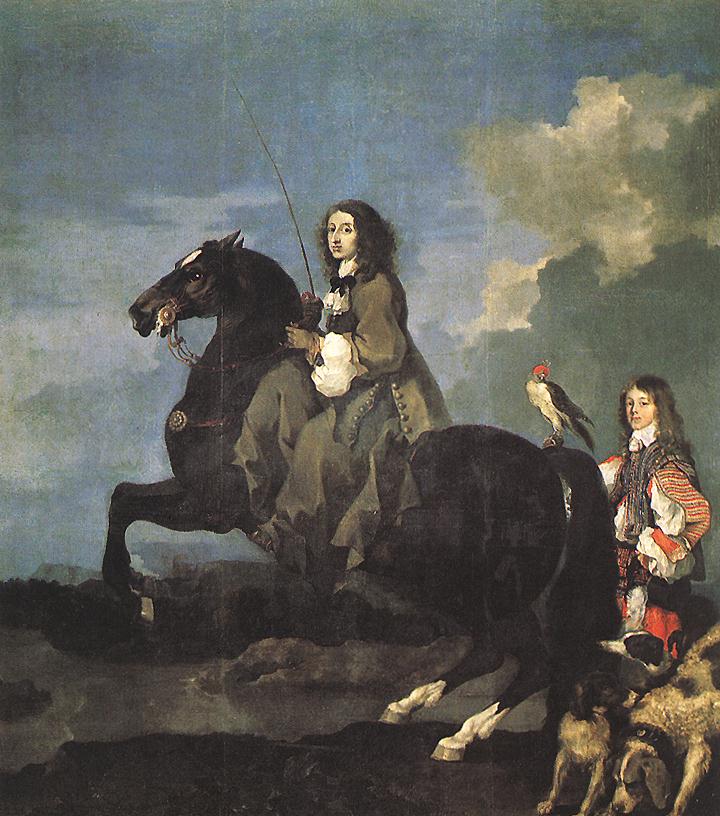
[April 19] Christina, queen of Sweden

True Name: Kristina Augusta
Parents: Gustav II Adolf, king of Sweden, and Maria Eleanora of Brandenburg
Date of Birth: 19 December 1626
House: Vasa
Predecessor: Gustav II Adolf
Reign: 1632 – 1654
Summary: Christina was the only surviving child of King Gustav II Adolf of Sweden. Strange astrological predictions brought hope that Christina would be the long-awaited son of the king, and indeed Christina was born hairy with a horse voice. When it was discovered that it was a girl, most of those present feared the wrath of Gustav, but the king laughed predicting "She'll be clever; she has made folds of us all!" Early in her development, Christina was dropped and throughout her life she had one shoulder higher than the other. Gustav fought hard to establish Christina as his heir when he left to fight the Catholics in the Thirty Years' War. Christina was to be raised as a prince and a boy, despite her sexual orientation. And when Gustav died in 1632, Christina became de jure queen of Sweden. Gustav had arranged for his half-sister, Catherine, to care for Christina but his wife, Maria Eleanora, dismissed the sister. Eventually, Chancellor of State Axel Oxenstierna, the regent, was forced to exile the queen mother in 1636 and recalled Catherine to act as regent.

As a child queen, Christina was taught religion, philosophy, Greek, and Latin. Oxenstierna taught her politics and discussed Tacitus. Christina eventually became fluent in Swedish, German, Danish, Dutch, French, Italian, Latin, and Greek. From 1638 onwards, Christina was taught elegance and grace in addition to her traditional education. In 1644, Christina formally became the leader of Sweden. She immediately sought a peace treaty with Denmark, which profited Sweden with territories from Denmark and Norway. Christina began butting heads with Oxenstierna during the Peace Congress in Osnabrück and Münster, with both politicians sending their own diplomats. She succeeded in her mission by winning a seat for Sweden in the Holy Roman Empire's Reichstag (Parliament). In 1649, René Descartes came to Sweden and he died there a few months later. Christina was distraught over the death and embraced skepticism, abandoning any strict adherence to Protestantism. With no desire to marry and no legitimate Vasa's remaining to inherit the throne, Christina set her sights on Charles Gustav, son of John Casimir, count palatine of Zweibrücken-Kleeburg. He was descended from the Swedish monarchy through his mother, Catherine, Christina's former regent. By 1651, Christina sought to abdicate her throne to Charles Gustav. Her advisors repeatedly talked her out of it. Then, in 1652, Christina privately converted to Catholicism. In addition, Christina was becoming unpopular due to changes in temperament and her desire to promote all of those who showed her loyalty with lands and titles.  She made brought Sweden to the brink of bankruptcy. The government finally relented and Christina abdicated on 5 June 1654. Soon after, she went to Denmark disguised as "Count Donha". She settled for a time in Antwerp in the Spanish Netherlands. She then travelled throughout Italy until settling in Rome. She returned to Sweden once between 1660 and 1662 but returned to Rome where died in 1689.
Date of Death: 19 April 1689
Successor: Charles X Gustav

Other Monarch Deaths:
Leo IX, pope of Rome (1054)
Gerasimus I, patriarch of Constantinople (1321)
Robert II, king of Scots (1390)

Wednesday, April 18, 2012

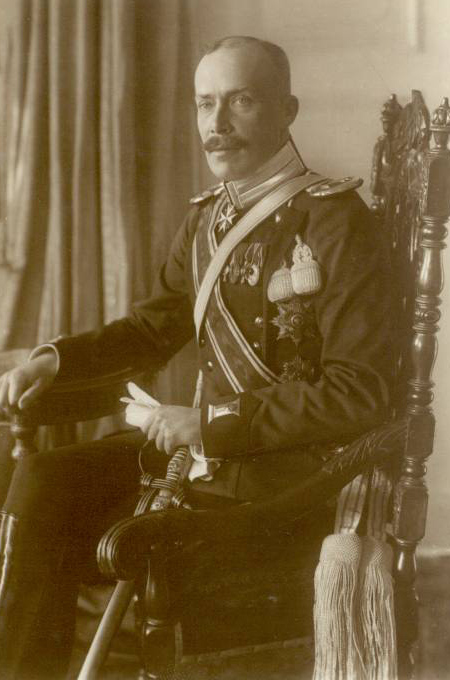
[April 18] Vidi I Skanderbeg II, prince of Albania

True Name: Wilhelm Friedrich Heinrich
Parents: William, prince of Wied, and Marie of the Netherlands
Date of Birth: 26 March 1876
House: Wied-Neuwied
Spouse: Sophie, daughter of Victor of Schönburg-Waldenburg and Lucia of Sayn-Wittgenstein-Berleburg
Reign: 7 March 1914 – 3 September 1914
Summary: Wilhelm began his life as the third son of a prince who ruled a small region in Germany. While his family certainly had connections, namely with the Dutch and Saxon rulers, the principality was nothing overly important. William served as a Prussian cavalry officer in the mid-1900s and became a captain in the German General Staff in 1911. Elisabeth, queen consort of Romania, brought William to the forefront when she nominated him for the position of "prince of Albania" in 1913. The country had just become independent of Ottoman control and the Great Powers were seeking to install a monarch. All of the powers agreed with Elisabeth that William would be a good fit. In November of 1913, the provisional government accepted the appointment and in February 1914, William made his acceptance of the title official. Albania was a backwater country at the time with little law and much poverty. William had originally refused the offer, but with World War I building up, the Austrians convinced him to accept it.

In March 1914, William, now Vidi I, began appointing royal ministers and forming his cabinet. He opted to choose locals for almost all positions to avoid appearing as a foreign puppet monarch. But even so, he was not able to avoid problems. Muslims revolted when he arrived, claiming foreign domination of Albania. Greece also interfered. Fearing for the native Greeks in southern Albania, Greece encouraged a secessionist movement in the south. The Greeks occupied southern Albania, which they called North Epirus, throughout Viri I's reign. The prince suffered defections from within his own government as well. His chief minister, Essad Pasha, accepted money from Italy to stage a revolt and coup against Viri. Viri arrested his minister in May and sentenced him to death, but Italy was able to force an exile instead. When World War I broke out, Austria-Hungary demanded that Albania send troops to fight for the Central Powers. When Viri refused, citing the Treaty of London, Austria cut off funds. Everything fell apart after that. Albania was in a civil war from July 1914 to the end of his reign. Viri finally abandoned the country in September and rejoined the Imperial German Army. In 1916, Austria removed troops it had sent to occupy Albania, and Viri thought he may be able to reclaim his principality, but he was not invited back. He was officially deposed in 1925 when Albania proclaimed itself a republic. When President Ahmet Zogu proclaimed himself king in 1928, Viri reaffirmed his claim to the throne but his family was never restored. His claim passed to his son, Carol Victor, when Viri died in 1945.  Carol Victor died childless in 1973 and the family's claim to Albania went extinct.
Date of Death: 18 April 1945
Successor: Carol Victor

Tuesday, April 17, 2012

[April 17] John IV, duke of Brabant

Parents: Antoine, duke of Brabant, and Jeanne de St. Pol
Date of Birth: 11 June 1403
House: Capet-Valois
Spouse: Jacqueline, countess of Hainaut, Holland, and Zeeland
Predecessor: Antoine
Reign: 1415 – 1427
Date of Death: 17 April 1427
Successor: Philip I

Other Monarchs Who Died Today:
Alexander, patriarch of Alexandria (326)
Harald III, king of Denmark (1080)
George, duke of Saxony (1539)
Joseph I, Holy Roman Emperor (1711)

Monday, April 16, 2012

[April 16] Berengar, Holy Roman Emperor

Parents: Eberhard, duke of Friuli, and Gisela of the Franks
Date of Birth: circa 845
House: Unruoching
Spouse: Bertilla, then Anna, daughter of Leo VI, emperor of Constantinople
Predecessor: Louis III
Reign: 915 – 924
Date of Death: 16 April 924
Successor: Otto I

Other Monarchs Who Died Today:
Marcus Salvius Otho, emperor of Rome (69)
al-Walid, Caliph of Sunni Islam (744)
Sviatopolk II, grand prince of Kiev (1113)
Frederick I, duke of Austria (1198)

Labels

[brief] (102) female monarch (31) Capet (26) [abbreviated] (19) Roman Empire (17) Great monarchs (16) Japan (15) Papacy (15) England (13) saints (13) France (11) Portugal (11) [Missing Deaths] (11) Habsburg (10) Sweden (10) Byzantine Empire (9) Carolingian (9) China (9) Hohenzollern (9) Oldenburg (9) Holy Roman Empire (8) Japan (dynasty) (8) Aragón (7) Austria (7) Denmark (7) Electorate (7) Ethiopia (7) Hungary (7) Navarre (7) Norway (7) Romanov (7) Russia (7) Saxony (7) Scotland (7) Wettin (7) Wittelsbach (7) Bavaria (6) Burgundy (6) Egypt (6) Italy (6) Lorraine (6) Luxembourg (6) Persia (6) Poland (6) Sicily (6) Spain (6) Valois (6) Capet-Burgundy (5) Franks (5) Germany (5) Plantagenet (5) Prussia (5) Quraish (5) Solomon (Ethiopia) (5) Tuscany (5) Anjou (4) Aquitaine (4) Barcelona (dynasty) (4) Bohemia (4) Brittany (4) Burgundy-Aviz (4) Burma (4) Capet-Valois (4) Castile (4) Constantinople (Patriarchate) (4) Habsburg-Lorraine (4) Holstein-Gottorp-Romanov (4) India (4) Ireland (4) Jerusalem (4) Jiménez (4) Kiev (4) Mongolia (4) Naples (4) Netherlands (4) Normandy (4) Osman (4) Ottoman (4) Palaeologos (4) Savoy (4) Savoy (dynasty) (4) Trastámara (4) Wales (4) Afghanistan (3) Albania (3) Bagrationi (3) Banu Hashim (3) Blois (3) Borjigin (3) Bourbon (3) Brabant-Hesse (3) Brandenburg (3) Capet-Bourbon (3) Cologne (3) Croatia (3) Cyprus (3) Disney (3) Fairhair (3) Georgia (3) Gwynedd (3) Hainaut (3) Hesse (3) Hohenstaufen (3) Holland (3) Holstein-Gottorp (3) Inca (3) Islam (3) León (3) Limburg (3) Lithuania (3) Livonia (3) Lothier (3) Macedonia (dynasty) (3) Mainz (3) Mann (3) Medici (3) Morocco (3) México (3) Nassau (3) Nguyễn (3) Serbia (3) Stuart (Stewart) (3) Toungoo (3) Tudor (3) Turkey (3) Vaudemont (3) Vietnam (3) Welf (3) Wessex (3) published articles (3) Abberfraw (2) Aberffraw (2) Alexandria (patriarchate) (2) Angevins (2) Anglo-Saxon (2) Ardennes-Metz (2) Auvergne (2) Ayyubid (2) Basarab (2) Bernadotte (2) Billung (2) Boulogne (2) Brabant (2) Bruce (2) Burgundy-Bragança (2) Caliphate (2) Cilicia (2) Constantine (2) Crovan (2) Denmark (Dynasty) (2) Draculesti (2) Dreux (2) Dunkeld (2) Dutch Republic (2) Estridsen (2) Flanders (2) Florence (2) Further Austria (2) Greece (2) Habsburg-Spain (2) Hanover (2) Hardrada (2) Hauteville (2) Hawai'i (2) Ivrea (2) Joseon (2) Karadordevic (2) Konbaung (2) Korea (2) Maya (2) Merovingian (2) Milan (2) Ming (2) Monaco (2) Nassau-Orange (2) Nassau-Weilburg (2) Norman (2) Novgorod (2) Orange (2) Ottonian (2) Piast (2) Piedmont-Savoy (2) Poitiers (dynasty) (2) Robertian (2) Romania (2) Rurik (2) Sardinia (2) Saxe-Coburg-Gotha (2) Seljuk (2) Siam (2) Syria (2) Teutonic Knights (2) Thailand (2) Theodosian (2) Thuringia (2) Timurid (2) Tokugawa (2) United Kingdom (2) Valois-Burgundy (2) Vandal (2) Venice (2) Visconti (2) Vladimir (2) Wallachia (2) Württemberg (2) York (2) Yugoslavia (2) Zeeland (2) the Britons (2) 18th Dynasty (Egypt) (1) Abbasid (1) Adal (1) Agiad (1) Akinyele (1) Al Khalifa (1) Al-Said (1) Alawiyya (Egyptian) (1) Albret (1) Algeria (1) Algonquian (1) Amber (1) Angola (1) Anjou (dynasty) (1) Anjou-Hungary (1) Ansbach (1) Antonia (1) Antonine (1) Apulia (1) Arabia (1) Armenia (1) Arpad (1) Arsacid (1) Asen (1) Ashikaga (1) Athens (1) Avesnes (1) Avignon Papacy (1) Aviz-Beja (1) Aztec Empire (1) Baden (1) Bahrain (1) Balti (1) Barakzai (1) Barazkai (1) Barcelona (1) Battenberg (1) Belgium (1) Bengal (1) Berg (1) Berg (dynasty) (1) Bernicia (1) Bharatpur (1) Bhutan (1) Bjelbo (1) Bonaparte (1) Bonde (1) Bonngau (dynasty) (1) Borghese (1) Borja (1) Bosnia (1) Bourbon-Two Sicilies (1) Brandenburg-Ansbach (1) Brienne (1) Brutus (1) Bukhara (1) Bulgaria (1) Canossa (1) Capet-Dreux (1) Carthage (1) Celje (1) Celje (dynasty) (1) Chakri (1) Champagne (1) Champagne (dynasty) (1) Chartres (1) Cometopuli (1) Contantine (1) Cordoba (1) Craiovesti (1) Crusader States (1) Dalmatia (1) Damascus (1) Danesti (1) Debeubarth (1) Deira (1) Deira (dynasty) (1) Denmar (1) Dulo (1) Díaz (1) Early Han (1) East Anglia (1) East Francia (1) Eastern Han (1) Eastern Jin (1) Egmont (1) Estonia (1) Farnese (1) Fatimid (1) Fatimid Caliphate (1) Flanders (dynasty) (1) Flavian (1) Friuli (1) Gausi (1) Geneva (1) Geneva (dynasty) (1) Gordiani (1) Grimaldi (1) Guelders (1) Guideschi (1) Gwent (1) Gwynedd (dynasty) (1) Gyatso (1) Haag (1) Hainaut (dynasty) (1) Hanan Cuzco (1) Hashim (1) Hashimite (1) Hebrides (The Isles) (1) Hellenes (1) Herat (1) Hohenzollern-Ansbach (1) Hohenzollern-Sigmaringen (1) Holland (dynasty) (1) Hunfriding (1) Ibadan (1) Iran (1) Iturbide (1) Jaipur (1) Jin (1) Jordan (1) Julio-Claudian (1) Jungingen (1) Justinian (dynasty) (1) Kachwaha (1) Kalakaua (1) Kamehameha (1) Karrani (1) Kent (1) Kent (house) (1) Kestutis (1) Khurasan (1) Knights Templar (1) Komnenos (1) Kotromanić (1) Lakota Sioux (1) Lancaster (1) Latin Empire (1) Lebanon (1) Leuchtenberg (1) Lombards (1) Ludowinger (1) Lusignan (1) Luxembourg (dynasty) (1) Luxembourg-Limburg (1) Maan (1) Macedon (1) Magdeburg (1) Maine (1) Majorca (1) Malaysia (1) Manghit (1) Maratha Empire (1) Marinid (1) Matsunaga (1) Maurya (1) Mecklenburg (1) Mecklenburg-Strelitz (1) Meissen (1) Mercia (1) Mercia (dynasty) (1) Miniconjou (1) Moldavia (1) Montenegro (1) Montferrat (1) Morgannwg (1) Mortain (1) Mountbatten (1) Mughal (1) Muhammad Ali (1) Munster (1) Musat (1) Myanmar (1) Nakagawa (1) Ndongo and Matana (1) Nemanjic (1) Nepal (1) Nervo-Trajan (1) Neuchâtel (1) Nigeria (1) Nominoë (1) Northumbria (1) O'Brien (1) Obrenović (1) Odowa (1) Olgovich (1) Olympus (1) Orléans-Longueville (1) Ostrogoths (1) Ottawa (1) Pahlavi (1) Palatinate of the Rhine (1) Parma (1) Penthièvre (1) Petrović-Njegoš (1) Poděbrady (1) Pointiers (Ramnulfids) (1) Poitiers (1) Poitiers-Lusignan (1) Polignac (1) Powys (1) Prasat Thong (1) Premyslid (1) Provence (1) Přemyslid (1) Q'umarkaj (1) Qin (1) Qing (Manchu) (1) Reginar (1) Reginarid (1) Rethel (1) Rethel-Boulogne (1) Ribagorza (1) Rouergue (1) Roupenians (1) Sa Malietoa (1) Safavid (1) Salian (1) Salzburg (1) Samoa (1) Sarantapechos (1) Saud (1) Saudi Arabia (1) Second Triumvirate of Rome (1) Selangor (1) Selangor (dynasty) (1) Sforza (1) Shah (Nepal) (1) Shi'a Imamate (1) Shishman (1) Shivaji (1) Silesia (1) Simmern (1) Sinsinwar Jat (1) Skowronski (1) Slovenia (1) Sobieski (1) South Africa (1) South America (1) Sparta (1) Spoleto (1) Sture (1) Sudan (1) Sussex (1) Sverre (1) Swabia (1) Swasi (dynasty) (1) Swaziland (1) Swiss Confederation (1) Tang (1) Tenochtitlan (1) Teotihuacán (1) Terter (1) Tibet (1) Tikal (1) Tolkien (1) Toulouse (1) Tours (dynasty) (1) Transylvania (1) Tunisia (1) Umayyad (1) Unruoching (1) Valencia (1) Valois-Angoulême (1) Valois-Anjou (1) Valois-Orléans (1) Vasa (1) Vermandois (1) Visigoths (1) Vokil (1) Wangchuck (1) Wied-Neuwied (1) Windsor-Mountbatten (1) Württemberg (dynasty) (1) Yamato (1) Ying (Qin) (1) Yuan (1) Zanzibar (1) Zhao (Song) (1) Zhou (1) Zhu (1) Zogu (1) Zulu Nation (1) Zápolya (1) Zähringen (1) bretwalda (1) cardinal (1) fantasy (1) fiction (1) shogunate (1) terms (1) Árpád (1) Öuchi (1)